Can You Put a Baby Car Seat in the Middle? Safety Guide
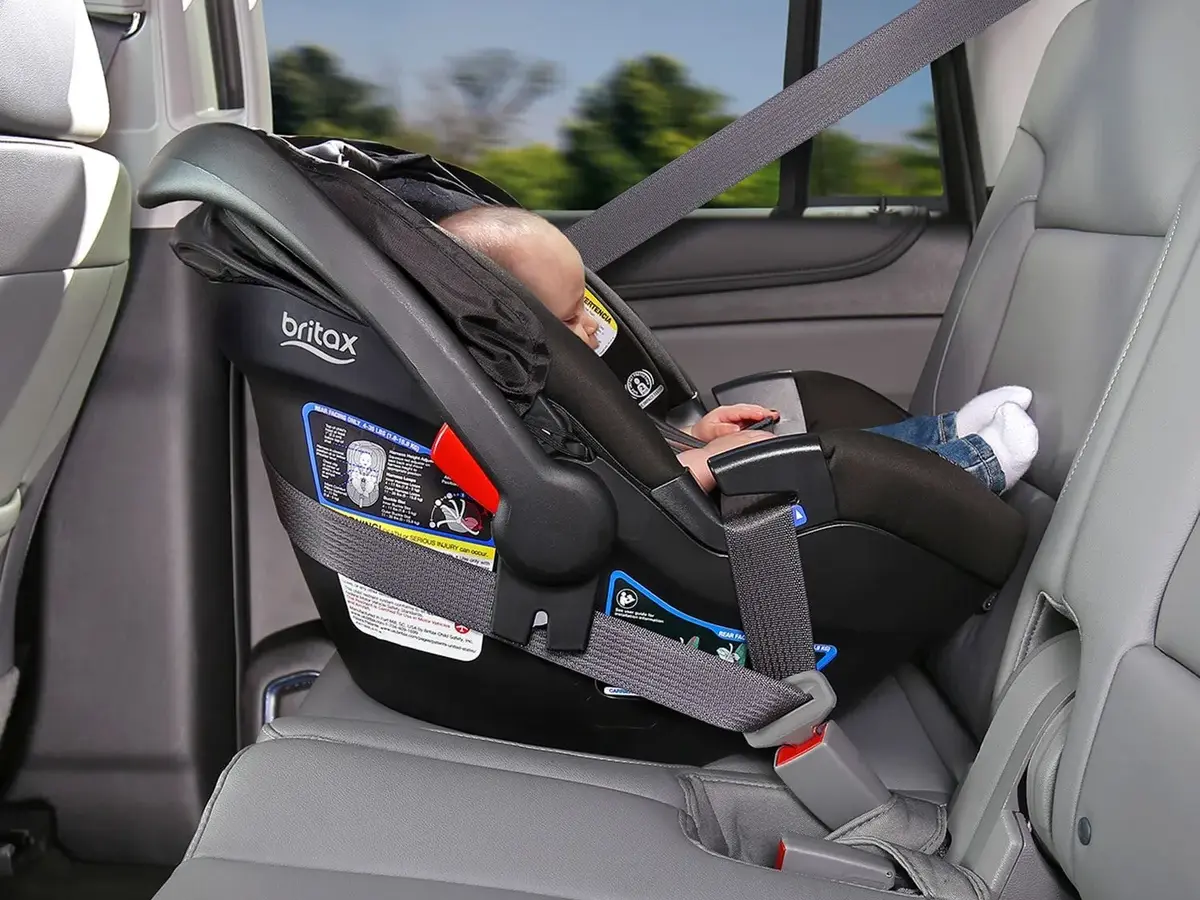
Yes, you can put a baby car seat in the middle, and for many vehicles it's the safest spot in the back seat. But "can" comes with conditions. The center position only works if your car, your seat, and your car seat manual all agree on it.
In our research, the American Academy of Pediatrics still points to the rear center as the safest position for a single child. The catch is that federal LATCH rules under FMVSS 225 don't guarantee a dedicated center anchor set. As of 2026, plenty of vehicles still lack one, so the answer really depends on your specific setup.
can you put a baby car seat in the middle
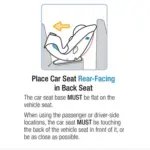
Yes. You can put a baby car seat in the middle if your vehicle has a usable center position. That means a dedicated LATCH anchor set or a lap-and-shoulder belt.
Your car seat manual must also allow it. Not every car and seat combo qualifies. Check both manuals before you install.
The Short Answer: Yes, But Only If Your Car Actually Allows It
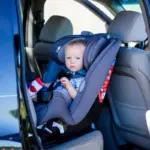
The middle seat is the safest theoretical spot for a single child. Crash data consistently shows that being furthest from the doors reduces injury risk in side-impact crashes. That's the "yes" part of the answer.
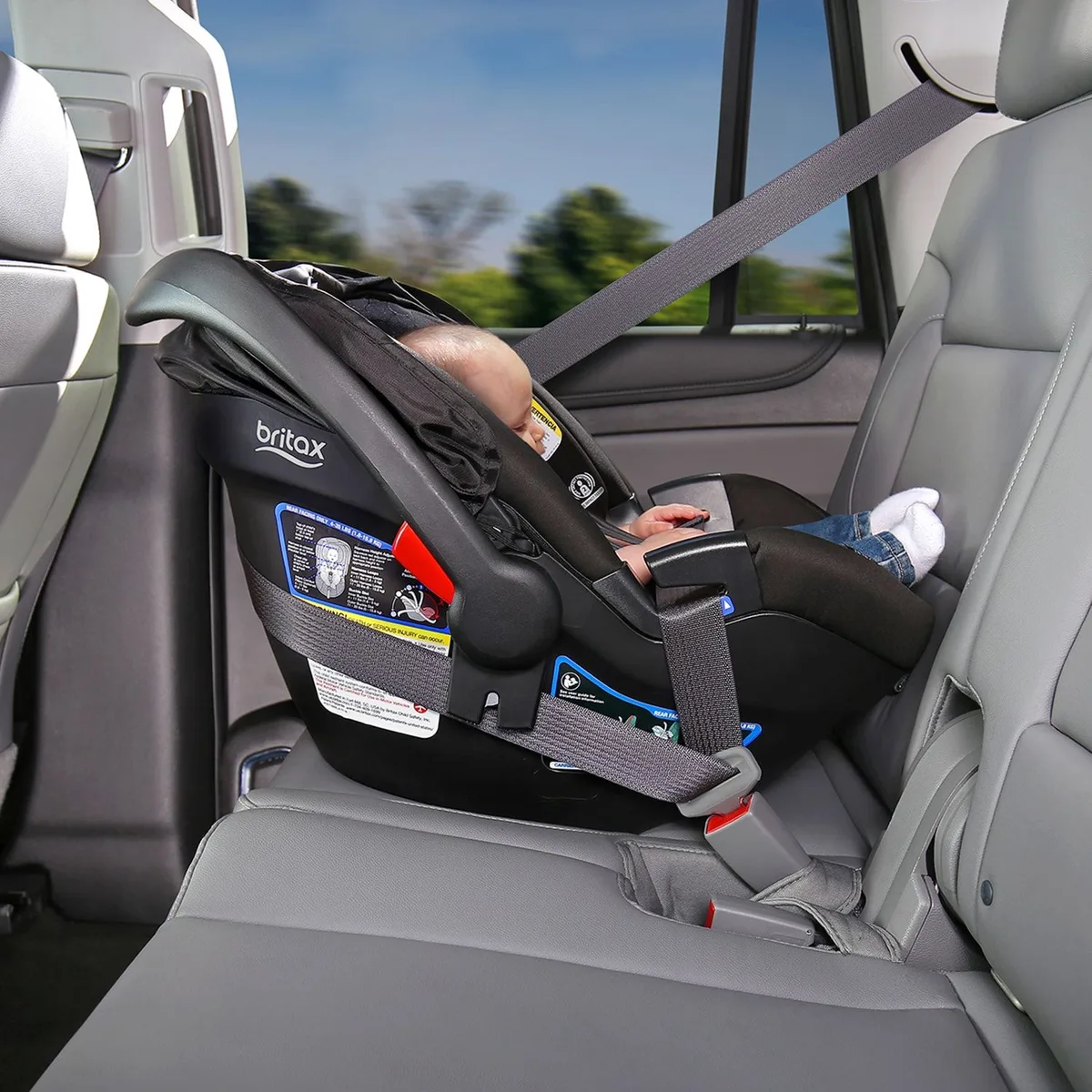
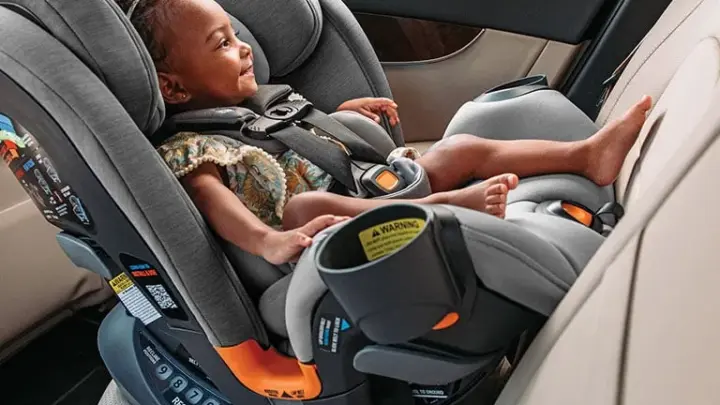
Image source: Web (Bing) / pinterest.com (Web image (fair-use with source credit))
The "but" is where things get real. A center install only counts if it's done correctly. A loose seat in the middle is more dangerous than a rock-solid seat behind the passenger.
Safety lives in the install, not the address.
If your vehicle doesn't have dedicated center LATCH anchors, you're looking at a seat belt install. That's fine in most cars, but only when the center belt is a full lap-and-shoulder belt. A lap-only belt in the center rules out most forward-facing configurations entirely.
So before you commit, check two things. First, does your vehicle manual permit a car seat at the center position? Second, does your car seat manual permit the belt type your center seat offers?
If both say yes, you're clear. If either says no, move outboard.
Why the Middle Seat Has a Safety Edge (and When It Doesn't)
Distance is the whole point. In a side-impact crash, the center seat gives your child more space between them and the intrusion point. That extra metal and crumple zone absorbs energy before it reaches the child.
According to research published through the National Highway Traffic Safety Administration (nhtsa.gov), the rear center position offers measurable protection against side-impact injuries. That's especially true for rear-facing infants, whose shells are designed to spread crash forces across the back.
But the safety edge isn't automatic. Three conditions erase it fast:
- You can't get less than 1 inch of movement at the belt path.
- Your center belt is lap-only and your seat needs a shoulder belt.
- Your vehicle's center cushion is deeply contoured and tilts the seat.
A center install that wobbles or leans is worse than an outboard install that's tight. The center advantage only exists when the fit is correct.
There's also a practical side. A center-installed seat often blocks access to both outboard seats. If you've got two other kids or another car seat, that math changes quickly.
For one child, the middle usually wins. For a full car, it's often a compromise.
The Three Things That Decide If a Center Install Is Legal and Safe
Does your vehicle have dedicated center LATCH anchors?
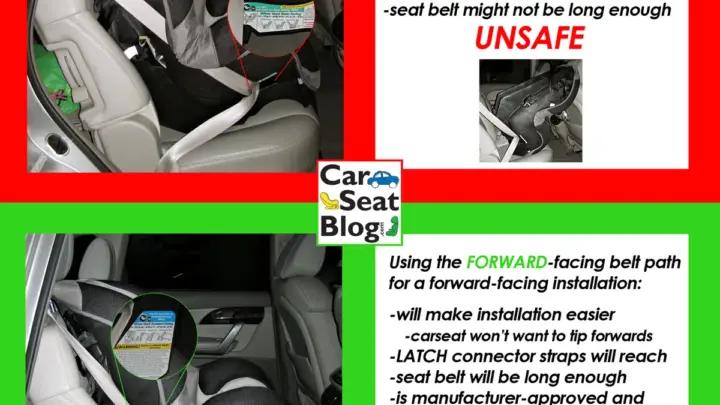
Not always, and this is the single biggest dealbreaker. Since September 2002, US vehicles have been required to have LATCH in at least two rear seating positions. Those are almost always the two outboard seats.
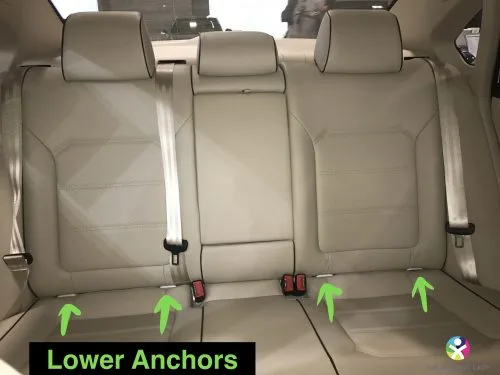
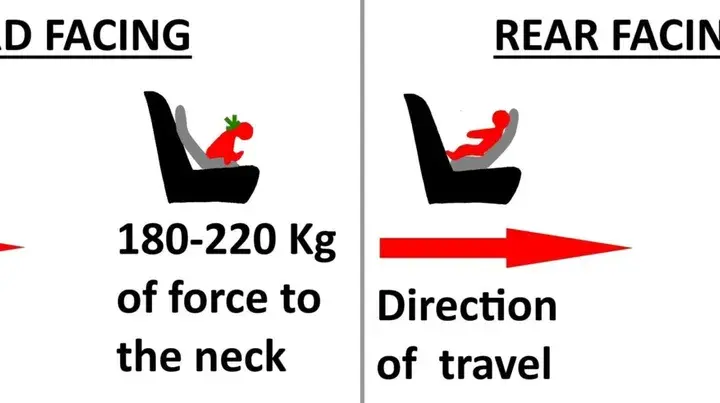
Image source: Web (Bing) / thecarseatlady.com (Web image (fair-use with source credit))
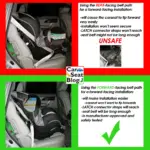
Some vehicles do have a dedicated center LATCH set. Others have three anchors that sit close enough that the middle one gets shared between positions. That's called "borrowing," and it's usually banned.
Vehicle and car seat manufacturers both have to allow it for it to be legal.
Here's the rule that trips people up. A standard LATCH anchor set is spaced 11 inches (280mm) apart. If your vehicle's center anchors are closer than that, they weren't designed for a center install.
Borrowing them can overload the hardware. Read your vehicle owner's manual for the exact wording. If it doesn't explicitly allow center LATCH, use the seat belt.
Is your center belt a lap-and-shoulder or lap-only?
Many center seats have a lap-only belt. That matters because most forward-facing car seats need a lap-and-shoulder belt. Some infant carriers and rear-facing convertibles can use a lap-only belt, but only if the manufacturer says so.
If your center belt is lap-and-shoulder, you're in good shape. If it's lap-only, check your car seat manual before assuming it's fine.
Does your car seat manual permit the center position?
This is the third gate, and it's just as binding. Some car seat manuals explicitly forbid center installation in certain vehicle types. Others allow it only with the seat belt, not LATCH.
Manufacturers test their seats under specific conditions. Deviating from those conditions voids the safety certification.
If your vehicle manual and car seat manual conflict, the stricter one wins. Always.
How to Install a Car Seat in the Middle Seat, Step by Step
You'll need a few basics: your car seat, both manuals, and a bit of patience. A rolled towel or pool noodle helps with rear-facing recline angle. Here's the process.
- Read the vehicle manual for the center position rules. Confirm LATCH or seat belt, and whether borrowing is allowed.
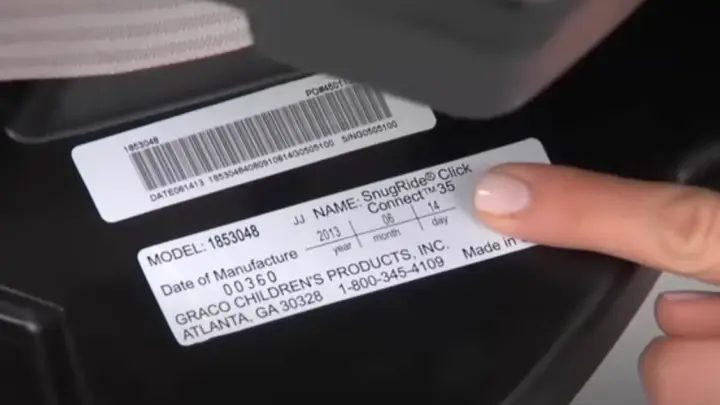
- Read the car seat manual for the center position and belt path routing. Note the LATCH weight limit.
- Choose your method. Use LATCH if a dedicated center anchor set exists and your seat allows it. Otherwise use the seat belt.
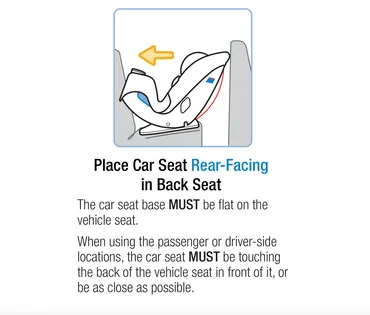
- Place the seat or base at the center. For rear-facing, check the recline indicator and adjust with a rolled towel if needed.
- Route the belt or connect the lower anchors. Follow the correct belt path. Rear-facing usually routes under the seat, forward-facing over it.
- Tighten firmly. Push down with your knee or body weight while pulling the belt or LATCH strap taut.
- Run the tightness test. Grab the seat at the belt path and tug. Movement should stay under 1 inch.
- Attach the top tether if forward-facing. Find the anchor point per your vehicle manual and hook it up.
- Check the harness. Chest clip at armpit level. Harness snug enough that you can't pinch slack at the shoulder.
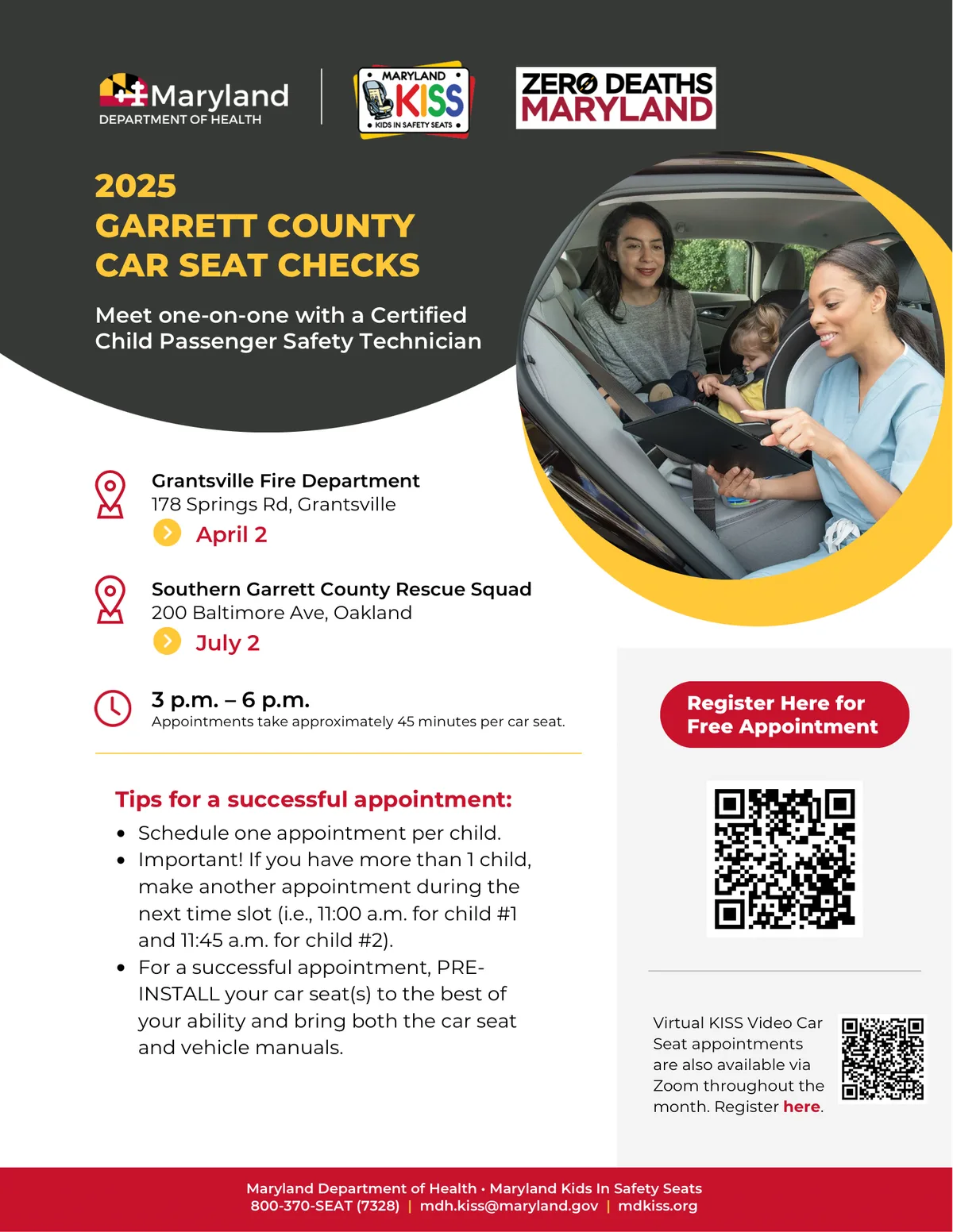
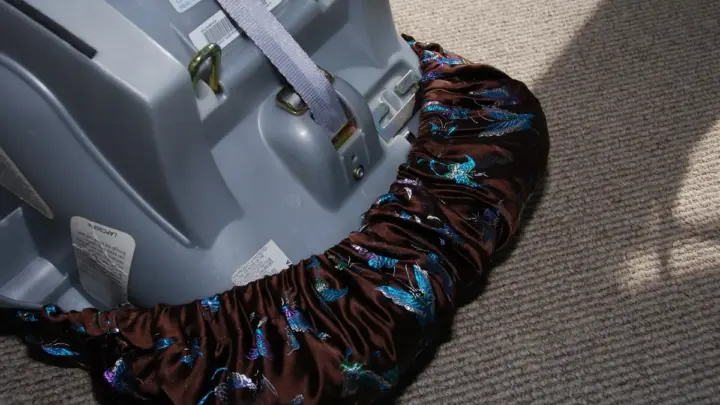
Image source: Web (Bing) / garretthealth.org (Web image (fair-use with source credit))
Then get it inspected. Certified Child Passenger Safety Technicians (CPSTs) are available across the country, often free. A second set of trained eyes catches what you'd miss.
Center vs. Outboard: Which Position Wins for Your Situation
There's no universal winner. The right position depends on your car, your kids, and what you can actually install correctly. Use this as a quick decision guide.
| Situation | Best Position | Why |
|---|---|---|
| One child, dedicated center LATCH | Center | Maximum side-impact distance, LATCH-legal |
| One child, lap-only center belt | Outboard | Belt type won't support most seats |
| Two kids in car seats | Outboard (both) | Three-across is rare without a dedicated anchor set |
| Three kids, one adult available | Depends on widths | Measure seat widths against your rear hip room |
| Rear-facing infant | Center if possible | Shell design plus distance, strong side-impact protection |
| Forward-facing with tether | Center if tether anchor exists | Tether reduces head excursion in a crash |
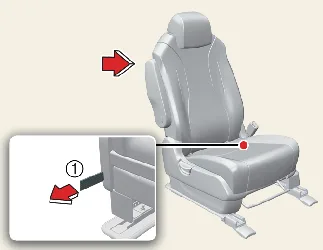
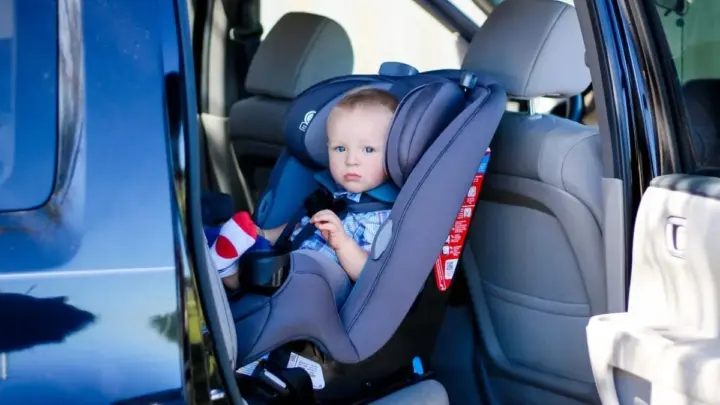
Image source: Web (Bing) / kia.com (Web image (fair-use with source credit))
The pattern holds: if the center install is legal and tight, use it for a single child. If it forces a compromise on tightness or blocks a second seat, go outboard. A correctly installed outboard seat beats a sloppy center one every single time.
That's not a hedge, that's the actual crash physics.
Mistakes That Turn a "Safe" Center Install Into a Dangerous One
The most common error is borrowing outboard LATCH anchors without permission. If your vehicle manual doesn't explicitly allow center LATCH, don't do it. Overloading shared hardware is a real risk, not a theoretical one.
The second mistake is trusting the "1 inch" rule by feel. Use your non-dominant hand and tug firmly at the belt path. If you can move it more than 1 inch, it's not tight enough.
That's the actual test NHTSA inspectors use.
A third trap is ignoring the recline angle for rear-facing seats. A center cushion that's flatter or more angled than the outboard seats will throw off that angle. Check the built-in indicator, not your gut.
Then there's the "touch" problem. Many parents install a center seat that rests against the front seatback or leans on another car seat. Some contact is fine, but pressure that pushes either seat out of position is not.
Recheck after every adjustment.
Finally, don't skip the top tether. Forward-facing seats in the center still need it. If your vehicle has no center tether anchor, the seat may not be legal at that position.
When to Skip the Middle Entirely
Skip the middle if any of these apply. You'll save yourself a headache and a safety risk.
- Your vehicle manual doesn't permit a center car seat.
- Your center belt is lap-only and your seat needs a shoulder belt.
- You can't get under 1 inch of movement at the belt path.
- A center install blocks a second car seat from fitting properly.
- The center cushion throws off the rear-facing recline angle and you can't correct it.
- You have three kids in seats and three-across isn't physically possible.
In any of those cases, a correctly installed outboard seat is the right call. A tight outboard install beats a compromised center one. That's the rule that matters most.
Also consider your daily reality. Lifting a heavy infant carrier into the center of a tall SUV is hard on your back. If the stretch makes you rush the install or skip the buckle check, outboard may be the practical choice.
Safety isn't just the crash. It's whether you can do the install right, every single time.
FAQs
Is the middle seat always the safest spot for a baby car seat?
No. The center is safest only when the install is legal and tight. If your vehicle lacks a dedicated center anchor set or a usable seat belt, an outboard position with a correct install is safer.
Fit beats position every time.
Can I use the outboard LATCH anchors for a center install?
Only if both your vehicle manual and car seat manual explicitly allow it. Most manufacturers prohibit borrowing anchors because shared hardware isn't rated for a center load. When in doubt, use the seat belt instead.
What if my center seat only has a lap belt?
Some rear-facing seats and infant carriers can use a lap-only belt if the manufacturer allows it. Most forward-facing seats cannot. Check your car seat manual first.
If it doesn't list lap-only as an approved option, move outboard.
Does a center car seat block the other seats?
Often, yes. A center-installed seat can overlap or crowd both outboard positions. If you have other passengers or a second car seat, measure before you commit.
Three-across setups need narrow seats and a wide rear bench.
How do I know my center install is tight enough?
Grab the seat at the belt path and tug firmly. Movement should stay under 1 inch in any direction. If it shifts more, tighten the belt or LATCH strap and retest.
A certified CPST can verify it for free at most inspection stations.
Can I install a car seat in the third row instead?
Yes, if your vehicle has a third row with LATCH or a lap-and-shoulder belt. The same rules apply. Check the vehicle manual for approved positions and follow the car seat manual for belt routing.
The center vs outboard logic doesn't change in a third row. Same anchor rules, same belt types, same tightness test.
Final Word: Correct Beats Convenient, Every Time
So, can you put a baby car seat in the middle? Yes, when three things line up. Your vehicle must allow it.
Your center belt or dedicated LATCH set must support it. Your car seat manual must permit it.
Miss any of those, and the honest answer flips to outboard. That's not a downgrade. A tight, verified outboard install protects your child far better than a loose center one you convinced yourself was fine.
Run the tightness test. Watch the recline angle. Attach the top tether.
Then get it checked by a CPST, because free inspections exist in nearly every community and they catch what tired parents miss.
Position matters. Correct installation matters more. Get both right, and you've done the single most important thing you can do to keep your child safe in the car.

Similar Posts