How Long Is a Baby Car Seat Good For? Expiration Guide
If you're wondering how long is a baby car seat good for, the short answer is six to ten years from the date it was made. That window changes depending on the seat type, how it's been stored, and whether it's ever been in a crash. Most parents assume a seat lasts as long as it fits their child, but that's not how it works.
As of 2026, the National Highway Traffic Safety Administration (NHTSA) and every major car seat manufacturer treat expiration dates as hard safety limits. NHTSA requires all child restraints sold in the US to meet FMVSS 213, a federal standard that includes material durability testing. Those materials degrade over time, so let's walk through what actually determines your seat's shelf life.
how long is a baby car seat good for
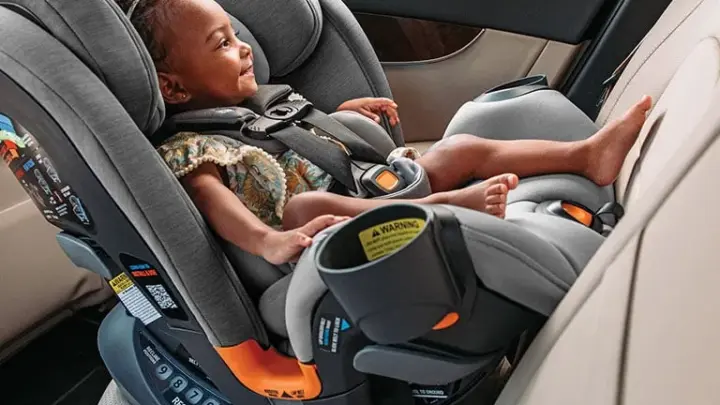
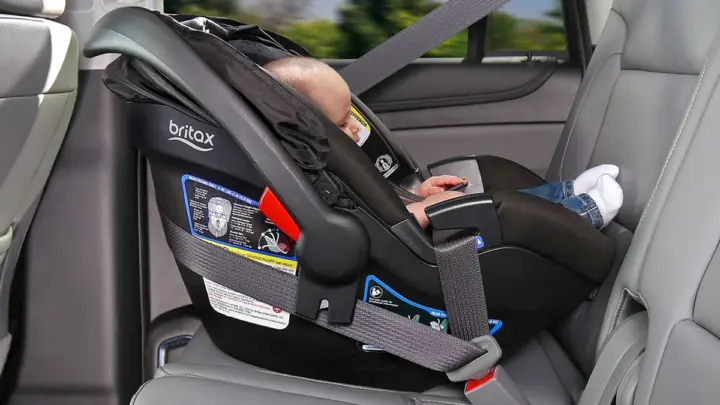
A baby car seat is good for six to ten years from its manufacture date. Infant seats typically last six to eight years. Convertible seats usually last seven to ten.
Booster seats often run eight to ten years. The exact date is printed on a label on the seat itself. Always check that label, not your purchase date.
Quick Answer: 6 to 10 Years, But It Depends on the Seat
Car seats expire because the materials that protect your child break down. The plastic shell, the energy-absorbing foam, and the harness webbing all degrade from heat, UV exposure, and time. When they degrade, the seat may not perform the way it did in crash testing.
That's why the "do not use after" date exists. It's a hard cutoff set by the manufacturer based on their own durability testing. Pass it, and the seat is no longer certified to protect your child in a crash.
Here's the rough breakdown by seat type:
| Seat Type | Typical Lifespan | Common Range |
|---|---|---|
| Infant car seat | 6 to 8 years | 5 to 8 years |
| Convertible car seat | 7 to 10 years | 6 to 10 years |
| All-in-one seat | 8 to 10 years | 7 to 10 years |
| Booster seat | 8 to 10 years | 6 to 10 years |
Those numbers are starting points. The label on your specific seat is the only number that matters. Manufacturers like Graco, Chicco, Britax, Evenflo, and Nuna all publish their own expiration windows, and they vary.
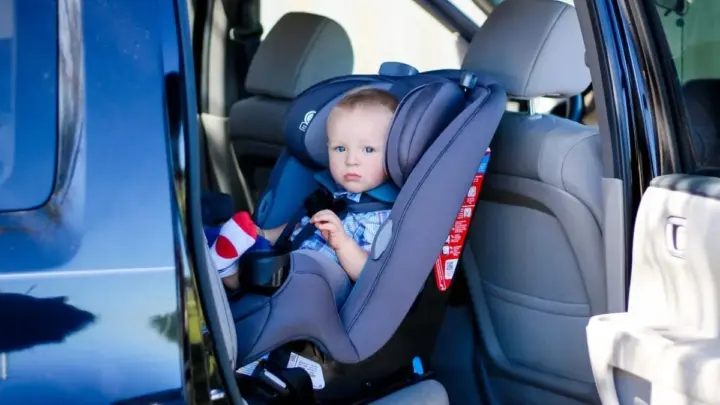
Image source: Web (Bing) / bestbabycarseat.com (Web image (fair-use with source credit))
Where to Find the Expiration Date on Your Car Seat
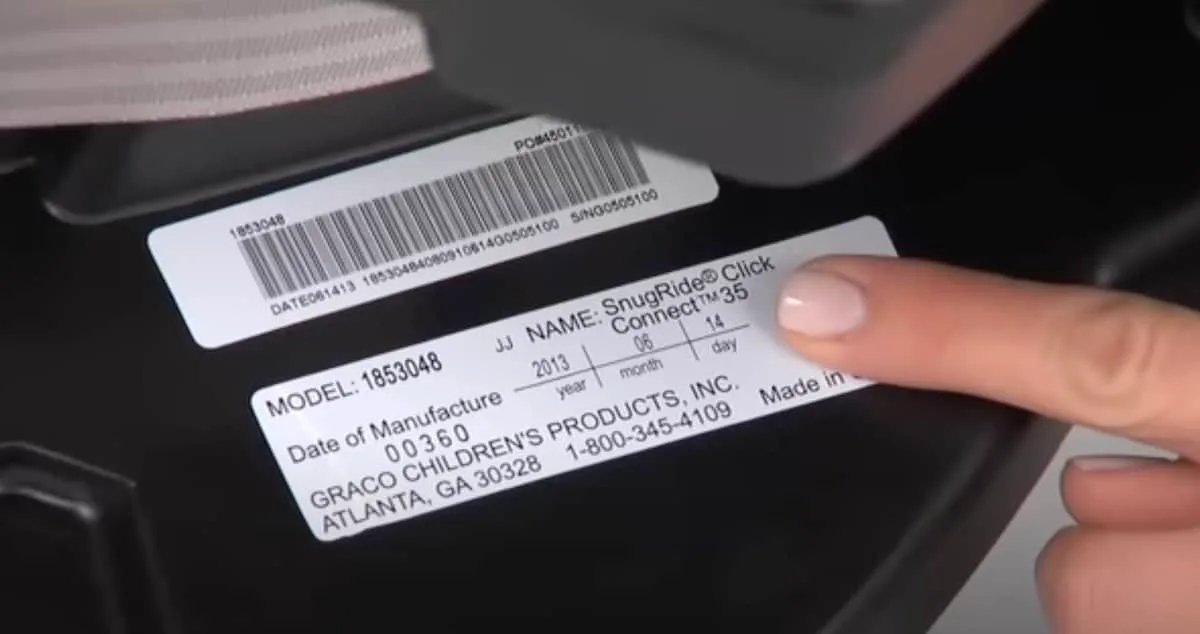
The expiration date is usually easy to find once you know where to look. It's printed on a label or sticker that manufacturers are required to attach to every seat. You just need to know the three spots where it hides.
The Three Places the Date Usually Hides
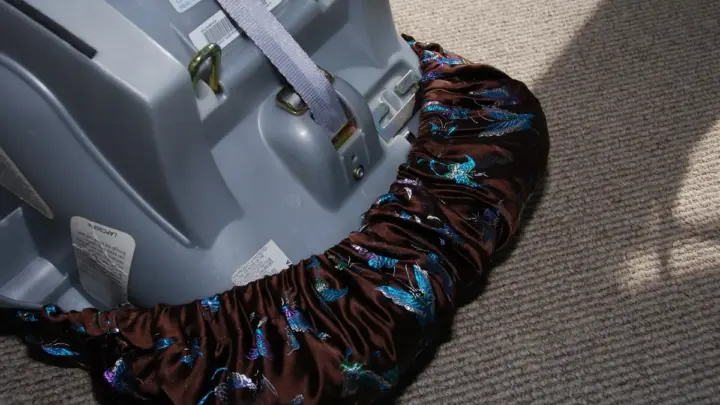
- Bottom of the base. Flip the seat upside down and look at the underside of the base. This is the most common location for infant seats.
- Side of the shell. Check the hard plastic shell on either side, often near where the harness anchors. Convertible seats often put it here.
- Under the fabric cover. Pull back the seat pad near the bottom or back. Some manufacturers tuck the label underneath to protect it.
- Back of the seat back. On some models, the label sits on the rear-facing side of the shell.
If you can't find it, check the manual. Every seat ships with one, and manufacturer websites host PDFs by model number.
Manufacture Date vs. Do-Not-Use-After Date, They're Not the Same
The manufacture date tells you when the seat was built. The do-not-use-after date tells you when it must be retired. Those are two different numbers, and the gap between them is the seat's usable lifespan.
A seat built in March 2020 with an eight-year lifespan expires in March 2028. That's the date you follow, not the day you bought it.
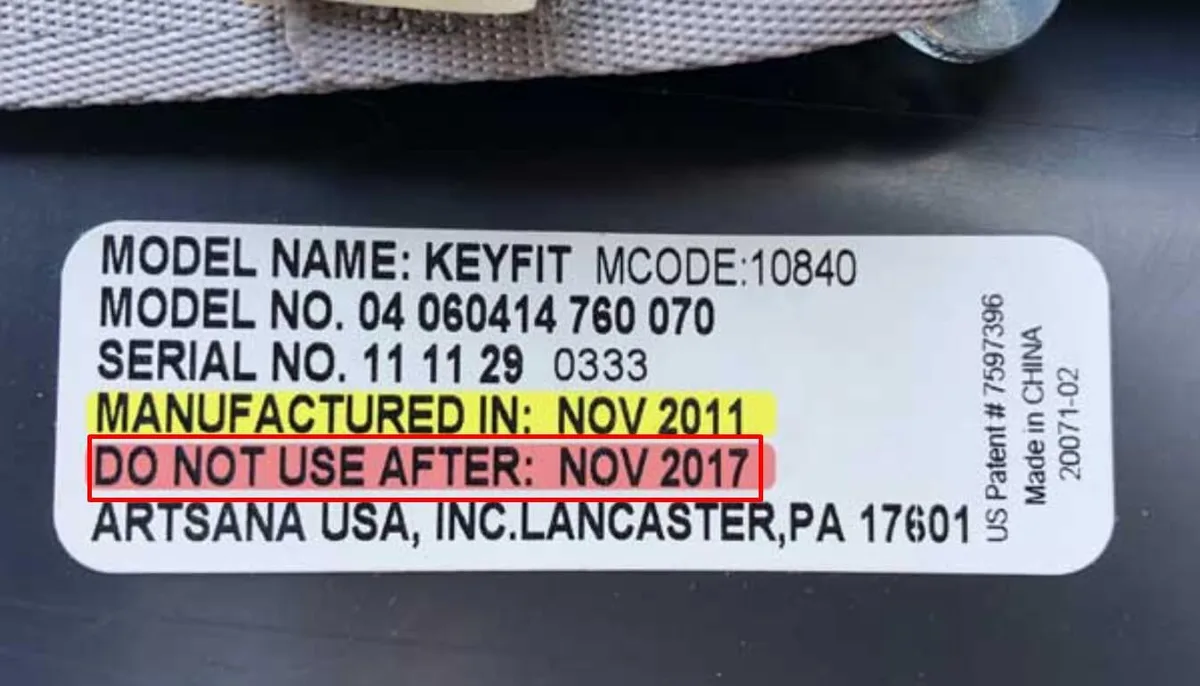
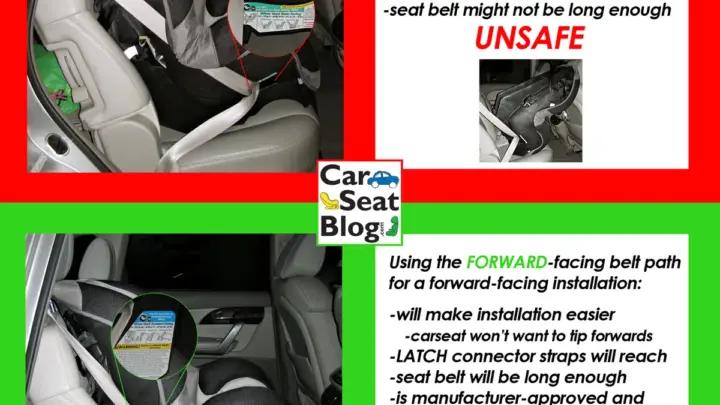
Image source: Web (Bing) / psychoautos.com (Web image (fair-use with source credit))
This trips up a lot of parents. A seat can sit on a store shelf or in a warehouse for a year before you buy it. That year is already gone from its lifespan.
If you buy a two-year-old seat on clearance, you've lost two years before your child ever sits in it.
Why Car Seats Expire at All
Car seats expire because the materials inside them don't last forever. The plastic shell can become brittle. The EPS foam, the stuff that absorbs crash energy, can crack or lose its ability to compress properly.
The harness webbing can stretch, fray, or weaken.
Plastic Degradation, UV Damage, and Heat
Heat is the biggest enemy. A car interior can hit 150°F or higher in summer. That kind of repeated heat cycling stresses the plastic over years.
Seats stored in hot garages, attics, or sheds age faster than seats kept in climate-controlled spaces.
UV exposure does its own damage. Sunlight breaks down plastic polymers and weakens webbing over time. That's why a seat left in a sunny car for years may be less safe than an identical seat kept shaded.
Outdated Safety Standards and Lost Parts
Safety standards change. A seat built in 2012 met the standards of 2012, not the standards of today. FMVSS 213 has been updated multiple times, and older seats may not reflect current testing requirements or best practices.
Parts go missing too. Harness pads, infant inserts, base locking clips, and instruction manuals all disappear over the years. Without every original component, the seat may not perform as tested.
When an Expired Date Isn't the Real Problem
An expiration date is only one reason to retire a seat. A seat that's still within its date can be unsafe for other reasons, and those reasons are often more serious than the expiration itself.
Crash History: The Rule That Overrides Everything
A car seat involved in a moderate or severe crash should be replaced, no matter how new it is. NHTSA guidance says the seat may have hidden structural damage that isn't visible. The plastic could be stressed or cracked internally.
The harness could have stretched beyond spec.
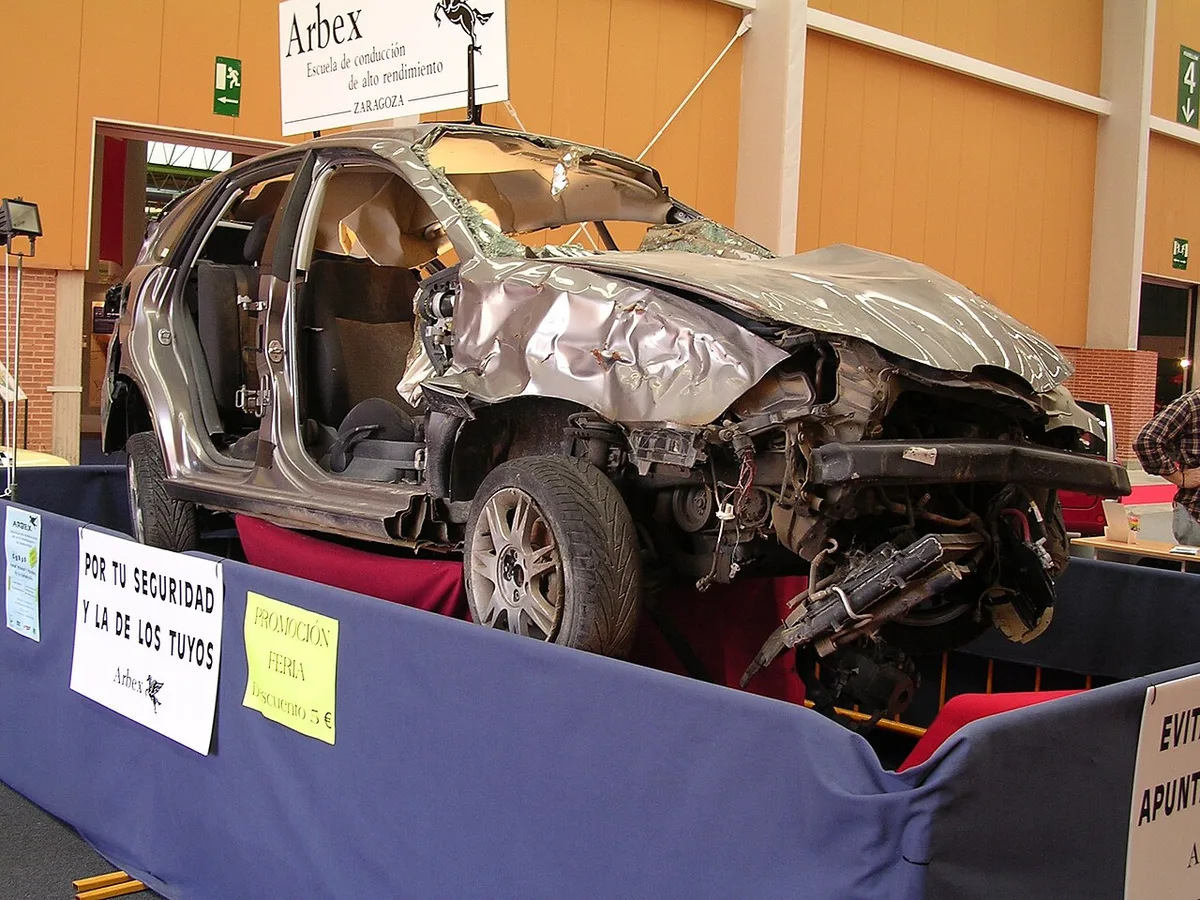
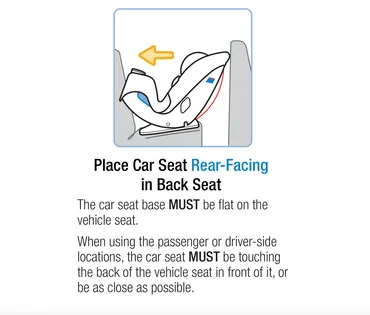
Image source: Wikimedia Commons / Wikimedia Commons contributor (CC BY-SA)
If you're not sure whether a crash counts, check with your insurance company and the seat manufacturer. Many insurers will reimburse a replacement seat after a claim. Some manufacturers will inspect or replace seats for free after certain crashes.
Never gamble on a seat that's been through a serious impact.
Recalls, Missing Parts, and Unknown Secondhand Seats
A recalled seat is unsafe until the recall is fixed or the seat is replaced. You can check any seat's model number against NHTSA's recall database. That check takes two minutes and it's free.
Missing parts are another red flag. If the seat is missing its base, harness covers, infant insert, or manual, you may not be able to use it safely. Some parts are replaceable through the manufacturer.
Others aren't.
Unknown secondhand seats are the biggest risk. If you don't know the seat's history, you don't know if it's been in a crash, stored in a hot attic, or had parts swapped. A free seat with unknown history isn't a bargain.
It's a gamble with your child's safety.
Hand-Me-Downs, Secondhand Seats, and Storage: What's Actually Safe
Hand-me-down seats can be perfectly safe, but only if you can verify their history. The seat needs to be within its expiration date, free of recalls, complete with all parts, and never involved in a crash. If you can't confirm all four of those things, pass on it.
Questions to Ask Before Accepting a Used Seat
- What's the model number and manufacture date? You need both to check the expiration and recall status.
- Has the seat ever been in a crash? Any crash beyond a minor parking-lot bump is a no.
- Was it ever stored in a hot garage, attic, or shed? Extreme heat shortens the seat's safe life.
- Do you have the manual and all original parts? Missing pieces often mean the seat can't be used as designed.
- Why are you getting rid of it? A vague answer is a warning sign. Trust your gut.
If the person can't answer those questions, walk away. There are plenty of safe seats out there. Don't roll the dice on one with a mystery history.
How to Store a Seat So It Lasts Its Full Lifespan
Store car seats indoors in a climate-controlled space. Avoid garages, attics, basements, and sheds where temperatures swing wildly. Keep the seat out of direct sunlight.
Bag the harness and buckle separately so nothing gets lost.
Label the seat with its manufacture date and expiration date so future you doesn't have to hunt for the sticker. Keep the manual with the seat. If you're storing between kids, check the seat once a year for cracks, fraying, or sticky harness adjusters.
When your seat hits its expiration date, replacement is the only safe move. You've got three practical routes: buy new, use a manufacturer trade-in program, or recycle it responsibly. Whichever you pick, don't keep using the expired seat "just a little longer." The whole point of that date is that the seat's protection has run out.
Replacement, Trade-In Programs, and Recycling
Buying new is the simplest path. You get a fresh manufacture date, full warranty, and current FMVSS 213 compliance. You also register the seat for recall alerts.
Trade-in programs are worth watching. Retailers like Target and Walmart run periodic car seat trade-in events, usually in spring and fall. You bring in an old seat and get a discount coupon toward a new one.
The old seat gets recycled through the retailer's partner program. Check store websites before you haul your seat across town, because these events are limited to specific dates.
Manufacturer buyback programs are rarer but exist. Some brands offer discounts when you trade in an expired seat of their own make. It's worth a call if you're loyal to a brand.
How to Dispose of an Expired Seat Safely
An expired seat shouldn't end up at a garage sale or on a curb where someone might grab it. The responsible move is to make it unusable before it leaves your hands.
- Cut the harness straps completely. Remove the buckle and cut it free too.
- Write "EXPIRED, DO NOT USE" in permanent marker across the shell.
- Remove the fabric cover if your local recycling accepts textiles.
- Take the plastic shell to a car seat recycling program if one exists nearby.
- Check with your local waste authority about hard plastic recycling options.
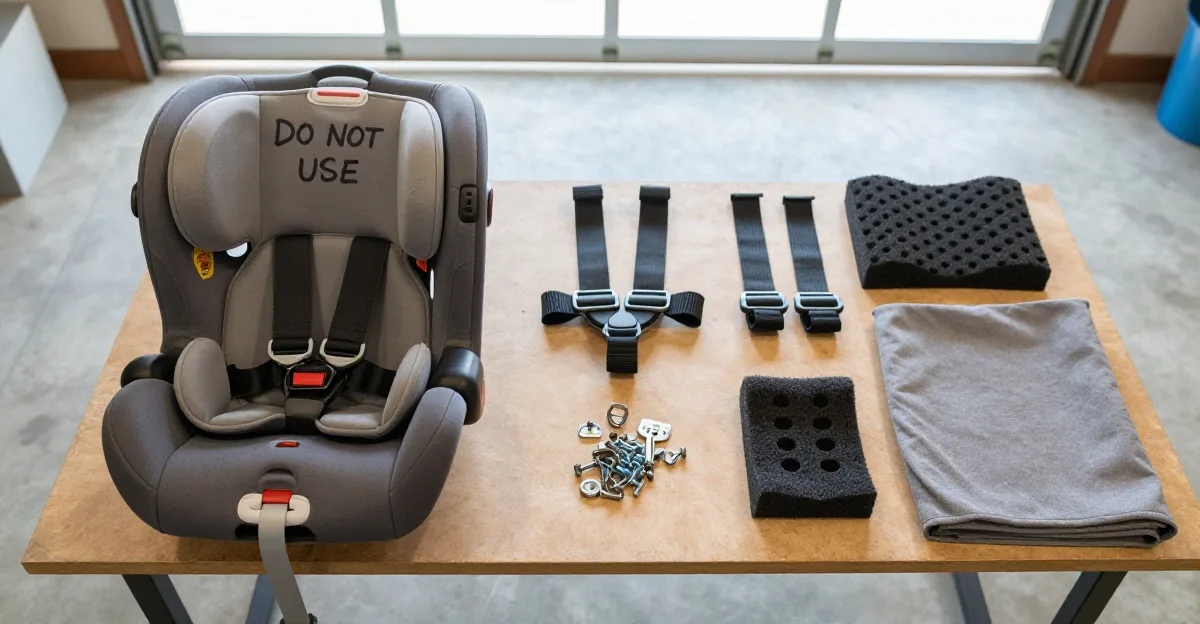
Image source: Bing (Web (fair-use with source credit))
Some cities run dedicated car seat recycling drives through Safe Kids Worldwide chapters. Others accept them at household hazardous waste facilities. If neither is available, put the seat in your regular trash after cutting the straps and marking it clearly.
Safety, Legal, and Manufacturer Rules You Can't Ignore
The expiration date isn't just a suggestion from the manufacturer. It's a safety limit backed by federal standards, state laws, and the manufacturer's own testing. Here's what actually governs your seat's usable life.
FMVSS 213, NHTSA Recalls, and State Laws
FMVSS 213 is the federal safety standard every US car seat must meet. It covers crash performance, labeling, and durability. A seat past its expiration date is no longer certified under that standard.
That matters legally if you're ever in a crash and an insurer or attorney asks about the seat.
NHTSA maintains a public recall database at NHTSA.gov. You can look up any seat by model number and see if it's been recalled. Checking takes two minutes.
Do it before you use any used seat, and re-check your own seat once a year.
State laws vary on child passenger safety. Most require kids to be in an appropriate seat until age 8 or until they meet a height and weight threshold. None of them explicitly say "don't use an expired seat," but using one could affect liability and insurance claims after a crash.
What the AAP and Manufacturers Actually Recommend
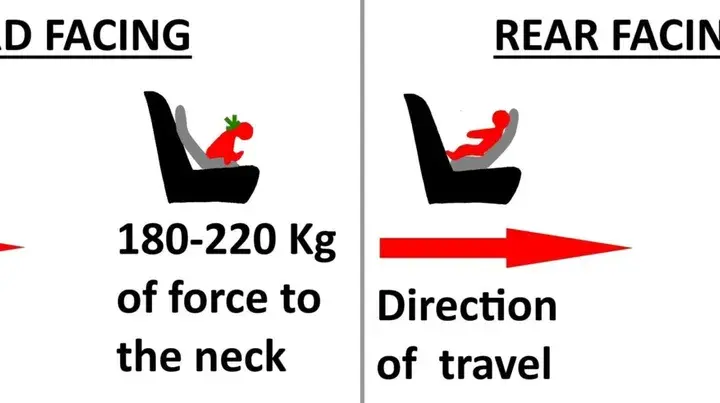
The American Academy of Pediatrics recommends rear-facing until at least age 2, or until the child outgrows the seat's rear-facing limits. That's separate from expiration, but the two rules work together. If your seat expires before your child outgrows rear-facing, you need a new seat.
Manufacturer specs are the final word on expiration. Graco, Chicco, Britax, Evenflo, Nuna, Cybex, and Maxi-Cosi all publish specific lifespans for each model. Some brands are more generous than others.
A Britax convertible might last 10 years, while a budget infant seat might only last 5. The label on your seat is the only number that counts.
Frequently Asked Questions
Can I use a car seat past its expiration date?
No, not safely. The plastic shell, foam, and harness degrade over time and may not protect your child in a crash. NHTSA and every major manufacturer treat the expiration date as a hard cutoff.
Replace the seat even if it looks fine.
Do car seats expire if they've never been used?
Yes. Expiration is based on the manufacture date, not on use. A seat sitting in a box for six years has still aged.
Plastic and foam degrade from time and temperature swings, even without a child in the seat. Check the label, not the condition.
How do I find my car seat's expiration date?
Look for the label on the bottom of the base, the side of the shell, or under the fabric cover. It shows both the manufacture date and the do-not-use-after date. If you can't find it, look up your model number on the manufacturer's website.
Are hand-me-down car seats safe?
Only if you can verify the history. The seat must be within its expiration date, free of recalls, complete with all original parts, and never in a moderate or severe crash. If the previous owner can't confirm all four, don't use it.
What should I do with an expired car seat?
Cut the harness straps, mark the shell with "EXPIRED, DO NOT USE," and recycle it if your area has a program. Many retailers run trade-in events that accept expired seats. Never donate an expired seat or leave it out for someone else to take.
Do infant car seats expire faster than convertibles?
Generally, yes. Infant seats typically expire in 5 to 8 years, while convertibles and all-in-ones often run 7 to 10. The difference comes down to design, materials, and how each type is tested.
Always check the specific label on your seat, since brands vary.

Similar Posts