Can Baby Wear a Sweatshirt in a Car Seat? Safety Tips
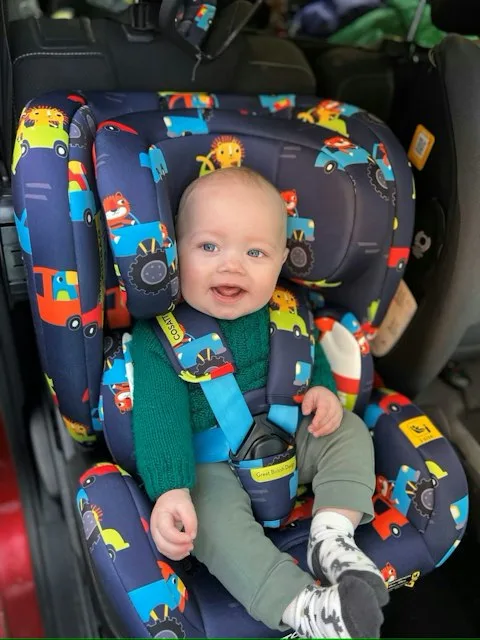
If you've ever buckled a wriggling toddler into a car seat on a freezing morning, you've probably wondered: can baby wear sweatshirt in car seat without compromising safety? It's a fair question. Sweatshirts look harmless compared to puffy coats, so most parents assume they're fine.
In our research, that assumption is where the trouble starts.
The core issue is harness slack. Per National Highway Traffic Safety Administration (NHTSA) testing, any clothing that compresses under crash force can let a child slip out of the straps. A sweatshirt adds less bulk than a coat, but it still adds some.
So the answer isn't a flat yes or no. It depends on the fabric, the fit, and how you buckle. Here's how to figure out what's safe for your baby.
can baby wear sweatshirt in car seat
Yes, a baby can wear a sweatshirt in a car seat, but only if it's thin and doesn't interfere with harness tightness. Bulky or thick hoodies can create dangerous slack. The pinch test at the collarbone tells you if it's safe.
If you can pinch fabric between thumb and forefinger, it's too loose. When in doubt, buckle first, then zip the sweatshirt over the harness.
Why a Sweatshirt Isn't Automatically Safe — The Harness Slack Problem
A sweatshirt isn't automatically safe because the harness can only do its job if it sits snug against the body. Any layer of fabric between the child and the straps can compress in a crash. When that fabric flattens, the harness loses tension.
That gap is called harness slack, and it's the real risk.
Image source: Bing (Web (fair-use with source credit))
Think about a thick fleece hoodie. It feels soft and thin in your hands. But under the sudden force of a 30 mph crash, that fabric squashes down by half an inch or more.
The straps that felt tight at the driveway are suddenly loose at the shoulders. A small child can slide up and out.
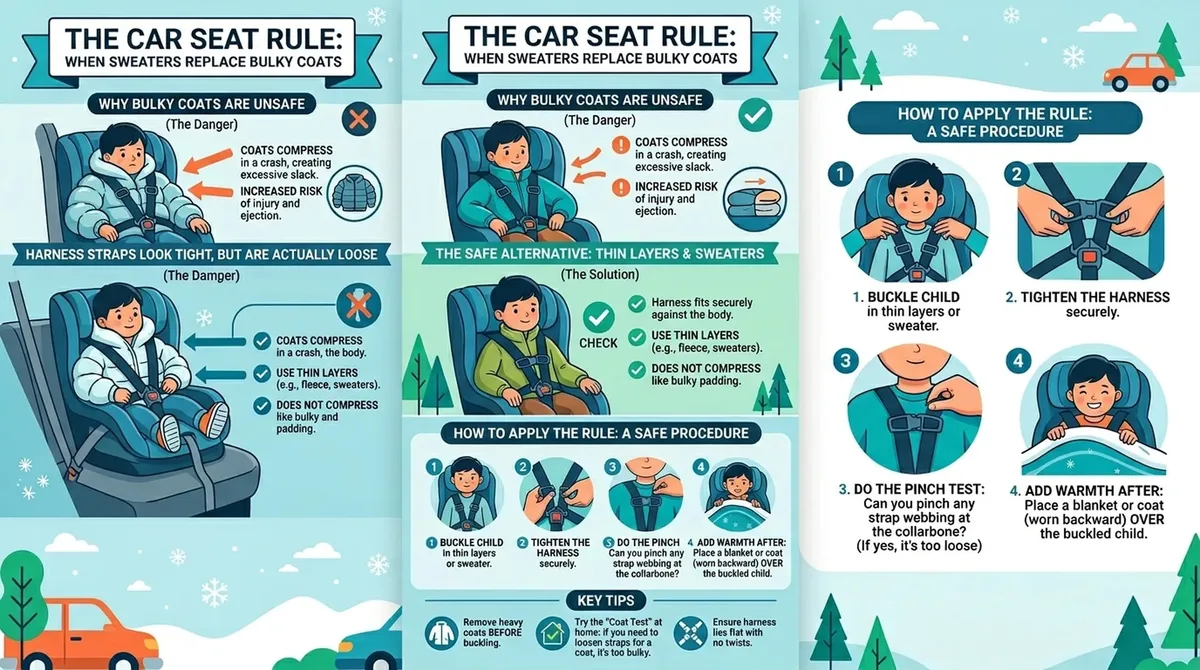
Image source: Bing (Web (fair-use with source credit))
The fix isn't to ban all sweatshirts. It's to understand which ones pass. Thin cotton and light fleece compress very little.
Sherpa-lined or thick insulated hoodies compress a lot. So the material matters more than the word "sweatshirt" on the tag.
Here's the practical rule most certified Child Passenger Safety Technicians (CPSTs) use: if you can't feel the harness snug against your child's chest through the fabric, it's too much. You should be able to run two fingers flat under the strap at the collarbone, no more.
The Pinch Test: How to Check if Your Baby's Sweatshirt Is Too Bulky
The pinch test answers the question in about ten seconds. It's the same method CPSTs use at car seat inspection stations, and it works on any clothing. Here's how to run it properly.
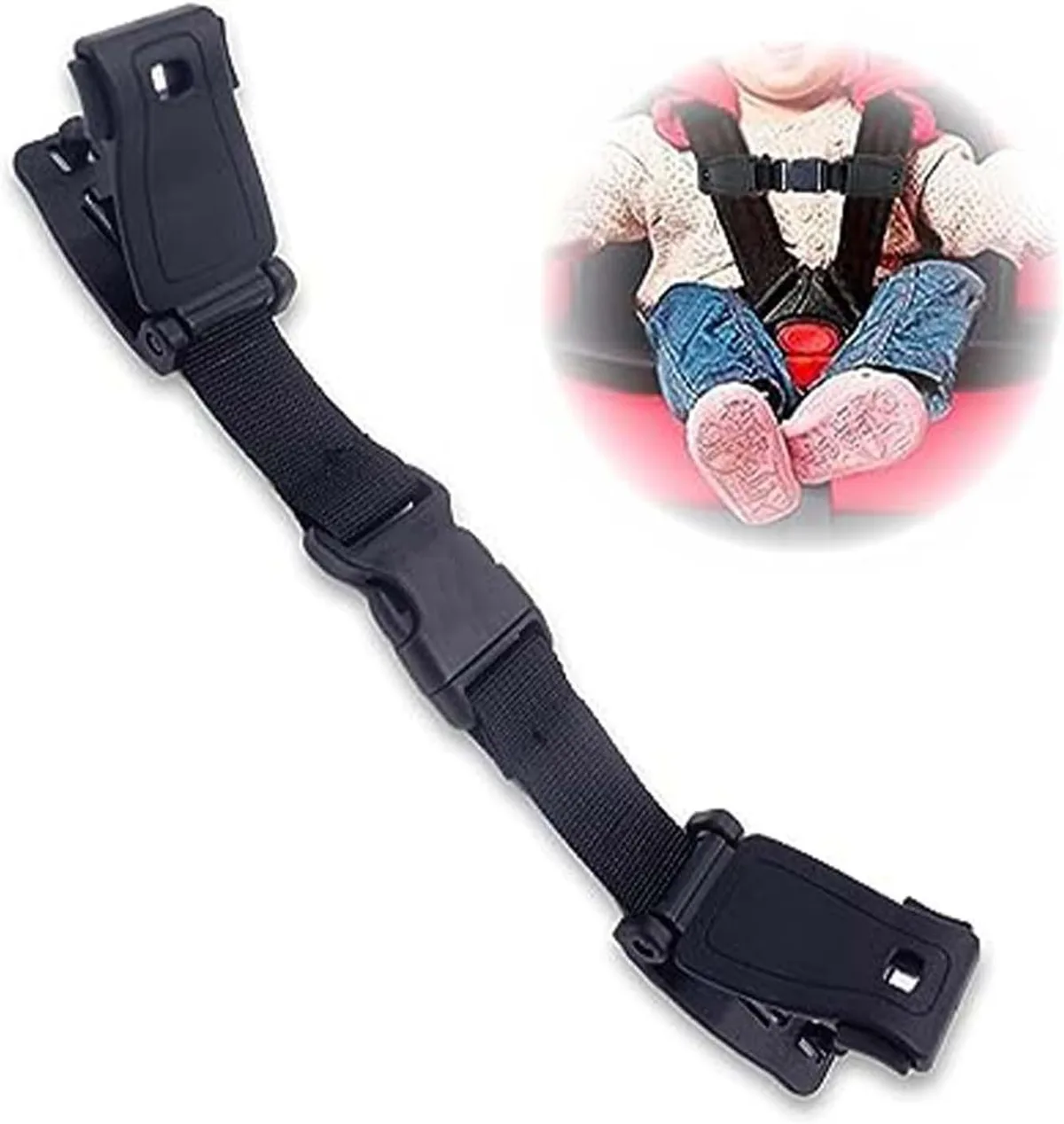
Image source: Bing (Web (fair-use with source credit))
Step 1: Buckle Them In Without the Sweatshirt First
Strap your baby in wearing just a thin base layer. Tighten the harness until you can't pinch any slack at the shoulder. This gives you a clean baseline.
Note how many clicks or how much strap you pulled through.
Step 2: Run the Pinch Test at the Collarbone
With the harness tight, try to pinch the strap webbing between your thumb and forefinger. If you can grab a fold of strap, it's too loose. If your fingers slide off, it's snug.
This is the standard pinch test.
Step 3: Check the Chest Clip and Shoulder Straps
The chest clip should sit at armpit level, not on the belly. Shoulder straps should come through the slots at or just below your child's shoulders for rear-facing seats. Bulky fabric can push the clip down or shift the straps off the shoulders.
Step 4: Decide — Keep It On, Take It Off, or Zip Over
Now put the sweatshirt back on and repeat the pinch test. If you can pinch slack, the sweatshirt is too bulky for that seat. Either remove it and use a blanket, or buckle first and zip the sweatshirt over the harness.
That last option is the gold standard.
| Sweatshirt Type | Pinch Test Result | Safe in Car Seat? |
|---|---|---|
| Thin cotton crewneck | No slack | Yes |
| Light fleece pullover | Minimal slack | Usually, verify with pinch test |
| Sherpa-lined hoodie | Noticeable slack | No |
| Thick insulated hoodie | Significant slack | No |
Which Sweatshirts Pass and Which Ones Fail
Most sweatshirts fall into two camps: the ones that behave like a t-shirt and the ones that behave like a coat. The fabric weight and lining decide which camp yours lands in. Here's how to tell them apart before you even buckle up.
Fleece vs. Cotton vs. Sherpa-Lined
Cotton sweatshirts are the safest bet. They're thin, they don't loft, and they compress minimally under the harness. Light fleece is usually fine too, especially if it's a single-layer pullover with no lining.
Sherpa-lined and sherpa-fleece hoodies are the problem children. That fuzzy inner layer traps air and adds real bulk. In our research, these compress dramatically under load, which is exactly what you don't want.
Treat them like a puffy coat: buckle first, layer over.
The Hoodie Problem: Why That Thick Hood Matters
The hood is often the sneakiest risk. A thick hood bunches behind the neck and pushes your baby's head forward. That can tilt the chin toward the chest, which can restrict the airway in a small infant.
Even a flat hood adds bulk at the shoulders where the harness needs to sit flush. If your child's hoodie has a thick hood, either fold it flat behind the shoulders or skip it. A thin hood that lies flat is far less of an issue than a plush one.
The Zip-Over Trick and Other Cold-Weather Workarounds
The zip-over trick solves the whole problem. You buckle your baby into a snug harness first, then put the sweatshirt or coat on backward or zipped over the straps. The fabric stays outside the harness, so it never creates slack.
Your child stays warm and safe.
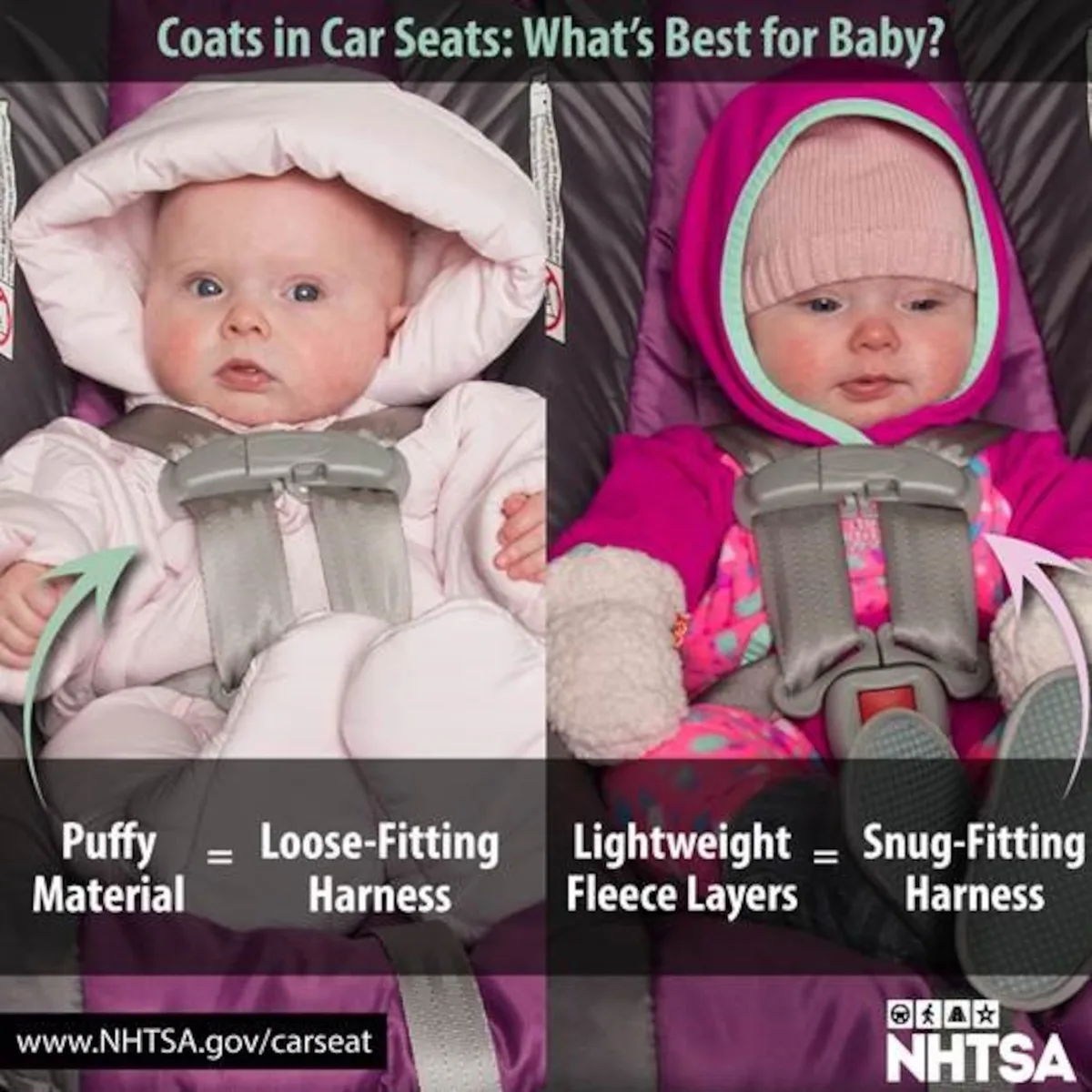
Image source: Bing (Web (fair-use with source credit))
Here's how the main workarounds compare:
- Zip-over sweatshirt or coat: Put the child in the seat, buckle and tighten the harness, then zip the sweatshirt over the front. Sleeves go on normally. The bulk sits on top of the straps.
- Coat worn backward: Same idea, but you put the coat on backward after buckling so the back of the coat faces the seat. Warm and simple, though it can slip off.
- Car seat poncho: A poncho drapes over the buckled harness with no sleeves. Quick for toddlers who hate sleeves anyway.
- Shower-cap style cover: Ainsulated cover that goes over the whole infant carrier. Great for newborns. Never use one that goes under or between the baby and the harness.
- Blanket over the lap: Buckle first, then tuck a blanket over the legs and torso. Keep it below the chest so it doesn't interfere with the harness.
A quick note on car seat ponchos and covers: anything that threads between your baby and the seat, or between the baby and the harness, is a no. Safe Kids Worldwide and car seat manufacturers are clear on this. The cover goes over the buckled child, never underneath.
If you want a deeper walkthrough of harness fit, the NHTSA car seat guidance at nhtsa.gov covers the pinch test and chest clip positioning.
Mistakes That Put Babies at Risk (and What to Do Instead)
The biggest mistake is trusting the label instead of the pinch test. A hoodie that says "lightweight" can still add enough bulk to loosen the harness. Always test with the actual garment in the actual seat.
Another common error is leaving the chest clip on the belly. Bulky fabric slides, and the clip drifts down without you noticing. Check that it sits at armpit level before you drive off.
If you're using a car seat poncho or cover, never route it under or behind your baby. The fabric has to sit over the buckled harness. Anything threaded between the child and the straps compromises the seat's crash performance.
Parents also forget the hood. A thick hood bunches behind the neck and tips the head forward. For newborns, that's an airway concern.
Fold it flat, or choose a hoodless sweatshirt for car rides.
Here's a quick list of mistakes to avoid:
- Buckling over a thick sherpa hoodie without testing slack
- Assuming "thin" fabric is automatically safe
- Forgetting to re-check the chest clip position
- Using aftermarket inserts or covers that weren't sold with the seat
- Leaving a puffy hood behind the neck on an infant
One more: don't loosen the harness to fit the sweatshirt. A loose harness is the exact failure mode you're trying to avoid. Tighten to snug, every time, even if it means removing a layer.
What the Safety Experts and Car Seat Manuals Actually Say
The safety guidance is consistent across major car seat manufacturers and child passenger safety organizations. Every manual we reviewed tells you to avoid bulky clothing under the harness. None of them single out sweatshirts as safe or unsafe by name.
The reasoning is simple. Car seats are crash-tested with a child in thin clothing. Adding layers changes the geometry of the harness on the body.
Manufacturers can't test every garment, so they give you the general rule: tight harness against the body, no bulky layers beneath it.
The American Academy of Pediatrics (AAP) recommends the pinch test as the standard check. If you can pinch slack at the collarbone, the harness isn't tight enough. That single test covers sweatshirts, coats, and anything else you layer on.
Federal law backs the harness requirement. FMVSS 213 sets the crash performance standard for car seats sold in the US. A snug harness is part of how seats meet that standard.
Loose harnesses defeat the design.
Per Safe Kids Worldwide, winter clothing is one of the most common causes of improper harness fit. A sweatshirt is a mild version of the problem. A puffy coat is the extreme.
The fix is the same for both.
As of 2026, no major manufacturer has approved a bulky garment for use under the harness. So the guidance hasn't changed. When in doubt, buckle first and layer over.
If you want the official wording, check your specific seat's manual. Each one has a section on clothing and harness fit. It's the most reliable source for your exact model.
FAQs About Sweatshirts, Car Seats, and Cold-Weather Safety
Can a baby wear a thin sweatshirt in a car seat?
Yes, if it's thin and passes the pinch test. Cotton crewnecks and light fleece usually work. Run the pinch test at the collarbone.
If you can grab slack in the strap, the sweatshirt is too bulky for that seat.
Is a hoodie safe in a car seat?
A hoodie can be safe if the fabric is thin and the hood lies flat. Thick hoods and sherpa linings add bulk that loosens the harness. Test with the pinch method.
If it fails, buckle first and zip the hoodie over the harness.
What's the safest way to keep a baby warm in a car seat?
Buckle your baby in thin clothing first, tighten the harness, then layer a sweatshirt, coat, or blanket over the buckled child. This keeps bulk outside the straps. A car seat poncho or shower-cap cover works too, as long as it sits over the harness.
Can I use a car seat cover with a sweatshirt underneath?
You can, but check the harness fit either way. A shower-cap style cover goes over the infant carrier and doesn't touch the straps. Never use a cover that threads between your baby and the harness.
That interferes with the seat's crash performance.
Does a sweatshirt count as bulky clothing under a car seat harness?
It depends on the fabric. Thin cotton and light fleece usually don't count as bulky. Sherpa-lined, insulated, or thick hooded sweatshirts do.
The pinch test is the tiebreaker. If you can pinch slack, treat it as bulky clothing.
At what age does this matter most?
It matters most for infants and young toddlers in rear-facing seats. Their small bodies and low weight make harness slack more dangerous. The risk doesn't disappear with age, though.
Forward-facing kids should still pass the pinch test.

Similar Posts































