When Should You Install a Baby Car Seat?
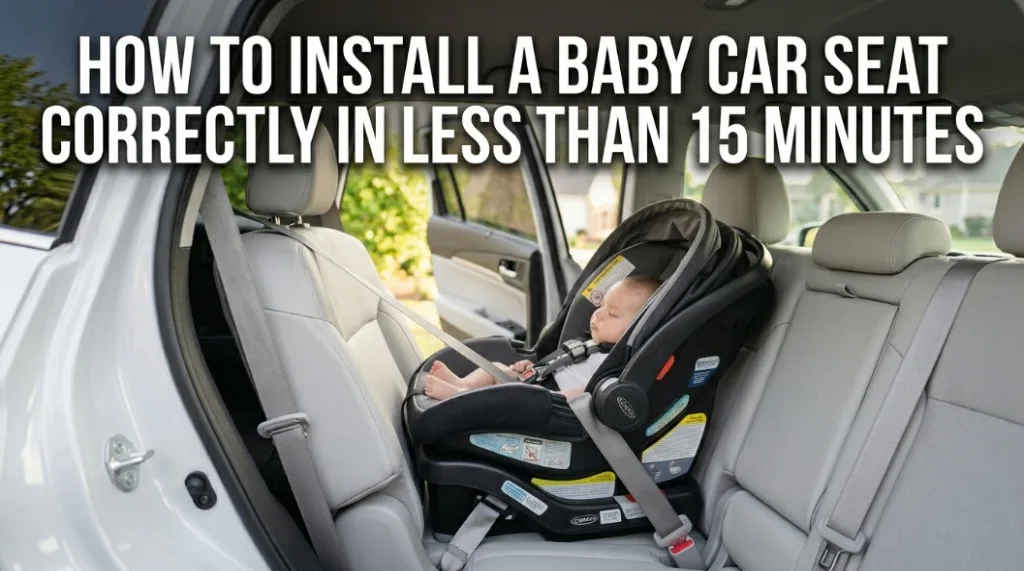
When should you install baby car seat? The honest answer is 2 to 4 weeks before your due date. That window gives you time to fix mistakes calmly instead of fighting a base in a hospital parking lot while your partner holds a newborn.
Most people don't realize how often first installs go wrong. Per National Highway Traffic Safety Administration (NHTSA) guidance, a properly secured seat shouldn't move more than 1 inch at the belt path. In our research, a dry run a few weeks early is what catches those errors.
Here's how to figure out your specific window.
when should you install baby car seat
Install your baby car seat 2 to 4 weeks before your due date. Never wait for the hospital pickup. That early window lets you practice, check the fit, and book a free inspection.
If you have a scheduled delivery or a preemie, install it even sooner.
What Changes Your Install Timeline: The Decision Branches
Timing isn't one-size-fits-all. Your situation shifts the window, sometimes by weeks. Use these branches to find yours.
Image source: Bing (Web (fair-use with source credit))
Branch 1 — Your Seat Type
If you bought an infant car seat, install the base now and keep the carrier stored inside. Infant carriers snap in and out, so the base stays put in the car. That's the simplest setup to prep early.
Convertible and all-in-one seats stay in the car permanently. They tend to be heavier and trickier to install, so give yourself extra time. In our research, convertible installs often take 30 to 45 minutes the first time.
Branch 2 — How Many Cars the Baby Will Ride In
If the baby rides in one primary car, install the base there and call it done. If grandparents or a second car is in the mix, get a second base or move the seat before the baby arrives. Don't wing it on the day.
Rideshare families should install the seat in their own car first. Then practice buckling the carrier without the base. That becomes your taxi and airport skill.
Branch 3 — Your Baby's Arrival Situation
Preemies, NICU stays, and scheduled inductions tighten the timeline. Many hospitals won't discharge a baby without a properly installed seat. If you know the date, install 3 to 4 weeks ahead and get it inspected.
Adoption and surrogacy situations move fast. Install as soon as you have a travel date, even if that's five days out. Better late and checked than early and rushed.
Branch 4 — Your Vehicle and Climate
Small back seats and third rows change how the base fits. Center-seat installs are safest, but not every car allows them with LATCH. Check your owner's manual before you commit to a spot.
Climate matters too. In hot regions, metal buckles can burn a newborn's skin. In cold climates, bulky coats make the harness fit dangerous.
Neither changes the timing, but both change what you prep for.
Step-by-Step: Installing Before the Baby Arrives
Here's the workflow that catches the most errors. Work through it slowly, then check it twice.
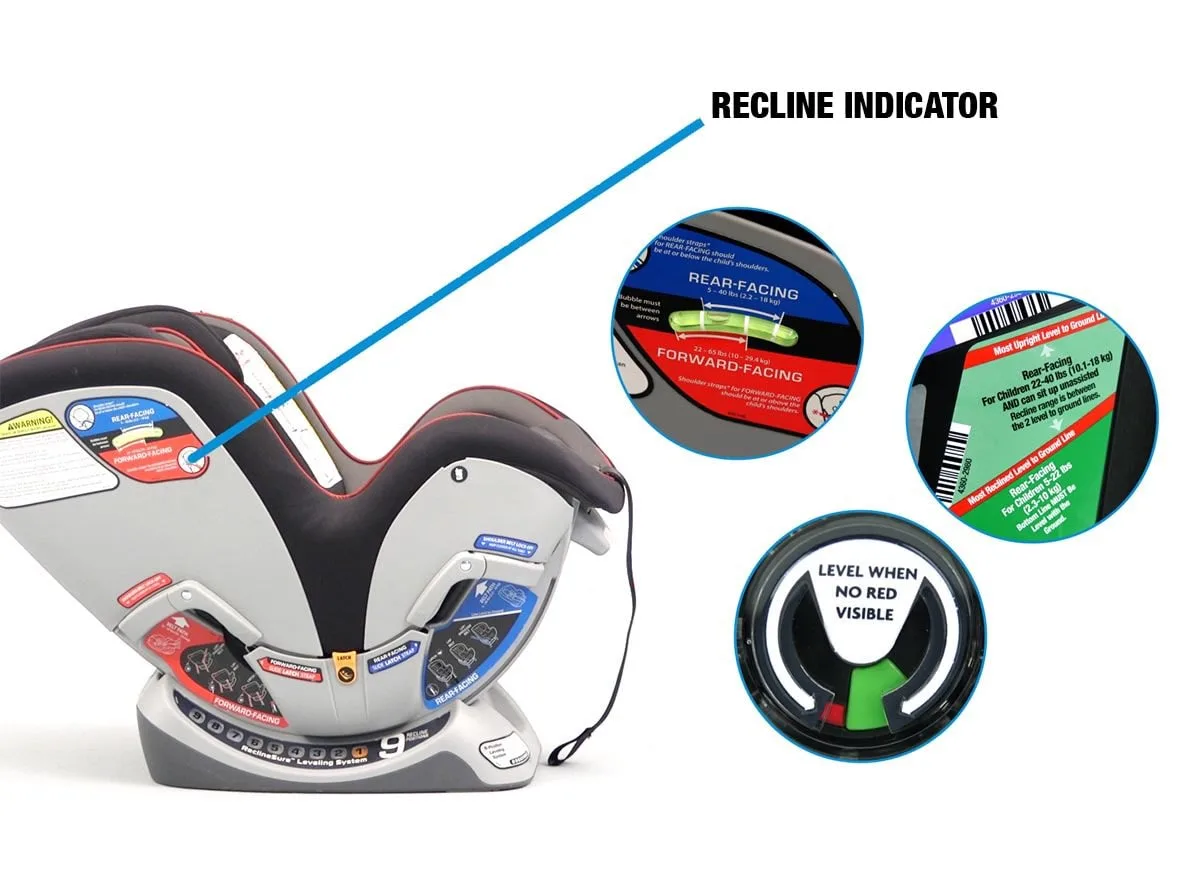
Image source: Web (Bing) / consumerreports.org (Web image (fair-use with source credit))
- Read both manuals first. Seat and vehicle. They override every general rule.
- Pick your position. Center rear is safest when the seat fits.
- Route the belt or LATCH strap exactly as the seat manual shows.
- Lock the seatbelt. Use the retractor or the included locking clip.
- Tighten. Push down with your knee and pull the strap hard.
- Check movement. Less than 1 inch at the belt path, per NHTSA.
- Attach the top tether where the manual requires it.
- Set the recline angle using the bubble indicator or level line.
- Adjust the harness to the lowest newborn slots.
- Buckle, tighten, and do the pinch test at the shoulder.
- Set the chest clip at armpit level.
- Practice clicking the carrier in and out until it's smooth.
- Register the seat with the manufacturer for recall alerts.
A quick note on the level indicator: for a newborn, most seats call for roughly a 45-degree recline. Too upright and their head flops forward. Too flat and the seat doesn't protect them in a crash.
That diagram above shows what "correct" looks like.
Getting It Checked: When a Pro Should Verify Your Install
Honestly, every first install deserves a second set of eyes. Certified Child Passenger Safety Technicians (CPSTs) inspect installs in roughly 20 to 40 minutes and fix the details you'll never spot alone.
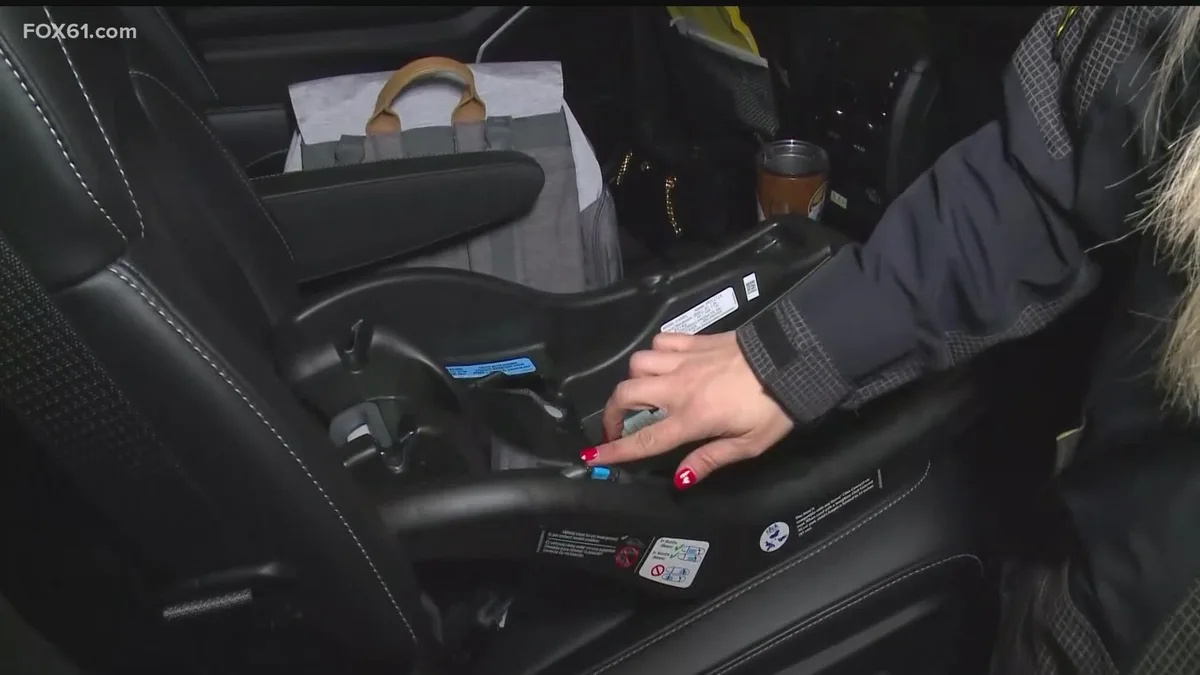
Image source: Web (Bing) / fox61.com (Web image (fair-use with source credit))
What a CPST actually checks:
- Belt or LATCH routing and tension
- Recline angle for your baby's size
- Harness height and tightness
- Chest clip position
- Top tether use
- Recalls and expiration date
Most inspections are free. Fire stations, hospitals, and police departments run them regularly. The NHTSA car seat inspection locator will find one near you.
Book it 2 to 3 weeks before your due date so you have room to reschedule.
If you can't get an inspection, at minimum do the "1-inch test" and the pinch test yourself. If either fails, don't guess. Read the manual again or call the seat manufacturer's helpline.
They walk people through this every day.
Mistakes That Push People Past Their Due Date
The most common mistake is timing. People wait until the hospital lobby, then panic. Install early and you avoid all of this.
Other errors we see repeatedly in aggregate user reviews:
- Loose installs (more than 1 inch of movement)
- Wrong recline angle for a newborn
- Chest clip sitting too low, near the belly
- Using LATCH and seatbelt at the same time (not allowed on most seats)
- Mixing lower anchors from two different seats
- Aftermarket inserts and rolled towels the manufacturer doesn't allow
- Bulky winter coats under the harness
- Expired seats or seats with an unknown crash history
- Hand-me-downs missing the manual or labels
One more: don't install a rear-facing seat in front of an active airbag. Ever. The force can kill a newborn.
Rear seats only, until they're old enough and big enough to move forward.
Timing Cheat Sheet: Match Your Situation to Your Install Window
Different situations call for different timelines. Use this table to find your window fast.
| Your Situation | When to Install |
|---|---|
| First baby, standard due date | 2–4 weeks before due date |
| Scheduled induction or C-section | 3–4 weeks before, plus CPST check |
| Preemie or NICU stay | Before discharge, hospital will require it |
| Adoption or surrogacy, short notice | As soon as you have a travel date |
| Second car or grandparent's vehicle | The same day you get the base |
| Flying with the seat | 1–2 weeks before travel |
| Rideshare or taxi travel | Install in your own car first, then practice |
If You Have a Scheduled Delivery
Install 3 to 4 weeks out and book your inspection immediately after. A scheduled C-section or induction gives you a fixed date. You lose the "wait and see" flexibility, so treat the install as a deadline.
If the CPST finds a problem, you still have time to order a part or swap seats. That cushion disappears if you wait until the week of.
If You're a Preemie Parent
Many hospitals run a car seat tolerance test before discharge. A nurse watches your baby in the seat for 90 to 120 minutes to check breathing and heart rate. If they fail, the hospital may send them home in a car bed instead.
Install before the discharge date so the test can happen on schedule. If NICU staff flag breathing issues, they'll tell you which seat type to use.
If This Is a Second Car or Grandparent Setup
Install the base the same day it arrives. Don't store it in a closet "for later." Bases that sit unused often go missing on the day you need them.
Grandparents especially need a walkthrough. Show them how the carrier clicks in and how to tighten the harness.
Recommended Top-Rated Infant Car Seats for Pre-Birth Installation
Graco SnugRide 35 Lite LX Infant Car Seat
Ultralightweight infant car seat under 7.2 lbs featuring 4-position adjustable base with bubble level indicator for foolproof pre-birth installation.
View on Amazon →Chicco KeyFit 30 Infant Car Seat and Base
Engineered with ReclineSure leveling foot, RideRight bubble indicators, and SuperCinch force-multiplying LATCH tightener for a secure install every time.
View on Amazon →Related Baby Car Seat Safety Guides & Practical Resources
- Assess center seating capability by evaluating center seat LATCH anchors and seatbelt rules.
- Compare vehicle seating locations before determining the safest rear seating position in your vehicle.
- Plan hospital travel safely by understanding the pediatric 2-hour travel rule.
- Inspect secondhand or hand-me-down seats by verifying manufacturer expiration dates and shell integrity.
- Discover our certified inspection philosophy and our vehicle fit inspection methodology on our About Us page.
Frequently Asked Questions
Can I install the car seat too early?
Yes. Installing months ahead is fine as long as you recheck it before the baby arrives and after any car change. Seats don't expire faster when installed.
Just confirm the manufacture date and that nothing's shifted.
Do hospitals really check the car seat before discharge?
Many US hospitals do a visual check before you leave. Some go further and require a CPST sign-off. Policies vary by state and facility.
Call your hospital's labor and delivery unit and ask what they require.
Should I install the base in the center seat?
Center rear is safest when the seat fits there properly. Not every vehicle allows center LATCH, and some seats are too wide for a three-across fit. Check your vehicle owner's manual before committing.
How long does a first install take?
Expect 30 to 45 minutes for a convertible seat. An infant base usually takes 15 to 25 minutes. Add more time if you're reading both manuals cold.
Once it's set, moving it between cars takes 5 to 10 minutes.
Do I need a new seat if I have one from a previous child?
Only if it's unexpired, has an unbroken history, and was never in a moderate or severe crash. Most car seats last 6 to 10 years from the manufacture date. If you can't verify the history, replace it.
What if my car seat was in a minor crash?
NHTSA says you can usually keep a seat after a minor crash if all conditions are met: the airbags didn't deploy, no one was injured, the door nearest the seat wasn't damaged, and the seat itself shows no damage. Otherwise, replace it and check your insurance.

Similar Posts