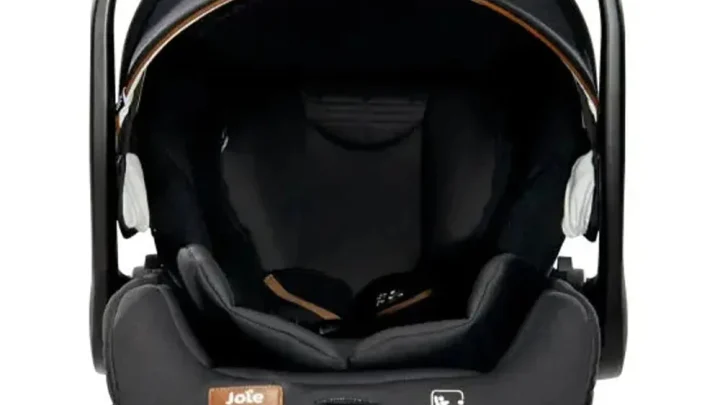
When to Switch to Forward-Facing Car Seat
The old "1 year and 20 pounds" rule has been retired for years, and plenty of parents are still making the switch way too soon because of it. If you're wondering when to put baby in forward facing car seat, the short answer is later than most grandparents will tell you. Age 2 is the floor, not the finish line.
Rear-facing is the safest position until your child outgrows the seat's rear-facing limits.
That matters because the National Highway Traffic Safety Administration and the American Academy of Pediatrics both point to rear-facing as the safest configuration for young children. Manufacturer specs confirm most modern convertible seats hold kids rear-facing up to 40 or even 50 pounds. The catch is every seat has its own ceiling, so the trigger isn't a birthday.
It's a set of limits printed in your manual. Let's walk through what actually decides the switch.
when to put baby in forward facing car seat
Keep your baby rear-facing until they reach the rear-facing limits in your seat manual. Those limits are usually age 2 minimum, plus a weight ceiling around 40 to 50 pounds. Switch only when your child maxes out either the weight or the height limit.
Never flip early just for legroom.
The Old Rule That Got Us All Confused
Blame the 1980s and 90s for the mess. Pediatric guidance back then said 1 year and 20 pounds was fine for forward-facing. Parents memorized it, pediatricians repeated it, and it stuck for a generation.
The problem is the science moved on and the folk wisdom didn't.
So what changed? Crash testing got better. Researchers realized a baby's neck and spine aren't just small adult versions.
They're mostly cartilage, and the head is proportionally huge. In a frontal crash, a rear-facing seat cradles the head and spreads force across the entire back. A forward-facing child gets thrown forward with nothing holding the head back.
That's how spinal cord injuries happen.
The AAP updated its policy in 2011 to push rear-facing until age 2 minimum. In 2018, the recommendation got even firmer: keep them rear-facing as long as the seat allows. NHTSA aligns with that.
Per IIHS and AAP-cited research, rear-facing cuts the risk of serious injury in a crash by well over 70% for children under 2. That's not a small margin.
What the Experts Actually Recommend Now
The current consensus is refreshingly simple. Rear-facing until the seat's rear-facing limit, then forward-facing with a harness, then a booster. Each stage uses the previous one's ceiling as the trigger for the next.
Here's how the stages stack up as of 2026.
| Stage | Minimum Trigger | Typical Limits |
|---|---|---|
| Rear-facing | Birth | Age 2+, 40–50 lb, 43–49 in |
| Forward-facing harness | Maxed out rear-facing | 22–65 lb, up to 49 in |
| Booster seat | Maxed out harness | 40+ lb, age 4–5 |
| Seat belt alone | Booster maxed out | ~4'9" tall, age 8–12 |
Notice that age 2 is a floor. A small 2-year-old still fits rear-facing fine. So does a 3-year-old.
A 4-year-old in many seats still fits rear-facing. The point is to keep them there as long as the seat says you can.
The Real Rules: Age, Weight, Height, and Development
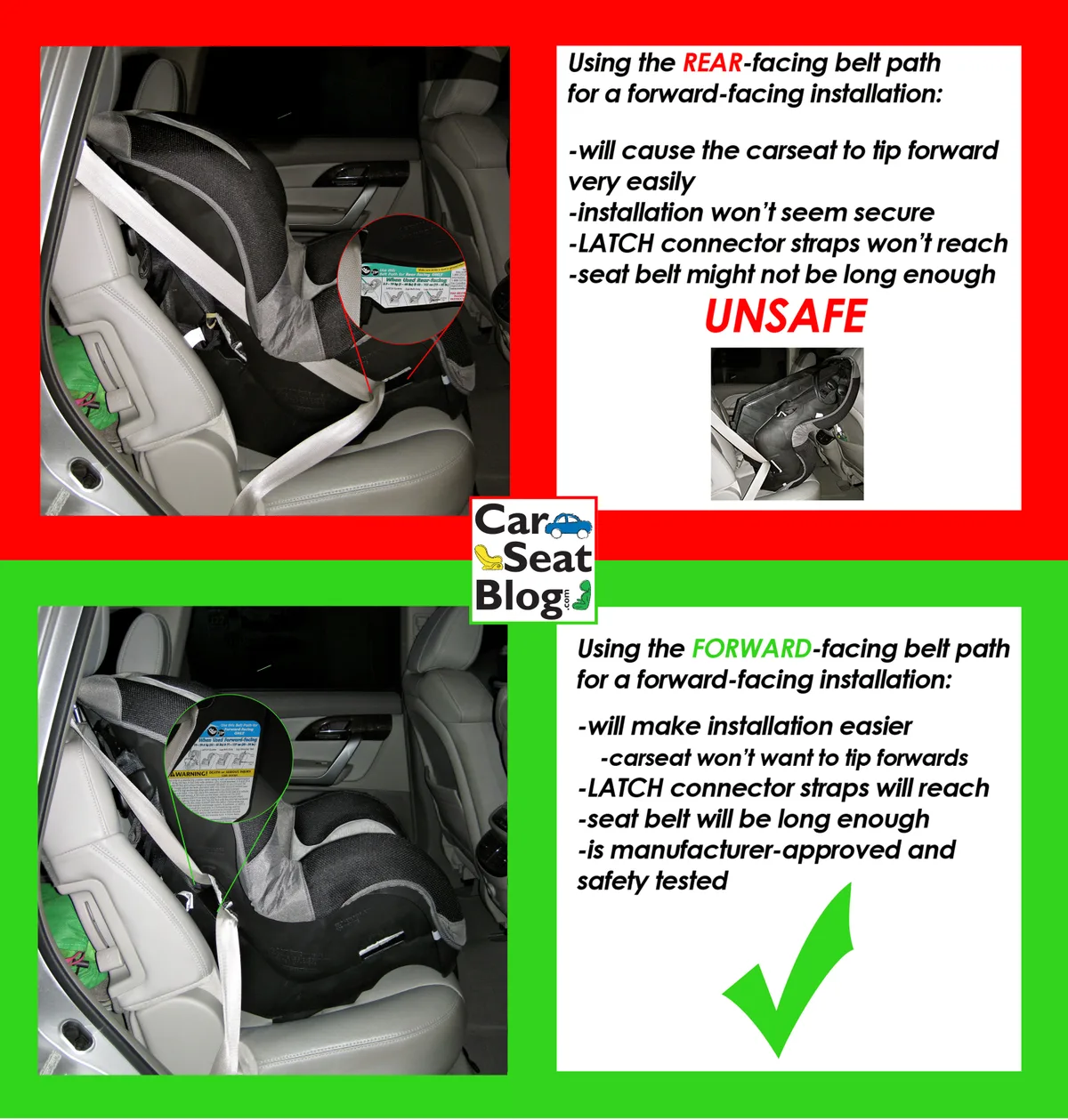
Image source: Bing (Web (fair-use with source credit))
No single number decides this. You're tracking four things at once, and whichever runs out first is the one that flips the seat.
Why Rear-Facing Protects Better in a Crash
Rear-facing spreads crash forces across the shell of the seat and your child's back. The head, neck, and spine move together instead of the head whipping forward. For a child under 2, that whiplash risk is the single biggest danger.
The Age 2 Minimum, and Why Minimum Is the Key Word
Age 2 is the bare floor set by the AAP and NHTSA. It's not a milestone to celebrate with a seat flip. Treat it as permission to keep going, not a signal to stop.
The Limits That Actually Trigger the Switch
Check your manual for two numbers: the rear-facing weight limit and the rear-facing height limit. You switch when your child hits either one. There's also a fit rule: the top of their head must stay at least 1 inch below the top of the seat shell.
Image source: Bing (Web (fair-use with source credit))
Head Clearance, Harness Slots, and Other Fit Checks
For rear-facing, the harness slots sit at or below the shoulders. Forward-facing, they sit at or above. The chest clip stays at armpit level in both.
Get the pinch test right: if you can pinch slack at the shoulder, it's too loose.
When Your Child Is Ready to Face Forward: Step-by-Step
Once your child maxes out the rear-facing limits, here's the sequence we'd walk any parent through. It takes about 20 minutes if you've done it before.
Checking Your Car Seat Manual and Vehicle Manual
Start with the car seat manual. Find the forward-facing section. Then open your vehicle owner's manual and locate the tether anchors.
Both documents matter, and neither overrides the other.
Reinstalling the Seat Forward-Facing
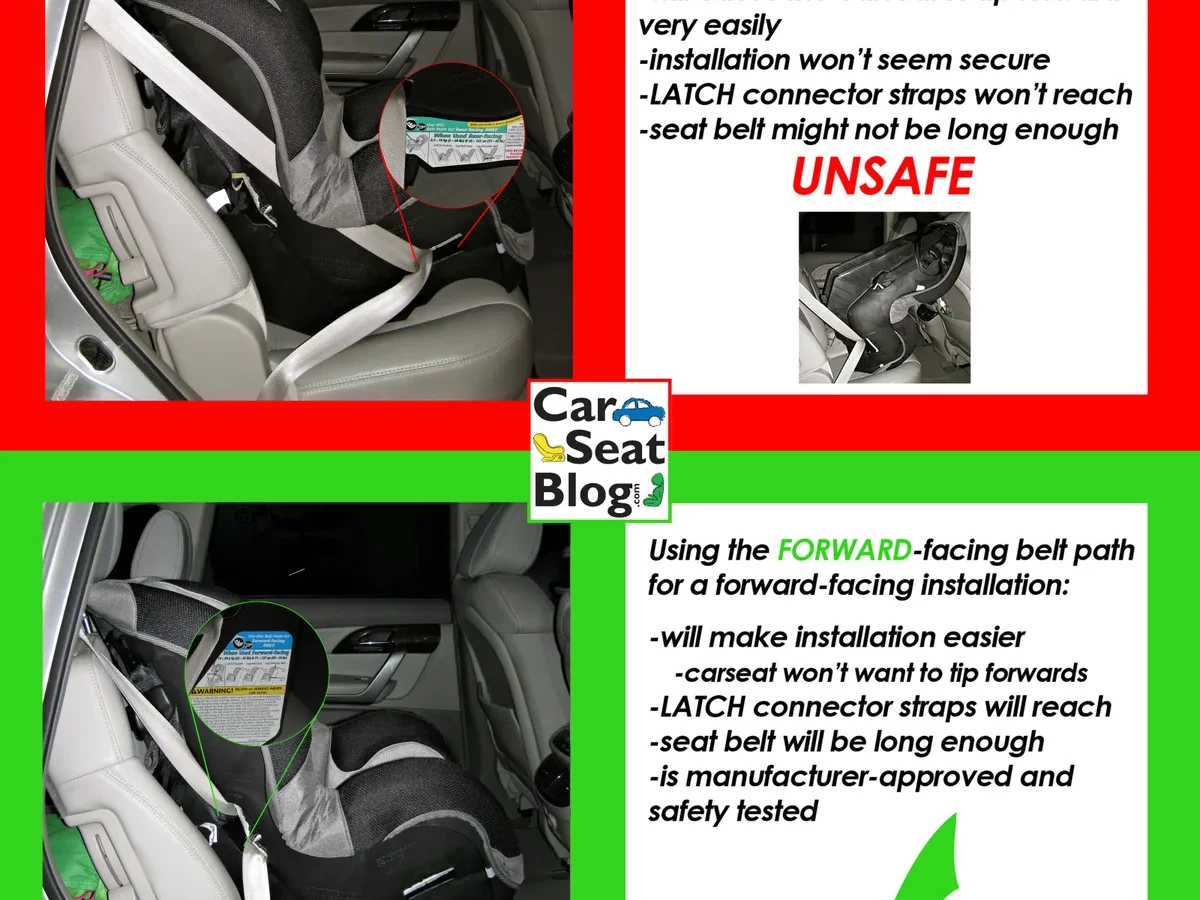
Remove the seat and reinstall it upright, not in the newborn recline. Route the seat belt or lower anchors exactly as the manual shows. Push down hard on the seat while tightening.
You want less than 1 inch of movement at the belt path.
The Top Tether Step Most Parents Skip
The top tether is not optional for forward-facing. It's required by FMVSS 225 and it's the piece that limits how far your child's head flies forward in a crash. Find the anchor, clip it on, and pull the strap tight so there's no slack.
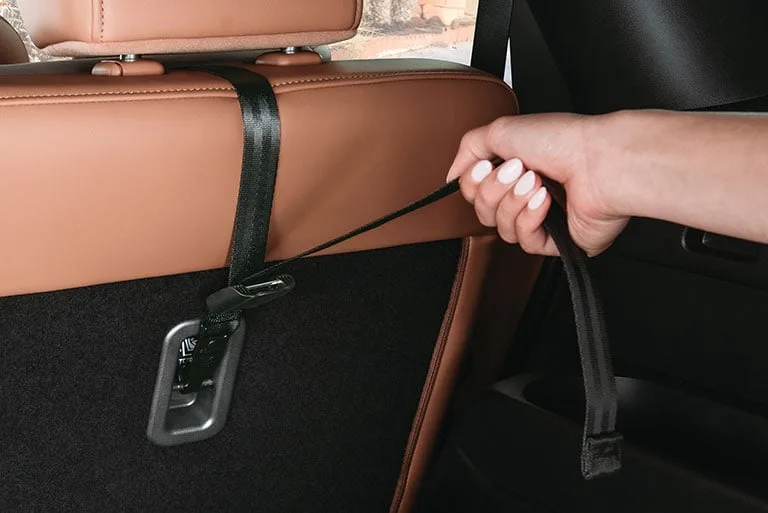
Image source: Bing (Web (fair-use with source credit))
Harness Tightness and Chest Clip Position
Tighten the harness until you can't pinch slack at the shoulder. Move the chest clip to armpit level. Skip the bulky winter coat under the straps.
A thin layer is fine, a puffy coat creates hidden slack that defeats the harness.
Getting a Free Inspection From a CPST
A Child Passenger Safety Technician will check your install for free. Safe Kids Worldwide runs inspection events nationwide, and many fire departments and hospitals offer the same. If anything feels off, this is the fastest way to fix it.
Common Mistakes That Put Kids at Risk
Most installs we've seen reviewed by CPSTs fail on the same handful of issues. None of them are exotic. They're just easy to miss.
Turning Too Early Because of Legroom
A rear-facing child's bent legs are not a safety problem. That's the position the seat was crash-tested in. Cramped legs are uncomfortable to look at, but they don't increase injury risk.
Turn only when a limit is reached, not when the legs look folded.
Skipping the Tether or Double-Installing With LATCH and Belt
Pick one installation method, not both. Using LATCH and the seat belt together is a common error, and it can exceed the anchor weight limit. And always attach the top tether forward-facing.
Skipping it is one of the most frequent findings at inspection events.
Bulky Coats, Aftermarket Inserts, and Expired Seats
Puffy coats hide slack under the harness. Aftermarket inserts and head supports void the seat's certification unless the manufacturer approves them. Check the expiration date on the shell.
Most seats expire 6 to 10 years from manufacture.
Confusing State Law With Best Practice
Every US state has a car seat law, and most are weaker than the AAP recommendation. Meeting the legal minimum doesn't mean your child is in the safest configuration. Follow the manual, not the statute, when the two disagree.
Forward-Facing vs. Rear-Facing vs. Booster: What Fits When
Each stage of the car seat ladder has its own job. Pick the highest stage your child still fits, not the one they look ready for.
Convertible, All-in-One, and Combination Seats Explained
A convertible seat runs rear-facing then forward-facing. An all-in-one adds a booster mode on top. A combination seat skips rear-facing entirely, going straight to forward-facing harness then booster.
If you're buying new and want the longest use, a convertible or all-in-one usually wins.
How Long Should You Stay Forward-Facing in a Harness?
Stay in a forward-facing harness until your child maxes out the seat's harness weight or height limit. That's usually 50 to 65 pounds and up to 49 inches. A harness spreads crash forces better than a seat belt alone, so there's no rush to move up.
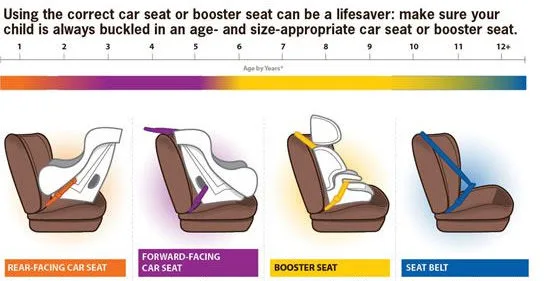
Image source: Bing (Web (fair-use with source credit))
When a Booster Seat Becomes the Next Step
Move to a booster when the harness is outgrown. A booster positions the adult seat belt across the strong parts of the body. Your child should be at least 4 years old, around 40 pounds, and able to sit upright for the whole trip.
Quick Reference: Age, Weight, and Height Limits at a Glance
Use this table as a quick sanity check. The seat manual always wins when it disagrees.
| Stage | Age Floor | Weight | Height |
|---|---|---|---|
| Rear-facing | Birth | 35–50 lb | 40–49 in |
| Forward-facing harness | 2+ | 22–65 lb | Up to 49 in |
| Booster | 4+ | 40+ lb | ~4'9" for belt alone |
Two rules override every number here. The head-clearance rule keeps a rear-facing child's head 1 inch below the shell top. The belt-fit test checks whether the lap belt sits low on the hips and the shoulder belt crosses the collarbone, not the neck.
If your child is close on any single metric, keep them in the current stage until they clearly outgrow it. A few extra weeks rear-facing is safer than a rushed switch. The same logic applies forward-facing versus a booster.
Legal and Safety Essentials Every Parent Should Know
State law is a floor, not a target. Nearly every US state requires a car seat for young kids, but the exact age and weight thresholds vary wildly. Some specify age 2 rear-facing, some say age 1, and a few only mention weight.
State Laws vs. AAP and NHTSA Guidance
Meeting your state minimum is legal. It isn't automatically safest. NHTSA's own guidance and the AAP policy both push rear-facing well past what most statutes require.
When the law and the manual disagree, follow the manual and the AAP. You can review NHTSA's car seat recommendations and recall database at nhtsa.gov.
Recalls, Expiration Dates, and Crash Replacement
Register your seat with the manufacturer so recall notices reach you. Check the shell for a manufacture date, since most seats expire 6 to 10 years out. Replace the seat after any moderate or severe crash, even if it looks fine.
The internal structure may be compromised in ways you can't see.
Frequently Asked Questions
Can my tall 18-month-old face forward?
No. Age 2 is the minimum, and height alone doesn't override it. A tall toddler can still rear-face in a seat with a taller shell or higher height limit.
Only switch when the seat's rear-facing limits are maxed out.
What if my child hates rear-facing?
Discomfort is not a safety reason to switch early. Try a seat with more legroom or a different recline. Bent legs are normal and safe in a crash.
Keep them rear-facing until a limit is reached.
Does a forward-facing seat always need a tether?
Yes. FMVSS 225 requires a top tether for forward-facing installations, and most seats are certified only with it attached. Skipping it increases head movement in a crash.
Always find the anchor and tighten the strap.
Is a hand-me-down car seat safe to use?
Only if you know its full history. Skip any seat that's been in a crash, has missing parts, or is past its expiration date. Check the model against the NHTSA recall list before you use it.
When can my child move to a booster?
When they've outgrown the forward-facing harness by weight or height, and they're at least 4 years old. They also need to sit upright the whole ride. If they slump or unbuckle, they're not ready.

Similar Posts