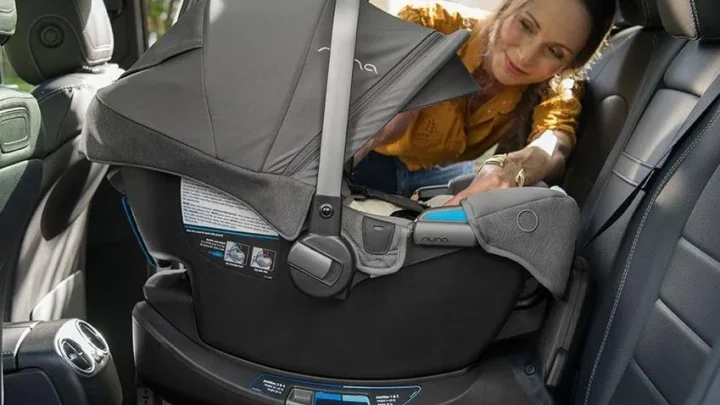
When Can Baby Car Seat Face Forward? Age Guide
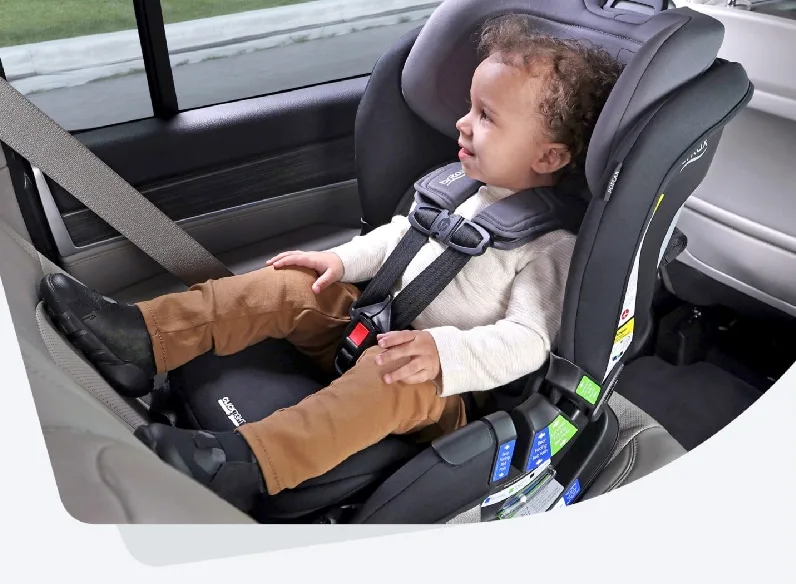
Learning that your toddler can ride facing forward feels like a milestone worth celebrating, but it's also one of the most consequential safety decisions you'll make in those early years. What age can baby car seat face forward is a question every parent eventually asks, and the honest answer is more layered than a single birthday. The right moment depends on your child's size, your specific seat, and the safety evidence behind it all.
As of 2026, the American Academy of Pediatrics recommends keeping children rear-facing until they reach the rear-facing weight and height limits of their convertible or all-in-one seat, with a legal floor of at least 2 years old in most U.S. states. The single greatest source of preventable injury here is turning a child around too soon, so let's walk through exactly how to get this right.
what age can baby car seat face forward
Most children can safely face forward at age 2, but age alone is not the deciding factor. Your child must also meet the minimum weight and height requirements listed in the seat's manual. Many convertible seats let kids stay rear-facing until 40 to 50 pounds.
Keep them rear-facing as long as the seat allows. That's the safest approach.
Why Turning Too Early Is the One Mistake You Can't Undo
Turning early isn't a small trade-off you can fix later. It's the single most damaging car seat error parents make, and pediatric injury research keeps pointing to the same conclusion.
Image source: Bing (Web (fair-use with source credit))
What Actually Happens to a Toddler's Body in a Crash
A young child's head is proportionally huge compared to the rest of the body. The neck bones and ligaments haven't fully hardened yet, so they can't resist violent forward motion. In a frontal crash, the body gets thrown forward while the head whips ahead of it.
For a rear-facing baby, the shell of the seat cradles the whole head, neck, and spine. The crash forces spread across the entire back of the seat, not just the harness. That's why NHTSA continues to recommend rear-facing for as long as the seat allows.
For a forward-facing child, the harness and top tether have to do all the holding. If the child is too small or the fit isn't perfect, the head can move far forward, stretching the spinal cord. The difference in injury risk is not subtle.
The Rear-Facing vs. Forward-Facing Physics in Plain English
Think of crash forces like a wave hitting a surfboard. Rear-facing, the seat shell absorbs the wave across a wide, flat surface. Forward-facing, the child's body takes the wave directly.
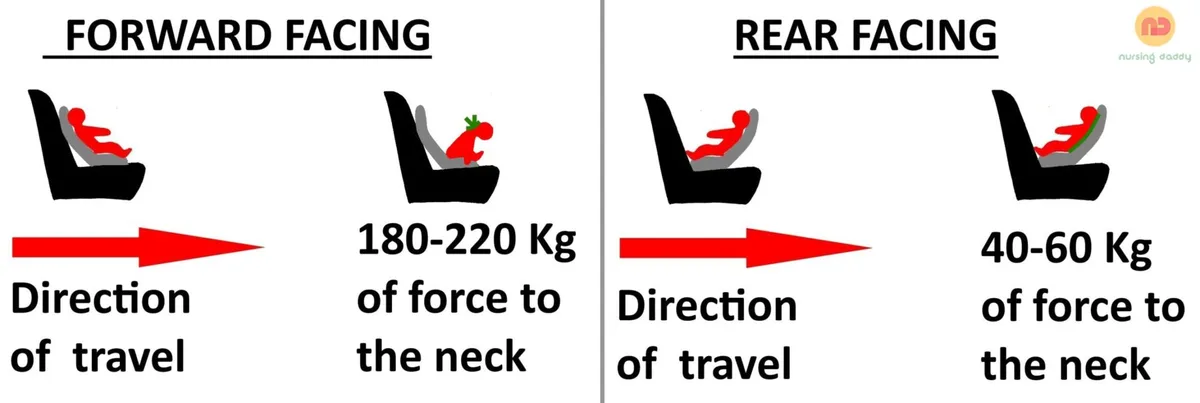
Image source: Bing (Web (fair-use with source credit))
This is why extended rear-facing seats now exist. Manufacturers keep raising the rear-facing weight limits because the physics haven't changed. Bigger kids just need a bigger surfboard, not a different direction.
The Three Numbers That Decide When Your Child Can Face Forward
If you can only remember three things from this article, remember these. They're the actual gatekeepers, not the birthday candles on the cake.
Age: The Legal Floor, Not the Safety Target
Most U.S. state laws require rear-facing until at least age 1 or 2. That's a floor, not a finish line. The AAP's guidance pushes well past it for good reason.
A 2-year-old who hits the minimum age but still fits comfortably rear-facing has no reason to switch. The law permits it. Safety doesn't reward it.
Weight and Height Limits in Your Specific Seat's Manual
Every car seat has its own rear-facing and forward-facing limits. There is no universal number. Your seat's manual is the authority, and it overrides any general advice you find online.
Weight limits for rear-facing on convertible seats typically land between 30 and 50 pounds. Some extended rear-facing models go higher. Forward-facing minimums usually start at 20 to 22 pounds.
Height limits matter just as much. Many kids hit the height cap before the weight cap, especially tall toddlers.
The 1-Inch Head Clearance Rule Most Parents Miss
Your child has outgrown the rear-facing mode when the top of their head comes within 1 inch of the top of the seat shell. Measure straight up from the crown of the head to the top edge of the plastic.
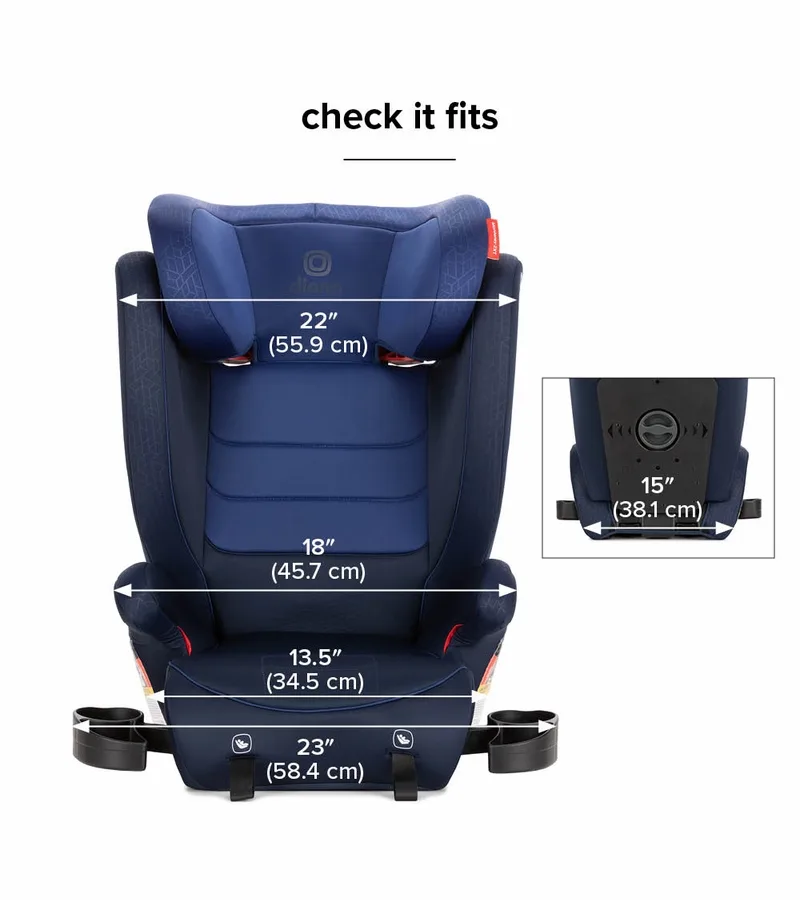
Image source: Bing (Web (fair-use with source credit))
This rule comes straight from manufacturer specifications and appears in nearly every convertible seat manual. It's the reason a tall, lean toddler might outgrow rear-facing before a shorter, heavier one does.
How to Know Your Child Has Actually Outgrown Rear-Facing
This is where parents second-guess themselves the most. The seat manual is dense, kids don't always cooperate, and the internet is full of conflicting advice.
Reading Your Seat Manual Without Getting Confused
Find the page titled "Rear-Facing Use" or "Rear-Facing Mode." It will list a weight range, a height range, and often an age minimum. Note all three.
Next, look for the head clearance requirement. It's usually stated as a specific distance from the top of the head to the top of the shell. Write those numbers down and stick them on your fridge.
The Two Signals That Mean It's Time (Weight or Height, Whichever Comes First)
You switch when either limit is reached, not both. If your child hits the rear-facing weight cap at 42 pounds but could still fit by height, they still need to move forward. The seat was tested to that cap.
The signal to watch most closely is head clearance. Once the head is within 1 inch of the shell, you're done with rear-facing in that seat, regardless of weight.
Why "She Looks Squished" Isn't a Reason to Switch
Crossed legs, bent knees, and feet touching the back seat are all normal. They're also not safety problems. Kids are flexible, and they'll find a comfortable position.
In our review of injury data and CPST guidance, a child in a properly installed rear-facing seat is dramatically safer than the same child turned forward too early, even if they look cramped. Comfort is not the metric. Protection is.
Turning the Seat Around: A Step-by-Step Walkthrough
Once your child genuinely outgrows rear-facing, the switch itself has to be done right. A sloppy forward-facing install is almost as dangerous as turning too early.
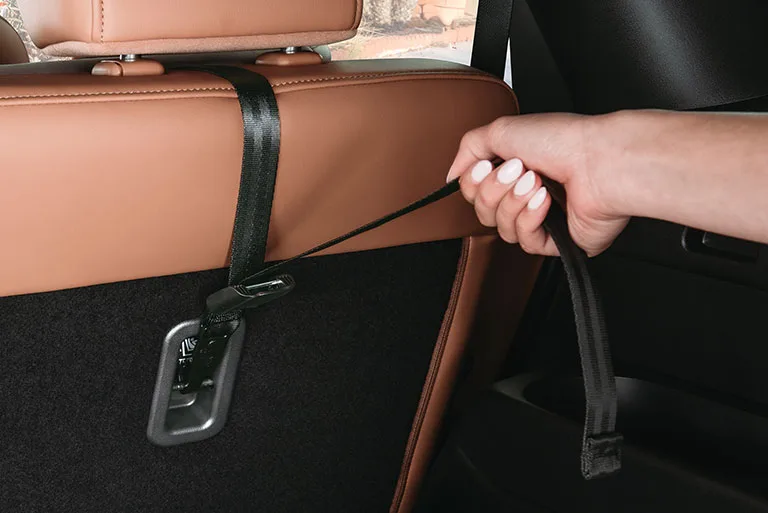
Image source: Bing (Web (fair-use with source credit))
Re-Threading the Harness to the Right Slots
Forward-facing harness straps must be at or above the child's shoulders. Rear-facing straps sit at or below. This is the most common mistake people make when flipping the seat.
Check the manual for the exact slot positions. Many seats have reinforced slots for forward-facing use only. Thread the straps correctly, then double-check the harness isn't twisted anywhere along its path.
Installing Forward-Facing with the Top Tether
The top tether is not optional on most forward-facing installs. It anchors the top of the seat to a tether point in your vehicle, which dramatically reduces how far your child's head can fly forward in a crash.
Find the tether anchor in your vehicle owner's manual. It's usually behind the seat, on the floor, or on the back wall of the cargo area. Clip the tether hook, then pull the strap tight so all the slack is removed.
The Pinch Test, the Chest Clip, and the 1-Inch Movement Check
Three quick checks catch most install errors. Do all three every time you reinstall the seat.
- Pinch test: You shouldn't be able to pinch any slack at the shoulder strap.
- Chest clip: It belongs at armpit level, not down on the belly.
- Movement check: Grab the seat at the belt path and tug. It shouldn't move more than 1 inch in any direction.
If any of these fail, adjust and re-check. It's tedious the first time and quick after that.
Getting a Free CPST Inspection (and What to Ask)
Safe Kids Worldwide runs free car seat inspection events across the U.S., staffed by certified Child Passenger Safety Technicians. Book one if you can.
Ask the technician to show you where the tether anchor is in your specific car. Ask them to verify the harness slot height. Ask them to demonstrate the pinch test so you know what "snug" actually feels like.
You'll walk away far more confident.
Legal Minimums vs. Safest Practice: What the Rules Really Say
Legal minimums exist to prevent the worst outcomes, not to define the best ones. The gap between "allowed" and "safest" is where most parents get tripped up.
U.S. State Laws, NHTSA, and the AAP Recommendation
Most U.S. states require rear-facing until age 1 or 2, depending on where you live. NHTSA and the AAP both push beyond that floor, recommending rear-facing until the seat's limits are reached. No state law requires extended rear-facing.
That doesn't make it unnecessary.
UK, EU, Canada, and Australia: How the Rules Differ
The UK and EU operate under i-Size regulation, known formally as UN R129. It requires rear-facing until at least 15 months. Canada's Transport Canada rules set the floor at 1 year and 22 pounds.
Australia's AS/NZS 1754 standard requires rear-facing until 6 months. In every case, the legal minimum sits well below what injury data supports.
| Region | Legal Rear-Facing Minimum | Safety Guidance |
|---|---|---|
| United States | 1 to 2 years (varies by state) | Until seat's rear-facing limit |
| UK / EU | 15 months (i-Size) | Until seat's rear-facing limit |
| Canada | 1 year and 22 lbs | Until seat's rear-facing limit |
| Australia | 6 months | Until seat's rear-facing limit |
Why Following the Law Isn't Always Following the Science
Laws get written slowly and often lag behind research. The current AAP policy reflects years of crash data showing rear-facing is dramatically safer for young children. When law and safety guidance disagree, treating the law as your ceiling means leaving protection on the table.
Follow the seat manual and the safety guidance, and you'll always clear the legal bar anyway.
Mistakes That Put Kids at Risk (and How to Avoid Every One)
The install itself is usually fine. The trouble hides in the small choices parents make after the seat's in the car, and those choices add up.
Bulky Coats, Aftermarket Inserts, and Other Silent Hazards
A puffy winter coat creates invisible slack under the harness. In a crash, the coat compresses and the child can slip forward. Take the coat off, buckle the child in snug, then drape the coat over the harness like a blanket.
Aftermarket inserts, strap covers, and head supports are another quiet risk. Unless the seat manufacturer explicitly approves them, they can interfere with how the harness and shell behave in a crash. Manufacturer specs confirm the seat was only tested with the parts in the box.
Expired Seats, Hand-Me-Downs, and Recalls You Didn't Know About
Car seats have an expiration date, usually 6 to 10 years from the manufacture date stamped on the shell. Plastic weakens over time and in heat, so an expired seat may not hold up in a crash.
Never use a seat with an unknown history, even if it looks fine. A seat involved in a moderate crash should be replaced, and that includes one from a car you didn't own. Register every new seat with the manufacturer so recall notices reach you directly, and check the NHTSA recall database periodically.
When Forward-Facing Is Genuinely the Right Call
Forward-facing is correct once your child hits the rear-facing weight or height limit, whichever comes first. It's also right when head clearance drops below 1 inch in your specific seat.
A tall toddler might outgrow rear-facing by height before age 2. If that happens, the seat's forward-facing mode is the next safest option, not a failure. What you don't do is turn forward early because of convenience, complaints, or a sibling hand-me-down.
When Rear-Facing Is Still the Safer Choice
If your child fits comfortably rear-facing and is below the seat's rear-facing limit, keep them there. Looking cramped, wanting to see out the window, or being "almost 2" aren't reasons to flip the seat. In our review of CPST guidance and crash data, the children who stay rear-facing longest have the lowest rates of serious head and neck injury.
Frequently Asked Questions
What age can a baby car seat face forward?
Most children can safely ride forward-facing at age 2 or older, but age alone doesn't decide it. Your child must also meet the seat's forward-facing weight and height minimums and have outgrown the rear-facing limits. Always check your specific seat's manual, since limits vary by model.
Can my tall 18-month-old face forward?
No, not if they still fit rear-facing. Height doesn't override the age and safety guidance. If your 18-month-old is within the seat's rear-facing height and weight limits and has at least 1 inch of head clearance, keep them rear-facing.
If they've outgrown rear-facing entirely, switch then.
What if my child hates rear-facing?
Discomfort is normal and rarely a safety reason to switch. Toddlers cross their legs, bend their knees, and adapt within days. If crying is the issue, try a different distraction, adjust the recline slightly within the manual's range, and keep them rear-facing until the seat limits are reached.
Does a forward-facing seat always need the top tether?
Yes, in almost every case. The top tether is required for forward-facing installs on most seats and in most vehicles, and it's a major safety feature. It reduces how far your child's head moves forward in a crash.
Check both your car seat manual and your vehicle owner's manual for the anchor location.
When do I move from forward-facing to a booster?
Move to a booster only when your child has outgrown the forward-facing harness by weight or height, which is typically around 65 to 80 pounds and 49 inches on most convertible seats. Booster readiness also requires maturity, since the child must sit still with the seat belt positioned correctly for the entire ride.
Is it legal to turn my child forward before age 2?
In most U.S. states, no. Many states now require rear-facing until at least age 2, and some push longer. Even where it's legal, the AAP and NHTSA both recommend keeping kids rear-facing until the seat's limits.
Legal isn't the same as safest, so follow the safety guidance where you can.
The Bottom Line: Keep Them Rear-Facing as Long as the Seat Allows
If you take nothing else from all of this, take one thing: rear-facing is the safest position for your child, and the seat's limits decide when that changes, not a birthday.
Your job as a parent isn't to hit a milestone on schedule. It's to squeeze every bit of protection out of the seat you already own. Most convertible and all-in-one seats let kids stay rear-facing well past age 2, and many go to 40 or 50 pounds.
Read the manual. Watch the head clearance. Weigh and measure your child at every checkup.
When they genuinely outgrow rear-facing, move them forward, install the top tether, and get a free CPST inspection if you can.
That's the whole game. No magic age, no guessing, just a seat doing what it was engineered to do. Get that right and your toddler rides in the safest possible setup for their size, every single trip.

Similar Posts