When to Switch Baby Out of the Infant Car Seat
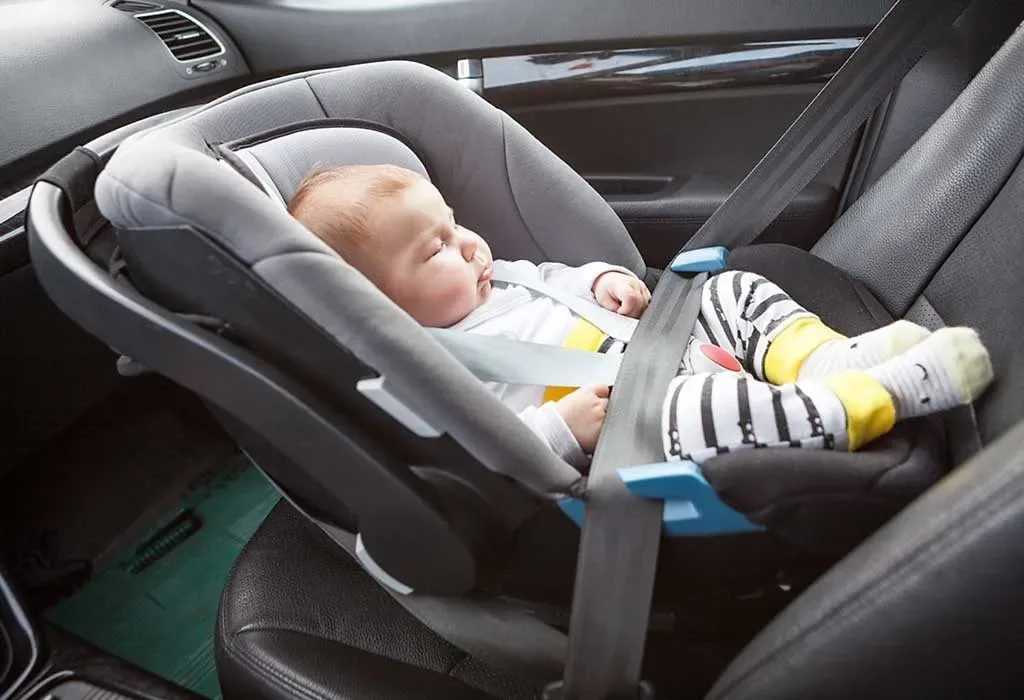
When you ask, "when to switch baby out of infant car seat," the honest answer is rarely about age. It's about your baby's height and weight against the specific seat you own. Most infant car seats top out around 30 to 32 inches and 22 to 35 pounds, and your baby hits one of those ceilings long before most parents expect it.
That matters because the chest clip and harness have to sit correctly on your baby's frame. Once the top of the head creeps within one inch of the hard shell, the seat no longer protects the way it's designed to. Below, we walk through the real signals, the rules that override the old milestones, and what to do at each branch.
As of 2026, the American Academy of Pediatrics (AAP) still recommends rear-facing until at least age 2, or until your seat's rear-facing limit, whichever comes last.
when to switch baby out of infant car seat
Move your baby out of an infant seat when they hit the seat's rear-facing height or weight limit, or when the top of their head is within one inch of the shell. Age alone is not the trigger. Most babies outgrow the infant seat between 9 and 18 months, based on height more often than weight.
Check your manual first. Then check the one-inch rule.
The One Rule That Overrides Every Milestone You've Heard
Your seat's manual wins every argument. That's the rule. If the manufacturer says rear-facing up to 35 pounds and 32 inches, those numbers decide when you switch, not a birthday or a well-meaning relative.
The old "1 year and 20 pounds" guidance is outdated and hasn't been the standard for years. Per AAP policy, rear-facing should continue until at least 2 years old, or until your baby maxes out the seat's rear-facing limits. NHTSA echoes that.
Keep them rear-facing as long as the seat allows.
Here's why this matters so much. Rear-facing seats spread crash forces across the whole back, head, and neck. An infant's neck bones are still hardening, and the head is proportionally huge.
Forward-facing too early puts that developing spine at real risk in a crash.
So if your baby is 11 months and already 30 inches tall in a seat with a 30-inch limit, you switch. If your baby is 14 months, 24 pounds, and nowhere near the height ceiling, you wait. Age is a floor, not a deadline.
Image source: Bing (Web (fair-use with source credit))
Two Different Switches Parents Keep Confusing
There are two transitions, and mixing them up causes most of the confusion. The first is infant seat to convertible seat. The second is rear-facing to forward-facing.
They are not the same event, and they rarely happen at the same time.
The infant seat to convertible switch is about outgrowing the bucket seat. You move to a bigger rear-facing seat that stays rear-facing. Your baby is still rear-facing after this switch.
Nothing about their position changes.
The rear-facing to forward-facing switch is the big safety one. This is the move the AAP wants you to delay until at least age 2, and ideally longer. Many convertible seats rear-face to 40 or 50 pounds, so plenty of kids stay rear-facing well past 3.
If you're unsure which switch you're facing, ask this: "Am I replacing the bucket seat, or am I changing my child's direction in the car?" If it's the first, that's a convenience and fit upgrade. If it's the second, slow down and check the seat's forward-facing minimums.
How to Know Your Baby Has Actually Outgrown the Infant Seat
Measure, don't guess. Parenting intuition is wonderful, but car seat limits are exact numbers, and the margin for error is small. Run through these checks every month or two, especially during growth spurts.
The height and weight limits in the manual
Find the rear-facing limit printed in your manual or on the seat label. Note both the height and the weight number. Your baby is out when they hit either one, not both.
Tall, lean babies typically max out height first. Heavier babies sometimes hit weight first.
The one-inch head clearance test
This is the rule most parents miss. Park the seat on flat ground. Sit your baby in it and buckle them properly.
Now look at the top of the shell.
If there's less than one inch between the top of your baby's head and the top edge of the hard shell, they've outgrown it, even if they're under the weight limit. That inch is the crumple zone. Without it, the head can strike the shell in a crash.
Harness slots and the pinch test
Rear-facing harness slots should sit at or below your baby's shoulders. If the shoulders are climbing above the top slot, that's another outgrown signal. Then run the pinch test.
Buckle the harness, then try to pinch the strap at the shoulder. If you can grab a horizontal fold of webbing, it's too loose.
When inserts need to come out
That newborn insert and body support cushion don't last forever. Most manufacturers specify a weight or height at which you must remove them because they change the harness geometry. Check your manual for the exact cut-off.
Continuing to use inserts past the limit can put the chest clip in the wrong spot.
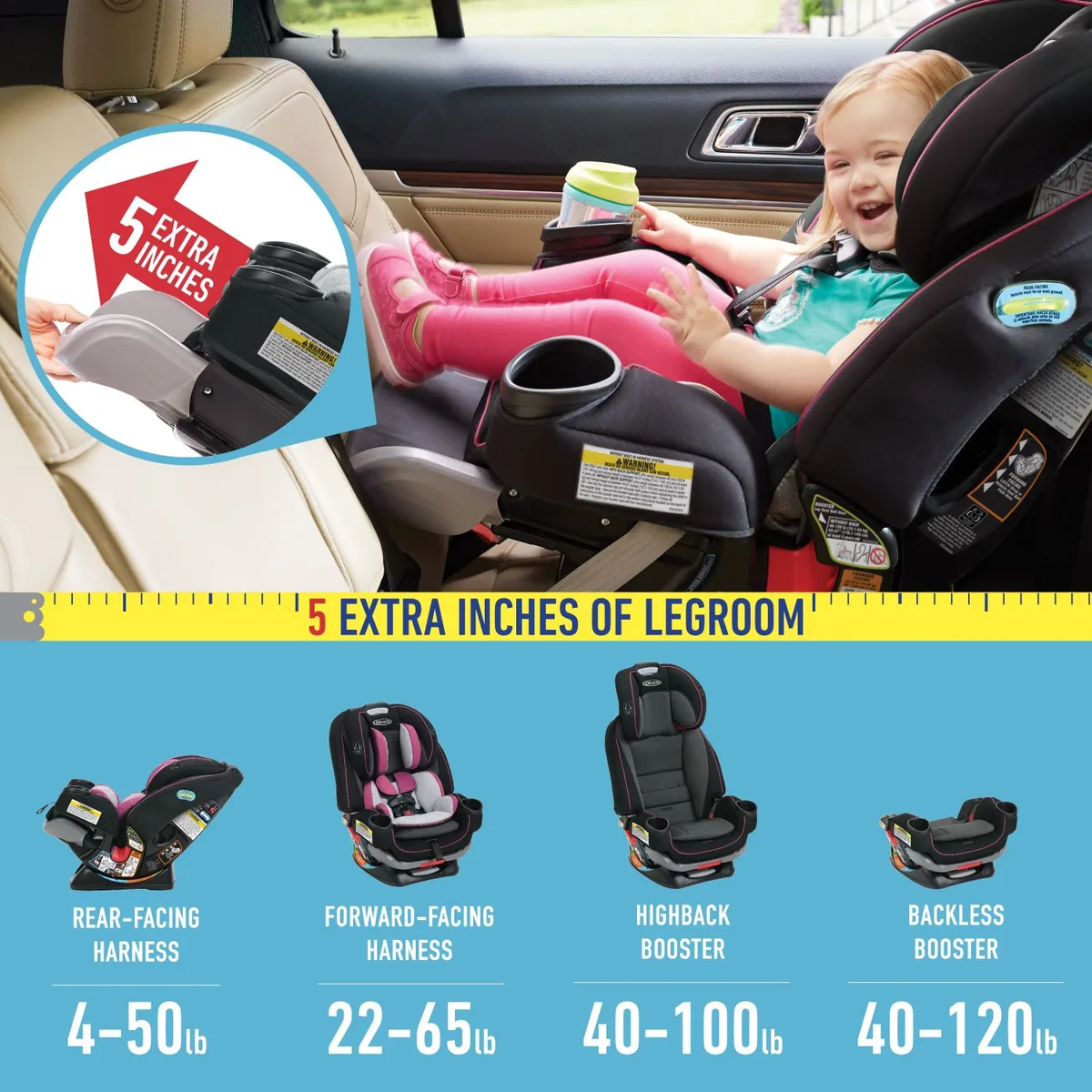
Image source: Bing (Web (fair-use with source credit))
Rear-Facing Isn't Over Just Because the Infant Seat Is
This is the part parents get wrong most often. Your baby outgrows the infant seat, and that feels like the moment to flip them around. It isn't.
It's the moment to buy a bigger rear-facing seat.
Why the AAP says "until 2, or until the seat max"
The AAP's position is a floor, not a ceiling. Rear-facing until at least age 2 is the bare minimum. The organization also says to keep going until your child reaches the highest weight and height their convertible seat allows for rear-facing.
That's often 40 to 50 pounds, which for many kids means rear-facing well into the preschool years.
Peer-reviewed crash data consistently shows rear-facing reduces the risk of serious head and spinal injury compared to forward-facing. It's not a close call. The longer you can keep a child rear-facing, the better their odds in a severe crash.
What a convertible seat buys you, in years and in safety
A convertible car seat is the workhorse. It rear-faces to a high limit, then flips to forward-facing with a five-point harness. Some all-in-one seats go on to become a booster.
In our research, one good convertible often covers a child from their first birthday through early elementary.
That's years of rear-facing protection from a single install. Compare that to buying a new forward-facing-only seat at 12 months, which locks you out of the safest position prematurely.
Forward-facing, what actually has to be true first
Before you flip forward-facing, three things must be true. Your child is at least 2 years old, though older is safer. They've hit the seat's forward-facing minimum weight, usually 22 to 40 pounds.
And the top tether is properly anchored, because forward-facing seats require it.
If any one of those isn't met, stay rear-facing a little longer. There's no rush, and there's no prize for switching early.
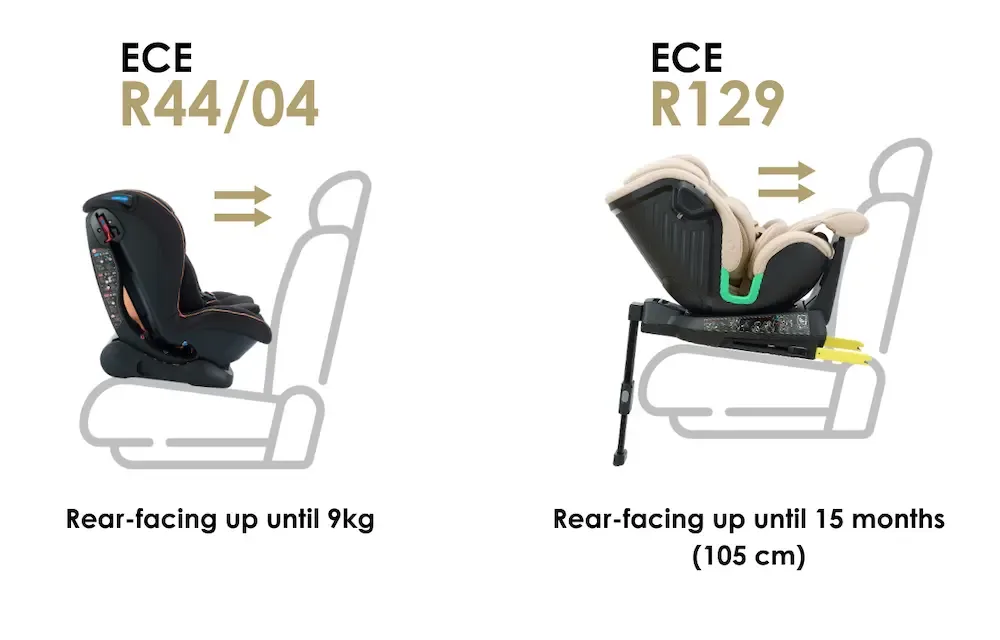
Image source: Bing (Web (fair-use with source credit))
Mistakes That Get Babies Moved Too Soon (or Too Late)
One mistake outranks all the others. Parents flip the seat forward-facing when the baby outgrows the infant bucket, rather than buying a convertible and staying rear-facing. That single move undoes the safest position your child can ride in.
Here's the short list of traps we see most often in the research and in verified buyer feedback.
- Treating "1 year and 20 pounds" as the law. It hasn't been the guidance for over a decade.
- Missing the one-inch head clearance because the baby "still fits."
- Leaving newborn inserts in past the manufacturer's cut-off weight.
- Using a bulky winter coat under the harness. It adds slack the harness can't compress.
- Installing a convertible seat at the newborn recline angle for an older baby.
- Reusing a hand-me-down seat with unknown crash history or an expired label.
Going too late has a cost too. A baby whose head is already touching the shell is riding in a seat that can't protect them. That's the quiet risk.
Nobody notices it because the seat still looks fine.
What to do the moment you notice an outgrown seat
Stop using it that day. Move your baby into the convertible seat, rear-facing, before the next drive. Don't wait for the weekend or a road trip.
If the convertible isn't installed yet, install it today or leave the baby with a caregiver until it is.
Installation, Fit, and the Checks Most Parents Skip
A correctly chosen seat installed wrong is still a dangerous seat. The two failure points are movement and harness fit. Fix those and you've handled most of the real risk.
To test the install, grab the seat at the belt path and tug. It should move less than one inch side to side and front to back. If it slides more, tighten the LATCH strap or seat belt and lock it off.
Then check the recline angle using the built-in indicator on the seat.
For harness fit, the rules are simple and non-negotiable.
- Chest clip at armpit level, never on the belly.
- Harness slots at or below the shoulders while rear-facing.
- Pinch test at the shoulder. No horizontal fold means it's snug.
- No bulky layers under the straps. Use a thin fleece or a blanket over the top instead.
Ready for the install to be genuinely safe? These are the checks a trained eye would make.
| Check | Pass | Fix |
|---|---|---|
| Seat movement at belt path | Under 1 inch | Tighten belt or LATCH |
| Chest clip position | Armpit level | Raise the clip |
| Harness slots (rear-facing) | At or below shoulders | Lower the headrest |
| Harness tightness | Can't pinch a fold | Pull the adjuster strap |
| Recline angle | Matches seat indicator | Adjust the base or recline |
Register your new convertible seat with the manufacturer the day you install it. That way, a recall reaches you directly instead of through a news story.
When to Call a CPST or Book an Inspection
A CPST, short for Child Passenger Safety Technician, is a certified installer who will check your seat for free. Most parents don't need a paid service. They need a trained second set of eyes on the install.
Here's when to book one.
- Any time you install a seat for the first time.
- After switching from an infant base to a convertible.
- If the seat moves more than one inch no matter how hard you tighten.
- If you've been in any crash, even a minor fender bender.
- If you're using a seat in a rental car or a rideshare.
NHTSA lists free inspection stations across the country, and Safe Kids Worldwide runs regular check events. Search your ZIP code and you'll usually find a location within a short drive. The visit takes 20 to 30 minutes.
Bring your car, your child, and the seat manual.
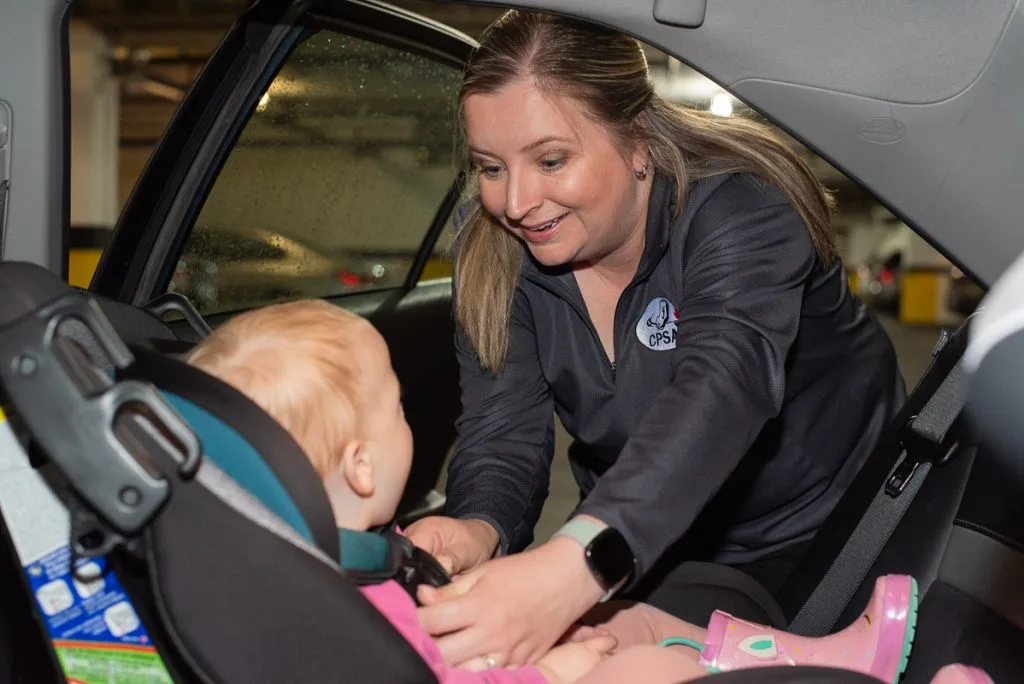
Image source: Bing (Web (fair-use with source credit))
If you can't reach a station, ask a pediatrician's office or your local fire department. Many have CPST-trained staff on site. A five-minute fit check has caught mistakes that would have taken years to surface otherwise.
FAQs: The Questions Parents Actually Ask
How do I know my baby has outgrown the infant car seat?
Check two things. First, your seat's rear-facing height and weight limits. Second, the one-inch rule.
If the top of your baby's head sits within one inch of the shell, the seat is outgrown, even if they're under the weight limit.
Can I switch my baby at 1 year old if they're big enough?
You can switch to a convertible seat at any age, still rear-facing. But you should not flip forward-facing at 1 year. The AAP recommends rear-facing until at least age 2, or until your seat's rear-facing max, whichever comes last.
What's the difference between an infant seat and a convertible seat?
An infant seat is a rear-facing-only bucket with a carry handle and a base. A convertible seat rear-faces to a much higher weight, then flips to forward-facing. The convertible usually stays usable for years longer.
Is it safe to move my baby into a convertible seat before 1 year?
Yes, absolutely. A rear-facing convertible seat is fine from birth as long as the seat is rated for your baby's weight and height, and the recline angle matches the newborn setting. Many families skip the infant seat entirely.
What if my baby outgrows the seat but I can't afford a new one?
Stop using the outgrown seat and don't flip it forward early. Reach out to your local Safe Kids coalition, many distribute free or low-cost seats. A fire station or health department can usually point you to a program.
Do state laws match the AAP recommendation?
Not everywhere. Many states require rear-facing until 2, but others still allow 1 year. The law is a floor, not the safe target.
Follow the AAP and your seat's manufacturer limits, whichever keeps your child rear-facing longer.

Similar Posts































