Can You Feed a Baby a Bottle in a Car Seat? Safety Tips
Can you feed baby a bottle in car seat? The short answer is no, not while the car is moving. It feels efficient, especially on a long drive with a hungry newborn, but it's one of the more dangerous things you can do in a vehicle.
The risks range from choking to something called positional asphyxia, and none of them are worth the convenience.
The American Academy of Pediatrics (AAP) is clear on this. Infants should be fed upright and supervised, never reclined and unattended in a moving car. Car seat makers like Graco, Chicco, and Britax put the same warning in their manuals.
So what do you actually do when your baby starts crying 40 minutes into a road trip? Let's walk through it properly.
can you feed baby a bottle in car seat
No, not while the vehicle is moving. Feeding a baby in a car seat while driving raises the risk of choking, aspiration, and positional asphyxia. Even parked, a reclined infant is at risk if left unattended with a bottle.
The safe method is simple: pull over, unbuckle your baby, and feed them upright in your arms.
The Quick Answer — and Why It's Not Up for Debate
Image source: Bing (Web (fair-use with source credit))
We know that answer is inconvenient. Nobody wants to stop every two hours on a six-hour drive. But the safety logic here isn't a gray area, and it's not the kind of thing where "a little bit is fine."
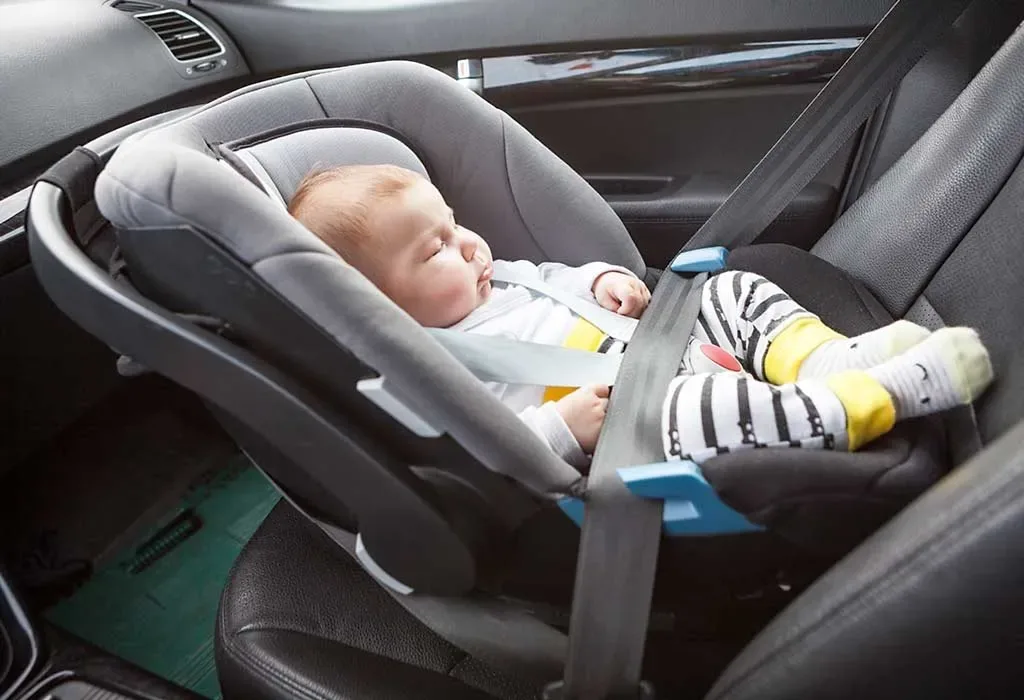
The core problem is the recline angle. A rear-facing car seat sits at roughly 30 to 45 degrees for a newborn. That angle is designed to protect the spine and airway during a crash.
It's not designed for eating. When a baby feeds in that position, milk can pool in the throat instead of going down cleanly.
Then there's the movement factor. A car seat is not a high chair. Every bump, brake tap, and turn shifts your baby's position.
Their head can slump forward, and a chin-to-chest posture is exactly what triggers positional asphyxia.
Per NHTSA guidance and AAP feeding recommendations, the two activities, feeding and traveling, need to be separated. Full stop.
Why Feeding in a Moving Car Is a Real Safety Risk
Image source: Bing (Web (fair-use with source credit))
Three distinct risks stack up when you feed a baby in a moving car. Each one is serious on its own.
Choking and Aspiration
A reclined baby can't manage a bottle the way an upright one can. Swallowing and breathing share the same pathway in infants, and their coordination is still developing. If milk flows faster than they can swallow, it can head toward the airway instead of the stomach.
That's aspiration, and it can lead to choking or aspiration pneumonia. Newborns are the most vulnerable because their suck-swallow-breathe rhythm is still immature.
Positional Asphyxia
This is the one parents underestimate most. Positional asphyxia happens when a baby's airway gets blocked by their own posture, usually a forward head slump that closes off breathing. In a car seat, a baby who falls asleep mid-feed can slip into that position silently.
There's no noise, no crying, just quiet oxygen loss. Infants under four months are at the highest risk because they can't yet lift or turn their heads to fix it.
The Projectile Problem
Here's the crash math. A baby bottle weighs only a few ounces. In a sudden stop at 30 mph, that bottle's effective force multiplies by roughly 20 to 30 times its weight.
It becomes a loose object flying through the cabin. If a caregiver is holding the bottle from the front seat, one hand is off their own restraint, and the bottle itself is unsecured.
What the Experts and Car Seat Makers Actually Say
The guidance here is unusually consistent. That's a good sign when you're weighing safety advice.
AAP and NHTSA Guidance
The AAP's feeding recommendations state that infants should be fed in an upright or semi-upright position while awake and supervised. NHTSA's car seat guidance focuses on correct harness use and keeping the child properly restrained. Neither agency endorses feeding in a moving vehicle.
Put together, the message is clear: feeding and driving are separate events.
Manufacturer Warnings You Probably Skipped
Every major car seat brand includes a warning against feeding in the seat while the vehicle is in motion. Graco, Chicco, Britax, Evenflo, and Nuna all say some version of the same thing. Per manufacturer specifications, the car seat is a restraint device, not a feeding station.
This matters for liability too. Using the seat outside its intended purpose can void warranty protections and complicate insurance claims after a crash.
Safe Ways to Feed Your Baby During a Road Trip
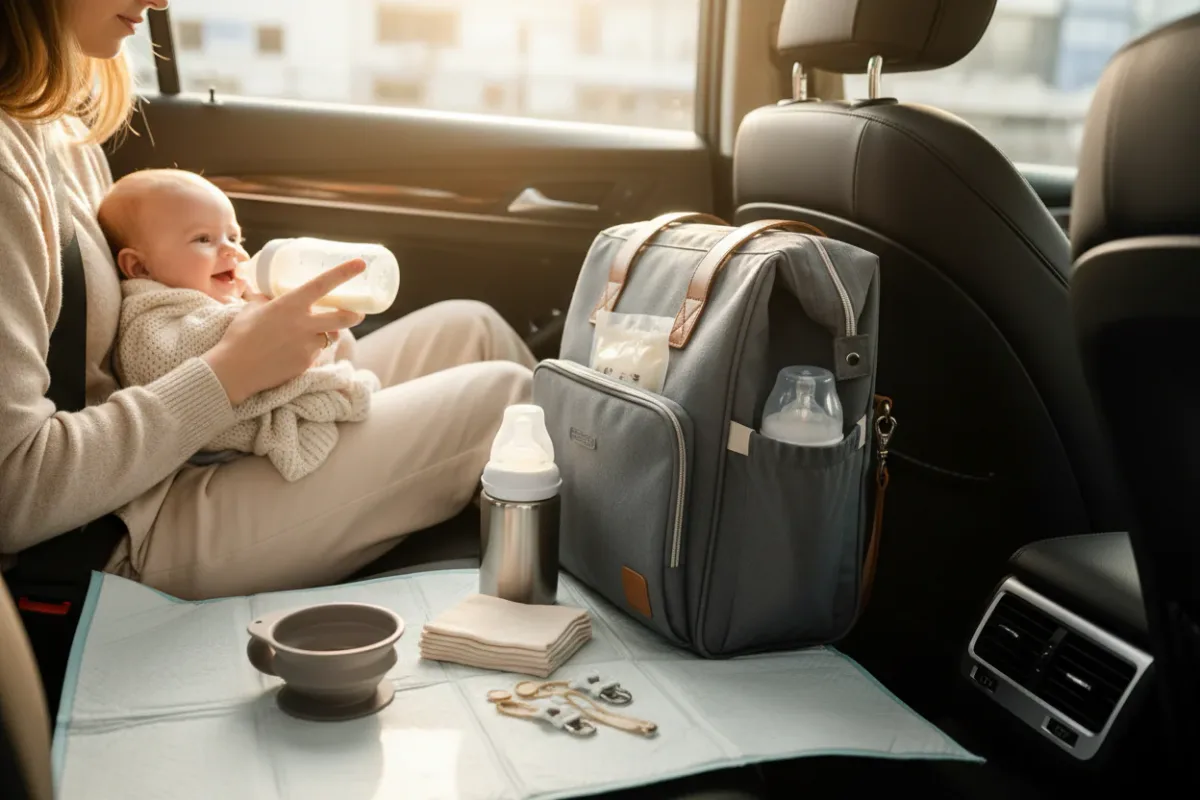
Image source: Bing (Web (fair-use with source credit))
You don't have to dread road trips with a baby. You just have to plan around feeds instead of trying to feed on the move.
Step-by-Step: The Pull-Over Feed
- Find a safe stop. Use a rest area, parking lot, or gas station. Never the shoulder of a highway.
- Turn off the engine and take the keys.
- Unbuckle your baby and lift them out of the seat.
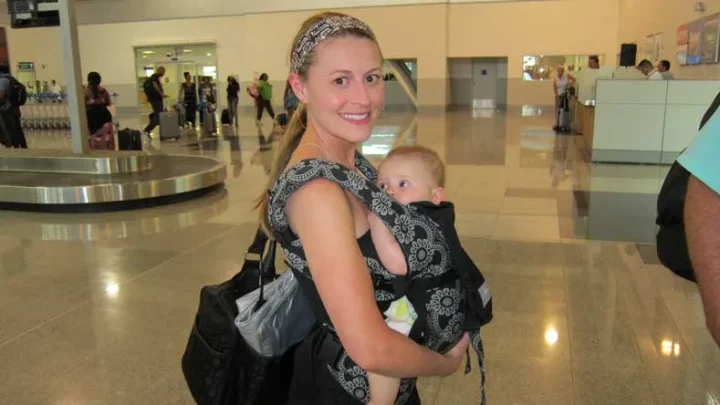
- Feed them upright in your arms or a supported position.
- Burp thoroughly. Trapped air plus motion equals spit-up.
- Hold them upright for 20 to 30 minutes if they have reflux.
- Re-buckle with a snug harness and the chest clip at armpit level.
- Resume driving.
That's the whole routine. It takes 30 to 45 minutes, which is a small price for safety.
How to Plan Stops Around Your Baby's Schedule
Newborns feed every two to three hours. Older infants stretch to three or four. Map your route with those intervals in mind, not your own driving stamina.
A 300-mile trip with a newborn isn't a five-hour drive. It's a six- or seven-hour drive with two real stops built in.
If you're traveling with a partner, one of you can sit in the back to watch for signs of distress. That said, a second adult watching doesn't make feeding in motion safe. It just means you'll catch problems faster, which isn't the same as preventing them.
Feeding in a Parked Car — What's Safe and What Isn't
Parked changes things, but not as much as parents hope.
When Baby Can Stay in the Seat (and When They Can't)
If you're parked and your baby is awake, supervised, and sitting at a comfortable recline, a quick feed is less risky than one in motion. That said, "less risky" isn't "safe." The reclined angle still makes swallowing harder, and a baby who falls asleep mid-feed can still slump.
The safer call is to unbuckle and feed them in your arms. If you absolutely must feed in the parked seat, keep your eyes on them the entire time. Never prop the bottle and walk away, even for a minute.
Aftermarket Bottle Holders and Props: Skip Them
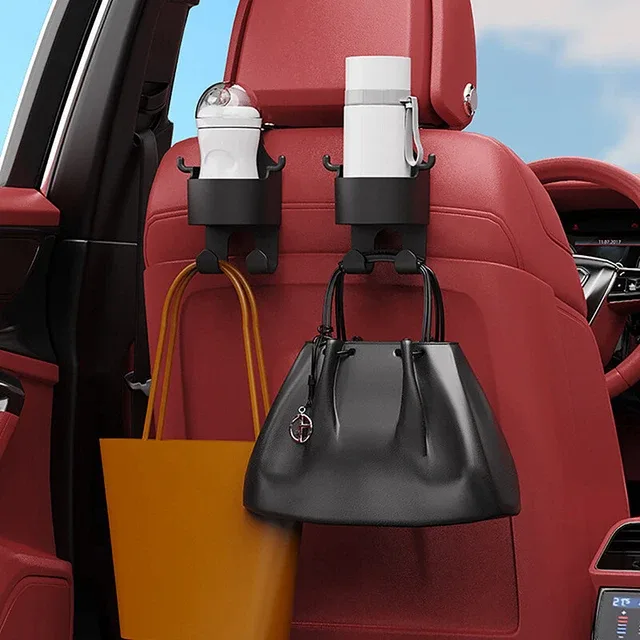
Image source: Bing (Web (fair-use with source credit))
Bottle holders, clips, and car seat feeding props are widely sold. They're also widely warned against. The AAP and car seat manufacturers both say these products create a choking hazard and encourage unsupervised feeding.
They're not safety devices. They're shortcuts that trade risk for convenience.
The JPMA and most car seat brands explicitly call out aftermarket accessories as unregulated. That means no safety testing, no crash testing, and no accountability if something goes wrong.
That covers the core safety picture. Next up: the mistakes parents make most often, how age and reflux change the answer, and the full FAQ.
Most parents don't set out to do anything risky. They feed the baby in the seat because they're exhausted, alone behind the wheel, and out of options. Sound familiar?
Let's look at the mistakes that cause the most trouble, and how to sidestep every one.
Unbuckling While Moving
This is the big one. Some parents unbuckle the baby to breastfeed or feed a bottle on a quiet stretch of road. If the car stops suddenly, an unbuckled infant becomes a projectile.
No amount of adult arms can hold a baby through a crash. Always pull over and stop completely before you unbuckle anyone.
Feeding Too Soon After a Feed
Feeding a baby while their tummy is still settling is a recipe for spit-up. Motion makes reflux worse, not better. If your baby just ate within the last hour and is fussy, try a pacifier, a song, or a white-noise app before you reach for the bottle.
Then plan an actual stop when the next feed window opens.
Ignoring the Recline Angle
Newborn car seats sit at 30 to 45 degrees, and that angle is fixed by design. You can't adjust it to make feeding safer. If you find yourself loosening the harness or removing the head insert to fit a bottle, you're defeating the seat's crash protection.
Leave the seat set up the way the manufacturer intended. Feed outside the seat.
Age, Reflux, and Other Factors That Change the Answer
Age doesn't change the core answer, but it changes how quickly things go wrong. Here's the breakdown.
| Age Group | Feed Interval | Highest Risk Factor | Safest Approach |
|---|---|---|---|
| 0 to 3 months | Every 2 to 3 hours | Positional asphyxia, choking | Pull over, feed upright in arms |
| 3 to 6 months | Every 3 to 4 hours | Spit-up, head slump | Pull over, upright feed, 20-min hold |
| 6 to 12 months | Every 4 hours | Distraction, projectile bottle | Pull over, sippy or straw cup at stop |
Babies with reflux need extra care. Their milk comes back up easily, and a reclined position makes that worse. Per pediatric guidance, keep them upright for 20 to 30 minutes after a feed before you buckle them back in.
Premature babies and those with feeding difficulties fall into the highest-risk group. Their suck-swallow-breathe coordination lags behind their age. For them, even a parked feed needs a caregiver's full attention.
FAQs
Can you feed a baby a bottle in a car seat while parked?
While parked, it's lower risk than while moving, but still not ideal. The reclined angle makes swallowing harder and a sleeping baby can slump. The safest move is to unbuckle and feed them upright in your arms.
If you must feed in the parked seat, stay with them and watch closely the whole time.
Is it safe to prop a bottle for a baby in the car?
No. Propping a bottle is unsafe anywhere, and worse in a car. It removes supervision, raises choking risk, and lets milk pool in the mouth.
The AAP warns against propped bottles even at home. Bottle holders and clips sold for car seats are unregulated and untested.
How often should you stop to feed a baby on a road trip?
Plan stops around feed intervals, not distance. Newborns feed every 2 to 3 hours, older infants every 3 to 4. With a newborn, a 300-mile trip is realistically a 6 to 7 hour drive with two real feeding stops built in.
Build the buffer into your schedule so you're not rushed.
What if my baby cries and won't settle between stops?
Try a pacifier, white noise, or a favorite song first. If nothing works, pull over. A crying baby is stressful, but a fed baby in a moving car seat is far riskier.
Five extra minutes at a rest stop beats an emergency you can't undo. Never feed while driving just to stop the crying.
Does the chest clip position matter during a feed?
Yes. The chest clip should sit at armpit level, snug against the chest. If you loosen it or slide it down to fit a bottle, you weaken the harness.
That clip keeps the straps on the shoulders in a crash. Never adjust it for feeding convenience.
Can an older baby drink from a sippy cup in the car seat?
For babies over 6 months, a straw or sippy cup at a parked stop is generally fine. While moving, it's still not recommended. Sudden braking can cause choking on any liquid.
Wait until you're stopped, then offer the cup with your full attention on them.
The Bottom Line: Pull Over, Feed, Then Drive
The answer to whether you can feed a baby a bottle in a car seat doesn't change based on how long the drive is or how fussy your baby gets. It's still no while the vehicle is moving. The risks stack up fast: choking, aspiration, positional asphyxia, and a bottle that turns into a projectile in a crash.
The good news is the fix is simple. Build feed stops into your route instead of trying to feed on the go. Newborns need a stop every 2 to 3 hours, and older infants can stretch to 3 or 4.
A 30 to 45 minute stop feels like a lot, but it's nothing next to an emergency you can't take back.
Unbuckle, feed upright in your arms, burp, hold them up for 20 to 30 minutes if they have reflux, then buckle them back in with the chest clip at armpit level. That's the routine. Skip the bottle holders and props, because they're unregulated and they encourage exactly the unsupervised feeding you're trying to avoid.
As of 2026, the guidance from the AAP, NHTSA, and every major car seat brand still lands in the same place. Feeding and driving are two separate jobs. Keep them separate, and everyone gets there safely.

Similar Posts