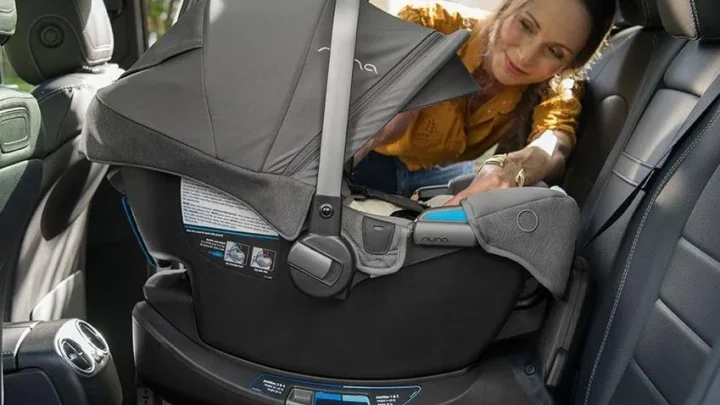
Can You Feed a Baby Bottle in a Car Seat? Safety Guide
Can you feed baby bottle in car seat? The short answer is no, not while the car is moving. It feels like a simple convenience question, but it's actually a safety question with real stakes.
Babies can choke, aspirate milk, or suffer positional asphyxia when fed at the reclined angle of a rear-facing seat.
The American Academy of Pediatrics (AAP) and the National Highway Traffic Safety Administration (NHTSA) both advise against feeding an infant in a car seat during travel. In our research, the crash data is sobering: even at 30 mph, an unsecured bottle becomes a projectile, and a parent taking their eyes off the road to hold it is a distraction hazard. Here's what actually works instead.
can you feed baby bottle in car seat
No. You should not feed a baby a bottle in a car seat while the vehicle is moving. The reclined position raises the risk of choking and aspiration.
A bottle can also become a projectile in a crash. Pull over safely and take your baby out to feed them.
Why This Question Matters More Than Most Parents Realize
Most parents ask this because they're desperate, not careless. A screaming newborn on mile 40 of a highway is a genuine problem, and handing them a bottle feels like the only fix. We get it.
But the two risks here are bigger than most people assume.
The first is aspiration. A rear-facing infant car seat sits at a 30 to 45 degree recline. That's the correct angle for crash protection, but it's a terrible angle for swallowing.
Milk pools in the back of the throat, and a baby who can't yet sit up has no way to clear it.
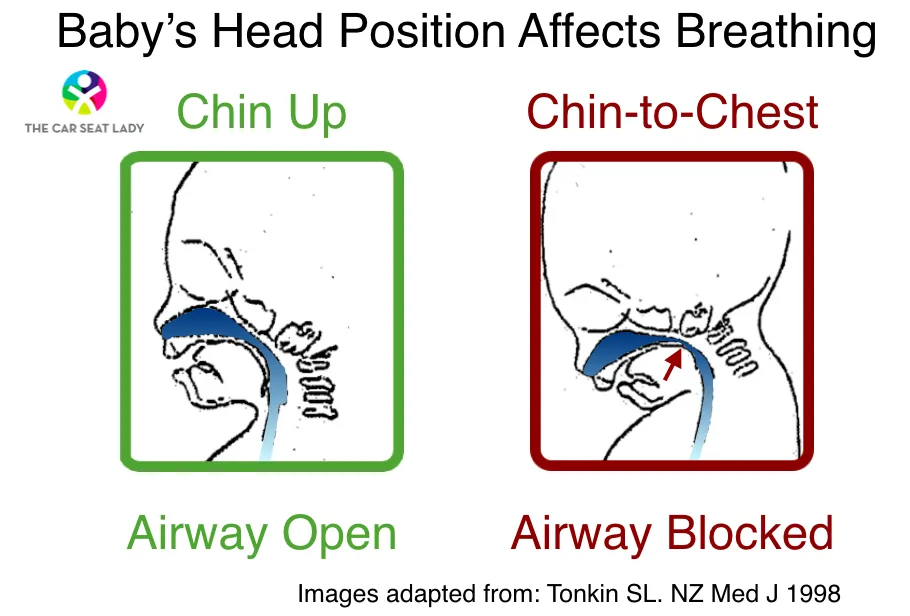
The second is positional asphyxia, which is when a baby's airway gets compressed or blocked by their own position. Babies under four months are the most vulnerable. Their heads are heavy, their necks are weak, and they can slump into a chin-to-chest position that cuts off breathing without making a sound.
Image source: Bing (Web (fair-use with source credit))
The two risks people underestimate: choking and positional asphyxia
Choking happens fast. A newborn's airway is roughly the width of a drinking straw, and slow-flow nipple or not, milk can overwhelm them mid-swallow. Positional asphyxia is quieter.
It can happen in seconds, and there's often no cry, no cough, and no warning.
What "in a moving car" vs. "parked" actually changes
Here's the distinction most parents miss. A parked car removes the crash risk. It does not remove the choking or asphyxia risk.
The recline angle is the same whether you're doing 70 on the interstate or sitting in a Target parking lot. That's the part generic advice glosses over.
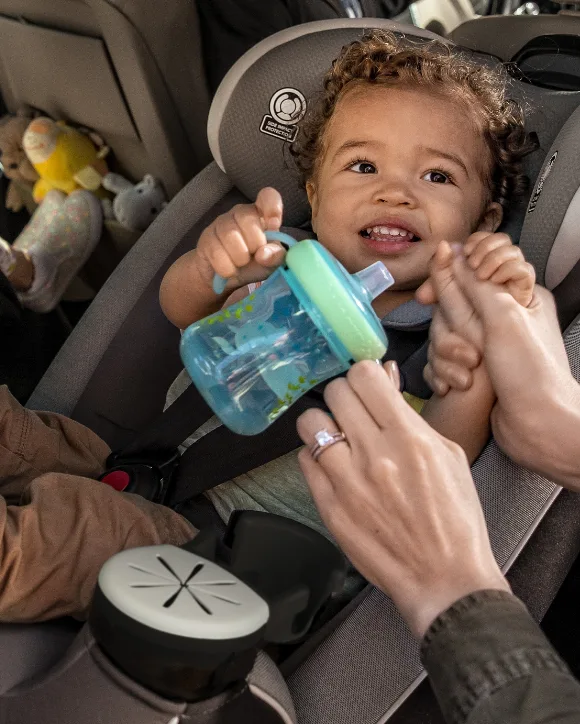
Image source: Bing (Web (fair-use with source credit))
What the Experts Actually Say (and Why)
The guidance is clearer than most parents expect. NHTSA's car seat recommendations focus on correct installation, harness tightness, and rear-facing duration, and they don't include feeding as a use case. The AAP goes further: their safe sleep guidance explicitly warns against letting babies sleep in car seats outside the vehicle, for the same positional reasons that make feeding risky.
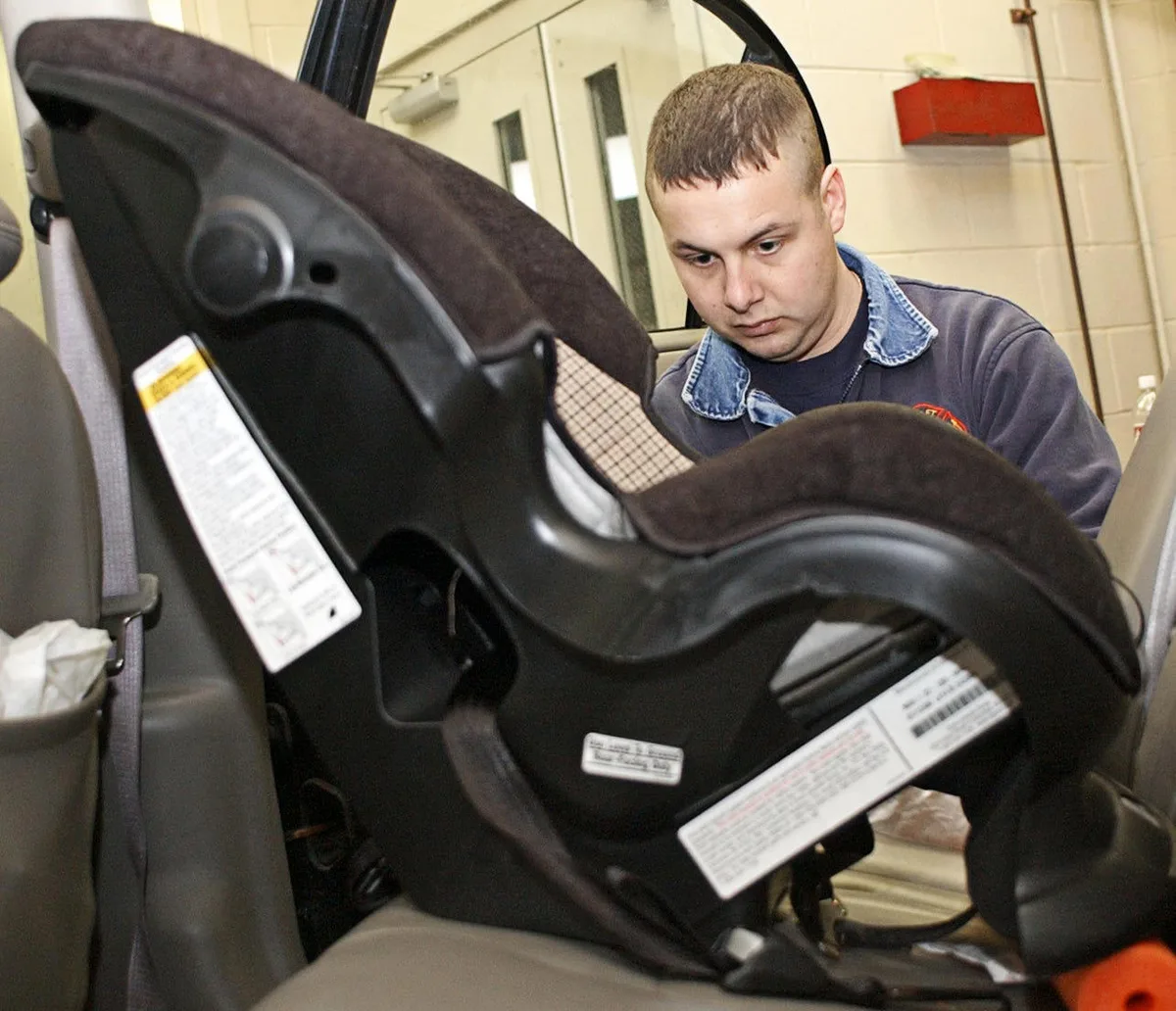
Image source: Bing (Web (fair-use with source credit))
AAP and NHTSA positions on feeding in a car seat
Neither organization endorses feeding a baby in a car seat in a moving vehicle. Both treat the car seat as a restraint device, not a feeding chair. If you want to check current guidance directly, the NHTSA car seat page is the primary source.
Why a reclined car seat is not a feeding position, even when stopped
A feeding position keeps a baby semi-upright, with the head above the stomach. A rear-facing car seat does the opposite. It cradles the baby back, which is exactly what you want in a crash and exactly what you don't want during a feed.
The crash-force problem: bottles, harnesses, and reaction time
At 30 mph, a crash generates forces equivalent to falling from a three-story building. Anything not strapped down becomes a missile. A bottle, a burp cloth, a phone, all of it.
Add a parent reaching back to hold a bottle and you've got a distracted driver and an unsecured object in the same moment. That's a bad combination.
When It's Tempting, and What Those Scenarios Really Look Like
The temptation is real, and it usually shows up in three predictable situations. Knowing them ahead of time is how you plan around them instead of improvising at 65 mph.
Long road trips with a hungry newborn
Newborns eat every two to three hours, sometimes more if they're cluster feeding. That's a feed roughly every 120 miles on a highway trip. If you leave without a plan, hunger will hit somewhere inconvenient.
Solo parents, rush hour, and no safe place to pull over
This is the hardest one. A solo parent in bumper-to-bumper traffic with a screaming baby has no good option. The answer isn't the bottle.
It's pulling off at the next exit, even if it adds ten minutes.
Reflux babies, preemies, and babies who refuse to eat before leaving
Some babies make this harder. A preemie has a weaker suck-swallow-breathe reflex. A reflux baby is more likely to spit up and aspirate.
A baby who refuses to eat before departure will be hungry twenty minutes in, every time.
Safe Alternatives That Actually Work
If feeding in the car seat is off the table, what do you actually do? Here's the playbook our research keeps landing on.
Pre-trip feed timing and the 30 to 60 minute window
Feed your baby 30 to 60 minutes before you leave. That gives them time to eat, burp, and settle. It also puts you at the start of their wake window, not the ragged end of it.
Scheduled stops every 2 to 3 hours (and how to plan them)
Plan stops before you leave, not when the crying starts. Map rest areas, exits with gas stations, and 24-hour spots along your route. Two to three hours is the realistic ceiling for an infant.
Pull-over feeding: where it's safe and where it isn't
Safe: rest areas, parking lots, gas stations, exit ramps with real shoulders. Unsafe: highway shoulders, narrow rural roads, anywhere a passing car could clip you. If you can't get fully off the road, keep driving to the next exit.
The rear-seat caregiver rule for parked feeds
If a second adult is in the car, they can sit in the back and handle the feed while the driver focuses. This only works when the vehicle is parked. In a moving car, the crash forces make it just as unsafe.
Pacifiers, comfort items, and buying yourself time
A pacifier won't feed a hungry baby, but it can buy you 15 to 20 minutes to reach a safe stop. Pair it with a familiar blanket, white noise, or a favorite toy. It's a bridge, not a solution.
Mistakes to Avoid (Even "Just This Once")
The "just this once" mindset is where most accidents live. These are the specific mistakes we see repeated in parent forums and CPST discussions.
Bottle propping and the aspiration trap
Propping a bottle with a blanket or a seat edge is one of the most dangerous shortcuts. It removes the caregiver's ability to monitor the flow. If the baby can't keep up, they choke silently.
Loosening the harness or unbuckling to feed
Loosening the harness to reach the baby defeats the entire point of the car seat. An unbuckled baby in a moving car has zero protection. If you need to unbuckle, you need to be parked.
Feeding a baby who's drifting off to sleep
A baby who falls asleep mid-feed with a bottle in their mouth is at risk for pooling milk and aspiration. Remove the bottle the moment they stop actively sucking.
Drive-thru and shoulder-stop shortcuts that aren't safe
A drive-thru is a stop, but it's not a safe feeding stop. You're still in traffic, still distracted, still in the driver's seat. A highway shoulder is worse.
It's one of the most dangerous places to be a pedestrian.
Feeding on the Go: A Step-by-Step Pull-Over Workflow
Do it in the right order and a pull-over feed takes about 30 to 40 minutes, including the re-buckle. Skip a step and you've traded one risk for another.
Here's the sequence our research keeps pointing to.
Choosing a safe stop (parking lot, rest area, exit ramp)
If you can see a rest area or gas station within five minutes, drive there. If you can't, take the next exit and find a lot. Never the shoulder.
Highway shoulders are where pedestrians die, and NHTSA has logged them as one of the most dangerous places to be outside a vehicle.
Getting baby out safely and into a proper feeding position
Turn the engine off. Take the baby out of the seat entirely. Feed them in your arms, semi-upright, head above stomach.
That's the same posture you'd use on the couch at home.
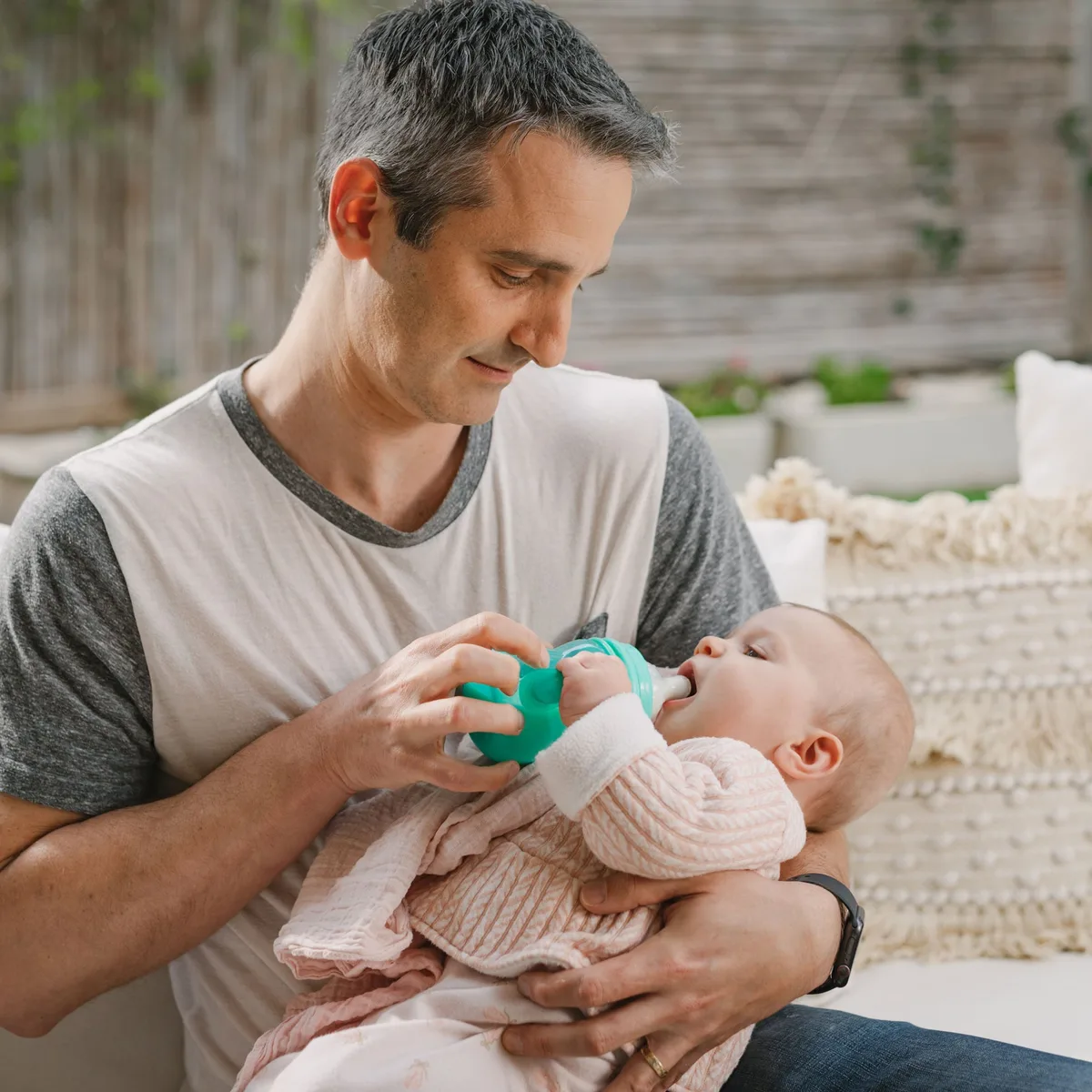
Image source: Bing (Web (fair-use with source credit))
Burping, re-buckling, and the harness re-check
Burp the baby before you re-buckle. Then check three things: the harness is snug with no slack at the collarbone, the chest clip sits at armpit level, and the buckle is below the belly. A quick visual check takes ten seconds.
Bottle handling on the road: coolers, warming, and cleaning
Pre-mixed formula stays safe in a cooler bag with ice packs for up to 24 hours. Breast milk holds for about 24 hours in a cooler too. Don't warm bottles in a moving car.
Warm them at the stop, feed, then clean or store the bottle.
Age, Feeding Method, and Risk: What Changes
Age matters more than most parents realize. Every month of neck strength and swallow coordination lowers the risk, but it never hits zero in a reclined seat.
Newborns vs. older infants (and why under 4 months is different)
Under four months, the risk is highest. Head control is poor, the airway is narrow, and the swallow reflex is still maturing. Positional asphyxia is most common in this window.
After four months, things improve, but the car seat still isn't a feeding chair.
Breastfeeding, expressed milk, and formula: does the method matter?
No. The delivery method doesn't change the physics. Bottle, breast, or expressed milk into a bottle, the recline angle and the crash risk are identical.
Breastfeeding directly in a moving car isn't safer. It's harder, because you can't stay buckled.
Reflux, cleft palate, and other conditions that raise the stakes
These babies need more caution, not less. Reflux raises aspiration risk. A cleft palate makes milk easier to inhale.
Premature infants tire fast and can't always protect their airway. For these babies, tighter stops and longer pull-over feeds are the answer.
FAQs
Is it ever okay to feed a baby in a car seat while the car is moving?
No. There's no safe version of this. The reclined position raises choking and aspiration risk, and a bottle becomes a projectile in a crash.
Pull over and take your baby out to feed them.
Can I feed my baby in the car seat if we're parked at a rest stop?
It's better than feeding while moving, but still not ideal. The recline angle is the same. Take the baby out and hold them semi-upright.
That's the safest parked option.
What if my baby is screaming and there's nowhere to stop?
Buy time with a pacifier, a familiar toy, or white noise. Then take the next exit, even if it adds minutes. A screaming baby is stressful.
An unattended bottle in a reclined seat is dangerous.
Does a pacifier count as feeding? Is it safer?
Yes, a pacifier is much safer. It satisfies the suck reflex without delivering milk. That means no aspiration risk and no choking risk.
It won't fill a hungry belly, but it can bridge the gap to the next stop.
At what age can a baby safely eat in the car?
There's no age where eating in a moving car becomes truly safe. Older toddlers can handle a sippy cup or snack with less risk, but the choking hazard doesn't disappear. The rule still holds: parked and out of the seat for anything substantial.
What about a sippy cup or snack for an older baby?
A sippy cup of water is lower risk than a bottle of milk, but not zero. Hard snacks like puffs or crackers are a choking hazard in a moving car. Wait until you're stopped.
The Bottom Line: A Simple Rule to Follow
Two rules cover almost every situation. The first: if the car is moving, the bottle waits. The second: if you stop, stop safely, and take them out of the seat to feed.
That's it. No exceptions for "just this once," no workarounds with propped bottles, no reaching back from the driver's seat. The 30 minutes you lose at a rest stop is nothing compared to the risk you avoid.
Plan your stops before you leave. Feed 30 to 60 minutes before departure. Keep a pacifier and a cooler bag in the car.
Do those three things and the question stops being a dilemma and becomes a routine.

Similar Posts