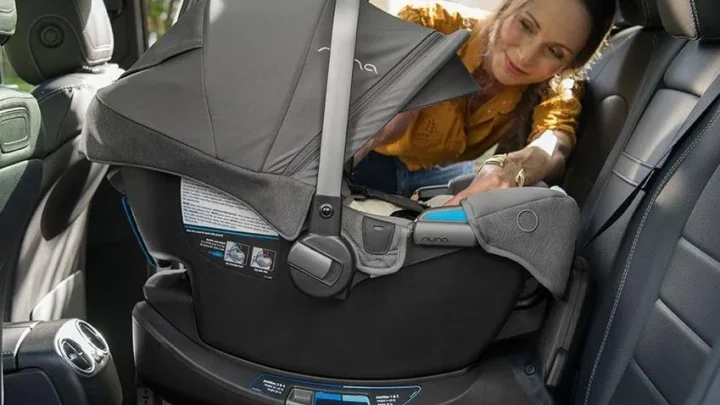
When Can Baby Face Forward in a Car Seat?
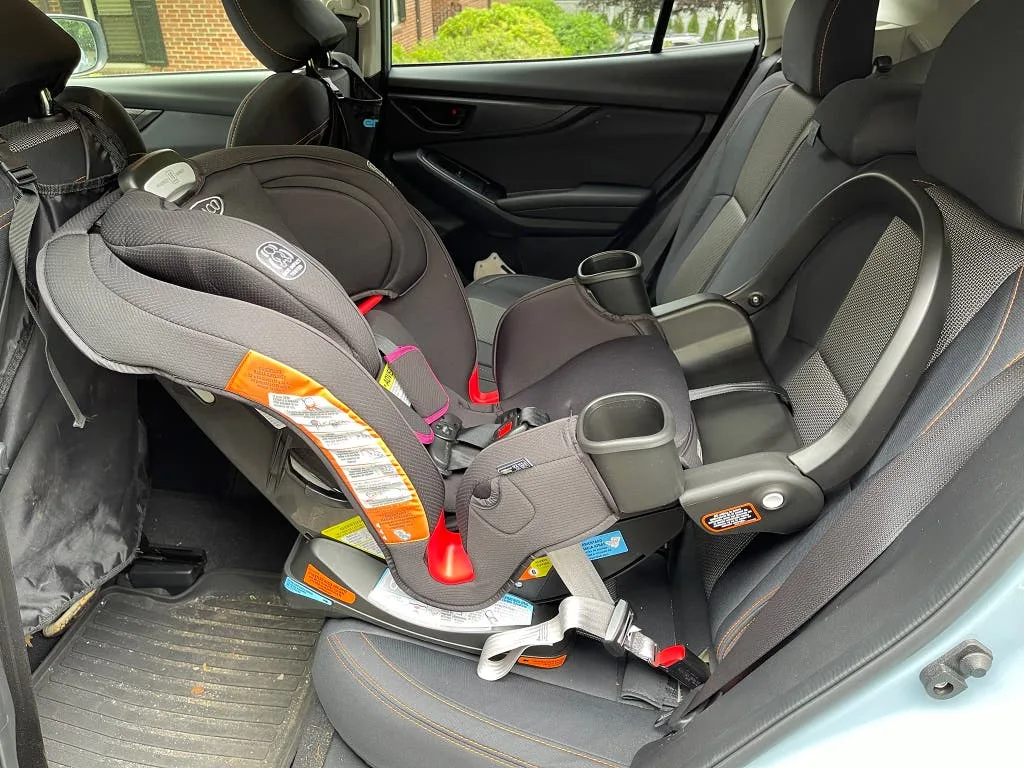
The moment your toddler's legs start pushing against the back seat, it's natural to wonder when can you forward face baby in car seat. Most parents feel the pull to switch early, whether it's for legroom, easier loading, or because a relative said it's fine now. But the answer isn't a single birthday.
It's a set of conditions your child, your seat, and your state all have to meet together.
Per the American Academy of Pediatrics (AAP), kids should stay rear-facing until they hit the rear-facing weight or height limit of their specific convertible car seat. For many modern seats, that's 40 to 50 pounds, which often lands a child well past age two. So the real question isn't "when are they old enough?" It's "have they actually outgrown the seat?" Here's how to work through that decision step by step.
when can you forward face baby in car seat
You can forward face once your child meets all three: the seat's forward-facing minimums, your state's legal age, and the AAP's rear-facing guidance. The AAP says wait until age two minimum. Ideally, keep them rear-facing until they max out the rear-facing weight or height limit.
Check your manual and your state law before switching.
Why the Age 2 Rule Is Only Half the Story
What the AAP Actually Recommends
The AAP updated its policy position years ago, and it still stands today. Their guidance says children should ride rear-facing until they reach the highest weight or height allowed by their car seat's manufacturer. That's a big shift from the old "age one and 20 pounds" advice your parents probably followed.
The reason comes down to physics. A rear-facing seat cradles the head, neck, and spine against the seat shell. In a frontal crash, crash forces spread across the whole back instead of concentrating on a small neck.
For a toddler whose head is still proportionally huge, that difference is enormous. Aggregate crash data consistently shows rear-facing seats reduce serious injury risk compared to forward-facing harness seats for the same child.
What Your State Law Says vs. What's Safest
Here's where parents get tripped up. State law is a floor, not a ceiling. Some states still allow forward-facing at age one.
That doesn't mean it's the safest choice.
As of 2026, most US states require rear-facing until at least age two, but a handful still use age one as the legal threshold. If you live in one of those states, your car seat probably won't even let your child forward face that early. The seat's own limits override the law when they're stricter.
If you're driving across state lines on a road trip, the rule that applies is the one in the state you're physically driving through. Check before you go. This trip-planning page from NHTSA is a solid place to start: NHTSA car seat recommendations.
The Real Test: Outgrowing the Seat, Not the Calendar
Birthdays don't trigger the switch. Limits do. Every convertible car seat has a listed rear-facing weight range and height range.
Your child has officially outgrown rear-facing mode when they hit either one.
Weight limits typically run 30 to 50 pounds on modern convertibles. Height limits are usually 40 to 49 inches, but the height number is less important than the head clearance rule we'll get to in a moment. Read your specific manual.
Don't guess.
If your child is 35 pounds but the seat allows rear-facing to 40, they stay rear-facing. If they're 30 pounds but the seat's rear-facing max is 30, they've outgrown it. Simple as that.
Image source: Bing (Web (fair-use with source credit))
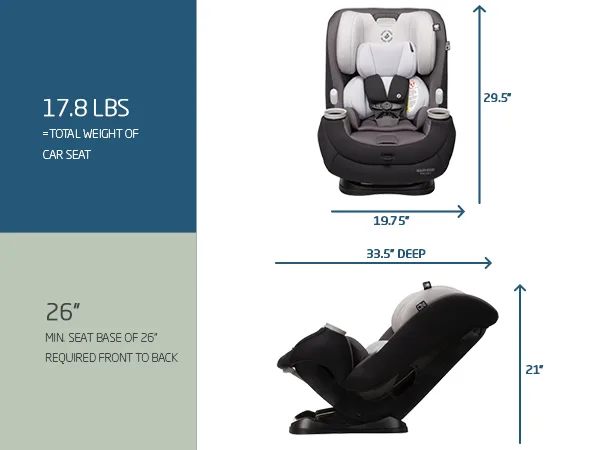
Image source: Bing (Web (fair-use with source credit))
The Four Conditions You Need to Check Before Switching
1. Your Child's Weight and Height
Weigh and measure your child properly. Stand them against a wall with shoes off for height. Weigh them on a scale at the same time of day for consistency.
Write both numbers down. You'll need them to compare against your seat's forward-facing minimums and your seat's rear-facing maximums. If the child hasn't hit the rear-facing max, there's no reason to switch yet.
2. Your Car Seat's Rear-Facing Limits
Grab your manual, not a blog post. Every seat is different, even within the same brand. Look for the rear-facing weight range and rear-facing height range in the specs section.
If your manual is lost, search the seat's model number and manufacture date online. Most manufacturers post current PDFs. Never rely on memory or what a friend's seat allows.
3. Your Child's Head Position in the Shell
This is the rule parents forget. Your child's head must be at least one inch below the top of the car seat shell in rear-facing mode. If the head is within one inch of the top, they've outgrown rear-facing, regardless of weight.
That one inch gives their head room to move without hitting the shell edge or slipping above it. Some seats measure this to the top of the headrest instead of the shell. Check your manual's wording carefully.
4. Your State's Legal Minimum
Confirm your state's current law. Then confirm the state you'll be driving in if you travel. If your seat allows forward-facing before your state's legal age, the law wins.
If your state allows it before your seat does, the seat wins.
Use the stricter of the two every time. That's the condition that matters.
How to Tell If Your Child Has Actually Outgrown the Seat
The 1-Inch Head Rule
Measure from the top of your child's head to the top of the shell or headrest. If the gap is one inch or less, they've outgrown rear-facing in that seat.
This applies even if they're still under the weight limit. Height and head clearance almost always run out first for toddlers. It's the most common reason kids switch.
Weight and Height Limits in Your Manual
Check both numbers every few months. Kids grow fast, and a seat that fit at 18 months can be too small by 24 months. Set a reminder on your phone.
Once your child hits EITHER the rear-facing weight limit OR the rear-facing height limit, that seat is done rear-facing for them.
What "Outgrowing" Doesn't Mean
It doesn't mean they're too tall, too heavy, or too old in general. It means they've outgrown that specific seat in that specific mode. It's a seat limit, not a child limit.
A different convertible seat with higher rear-facing limits could keep them rear-facing longer. That's worth considering if you're buying a new seat anyway.
| Seat Type | Typical Rear-Facing Max | Typical Forward-Facing Min |
|---|---|---|
| Infant carrier | 22–35 lbs | N/A (rear-facing only) |
| Convertible | 40–50 lbs | 22–40 lbs |
| All-in-one | 40–50 lbs | 22–40 lbs |
Step-by-Step: Switching Your Seat to Forward-Facing Safely
Reinstalling the Seat
Start by moving the seat to a forward-facing position. Typically this means the middle of the back seat or a rear side seat if the middle is occupied. Read the manual's forward-facing section before you touch anything.
Thread the seat belt or LATCH strap through the forward-facing belt path, which is usually different from the rear-facing path. Follow the manual's diagram exactly.
Attaching the Top Tether
The top tether is not optional in forward-facing mode. It connects the top of the car seat to a tether anchor in your vehicle, usually behind the seat or on the ceiling.
The tether reduces head movement forward in a crash by a significant margin. Skip it and you're leaving protection on the table. Per Federal Motor Vehicle Safety Standard 225, tether anchors are required in most vehicles made since 2000.
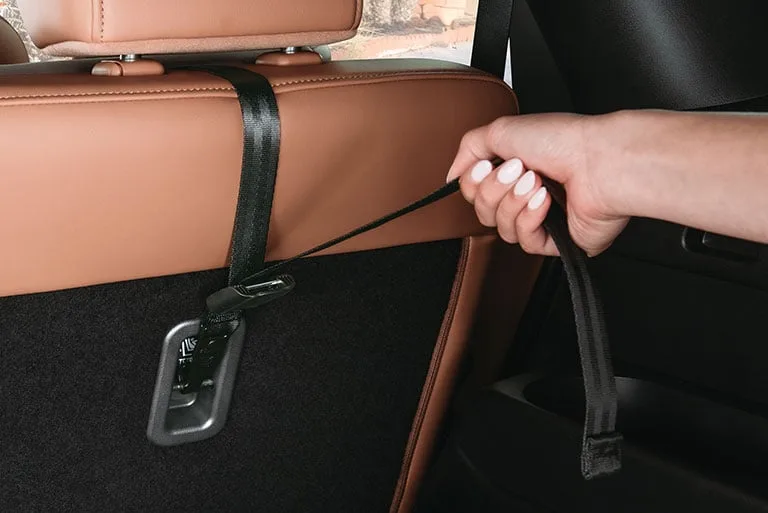
Image source: Bing (Web (fair-use with source credit))
Adjusting the Harness and Chest Clip
Move the harness straps to the slots at or just above your child's shoulders. Rear-facing harness sits at or below the shoulders. Forward-facing sits at or above.
Don't mix these up.
Position the chest clip at armpit level. Snug the harness until you can't pinch any slack at the shoulder. That's called the pinch test.
The Install Tightness Test
Grab the seat at the belt path and tug side to side, then front to back. It should move less than one inch in any direction. If it moves more, tighten the belt or LATCH strap and try again.
Then give the seat a firm push down into the vehicle seat while you tighten. That compresses the cushion and gets a truer tightness reading.
Mistakes That Put Kids at Risk
Moving Them Too Soon Because "Their Legs Look Cramped"
Legs touching the back seat is normal and not a sign of outgrowing. Rear-facing seats are designed for bent knees and crossed legs. The AAP confirms that leg position doesn't increase injury risk, and kids actually self-adjust by stretching out or sitting cross-legged.
If your only reason to switch is leg comfort, don't switch yet.
Skipping the Top Tether
Forward-facing seats must use the top tether. It's not a bonus feature, it's part of the installation. The tether cuts forward head movement in a crash by a measurable margin.
Without it, your child's head and neck absorb more force. If your vehicle lacks a tether anchor in the spot you want, pick a different seating position.
Trusting a Hand-Me-Down Seat
You can't verify a used seat's crash history. A seat involved in a moderate or severe crash should be replaced, even if it looks fine. Seats also expire, typically six to ten years from the manufacture date stamped on the shell.
If the label is gone or the history is unknown, skip it.
Confusing Legal Minimums With Safe Practice
Legal age is not the same as safe age. State law might allow forward-facing at age one or two. The AAP and your seat's manual usually push that later.
When the law, the seat, and the AAP disagree, follow the strictest one. That's the safest reading of all three.
When to Get a Professional Install Check
What a CPST Does
A Child Passenger Safety Technician (CPST) is a certified expert trained on hundreds of car seat and vehicle combinations. They inspect your installation, check harness fit, verify tether use, and confirm your child meets the seat's limits. Most checks take 20 to 30 minutes.
It's free in most communities.

Image source: Web (Bing) / unitedwayofbrucegrey.com (Web image (fair-use with source credit))
How to Find One Near You
Search the NHTSA directory or call your local fire department, police station, or hospital. Many offer free inspection events monthly. Safe Kids Worldwide also hosts checkup events across the US.
Bring your vehicle, the car seat, and your child if possible.
What to Bring
Bring the car seat manual, your vehicle owner's manual, and your child. The technician needs to check fit against both books. If you've lost the car seat manual, download it beforehand.
Knowing your child's current weight and height helps too.
FAQs
Can my tall 18-month-old forward face?
No, not safely. Height alone isn't a reason to switch. If your child still fits the seat's rear-facing height and weight limits and has one inch of shell above their head, they stay rear-facing.
Many tall toddlers stay rear-facing past age three.
What if my state law says age 1?
Follow your car seat's rear-facing limits instead. State law is a minimum, not a recommendation. The AAP advises rear-facing until the seat is outgrown, which is usually well past age one.
Your seat manual usually overrides the state age minimum.
Is it safe to forward face in a rental car?
Yes, as long as you install the seat correctly and use the top tether. Rental cars made since 2000 have tether anchors. Bring your own car seat if you can.
Rental seats are often low-quality or have unknown histories.
How long can my child stay rear-facing?
As long as the seat allows. Many convertible seats accommodate rear-facing to 40 or 50 pounds. Some kids stay rear-facing until age four.
There's no upper age limit, only seat limits.
Do I need a new seat to forward face?
No, most convertible and all-in-one seats convert from rear-facing to forward-facing. Check your manual for the forward-facing weight and height minimums before you switch. If your seat is rear-facing only (an infant carrier), you'll need a convertible or forward-facing seat.
Your Decision Cheat Sheet
Use this quick reference when you're ready to decide. Run through each condition in order. If any answer is "not yet," keep your child rear-facing.
| Condition | Check | Decision |
|---|---|---|
| Weight | At or above seat's forward-facing minimum | Move on |
| Height | At or above seat's forward-facing minimum | Move on |
| Head clearance | Less than 1 inch below shell top | Move on |
| State law | Child meets legal age | Move on |
| AAP guidance | Child has outgrown rear-facing | Move on |
If every box is checked, switch the seat to forward-facing. Install it with the top tether. Adjust the harness to at-or-above shoulder level.
Then get it inspected by a CPST if you can.
When in doubt, keep them rear-facing. There's no penalty for staying rear-facing longer than the minimum. There's real risk in switching early.
Your child's spine will thank you.

Similar Posts