How Long Can a Baby Stay in a Doona Car Seat?
How long can a baby stay in a Doona car seat? Short answer: not long. For a newborn, most pediatric guidance caps a single stretch at around 30 to 90 minutes, and total daily container time should stay far lower than most parents assume.
The Doona is a car seat first, a stroller second, and never a sleep space.
Manufacturer specifications for the Doona Infant Car Seat list a weight range of roughly 4 to 35 lbs (1.8 to 15.9 kg), which covers newborn through about 12 months. But "fits" and "safe for long periods" are two very different things. Here's what you actually need to know before you strap your baby in for the day.
Why This Question Matters More Than You Think
The Doona is brilliant at exactly one thing: moving a sleeping baby from car to sidewalk without waking them. That's real value. But the same design that makes it convenient also makes it easy to overuse.
And overuse is where the risks live.
Here's the core problem. A car seat is a container. It holds a baby in a semi-reclined, head-forward position.
That position is engineered for crash protection, not for breathing comfort or spinal development.
Per American Academy of Pediatrics (AAP) safe sleep guidance, babies should sleep on a flat, firm surface with nothing else around them. A car seat, even reclined to the correct angle, is not that surface. When a baby's head slumps forward, the airway can narrow.
When they stay in that position too long, flat spots can form on the skull.
The Two-Hour Rule Isn't a Newborn Rule
You've probably heard the "two-hour rule" for car seats on long drives. It's real, and it's cited by organizations like NHTSA for older infants. But it's a ceiling for toddlers, not a target for newborns.
For a baby under three months, that number drops hard. Many pediatric sources suggest 30 to 90 minutes per stretch is the outer practical limit. Anything longer deserves a break, a pickup, and floor time.
What the Doona Actually Is (and Isn't)
The Doona Infant Car Seat is a rear-facing car seat that converts into a stroller with the push of a button. It's sold with either a LATCH base in the US or an ISOFIX base in the UK and EU. As of 2026, it remains one of the few all-in-one travel systems on the market.
Image source: Bing (Web (fair-use with source credit))
What it isn't: a bassinet, a crib, a safe sleep space, or a long-duration carrier. That distinction matters, because the marketing leans hard on convenience.
Here's the honest breakdown:
| Feature | What It's Good For | What It's Not Good For |
|---|---|---|
| Car seat mode | Crash protection, short drives | Naps longer than 60-90 minutes |
| Stroller mode | Quick errands, school run | All-day outings, long walks |
| Recline angle | Newborn airway support in car | Flat sleep, back support for hours |
The recline angle is set for the car and the base. When you pop it into stroller mode, that angle stays roughly the same. It doesn't flatten out.
So the same posture concerns apply whether you're driving or rolling.
The Infant Insert Isn't a Sleep Solution
The newborn cushion that comes with the Doona helps fit small babies. It doesn't turn the seat into a safe sleep surface. A common misreading of the manual is that the insert makes longer naps okay.
It doesn't.
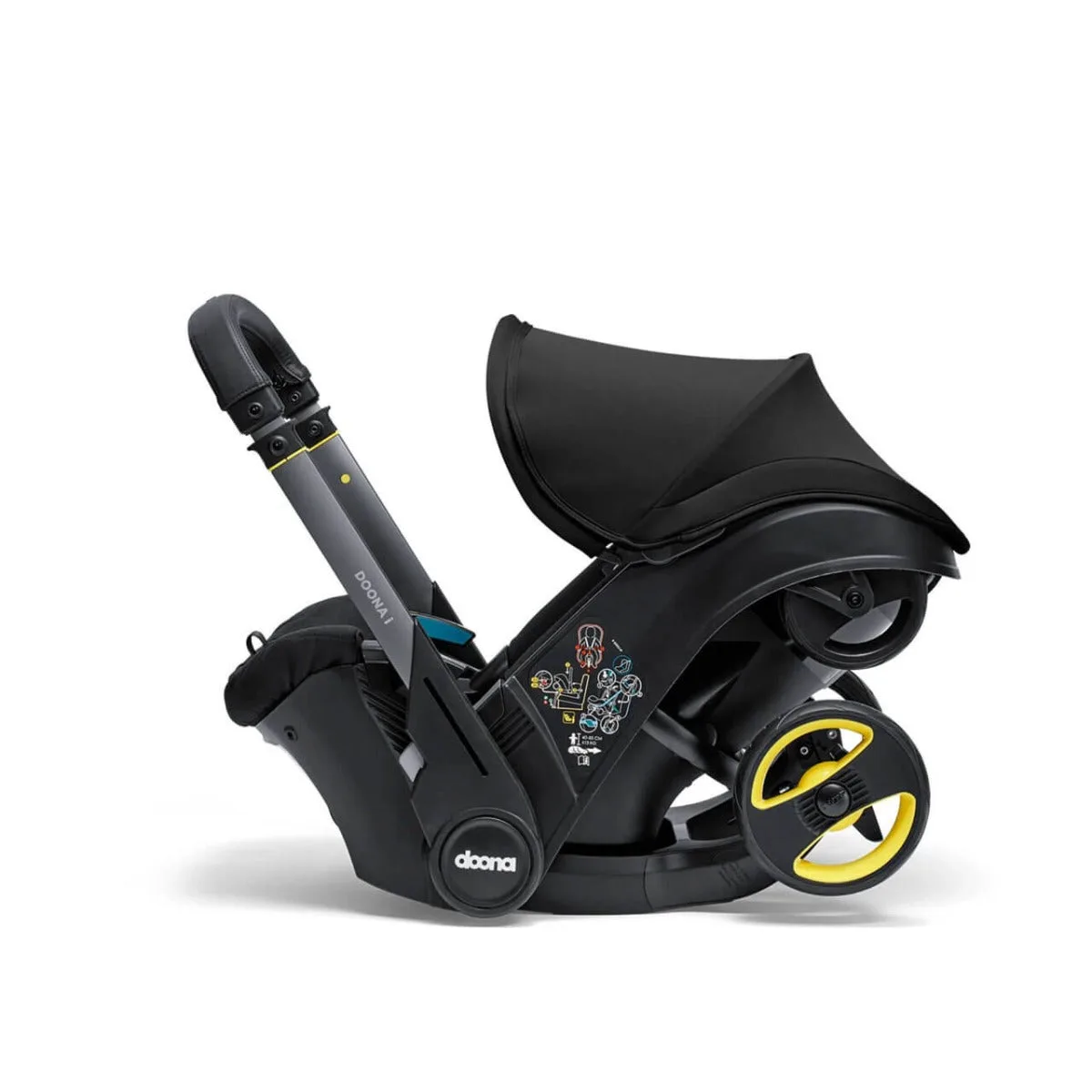
Image source: Bing (Web (fair-use with source credit))
The Real Time Limits: Newborns vs. Older Babies
There's no single official number stamped on the Doona. What exists is a range of guidance from pediatric bodies, and that guidance shifts as your baby grows. The younger and smaller the baby, the tighter the limit.
| Age | Practical Max Per Stretch | Total Daily Guide |
|---|---|---|
| 0-3 months | 30-60 minutes | Under 2 hours |
| 3-6 months | 60-90 minutes | Under 3 hours |
| 6-12 months | Up to 2 hours | Still limited |
These aren't laws. They're sensible working numbers based on how newborns breathe, how their skulls form, and how much time they need flat on their backs to develop.
If Your Baby Is Premature or Low Birth Weight
Then the limits shrink further. Premature babies have weaker neck muscles and a higher risk of airway obstruction in a semi-reclined position. If your baby was born early, treat every car seat stretch as short as practically possible, and check with your pediatrician for a personalized ceiling.
The Overnight Rule
Zero. A baby should never sleep overnight in a Doona. No exceptions, no "just this once." If your baby falls asleep in the car and you get home, transfer them to a flat, firm sleep surface.
A crib, a bassinet, or a bedside sleeper.
The Hidden Risks of Leaving Your Baby in the Doona Too Long
The risks here aren't dramatic. They're slow and quiet. That's what makes them easy to dismiss.
Most parents who leave a baby in a car seat for too long don't do it on purpose. They do it because the baby is finally asleep, because the errands aren't done, or because waking them feels cruel. All understandable.
None of it changes the physiology.
Positional Asphyxia: The Quiet Danger
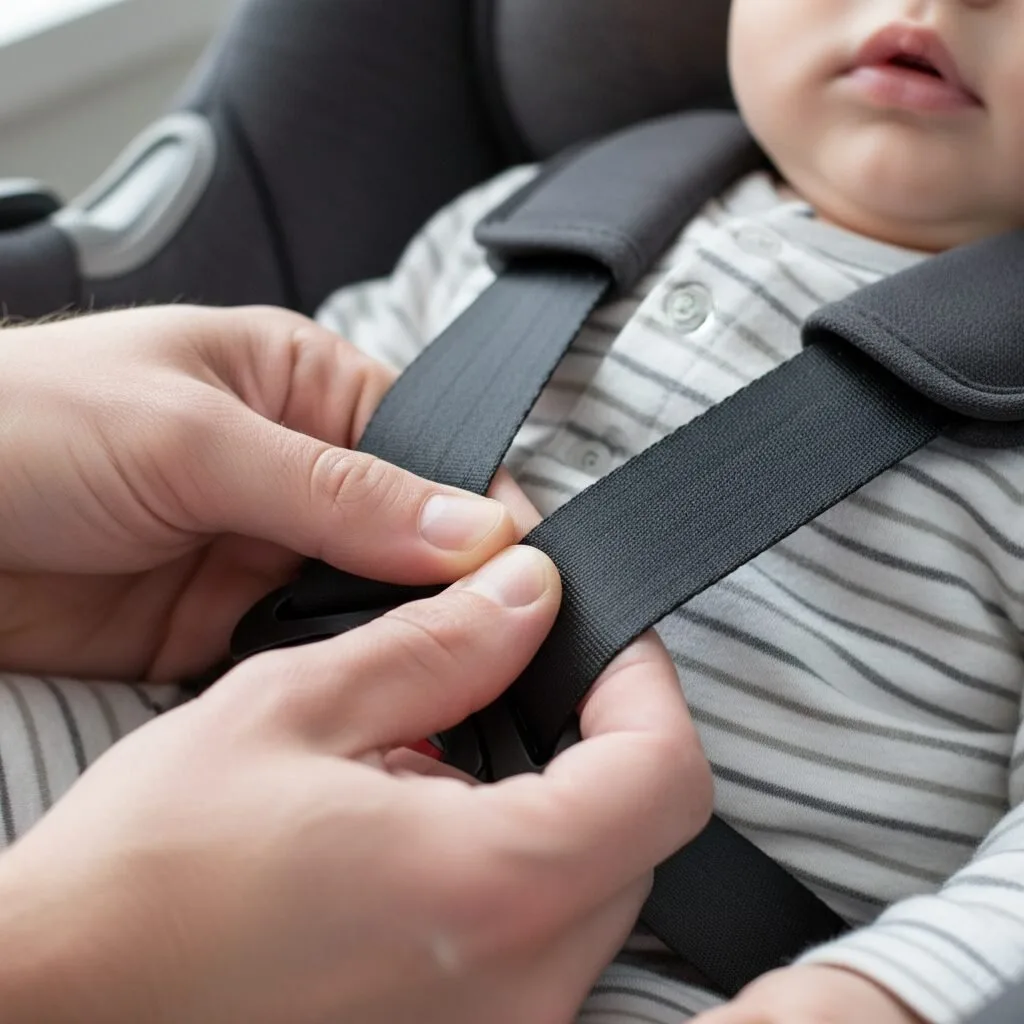
Image source: Web (Bing) / firstcrycare.com (Web image (fair-use with source credit))
Positional asphyxia is when a baby's airway gets blocked by their own posture. In a car seat, that happens when the head flops forward and the chin drops toward the chest. The baby can't lift their head to fix it.
Newborns are especially vulnerable because their necks are weak. They can't reposition themselves. And here's the cruel part: it can happen silently.
No crying, no struggle, no obvious warning. The CDC's safe sleep guidance exists in part because of exactly this risk.
Flat Head Syndrome and Container Baby Syndrome
Prolonged time in any container, including a Doona, can flatten the back of a baby's skull. That's called plagiocephaly, and it can require helmet therapy in serious cases.
The bigger umbrella issue is what pediatric professionals call container baby syndrome. It's a set of developmental delays tied to too much time in car seats, bouncers, swings, and similar devices. Babies need tummy time and floor time to build core strength and motor skills.
A Doona can't give them that.
Overheating in the Car Seat
Car seat fabrics trap heat. A baby strapped into a padded seat with a canopy overhead can overheat faster than you'd expect. In warm weather, that risk climbs.
Per CPSC safety alerts, heat-related incidents in car seats and strollers are a real category of harm.
Safe Practices: How to Use the Doona Without Cutting Corners
You don't have to avoid the Doona. You just have to use it the way it was designed. Short trips, quick transitions, and a strict rule about where sleep happens.
Here's a workable routine:
- Cap car seat stretches at 30 minutes for newborns, 60-90 for older babies.
- Never let your baby sleep overnight in the seat.
- Transfer to a flat surface the moment you're home.
- Check the recline angle indicator every time before driving.
- Position the harness snug across the chest, not loose.
- Take breaks on long drives, at least every 90 minutes.
- Build in daily tummy time and floor time to offset container use.
- Watch for overheating signs: flushed skin, sweating, drowsiness.
How to Check the Recline Angle
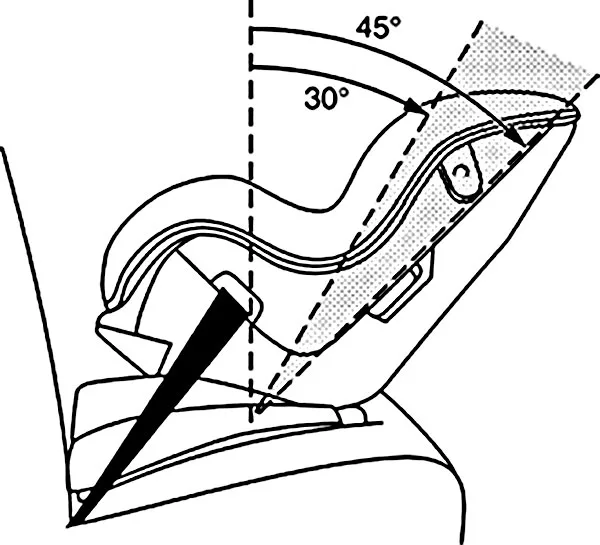
Park on level ground. Look at the indicator on the base. It needs to show the seat within the correct range for your baby's size, typically 30 to 45 degrees for a newborn.
If it's off, adjust the base or move the seat. An incorrect angle is one of the most common setup mistakes, and it directly affects your baby's airway.
The Transfer Trick
If your baby is asleep and you're home, you still transfer them. Do it slowly. Keep a hand under the head and neck.
The few seconds of possible fussing are worth it, because a flat surface is the only safe sleep surface for an unsupervised baby.
When the Doona Isn't the Right Choice
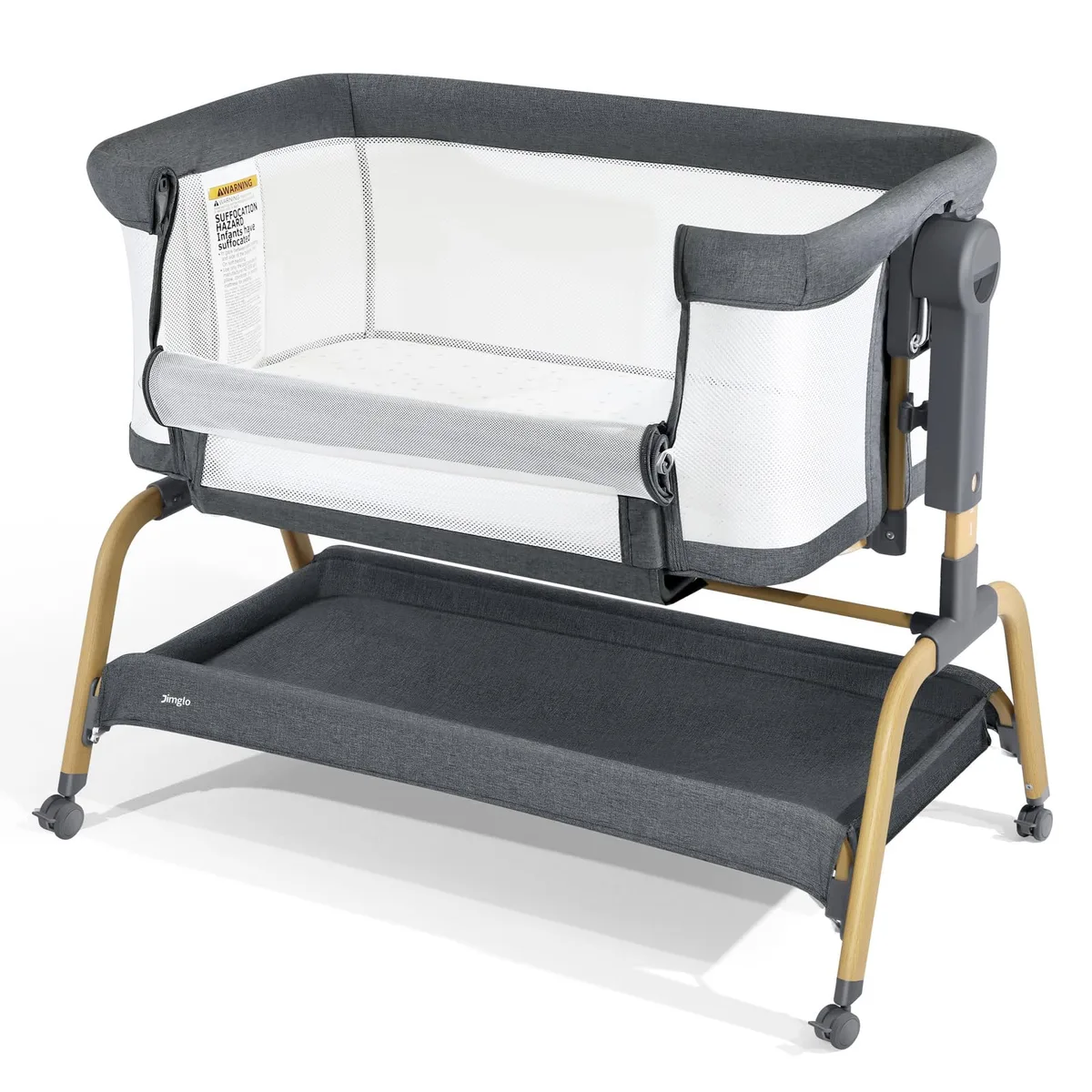
Image source: Bing (Web (fair-use with source credit))
Some situations call for a different tool entirely. If any of these apply, swap the Doona out.
- Long outings over three hours, where baby will need real rest.
- Overnight travel or hotel stays, where sleep space matters.
- Babies with reflux or breathing concerns, where flat positioning helps.
- Daily walks longer than 45 minutes, where a lie-flat stroller wins.
- Any time you need a place for the baby to sleep, not just ride.
A bassinet stroller, a wearable carrier, or a lie-flat pram all handle these better. The Doona shines for the 20-minute dash to the store. It struggles for anything longer.
Common Mistakes Parents Make (and How to Avoid Them)
The most common mistake is treating the Doona as a portable crib. It's not one, and no amount of convenience changes that. Parents also misjudge how long is "too long" once a baby is asleep.
Aggregate user reviews show a familiar pattern: baby falls asleep at the store, parent finishes two more stops, and suddenly it's been 90 minutes in the seat. That's how the limit gets blown without anyone deciding to blow it.
Other frequent errors we see:
- Leaving the harness loose because baby is sleeping.
- Skipping the transfer to a flat surface once home.
- Using the Doona as the primary daytime container.
- Ignoring overheating signs in warm weather.
- Assuming stroller mode resets the clock.
If the baby is asleep in the car and you pull into your driveway, that's a transfer. Every time.
FAQs About Doona Car Seat Time Limits
Can a newborn sleep in a Doona overnight?
No. A Doona is not a safe sleep surface. Per AAP guidance, babies should sleep on a flat, firm surface with nothing else around them.
Transfer your baby to a crib or bassinet the moment you're home.
Is the two-hour rule safe for a newborn?
No, it's too long for a newborn. That two-hour figure applies to older infants on longer drives. For babies under three months, aim for 30 to 60 minutes per stretch.
Does stroller mode make it safer for longer use?
No. The recline angle stays roughly the same in stroller mode. The same posture and airway concerns apply whether you're driving or walking.
How often should I take breaks on a long drive?
Every 90 minutes at minimum. For newborns, closer to every 45 to 60 minutes. Get them out, hold them, and give them floor time before strapping back in.
Can my baby get flat head syndrome from a Doona?
Yes, if it's used as a primary container for hours each day. Prolonged reclined positioning can flatten the back of the skull. Daily tummy time and floor time offset that risk.
Is the Doona safe for air travel?
Yes, most Doona models are FAA-approved for use on aircraft. Check your specific model and confirm with your airline before you fly.
Does the Doona work as a travel system with other strollers?
No. The Doona is a standalone travel system. It doesn't click into other stroller frames.
As of 2026, that's still its main trade-off against a standard infant car seat plus a separate caddy.
At what age should my baby stop using the Doona?
Around 12 months, or when they outgrow the weight or height limits. Manufacturer specs cap it at roughly 35 lbs (15.9 kg) and 32 inches (81 cm). Most babies hit the height limit first.
Can I leave my baby in the Doona while I eat at a restaurant?
Only briefly, and keep it under 30 minutes. Then take them out and hold them. Sitting in the seat at a table doesn't reset the container clock.
What should I do if my baby falls asleep during a long drive?
Take a break at the next safe stop. Pull over, lift them out, and let them stretch on a flat surface if you can. If you can't stop, keep the drive short and monitor their head position.
Is a bassinet attachment better than a Doona for long outings?
Yes, for outings over an hour. A lie-flat bassinet keeps the spine and airway in a neutral position. That's a real advantage the Doona's fixed recline angle can't match.
The Bottom Line on Doona Time Limits
There's no single number that fits every baby. But here's the honest range. Newborns get 30 to 60 minutes per stretch.
Older babies get up to 90 minutes, maybe two hours on a long drive.
The Doona is a car seat with a stroller trick, not a crib. Treat it that way and you'll get the convenience without the risks. The moment you're home, that baby goes on a flat surface.
If you're ever unsure, err on the side of less time, not more. A fussy transfer is a small price. The alternative is a risk no parent wants to take.

Similar Posts