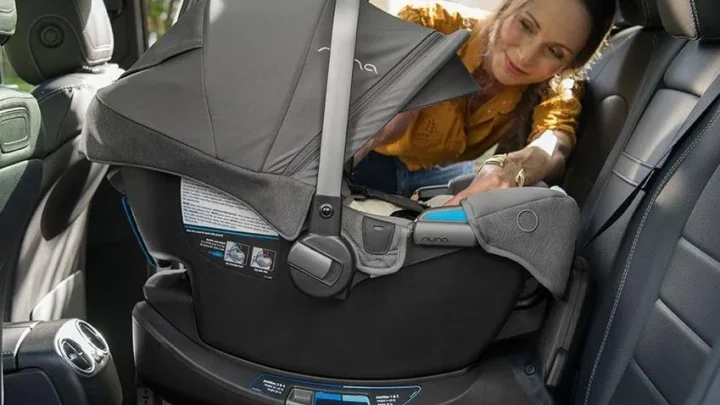
How to Strap Baby in Doona Car Seat Safely
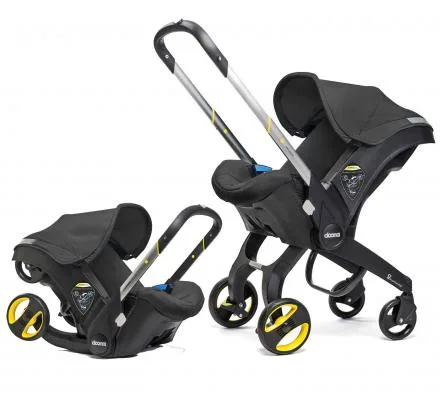
Struggling to figure out how to strap baby in doona car seat correctly? You're not alone. The Doona is a car seat and a stroller in one, and that dual personality fools a lot of parents into treating it like a stroller when it's sitting in the back seat.
That's exactly when harness mistakes happen.
Manufacturer specs confirm the Doona is rear-facing only, built for babies from 4 to 35 lbs and up to 32 inches tall. It meets Federal Motor Vehicle Safety Standard 213 (FMVSS 213), the same US rule every infant seat must pass. So let's walk through the correct method, step by step, and flag the Doona-specific traps along the way.
how to strap baby in doona car seat
Place the baby in the Doona with their back flat against the shell. Route both harness straps over the shoulders. Buckle the two tongues into the central buckle.
Snap the chest clip at armpit level. Tighten the harness and do the pinch test at the collarbone. Confirm the handle is locked upright before you drive.
Why the Doona Is Different (And Why That Matters for Safety)
The Doona has one rule that separates it from almost every other infant car seat on the market. Its handlebar must be in the upright, locked position before the car moves.
Most infant seats let you leave the handle down while driving. The Doona doesn't. Per the Doona user manual, the handle acts as part of the seat's anti-rebound structure when locked upright.
Skip that step and you've removed a layer of protection you paid for. If you're used to a Graco or Chicco where the handle position is flexible, this is the habit you have to unlearn first.
The second thing to understand is the mode confusion. The same seat that clips into a car base also rolls as a stroller with the handle pushed down. That mental flip between "stroller mode" and "car seat mode" is where parents rush, and rushing is where straps end up loose.
In our research across parent forums and safety educator guidance, mode-switching fatigue is the single most common cause of a loose Doona harness.
Image source: Bing (Web (fair-use with source credit))
Your fix is a simple ritual. Every time the Doona clicks into the base, or you buckle it in with the seat belt, run one full check. Handle up.
Harness snug. Chest clip high. Then close the door.
The Doona Harness, Piece by Piece
Before you strap a wiggling baby in, know what each part does. The 5-point harness system holds your child at five points: two shoulders, two hips, and the crotch. That spread distributes crash forces across the strongest parts of a small body.
The chest clip is the piece parents get wrong most. Per Safe Kids Worldwide guidance, it belongs at armpit level, not on the belly. A clip that sits too low lets the straps slide off the shoulders in a crash.
Too high and it presses into the neck.
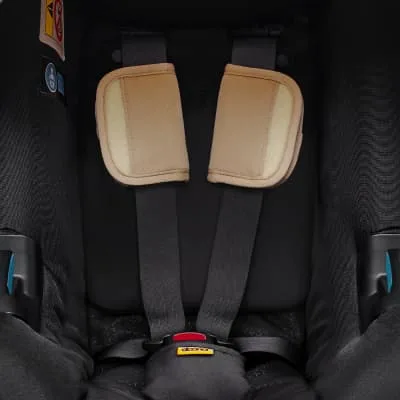
Image source: Bing (Web (fair-use with source credit))
Here's what each component does, in plain terms:
- Shoulder straps: route over the shoulders and through the slots that sit at or just below the shoulder line.
- Buckle tongues: the two metal or plastic tabs that click into the central buckle.
- Central buckle: the crotch buckle where both tongues lock in.
- Chest clip: the sliding retainer that keeps straps on the shoulders at armpit level.
- Harness adjuster strap: the front strap you pull to tighten the whole system.
- Shoulder pads: padding that should stay between the strap and the baby's collarbone, not slid down the arm.
The newborn insert is worth a mention too. Doona ships it for smaller babies. Check the manual for the weight at which it comes out.
Leaving it in past that cutoff pushes the baby forward and changes how the harness sits.
Step-by-Step: Strapping Your Baby In Correctly
This is the core process. Once you've done it ten times, it takes about 30 seconds. When you're learning, give it a full minute and don't rush.
A rushed buckle is a loose buckle.
- Read your specific Doona model's manual first. Doona i, Doona+, and Doona X have small differences in strap routing and insert cutoffs.
- Adjust the handle to the upright locked position. This is a Doona rule, not a general one.
- Loosen the harness fully before you place the baby in. Pull the front adjuster strap to give yourself slack.
- Lay the baby back flat against the seat shell. No thick coats. No bunting under the straps.
- Route both straps over the shoulders. Keep them flat. Twisted straps lose strength.
- Buckle the two tongues into the central buckle. Listen for the click.
- Clip the chest clip at armpit level. Tug it gently to confirm it's closed.
- Tighten the harness using the front adjuster. Pull until the straps lie flat against the body.
- Do the pinch test. Try to pinch a fold of the strap at the collarbone. If you get fabric between your fingers, it's too loose.
- Slide the shoulder pads back into position if they've moved.
That pinch test is your single best check. No slack at the collarbone, no exception. The 1-inch rule also applies to the seat itself: with the base or with the belt path, the seat shouldn't move more than 1 inch side to side or front to back.
If it does, the install is wrong, and the harness doesn't matter until you fix it.
The Mistakes That Actually Cause Injuries
These are the errors that show up again and again in car seat safety checks. None of them are exotic. All of them are fixable in seconds.
- Handle left down before driving. Doona-specific. The seat loses anti-rebound protection.
- Chest clip on the belly. It should sit at armpit level. A low clip lets straps slip off the shoulders. See the image above for the correct position.
- Harness too loose. If you can pinch slack at the collarbone, tighten it more.
- Bulky coat under the straps. Puffy coats compress in a crash, leaving dangerous gaps. Use a blanket over the baby instead.
- Twisted straps. A twisted strap spreads force unevenly. Flatten it before buckling.
- Aftermarket inserts. Strap covers or extra padding not approved by Doona can change how the harness fits. Skip them.
- Newborn insert left in too long. Check your manual's weight cutoff.
- Seat belt or LATCH not fully locked. Tug the belt path. Confirm the click.
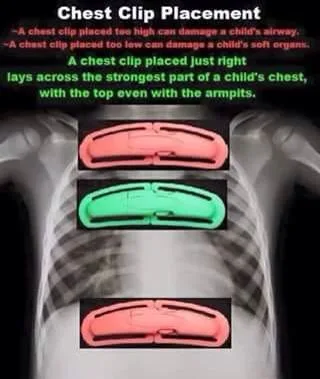
Image source: Bing (Web (fair-use with source credit))
One more: never place a rear-facing Doona in front of an active airbag. In the US, that's a legal and safety rule, not a preference. The back seat is the only correct spot.
Base vs. Baseless Install: What Changes, What Doesn't
The harness rules are identical whether you use the base or not. What changes is the seat install itself, and that's where the recline angle matters.
With the Doona base, the seat clicks in and the base's recline indicator tells you if the angle is right. The bubble or line must sit inside the allowed zone. If it doesn't, adjust the base's recline foot until it does.
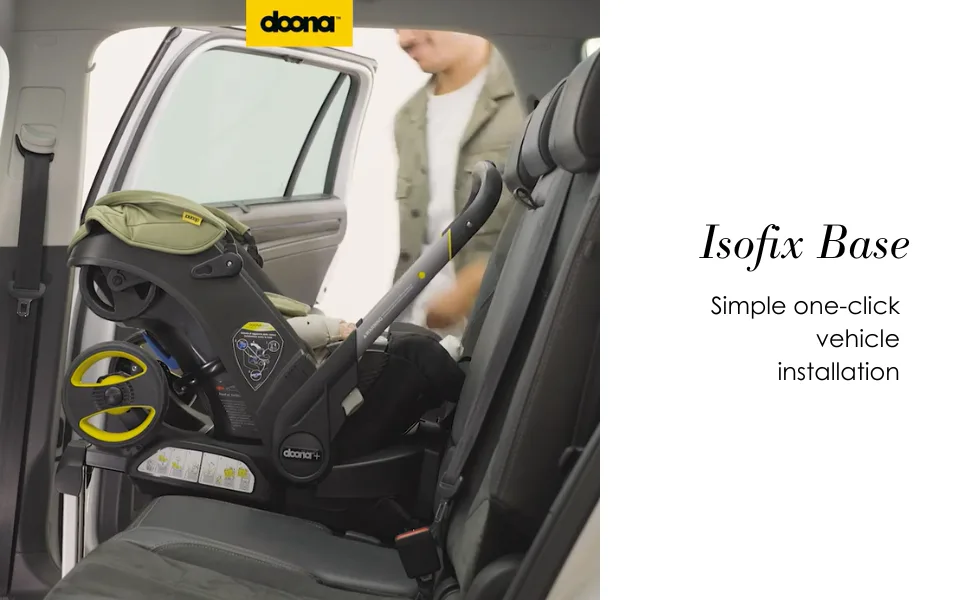
Image source: Bing (Web (fair-use with source credit))
Baseless means you're routing the vehicle seat belt through the Doona's belt path. It's the setup you'll use in taxis, rental cars, and on the far side of a flight. Same harness process, same pinch test, same chest clip height.
The belt just replaces the base.
Here's the short version:
| Setup | What you adjust | Harness rules |
|---|---|---|
| Doona base | Recline angle via base foot, confirm LATCH or belt lock | Identical |
| Baseless | Route vehicle belt through belt path, lock the belt, tug test | Identical |
| Aircraft | Follow the seat label for FAA approval, belt path install | Identical |
Whichever you use, the final check is always the same. Seat moves less than 1 inch. Harness passes the pinch test.
Chest clip at armpit level. Handle up and locked.
Doona-Specific Rules, Legal Notes, and When to Get a Second Check
Doona's handle rule is the standout legal-adjacent detail. The manual specifies the handle must be locked upright while the seat is in a vehicle. Most infant seats don't require that.
Get it wrong and you've quietly disabled the anti-rebound protection Doona designed into the seat.
Check your seat's expiration date too. Doona seats typically expire six to seven years from manufacture, and the date is stamped on the shell. An expired seat has degraded plastic.
That's a genuine safety concern, not a marketing nudge.
Recalls are worth a check as of 2026. The National Highway Traffic Safety Administration (NHTSA) runs a free recall lookup by model and date of manufacture. Run your Doona's DOM through it once when you buy the seat, and again after any secondhand purchase.
One legal ground rule covers every state: never place a rear-facing seat in front of an active airbag. The back seat is the only correct position. Rear-facing until at least age 2 is the American Academy of Pediatrics recommendation.
When should you get a second opinion? If you've read the manual twice and the harness still feels off, find a Child Passenger Safety Technician (CPST). Safe Kids Worldwide runs free car seat check events across the US.
A CPST will look at your actual install in your actual car in about 20 minutes.
Here's a quick if/then guide for the trickier moments:
- If the seat came secondhand, then check the DOM, the expiration date, and the recall database before you trust it.
- If you're flying, then check the FAA approval label on the seat before you board.
- If you've had the seat for months and never had a CPST look at it, then book a free check. Most parents find at least one small fix.
- If you're ever in a crash, then replace the seat. Doona and NHTSA both say don't reuse a seat that's been through a moderate or severe collision.
Keeping the Doona Safe Over Time
Small habits keep a harness working properly for years. Check the straps every few weeks for fraying, stiffness, or a buckle that no longer clicks with a firm snap. A sticky buckle is a warning sign, not a quirk.
Wash the seat pad only as your manual directs. Most Doona pads are removable and machine-washable on a gentle cycle. Never submerge the harness straps or the buckle in water.
Soap and water on a cloth at the surface is the limit. Damp straps lose strength over time.
The newborn insert comes out at a set weight, and Doona lists it in the manual for each model. Once your baby passes that number, pull the insert. It changes the recline and how the harness sits across the shoulders.
Recheck the base install after any long trip or if you move the seat between cars. The 1-inch movement rule doesn't change with time, but a base that's been bumped in a trunk can loosen. A 30-second tug test catches it.
One final check: harness slots. As your baby grows, the shoulder straps need to move up through the correct slots. On a rear-facing seat, the straps sit at or just below the shoulder line.
If the straps are digging below the shoulder, the slot is wrong.
FAQs
How tight should the Doona harness be?
Snug enough that you can't pinch any slack at the collarbone. Run the pinch test: try to grab a fold of strap between your thumb and finger. If fabric pinches, tighten the front adjuster and test again.
The straps should lie flat against the body with no gaps.
Where does the chest clip go on a Doona?
At armpit level. Not on the belly, not up at the neck. A clip that sits too low lets the straps slide off the shoulders in a crash.
A clip too high presses into the neck. Armpit level is the rule every time.
Can I leave the Doona handle down while driving?
No. Doona requires the handle in the upright, locked position before the car moves. Unlike most infant seats, the Doona's handle forms part of its anti-rebound structure.
Handle down means less protection than the seat was designed to give.
Do I need the base to strap my baby in safely?
No. The harness rules are identical with or without the base. Baseless use routes the vehicle seat belt through the Doona's belt path.
It's the setup for taxis, rental cars, and flights. Same pinch test, same chest clip height, same handle-up rule.
What should my baby wear under the Doona harness?
Thin layers only. Puffy coats, buntings, and thick sleep sacks compress in a crash, leaving dangerous slack in the straps. Buckle the baby in thin clothing, tighten the harness, then lay a blanket over the top.
That keeps them warm without compromising the fit.
When can I turn my baby forward-facing in a Doona?
Never. The Doona is rear-facing only for its entire life. It's built for babies from 4 to 35 lbs and up to 32 inches.
Once your child outgrows those limits, you move to a convertible seat, not to forward-facing in the Doona.

Similar Posts