When Can a Baby Car Seat Face Forward? Safety Guide
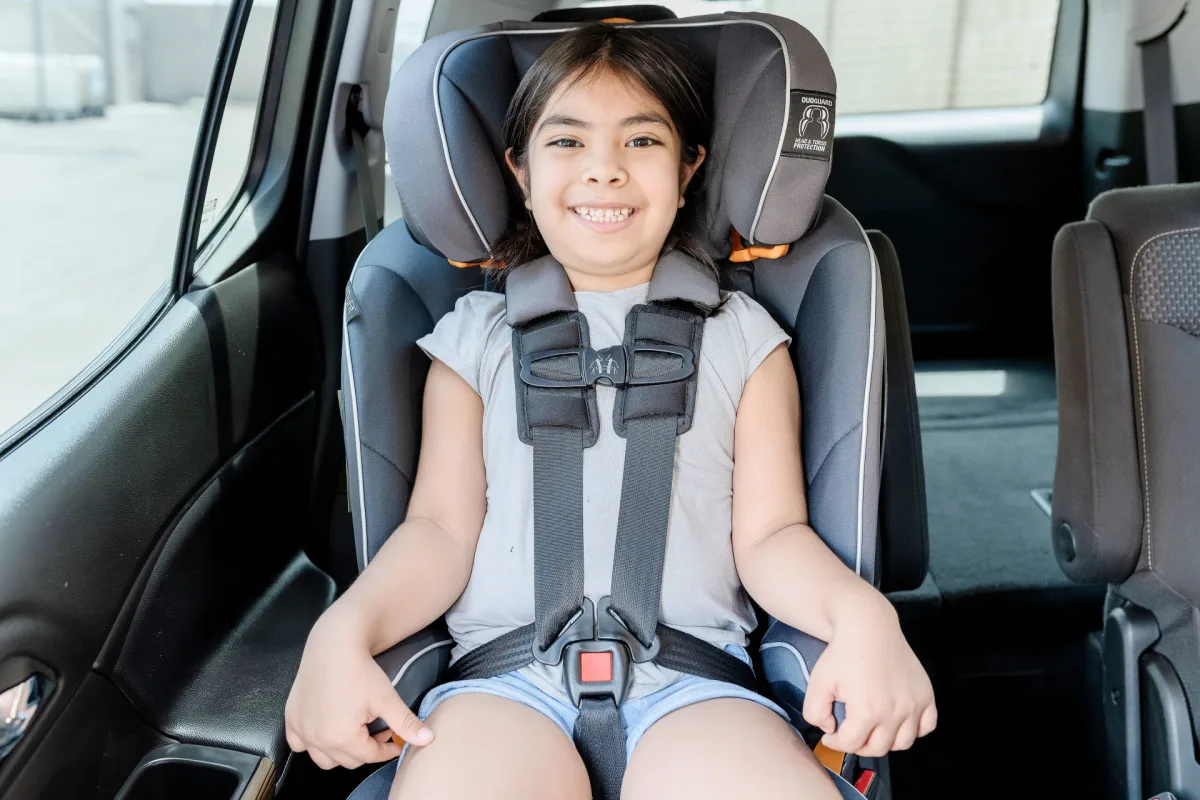
When you're deciding when can baby car seat face forward, the honest answer is messier than the "one year" rule your neighbor swears by. Most parents hit this question somewhere around their child's first birthday and get seventeen different answers from seventeen different people. So let's cut through it: legal minimums, safety recommendations, and your specific seat's limits are three separate things.
The American Academy of Pediatrics recommends keeping children rear-facing until at least age 2, ideally until they outgrow their seat's rear-facing limits. NHTSA says the same. And as of 2026, US state laws still vary wildly, with some requiring rear-facing to age 1 and others to age 2.
Your child's weight, height, and the printed limits on your specific seat matter more than the calendar. Here's how to figure out your actual answer.
when can baby car seat face forward
Your baby can face forward when they've hit the rear-facing limits of their specific car seat, not just a birthday. Most convertible seats allow forward-facing at 40 to 50 pounds and around 43 to 49 inches tall. The AAP recommends waiting until at least age 2.
Check your seat manual first.
The Quick Answer: Why "One Year" Isn't the Real Rule
Image source: Bing (Web (fair-use with source credit))
The one-year rule is a relic, and it's dangerously outdated. It comes from old state laws that set the legal floor at age 1 and 20 pounds, back when infant carriers only rear-faced to 22 pounds. Seats got better.
The advice got better. But the old number stuck around in family conversations.
So what replaced it? Two things. First, pediatric safety bodies now push rear-facing until at least age 2 because crash data shows a real survival advantage.
Second, seat manufacturers started building convertibles that rear-face to 40, 45, even 50 pounds.
That means the honest answer depends on four variables, not one.
- Your child's weight against the seat's rear-facing weight limit
- Your child's height against the seat's rear-facing height limit
- Whether their head still sits at least an inch below the shell top
- Your state's legal minimum age
If those four boxes check out, you can legally flip the seat. Whether you should is a different question, and that's what the next section digs into.
What Actually Determines When You Can Flip the Seat
Age, Weight, Height — Which One Matters Most
Weight and height matter more than age, every time. Age is a rough proxy. A seat has no idea how old your kid is, but it knows exactly what load its shell was crash-tested to handle.
Here's the hierarchy our research keeps landing on:
- Rear-facing weight limit on the seat label
- Rear-facing height limit on the seat label
- The 1-inch rule (head at least 1 inch below the shell top)
- Your state's legal minimum age
Meet all four and the seat is compliant. Miss any one and the seat is either unsafe or illegal, or both.
What Your State and Country Legally Require
US state laws range from 1 year to 2 years, and some only specify weight. As of 2026, a handful of states still allow forward-facing at age 1 with no weight requirement, which lags the AAP badly.
- US: Check your state highway safety office. Minimums range from age 1 to age 2.
- UK: Under UN R129 (i-Size), children must rear-face until at least 15 months. The old R44 standard allowed earlier.
- EU: R129 requires rear-facing to at least 15 months for all new seat approvals.
- Canada: Provinces set minimums, but rear-facing until at least age 1 and 22 pounds is the floor.
- Australia: AS/NZS 1754 requires rear-facing to 6 months legally, with extended rear-facing strongly recommended.
What the AAP and NHTSA Actually Recommend
The AAP's position is blunt: rear-face as long as your seat allows. Age 2 is the floor, not the ceiling. NHTSA echoes this and adds that most kids can stay rear-facing until age 3 or 4 in modern convertibles.
The gap between "legal" and "recommended" is where injuries happen. A parent in a state with a 1-year minimum who flips at 12 months is following the law but ignoring the safety data.
The Real Risks of Turning Too Early
Why Rear-Facing Protects the Spine and Neck
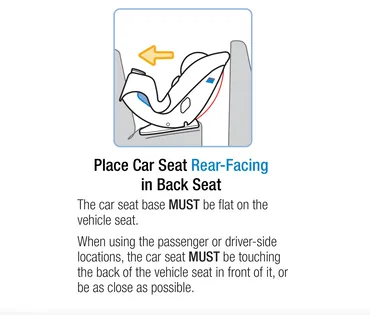
Image source: Bing (Web (fair-use with source credit))
A baby's head is huge relative to their body, and their neck bones don't fully harden until around age 3 to 4. In a forward-facing crash, the body is held by the harness while the head whips forward. That load lands on a neck that isn't built to take it.
Rear-facing changes the physics. The shell cradles the head, back, and spine, and crash forces get spread across the whole surface. The head moves with the seat instead of away from it.
Pediatric trauma research has linked this to a dramatically lower risk of cervical spine injury and internal decapitation, which is exactly what it sounds like. Rare, but survivable only in a rear-facing setup.
The "Legs Look Squished" Myth, Debunked
Your toddler's bent legs are not a safety problem. Kids sit cross-legged, prop their feet on the seatback, or splay their legs to the sides. They're flexible in ways adults aren't.
Injuries to legs in rear-facing crashes are rare and typically minor. Neck and spine injuries in forward-facing crashes are neither. When you weigh those against each other, "they look uncomfortable" stops being a real argument.
When "Legal" and "Safe" Are Two Different Things
Here's the uncomfortable part: state law is a minimum, not a recommendation. The AAP recommends age 2 or beyond. NHTSA says "as long as possible." A state saying "age 1" doesn't make age 1 safe.
We've seen this pattern in other safety domains too. Federal standards from agencies like NHTSA set the floor, and expert bodies push higher. If you're choosing between legal compliance and safety data, follow the safety data.
How to Tell If Your Child Has Outgrown Rear-Facing
Checking the Seat Manual, Label, and Shell Height
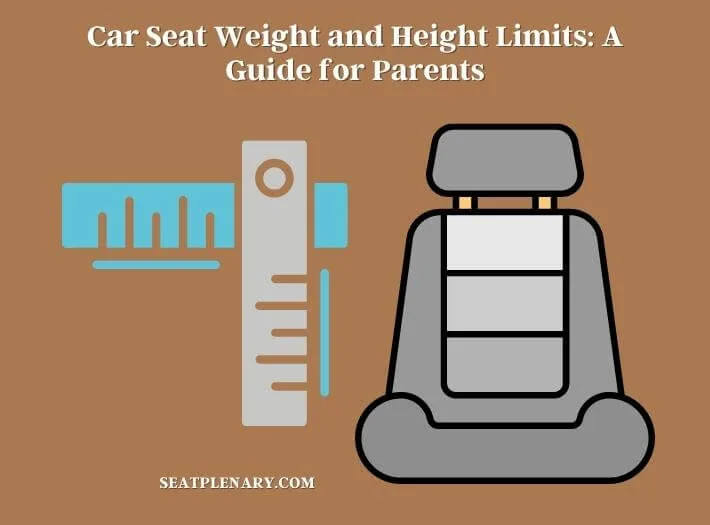
Image source: Bing (Web (fair-use with source credit))
Your seat manual is the single most authoritative document for your specific seat. It overrides general advice, state minimums, and anything you read online. Read the rear-facing section carefully, not just the forward-facing one.
Check the sticker on the side of the shell. It lists exact weight and height limits for rear-facing use. Manufacturer specifications are consistent across units, but always verify against your own seat.
Then measure. Sit your child against the shell and look at where the top of their head lands. Most seats require at least 1 inch of shell above the head, measured from the top of the shell to the crown.
The 1-Inch Rule and Harness Slot Position
The 1-inch rule covers head clearance. The harness slot rule covers strap position.
- Rear-facing: straps at or below the shoulders
- Forward-facing: straps at or above the shoulders
- Chest clip: at armpit level, every ride, no exceptions
If the harness slots are at shoulder level when rear-facing, you're at the upper limit and it's time to consider the flip.
Signs It's Genuinely Time to Flip
Flip when any of these is true:
- Your child hits the seat's rear-facing weight max
- Your child hits the seat's rear-facing height max
- Their head is less than 1 inch below the shell top
- Your state's legal minimum has been reached AND all the above are met
Not a sign it's time to flip: they "look uncomfortable," their legs touch the seatback, they're walking, or their older sibling flipped at that age.
Step-by-Step: Switching to Forward-Facing Safely
Re-Routing the Belt Path or LATCH Strap
Every convertible seat has a different belt path for forward-facing. Read the manual section for that mode, not the rear-facing one. Remove the seat from the vehicle, flip it around, and re-thread the seat belt or LATCH strap through the forward-facing path.
Tighten until there's less than 1 inch of movement at the belt path. Test at the belt path itself, not at the head or foot of the seat.
Attaching and Tightening the Top Tether
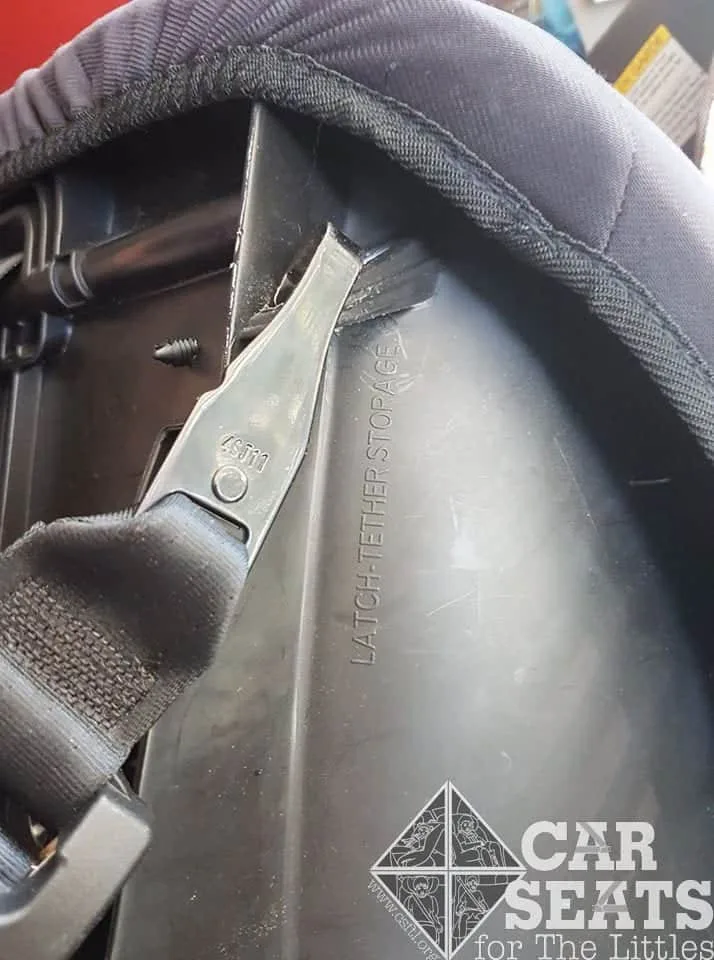
Image source: Bing (Web (fair-use with source credit))
The top tether is not optional in the US. It's a strap that hooks to a designated anchor point (usually behind the vehicle seat) and cuts head excursion significantly in a crash.
Find the tether anchor in your vehicle owner's manual. Hook it, then pull the tail strap to remove slack. Most seats have a tension indicator or a simple pull-to-tighten mechanism.
Skip this step and you've left a key safety feature unused.
Adjusting Harness, Recline, and Chest Clip
Move the harness straps to at or above the shoulders. Set the recline to the forward-facing position listed in the manual, which is usually more upright than rear-facing. Re-check the chest clip at armpit level.
Final Install Check — and When to See a CPST
Grab the seat at the belt path and try to move it side to side and front to back. You want less than 1 inch in any direction. If it moves more, tighten the belt or LATCH strap and try again.
If you're unsure, find a Child Passenger Safety Technician (CPST). Safe Kids Worldwide runs free inspection events across the US. It takes 20 minutes and it's the single highest-value safety step most parents skip.
Common Mistakes That Put Kids at Risk
Missing Tether, Wrong Harness Slots, Loose Installs
A missing top tether is the number-one forward-facing error our research keeps finding. NHTSA field studies have shown that a large share of forward-facing seats are installed without the tether attached, which is a free safety feature left on the table.
Wrong harness slots come next. Rear-facing straps go at or below the shoulders. Forward-facing straps go at or above.
Flip the seat without moving the slots and the harness can slide off in a crash.
Loose installs round out the top three. Grab the seat at the belt path. If it moves more than 1 inch side to side or front to back, it's not tight enough.
Bulky Coats, Aftermarket Inserts, Expired Seats
Bulky winter coats create hidden slack under the harness, and that slack turns into excursion in a crash. The fix is simple. Put the child in the seat without the coat, tighten the harness, then lay the coat over them like a blanket.
Aftermarket inserts, strap covers, and head supports that didn't ship with the seat void its certification. They weren't crash-tested with your specific shell, and they can change harness geometry in ways nobody has validated.
Check the expiration date stamped on the shell. Most seats expire 6 to 10 years from manufacture because the plastic degrades. An expired seat is a gamble.
Secondhand Seats and Unknown Crash History
A seat that's been in a moderate or severe crash should be replaced, even if it looks fine. The plastic may have micro-fractures that aren't visible.
Secondhand seats often arrive without a manual, missing parts, or with a recalled model number. Manufacturer specs confirm that even one missing component can compromise the entire restraint system. If you can't verify the history, don't use it.
Forward-Facing vs. Rear-Facing vs. Booster: What Comes Next
How Long to Stay Forward-Facing in a Harness
Stay in a forward-facing harness until your child maxes out the seat's forward-facing weight or height limit. Most convertibles harness to 40 to 65 pounds and around 49 inches tall.
That usually lands somewhere between ages 4 and 7. The harness is doing real work here, so don't rush the transition to a booster just because your child is "big for their age."
| Seat Stage | Typical Age Range | Typical Weight Range | Restraint Type |
|---|---|---|---|
| Rear-facing | Birth to 2-4 years | 4-50 lb | 5-point harness |
| Forward-facing harness | 2-7 years | 40-65 lb | 5-point harness + tether |
| Belt-positioning booster | 4-12 years | 40-120 lb | Vehicle seat belt |
When to Move to a Belt-Positioning Booster
Move to a booster when the harness is fully outgrown and your child meets the booster's minimums. Those minimums typically require age 4+, 40 pounds, and enough maturity to sit still for the whole ride.
A wiggly 3-year-old in a booster can slide out from under the lap belt in a crash. That's why harness time matters. Boosters are the next step, not a shortcut.
UK, EU, and US Rules Side by Side
| Region | Rear-Facing Minimum | Booster Requirement | Standard |
|---|---|---|---|
| US | Varies by state (1-2 years) | Varies by state | FMVSS 213 |
| UK | 15 months | Until 12 years or 135 cm | UN R129 (i-Size) |
| EU | 15 months | Until 12 years or 150 cm (varies) | UN R129 |
The UK and EU are ahead on the rear-facing floor. The US leaves it to states, which is why the national picture is so uneven as of 2026.
FAQs: What Parents Ask Most
Can I turn my toddler around at age 2?
Only if they've also hit the seat's rear-facing weight limit, height limit, and the 1-inch head clearance rule. Age 2 is the AAP's floor, not a trigger. If your seat rear-faces to 50 pounds and your 2-year-old is 28 pounds, keep them rear-facing.
What if my child is tall for their age?
Height is a real factor, but not the one most parents think. The trigger is head position relative to the shell top, not total height. A tall toddler with a short torso can rear-face much longer than a shorter child with a long torso.
Measure shell clearance, not overall length.
Are my child's legs really at risk rear-facing?
No. Leg injuries in rear-facing crashes are rare and typically minor. Neck and spinal cord injuries in forward-facing crashes are neither.
Every major pediatric safety body has debunked the legs concern.
Is it safe to forward-face in the front seat?
No. Children under 13 should ride in the back seat. A rear-facing seat must never go in front of an active frontal airbag.
Forward-facing in the front seat is legal in some places but never safer than the back.
Do forward-facing seats always need a top tether?
Yes in the US, unless the seat has no tether strap. The tether significantly reduces head excursion. Canada also requires it.
Some other regions recommend it. If your seat has a tether and your vehicle has an anchor, use both.

Similar Posts































