How to Travel With a Baby Car Seat: Easy Guide
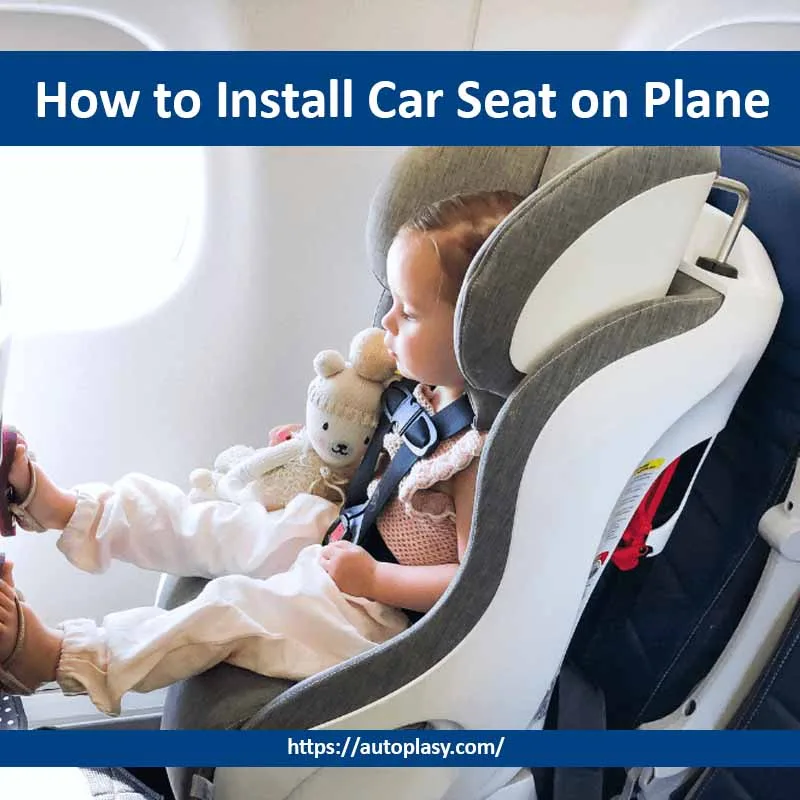
Unless you're driving the whole way, figuring out how to travel with a baby car seat comes down to one thing: keeping your child in a seat that's actually certified for the vehicle they're in. Flying, renting, or taking a rideshare each change the answer, and the wrong shortcut can turn a routine trip into a real safety risk.
The stakes here aren't theoretical. The National Highway Traffic Safety Administration (NHTSA) requires car seats sold in the US to meet Federal Motor Vehicle Safety Standard 213, and the FAA only permits seats labeled as certified for aircraft use. Get the label, the install, or the condition of the seat wrong, and the protection you're counting on isn't there.
Here's how to sort it out before you leave.
how to travel with a baby car seat
Buy a seat for your baby and install the car seat onboard when you fly. The car seat must carry an FAA-approved label to be used in the air. For rental cars and rideshares, bring your own seat and install it yourself.
Gate-checking is a fallback, not the safest plan.
Why This Isn't Just a Packing Question
This is a child safety topic, not a logistics one. In our research, the failure points almost never come from the seat itself. They come from how it's transported, installed, or replaced, and those are the parts most parents improvise.
Three official bodies shape every decision here. NHTSA sets car seat standards and runs the recall database. The Federal Aviation Administration (FAA) governs what can be used on an aircraft.
The American Academy of Pediatrics (AAP) recommends keeping children rear-facing until at least age 2, or until they max out the seat's rear-facing limits.
What actually changes your plan is your mode of travel. If you're flying, the car seat question becomes an aviation one. If you're renting a car, it becomes an installation question.
If you're using a rideshare, it becomes an availability question, and that's the one most parents underestimate.
Image source: Bing (Web (fair-use with source credit))
Here's the thing about the "we'll figure it out at the airport" approach. Airport and rental-counter staff aren't child passenger safety technicians. They can't verify your install, and they usually won't tell you a checked seat took a hard hit somewhere between the jet bridge and the cargo hold.
The Three Ways to Fly With a Car Seat, and What Each One Really Costs You
There are only three real options when you fly. Each one trades money, hassle, and safety differently, so let's walk through them honestly.
Buying a seat and installing it onboard
This is the safest option, full stop. Your baby rides in a seat you know, installed the way you installed it, for the entire flight. The FAA requires the seat to carry approval language and to be placed in a forward-facing aircraft seat, typically a window seat.
The tradeoff is cost. You're buying an extra ticket, which on a domestic round trip can run anywhere from 200 to 600 dollars or more depending on the route and how early you book. You also need to manage a car seat through security and down a narrow aisle.
If your baby is under 2, you're not legally required to buy a seat. But the seat is the only way to guarantee your child is restrained during turbulence, and clear-air turbulence has injured lap-held infants. That's a risk you're choosing to accept, not one you can eliminate another way.
Gate-checking versus checking it with your luggage
Gate-checking means handing the seat over at the jet bridge and getting it back when you land. It sounds gentler than full cargo, and it usually is, but the seat still travels outside your control and still gets stacked and tossed.
Checking the seat as regular baggage is the riskiest version. It goes through the full baggage system, and you have no way of knowing what happened to it. A padded travel bag helps reduce scuffs, but it can't tell you whether the shell took a hard drop.
Key point: a car seat involved in a hard impact needs to be replaced, not inspected and cleared. Even if it looks completely fine, the internal structure can be compromised in ways you can't see.
Flying as a lap infant
If you choose a lap infant, the FAA allows it for children under 2 on domestic US flights. Your baby rides on your lap with an added loop belt, and you check or gate-check the car seat for use on the ground.
This saves money and space. It also means your child has no dedicated restraint during the most unpredictable parts of the flight. Some countries, including Australia, don't allow lap infants at all, so this option disappears entirely on certain routes.
Side-by-side comparison
| Option | Cost | Safety | Hassle | Damage risk |
|---|---|---|---|---|
| Seat onboard | Highest (extra ticket) | Highest | Highest | None (you control it) |
| Gate-check | Low | Medium | Low | Medium |
| Check with luggage | Low | Lowest | Lowest | Highest |
| Lap infant | Lowest | Lowest in air | Lowest | Depends on storage |
The short version: seat onboard if you can afford it, gate-check if you can't, and never check a seat you're planning to rely on for years without knowing its history afterward.
Airlines, Rideshares, and Rental Cars: The Rules Nobody Tells You Until You're at the Gate
Each of these has its own rulebook, and mixing them up is where trips go sideways. Let's take them one at a time.
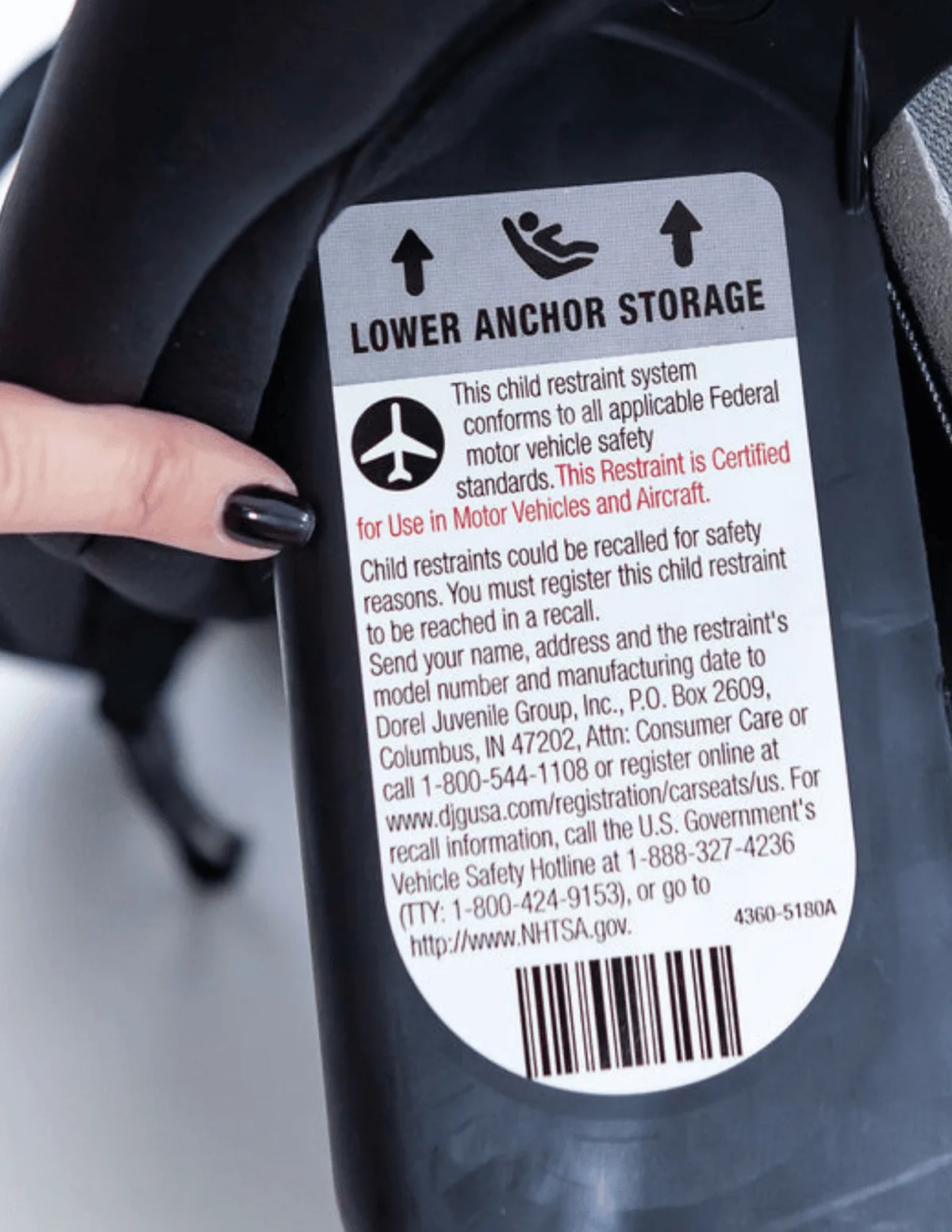
Image source: Bing (Web (fair-use with source credit))
FAA labels, window seats, and why bulkhead rows are off-limits
The FAA requires an approved car seat to be used in a forward-facing seat, and airlines generally require a window seat for the install. That's because a car seat in the middle or aisle blocks egress for other passengers.
Bulkhead rows often can't accept a car seat because the seat has no seat in front of it for bracing, and the armrests are fixed. Some airlines also restrict car seat use in business or first class. If you're flying with a seat, call the airline before you book and confirm both the policy and the seat assignment.
Rideshare car seat services, useful but not a bet worth making
Uber and Lyft both offer car seat options in some markets, but availability is thin. In our review of rider reports, the seat-equipped vehicles are frequently unavailable, especially at peak times and in smaller cities.
If you're relying on a rideshare to move your baby, bring your own seat or book a service that guarantees one in advance. An app that "sometimes" has a car seat isn't a plan. It's a coin flip with a child in the car.
Rental car seats, what you're actually getting
Rental companies will rent you a car seat, and the condition is a genuine unknown. You won't know its history, its expiration date, or whether it's been in a crash. You also won't have the manual for a correct install.
If you must use one, inspect it before you leave the lot. Check for cracks, a legible manufacture date, and a working harness. Better yet, reserve one as a backup and bring your own seat as the primary.
International travel and why your US seat might not be legal abroad
This one catches people off guard. A US-certified seat meeting FMVSS 213 may not be legal in countries that require ECE R44 or R129 (i-Size) certification, and vice versa. Some rental agencies abroad only stock forward-facing seats, which aren't appropriate for an infant.
Check the destination's requirements before you fly. If your seat isn't legal there, you may need to rent or buy a locally certified seat for the ground portion of the trip.
Step-by-Step: Getting a Car Seat From Your Front Door to a Correct Install
Here's the practical sequence, from the week before you leave to the moment your baby is buckled in at your destination.
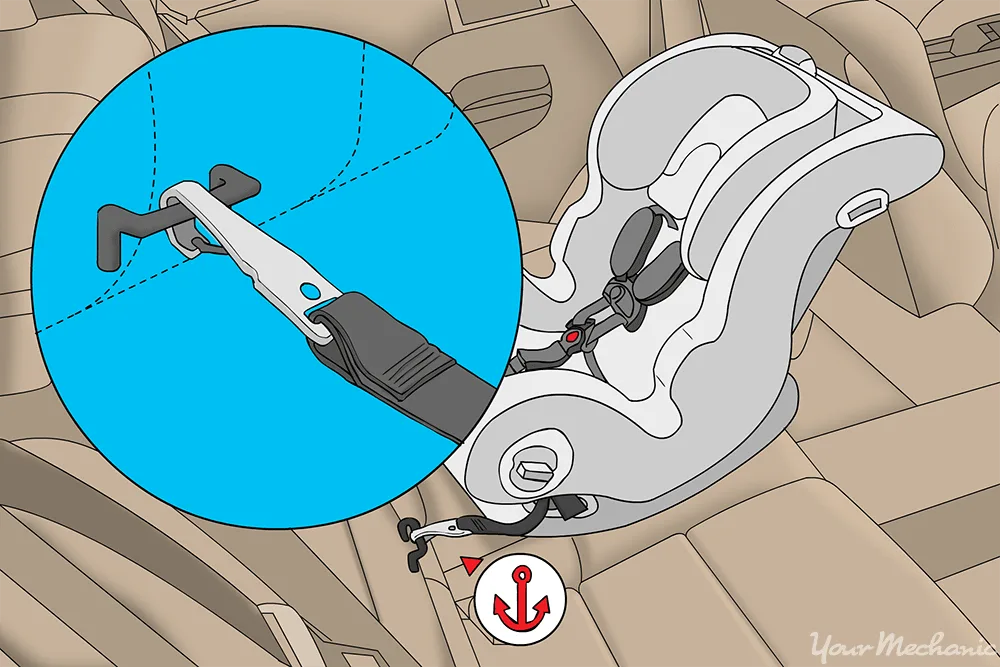
Image source: Bing (Web (fair-use with source credit))
Before you leave: expiration, recalls, and the manual on your phone
Check the manufacture date on the seat. Most car seats expire 6 to 10 years from that date, though it varies by brand. Check the NHTSA recall database for your specific make and model, and download the manual to your phone so you have it without Wi-Fi.
Airport day: security, preboarding, and installing on the plane
Car seats go through the security X-ray in most cases, and TSA doesn't count them as a carry-on. Preboard if the airline allows it, since installing a seat in a narrow row takes a few minutes. Install rear-facing for an infant seat, and route the aircraft seat belt through the correct path per the manual.
In the rental car or rideshare: checking anchors and the one-inch test
First, identify the anchor type. US vehicles use LATCH, and many other countries use ISOFIX. If the anchors aren't accessible, use the seat belt with a locking clip or the seat's built-in lock-off.
Then run the one-inch test. Grab the seat at the belt path and tug. It should move less than 1 inch side to side and front to back.
More than that means the install isn't tight enough, and you need to redo it.
After the trip: inspecting the seat and knowing when to replace it
Once you're home, look the seat over. Check for cracks in the shell, frayed harness straps, and any missing parts. If the seat was dropped hard, or was in the cargo hold during a rough flight, think carefully about whether it should be replaced.
Per NHTSA guidance, a seat involved in a moderate or severe crash should be replaced. Some manufacturers go further and say replace after any crash. When in doubt, replace it.
A new seat costs far less than the protection you'd be gambling with.
Mistakes That Actually Cause Injuries, and the Ones That Just Ruin Your Trip
Most of the harm here comes from a handful of recurring errors. Here are the ones worth knowing before you travel.
The "it looks fine" trap after a hard drop or crash
A car seat can absorb damage internally without any visible sign. If the seat took a hard hit, whether in a crash or a baggage handler's toss, don't trust your eyes. Replace it.
Loose installs, wrong recline, and harness errors
A loose install is the most common mistake. If the seat moves more than 1 inch at the belt path, it won't perform as designed. A wrong recline angle is close behind, and it matters most for newborns, whose heads need proper support.
Harness errors are the sneaky ones. Straps should be snug against the body, with no more than a finger's width of slack at the collarbone. The chest clip sits at armpit level.
If you can pinch the strap horizontally, it's too loose.
Secondhand seats, expired seats, and mystery-history seats
A free seat from a relative is only safe if you know its full history. If it's been in a crash, if the harness is frayed, if the label is missing, or if it's past its expiration date, don't use it. There's no way to certify a seat's history after the fact.
If/then: quick troubleshooting
- If the install moves more than 1 inch, then redo it using the lock-off or a locking clip.
- If the seat has no visible manufacture date, then treat it as expired and don't use it.
- If you're flying and the seat has no FAA label, then it can't be used onboard.
- If the rental seat has an unknown history, then use your own seat instead.
What to Pack, What to Skip, and What to Buy for Travel Specifically
You don't need much, but a few items genuinely earn their place. Others are money traps dressed up as travel gear.
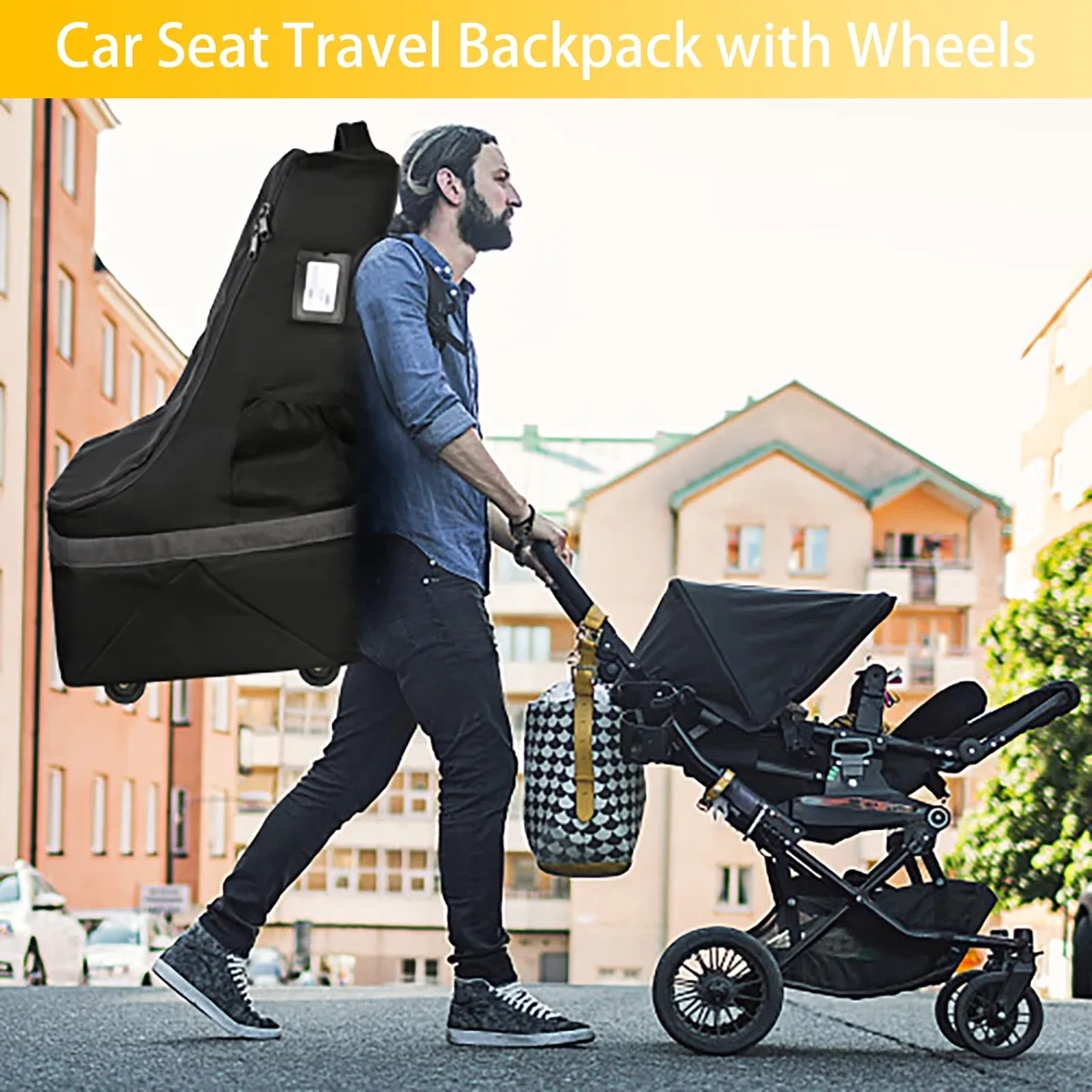
Image source: Bing (Web (fair-use with source credit))
Travel bags, carts, and hard cases
A padded travel bag with wheels turns a heavy convertible into rolling luggage and adds a layer of protection if you gate-check. A hard case offers more protection but takes up space. If you're carrying the seat onboard, skip both and use a travel cart to move it through the airport.
Dedicated lightweight travel seats versus risking your everyday seat
A lightweight travel seat is a reasonable investment if you fly often. It spares your primary seat from baggage handling, and it's easier to carry. The catch is that most travel seats have lower weight and height limits, so check whether your child still fits before you buy.
The gear that sounds smart but isn't
Some products sound helpful and aren't. A "car seat luggage tag" doesn't protect anything. A cheap universal bag with no padding is basically a sack.
And any product that promises to make a seat "safe" after a crash is selling you something that doesn't exist.
What to Pack, What to Skip, and What to Buy for Travel Specifically
You don't need much, and a few items earn their place while others waste money.
Travel bags, carts, and hard cases
A padded travel bag with wheels turns a heavy convertible into rolling luggage. It adds a layer of protection if you gate-check. A hard case offers more protection but eats space, so skip it if the seat rides in the cabin.
Dedicated lightweight travel seats versus risking your everyday seat
A lightweight travel seat is worth it if you fly often. It spares your primary seat from baggage handling, and it's easier to carry through an airport. Most travel seats have lower weight and height limits, so check that your child still fits before you buy.
The gear that sounds smart but isn't
Some products sound helpful and aren't. A "car seat luggage tag" protects nothing. A cheap unlined bag is basically a sack.
And any product promising to make a crashed seat "safe again" is selling something that doesn't exist.
Quick packing checklist
- Padded travel bag with wheels (for gate-check)
- Seat manual downloaded to your phone
- Locking clip if your seat doesn't have a built-in lock-off
- Thin blanket or sun shade for the buckle
- Contact card taped to the seat if you check it
FAQs About Traveling With a Baby Car Seat
Can I use my car seat on a plane?
Only if it carries an FAA-approved label. The seat must be installed in a forward-facing aircraft seat, usually a window seat. If the label is missing or doesn't mention aircraft use, the airline can refuse it.
Is it safe to gate-check my car seat?
Gate-checking is safer than full cargo handling, but the seat is still out of your control. Inspect it carefully when you get it back. Look for cracks, frayed straps, and any sign of a hard impact.
Do I need to buy a seat for my baby on a plane?
For domestic US flights, no. The FAA allows lap infants under 2. Buying a seat is still the safest option, because it gives your baby their own restraint during turbulence and takeoff.
Can I rent a car seat with a rental car?
Yes, most rental agencies rent seats. The catch is you won't know the seat's history or expiration date. Inspect it before you drive off, or bring your own seat as a backup.
How do I install a car seat in a rental car?
Identify the anchor type first. US vehicles use LATCH, and many other countries use ISOFIX. Run the one-inch test at the belt path.
If it moves more than 1 inch, redo the install or use the seat belt with a locking clip.
What if my baby's car seat gets damaged in transit?
Replace it. A car seat that took a hard impact may have internal damage you can't see. Per NHTSA guidance, seats involved in a moderate or severe crash should be replaced, and many manufacturers say the same after any crash.
The Short Version: A Decision Guide by Trip Type
Here's the two-minute version, sorted by how you're getting there.
If you're flying
Buy a seat and install the car seat onboard if you can afford the ticket. Gate-check as your fallback, and never check a seat you plan to rely on for years without knowing what happened to it.
If you're renting a car
Bring your own seat whenever possible. If you must use a rental seat, inspect it before you leave the lot and verify the manufacture date. Install it yourself and run the one-inch test.
If you're using a rideshare
Don't count on an app to have a car seat when you need one. Bring your own seat, or book a service that guarantees one in advance. Availability is too thin to gamble on.
If you're traveling internationally
Check the destination's certification requirements before you fly. A US seat meeting FMVSS 213 may not be legal where ECE R44 or R129 is required. Confirm what's allowed before you board.
The one rule that covers everything
Never trade safety for convenience. A seat that's expired, damaged, or of unknown history doesn't protect your child, no matter how carefully you install it. When in doubt, replace it or bring your own.

Similar Posts































