Should a Baby Car Seat Go in the Middle? Safety Guide
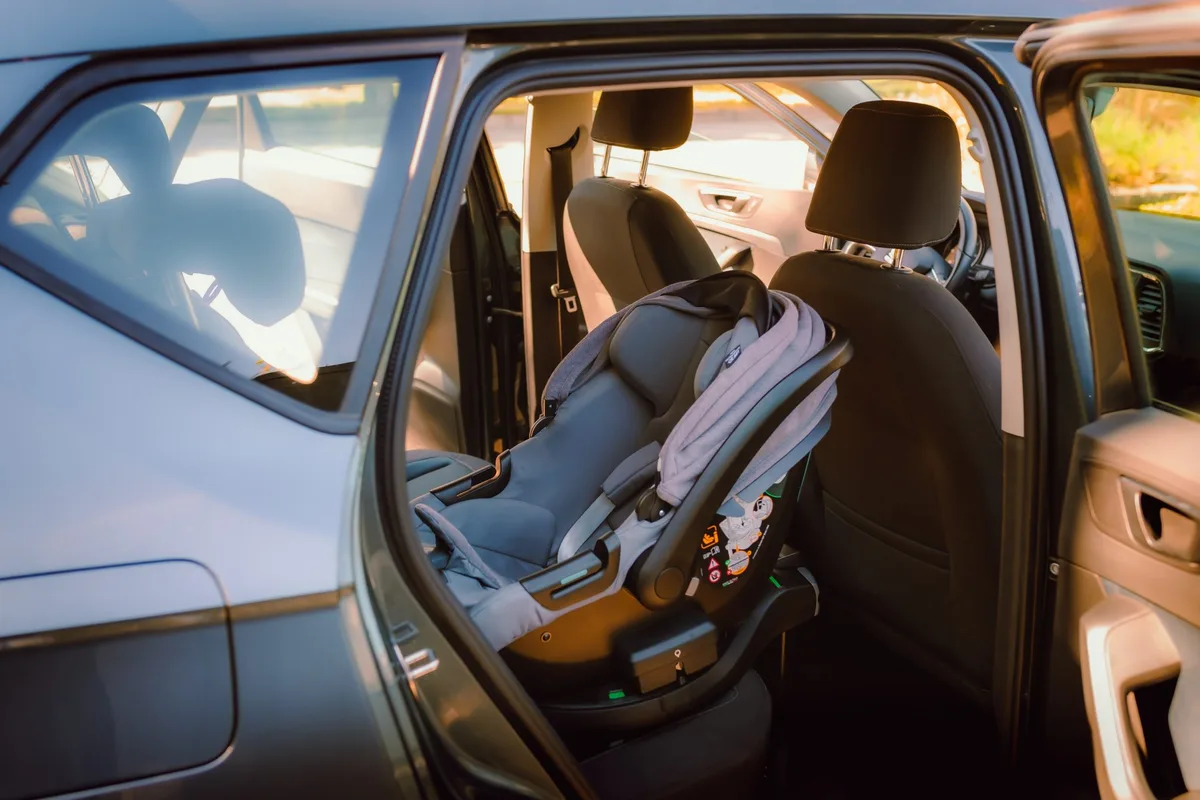
The middle seat has been the gold standard for car seat placement since the 1980s, and most parents hear it before they even leave the hospital. But "safest seat" only holds if the seat installs correctly, and plenty of vehicles make that nearly impossible. So when families ask us whether a baby car seat should be in the middle, the honest answer is: it depends on your car, your install, and your family size.
In our research, the center position does reduce injury risk in side-impact crashes compared to outboard seats, based on crash data analyzed by the Children's Hospital of Philadelphia. However, manufacturer specifications indicate that many U.S. sedans don't have center LATCH anchors at all, which changes the install entirely (more on that below). Here's how to figure out what actually works for your vehicle.
should baby car seat be in the middle
Yes, the middle is safest when you can install the seat tightly. It's furthest from side impacts. But it only counts if the fit is secure.
A loose center install is worse than a tight outboard one. Most CPSTs say the best position is wherever the seat fits correctly.
Why the Middle Seat Gets So Much Hype — And Where That Advice Breaks Down
Image source: Web (Bing) / carseatsmom.com (Web image (fair-use with source credit))
The "middle is safest" rule comes from real crash data. Side-impact crashes cause a huge share of child passenger injuries, and sitting in the middle puts distance between your baby and both doors. NHTSA has echoed this for years in its Child Passenger Safety guidance.
But here's what the rule leaves out: it assumes the seat installs well there. That's not always true. A 2015 study from the University of Pennsylvania and CHOP found that center seating reduced injury risk by up to 43%, but only when the seat was installed properly.
A bad install in the middle offers no advantage.
The practical truth: a solid outboard install beats a sloppy center install every single time. Install quality comes first. Position comes second.
What the Advice Usually Ignores
Most guides skip four big factors that matter in real life:
- Whether your car's owner's manual allows a car seat in the center
- Whether your center seat is flat, humped, or too narrow for the base
- Whether your vehicle has center LATCH anchors or just a seat belt
- What happens when a second child needs a seat too
Ignoring these doesn't make the middle unsafe. It just makes the recommendation useless for a lot of families.
The Crash Physics Behind the Center Position
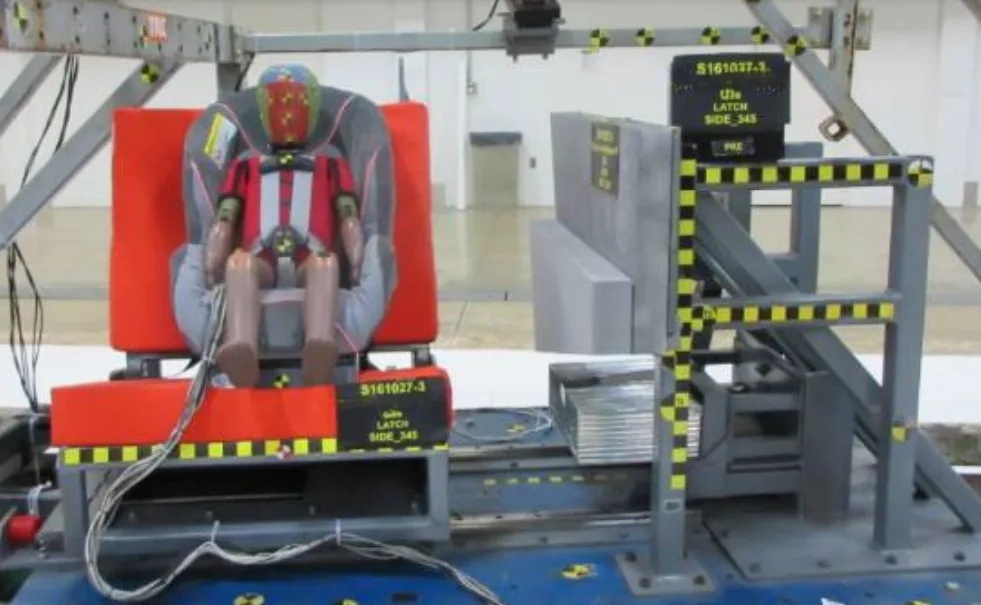
Image source: Bing (Web (fair-use with source credit))
Cars are built to crumple from the sides. That crumple zone absorbs energy before it reaches the cabin. A child in an outboard seat sits closer to that crumple zone.
A child in the center sits behind the strongest part of the rear structure.
In a T-bone crash, the center seat gives your baby more distance from the intrusion point. Distance equals time. Time equals lower peak forces on the small body.
That's the mechanism behind the injury data.
Rear-facing car seats add another layer. Their shells spread crash forces across the baby's back and head. Combine that with the center position and you get the best theoretical protection available.
Front vs. Rear Impact
Center wins on side impacts. It's roughly equal on front impacts. For rear impacts, position barely matters.
Side impact is where the middle delivers its statistical edge.
The Catch: Distance Only Helps If The Seat Stays Put
Crash forces hit the seat before they hit the child. If the install is loose, the seat shifts and the child moves with it. That movement eats up the safety margin the center position would otherwise give you.
Tight install first, position second. Always.
The 5 Things That Decide Whether the Middle Works in Your Car
1. Does Your Vehicle Even Allow It?
Open your owner's manual to the car seat section. Look for a diagram of approved seating positions. Some vehicles explicitly disallow car seats in the center.
Some allow the center only with a seat belt, not LATCH. Some allow both. The manual is the final word, not the internet.
2. Can You Get a Tight Install?
Push the seat side to side at the belt path. It should move less than 1 inch. If it drifts further, the install fails.
A humped or narrow center seat often causes this. Try the outboard position instead.
3. Do You Have Center LATCH — And Should You Use It?
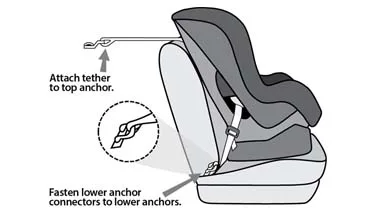
Image source: Web (Bing) / healthychildren.org (Web image (fair-use with source credit))
LATCH stands for Lower Anchors and Tethers for Children. It's the U.S. standardized anchor system for installing car seats without a seat belt. Many U.S. sedans don't have a dedicated center LATCH anchor set, so parents assume they can borrow one anchor from each outboard seat.
Most car seat and vehicle manufacturers forbid this.
Borrowing creates a non-standard spacing that the seat wasn't crash-tested with. If you have no dedicated center anchors, use the seat belt instead. It's just as safe when the belt locks properly.
4. What Happens When Baby #2 Arrives?
Two kids means both outboard seats get used eventually. Many parents move the first seat to the middle, only to move it back outboard a few months later. If a second baby is on the way, plan the layout early and avoid reinstalling twice.
5. Can You Actually Load and Unload Without Wrecking Your Back?
Reaching over an outboard seat to buckle a baby in the middle is awkward. It strains the lower back and shoulders. Some parents do it fine.
Others find it painful within weeks. If loading the middle hurts, the seat won't get used correctly, and that's a real safety problem.
Center vs. Outboard: An Honest Side-by-Side
| Factor | Rear Center Seat | Rear Outboard Seat |
|---|---|---|
| Side-impact protection | Highest | Lower |
| Front/rear impact protection | About equal | About equal |
| Center LATCH availability | Rare in sedans, common in some minivans | Almost always available |
| Seat belt install | Usually possible | Usually possible |
| Ease of loading | Harder, awkward reach | Easier, direct access |
| Two-kid layout | Hard to fit both in center+outboard | Natural fit for two seats |
| Three-across seating | Often the only workable spot | Blocks one side door |
The takeaway: center wins on protection, outboard wins on practicality. Both are safe when installed correctly. Neither is safe when installed poorly.
Installing a Car Seat in the Middle: Step-by-Step
Before You Start: Read Both Manuals
You need two documents: your vehicle's owner's manual and your car seat's manual. The vehicle manual tells you which positions allow a car seat and whether LATCH is available there. The seat manual tells you how to route the belt or anchors and what recline angle to use.
Seat Belt vs. LATCH in the Center
If your car has dedicated center LATCH anchors, you can use them. Check the seat and vehicle manuals for weight limits. LATCH typically stops being usable when the combined weight of child plus seat hits 65 lbs (29.5 kg).
If you don't have dedicated center anchors, use the seat belt. Route the lap-and-shoulder belt through the correct belt path, then lock it. Most modern retractors lock when fully pulled out.
Older vehicles may need a locking clip.
The Recline Angle and Level Indicator
Newborns need a recline around 30 to 45 degrees. The seat has a level indicator to guide you. Don't eyeball it.
If the center seat has a hump, a rolled towel or foam pool noodle under the base may be needed to hit the correct angle.
The 1-Inch Test and What It Really Means
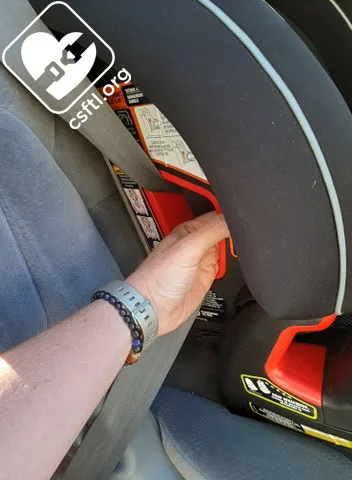
Image source: Web (Bing) / csftl.org (Web image (fair-use with source credit))
Grab the seat at the belt path. Push and pull with your non-dominant hand, using moderate force. The seat should move less than 1 inch (2.5 cm) in any direction.
That's the federal standard installers test against.
Test at the belt path, not the top of the seat. A high-back booster or a tall convertible will wobble at the top even with a perfect install. That's normal.
If your center install moves more than an inch, don't force it. Move the seat outboard and test again.
Get It Checked by a CPST
CPST stands for Child Passenger Safety Technician. These are certified installers trained on car seat mechanics and vehicle compatibility. NHTSA lists inspection stations on its site.
Many fire departments offer free checks. This takes 20 minutes and catches mistakes that are hard to see yourself.
Mistakes That Turn a Safe Middle Install Into a Dangerous One
Using Borrowed LATCH Anchors
Borrowing one lower anchor from each outboard seat looks clever. It's usually forbidden. The spacing doesn't match what the seat was crash-tested against, so the install isn't validated.
Check both manuals before you try.
Forgetting the Top Tether
A top tether anchor reduces forward head movement in a crash. Many center positions don't have one. If yours doesn't, you can still install the seat with the seat belt.
But you lose that extra restraint. Read the seat manual for what's allowed.
Skipping the Recline Adjustment After Install
Recline changes once the seat is tight against the vehicle cushion. Check the level indicator again after final tightening. A newborn with too little recline can slump forward and block their airway.
Adding Aftermarket Padding
Seat cushions, strap covers, and head supports sold outside the seat's original box can void the crash rating. They change how the harness sits on the baby. Skip them.
Never Re-Testing After Someone Else Installs
Grandparents, babysitters, and rideshare drivers install seats differently. Always re-check the 1-inch movement before your baby rides. It takes 30 seconds.
The Middle Seat by Family Setup: Who It Works For, Who It Doesn't
One Child, One Vehicle
This is the middle's best-case scenario. If your car allows a center install and you get under 1 inch of movement, use it. You get maximum side-impact protection and no layout conflicts.
Two Kids, One Back Seat
With two children, one usually goes center and one outboard. That means one child loses the center advantage. Some parents alternate seats on long trips.
Others accept the trade-off as the cost of having two kids in one row.
Three-Across and Narrow Benches
Three-across setups often require the center position for the middle child. Narrow car seats like the Diono Radian or Clek Foonf are popular for this. Verify your vehicle's bench width and door clearance before buying.
Grandparents, Rideshares, and Rental Cars
Secondary vehicles are the biggest source of bad installs. Rental fleets vary wildly on LATCH availability. If your child rides in a borrowed car, do a fresh install check every time.
Never assume the previous driver set it up correctly.
FAQs: What Parents Actually Ask
Is the middle seat always the safest for a car seat?
No. The middle is safest when the seat installs tightly with under 1 inch of movement. If your car's center seat is humped, narrow, or lacks LATCH anchors, a tight outboard install is safer.
Install quality beats position every time.
Can I use LATCH in the middle if there are no center anchors?
Usually no. Most manufacturers forbid borrowing outboard anchors for a center install. Use the seat belt instead.
It's just as safe when the belt locks correctly and the install passes the 1-inch test.
What if my car's middle seat has a hump?
A hump often prevents a flat, level install. You may need a rolled towel or foam noodle under the base to hit the correct recline. If the seat still moves more than an inch, move it outboard.
Is it safe to put a rear-facing seat in the middle?
Yes, and it's the preferred spot when the install works. Rear-facing seats benefit most from the center's distance from side-impact intrusion. Just confirm the recline angle and the 1-inch movement before every trip.
How do I know if my middle install is tight enough?
Grab the seat at the belt path. Push and pull with moderate force. It should move less than 1 inch (2.5 cm) in any direction.
Test at the belt path only, not the top of the seat.
Should I move the seat outboard when baby number two arrives?
Possibly. Two seats in the back usually means one child sits outboard. Plan the layout before the second baby arrives.
A CPST can help map the safest two-seat configuration for your vehicle.

Similar Posts































