When Can Baby Face Forward in a Car Seat?
We've all been there. You're buckling your toddler into the back seat, wondering when can baby face forward in car seat, and suddenly every parent, grandparent, and stranger on the internet has a different answer. The problem is that most of those answers stop at a single birthday, as if turning two unlocks some universal switch.
It doesn't. In our research across manufacturer manuals, National Highway Traffic Safety Administration (NHTSA) guidance, and American Academy of Pediatrics (AAP) policy, the real answer depends on three variables that all have to line up: your child's height and weight, your specific car seat's limits, and your state law. The AAP's own policy recommends keeping children rear-facing as long as their seat allows, which in practice often means age 2 to 4, not a fixed number.
Here's how to figure out where your child actually stands.
when can baby face forward in car seat
A baby can face forward only after maxing out the seat's rear-facing height and weight limits. Two years old is a minimum, not a target. Your state law sets the legal floor.
The AAP recommends rear-facing well past age 2 when the seat allows it.
The Three Things That Actually Have to Line Up
Three sources decide this, and the strictest one wins. Miss any of them and you've flipped too early. In our editorial analysis, most premature forward-facing decisions trace back to parents reading only one of these three.
Here's the checklist:
- Your car seat manual. Every convertible and all-in-one seat lists a rear-facing maximum for height and weight separately. You must hit both numbers, not just one.
- Your state law. Some states require rear-facing until age 1, many until 2, and a few have no specific age. The legal minimum is a floor, never the safest choice.
- AAP and NHTSA guidance. Both bodies recommend keeping children rear-facing until they reach the top limits of their seat. NHTSA's own guidance describes this as "as long as possible."
If your child is 2 but still 5 pounds under the seat's rear-facing weight limit, you don't flip yet. If your state allows forward-facing at 1 but your seat allows rear-facing to 40 pounds, you don't flip yet either.
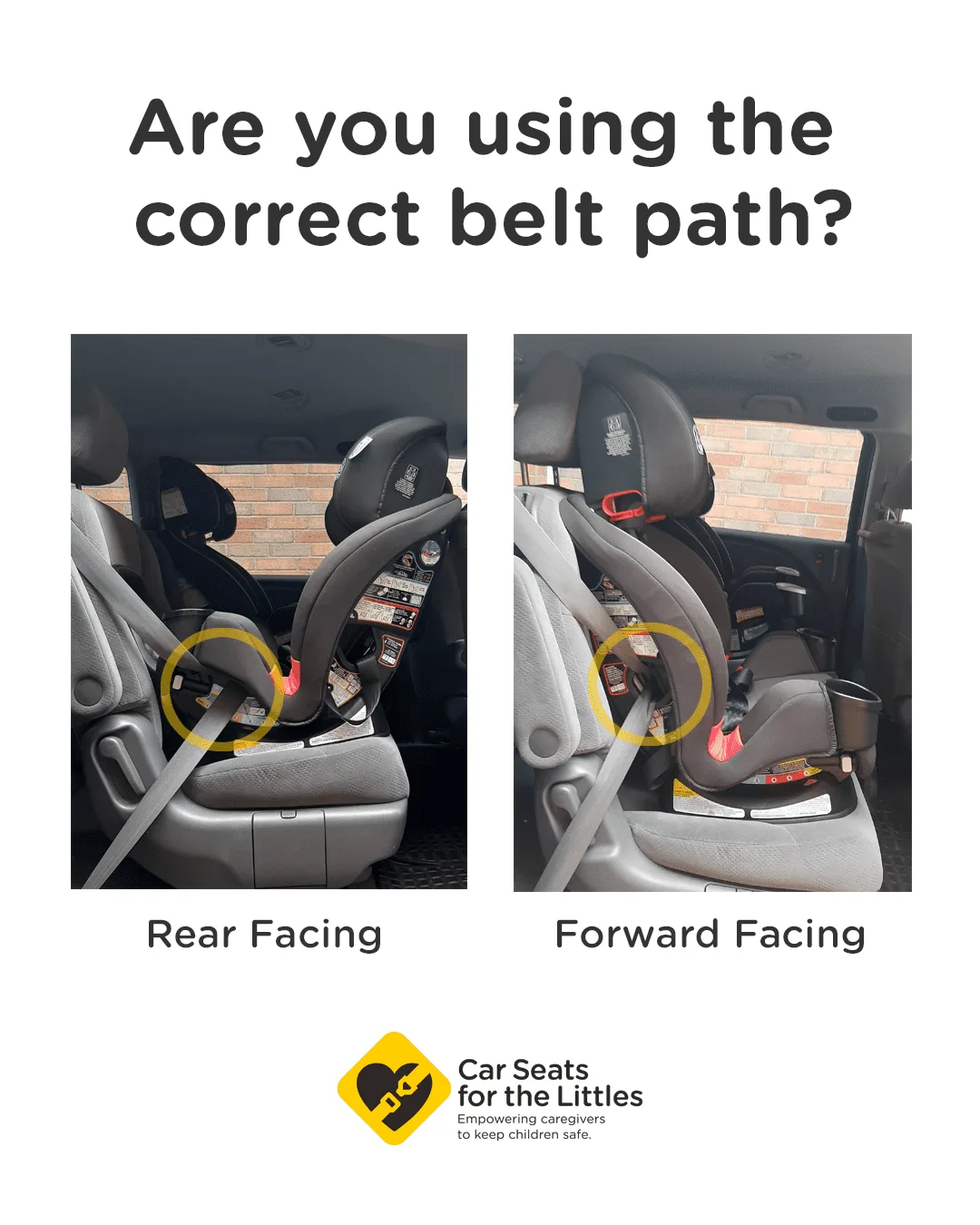
Image source: Web (Bing) / rivieradeifiori.org (Web image (fair-use with source credit))
Why Rear-Facing Protects a Baby's Neck and Spine
Rear-facing protects a baby's underdeveloped neck and spine by spreading crash forces across the back of the shell and seat, not the vulnerable neck. That's the whole reason the recommendation exists, and it's backed by decades of crash data.
Babies and toddlers have disproportionately large heads and weak neck ligaments. In a frontal crash, a forward-facing child's head whips violently forward. Their spinal column can stretch beyond its limit, which is where the term "internal decapitation" comes from in safety literature.
Rear-facing changes the physics. The shell cradles the head, neck, and torso together, so crash energy distributes across a much larger area. Per NHTSA's own materials, this rear-facing geometry is the single most effective protection a child restraint system (CRS) can offer.
What Happens in a Crash
A forward-facing child's entire upper body loads onto the harness straps and neck. A rear-facing child's back, shell, and headrest absorb that same energy. Real-world crash data collected by university research institutions consistently shows lower injury severity for rear-facing occupants in the same crash type.
Head Excursion and the Top Tether
Head excursion is how far the head travels forward in a crash. Forward-facing seats rely on the top tether anchor to reduce that distance significantly. Manufacturer specifications confirm the tether is not optional on forward-facing installs, and skipping it can increase head movement by several inches.
Image source: Web (Bing) / exploreuno.com (Web image (fair-use with source credit))
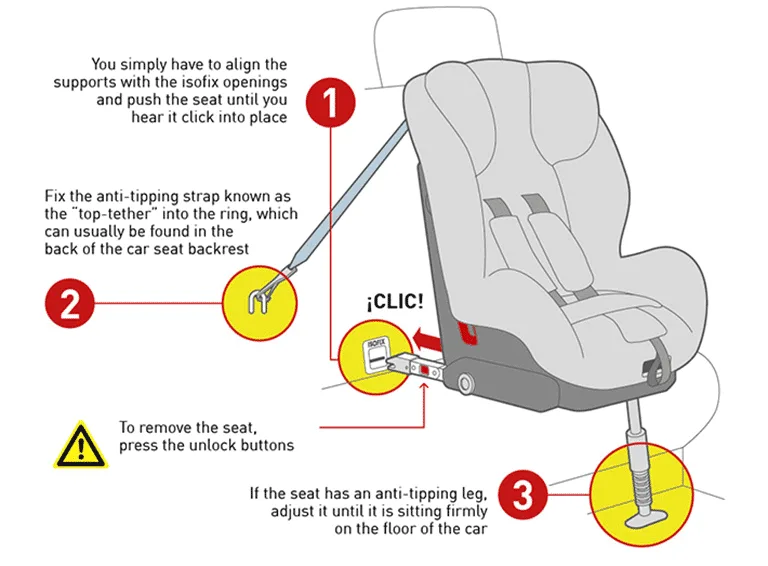
Image source: Web (Bing) / velcromag.com (Web image (fair-use with source credit))
The Decision Tree: Is Your Child Ready to Flip?
Run these four branches in order. If any one fails, keep the seat rear-facing.
Branch 1: Have You Maxed Out the Seat?
Check the manual for two numbers: rear-facing maximum weight and standing height. If your child is under either one, stop here. You're not ready.
Most convertible seats max out rear-facing around 40 to 50 pounds and 40 to 49 inches, though this varies by model.
Branch 2: What Does Your State Require?
Your state's minimum is the legal floor. Many states now require rear-facing until age 2. A handful of states set the threshold at 1 year or 20 pounds, which is outdated guidance and does not reflect current safety research.
If your state's minimum is older, follow the AAP instead.
Branch 3: Is the Vehicle Ready?
Forward-facing requires a top tether anchor. Check your vehicle owner's manual for anchor locations. Most cars built after 2000 have them, but placement varies.
If you can't find one, call the manufacturer before flipping.
Branch 4: Is Your Child Comfortable and Willing?
Comfort matters for compliance. If leg cramping or heat is making every ride a battle, a different rear-facing seat with more legroom may solve it. A Child Passenger Safety Technician (CPST) can help you find options.
How to Flip the Seat Safely: Step-by-Step
Once all four branches pass, here's the install sequence.
- Read the forward-facing section of your seat manual. Instructions differ from the rear-facing path, sometimes significantly.
- Recline the seat to the forward-facing position. This is usually more upright than rear-facing. Check the recline indicator line.
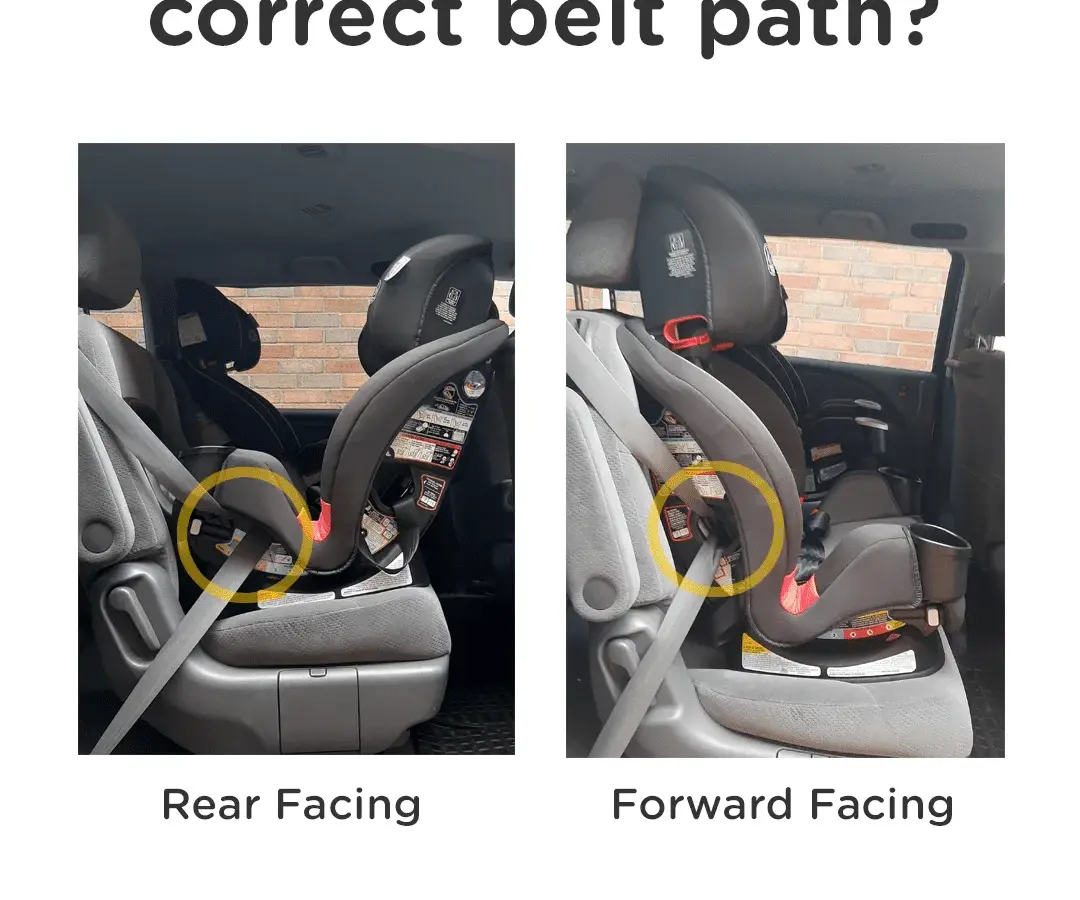
- Route the seat belt or LATCH strap through the forward-facing belt path. Do not assume it's the same path as rear-facing.
- Attach and tighten the top tether. Remove slack. Tether anchors are usually behind the seat or on the floor.
- Move the harness to the correct slot. Forward-facing slots must be at or above the shoulders. Rear-facing slots sit at or below.
- Tighten and check the chest clip. Position at armpit level. The pinch test at the shoulder should fail, meaning you can't pinch slack.
- Get the install verified. A CPST will check it for free at many fire stations and safety clinics.
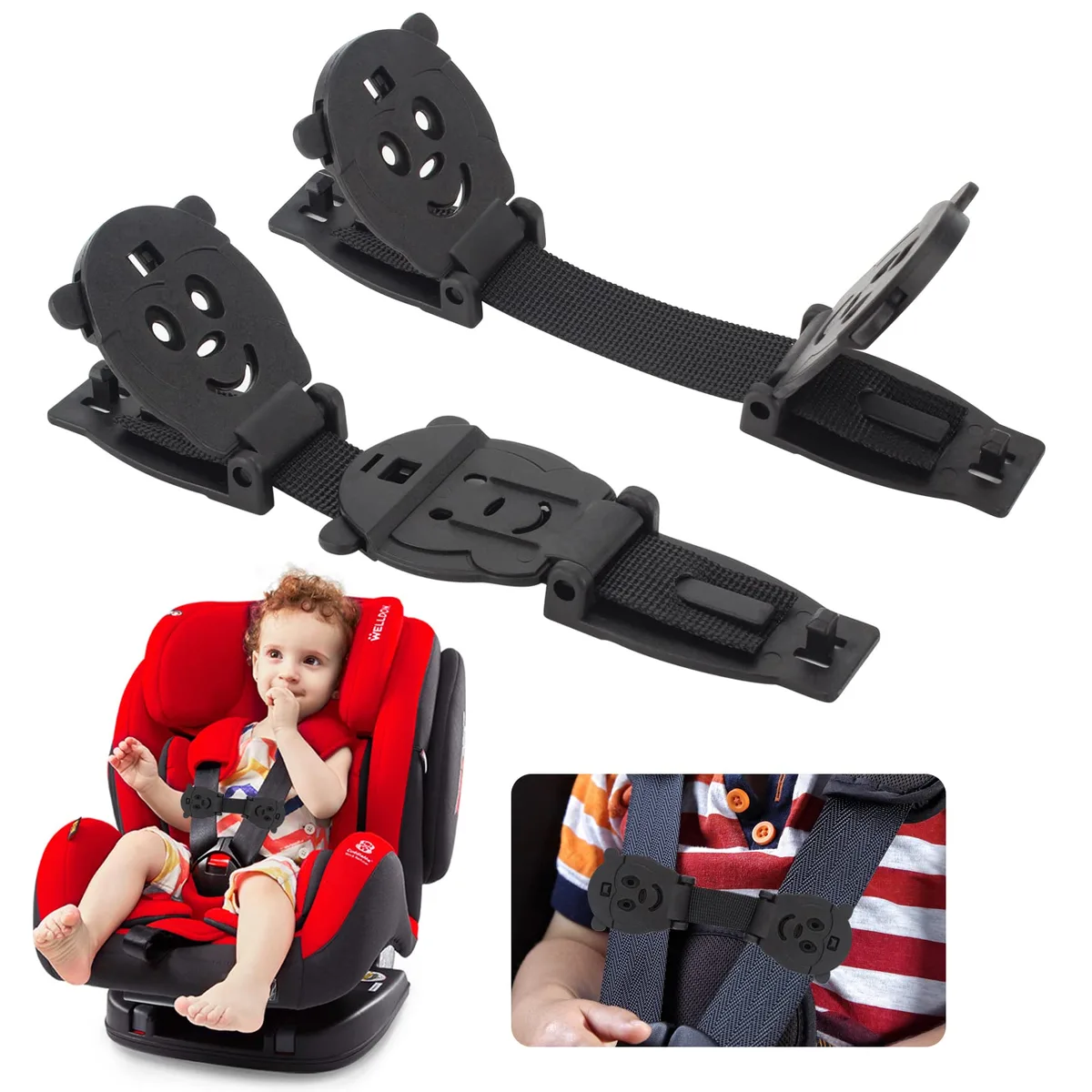
Image source: Web (Bing) / bidfta.com (Web image (fair-use with source credit))
Reinstall and Recline for Forward-Facing
Forward-facing recline is more upright than rear-facing. Too much recline and the harness won't sit correctly. Too little and the child slumps.
Check the seat's recline angle indicator and adjust until it's in range.
Harness Slot and Chest Clip Rules
The harness height rule flips when you turn the seat around. Rear-facing slots are at or below the shoulders. Forward-facing slots are at or above.
The chest clip stays at armpit level in both modes.
Getting the Install Verified by a CPST
A Child Passenger Safety Technician is certified through the national Safe Kids program. They'll check your install, harness fit, and tether in about 20 minutes. You can find a station through NHTSA's car seat inspection locator.
Mistakes That Put Kids at Risk
Most bad calls on this topic come down to convenience, not information. Here's what we see cited most often in safety reports and CPST feedback.
- Flipping forward before maxing out the seat's rear-facing limits. The most common error.
- Skipping the top tether. Some parents confuse it with a decorative strap.
- Leaving bulky winter coats under the harness. Compressed padding creates hidden slack.
- Using aftermarket inserts or strap covers. These void the warranty and can change crash performance.
- Trusting a hand-me-down seat with no history. Expired, recalled, or crash-involved seats are unsafe.
- Reusing a rear-facing belt path for a forward-facing install. The paths differ on most seats.
- Ignoring the recline angle. Forward-facing seats that are over-reclined fail to protect the head.
For state-by-state legal requirements, NHTSA's child passenger safety pages are the definitive reference. For the underlying clinical guidance, the AAP's policy statements are worth reading directly.
What the Law Says vs. What's Actually Safest
State child passenger safety laws usually set the floor, not the standard. Every US state requires some form of child restraint, but the specifics vary widely. That gap between legal minimum and safest practice is where most confusion lives.
Here's the split as of 2026:
- Age-based laws. Many states now say rear-facing until age 2. A handful still allow forward-facing at 1 year or 20 pounds, which reflects older research.
- Weight-based laws. Some statutes reference 20, 40, or 65 pounds as thresholds for booster transitions.
- Height-based laws. A growing number of states add standing or seated height minimums on top of age and weight.
If your state law is more permissive than the AAP, follow the AAP. Legal compliance isn't the same as optimal protection. A police officer won't ticket you for extended rear-facing.
State Minimums Are Floors, Not Targets
Treat the legal minimum like a minimum wage. It sets what's allowed, not what's best. If your seat still fits rear-facing, keep it there.
AAP, NHTSA, and FMVSS 213 Explained Simply
The AAP issues medical policy recommendations. NHTSA writes the federal safety standard, Federal Motor Vehicle Safety Standard (FMVSS) 213, that every seat sold in the US must meet. FMVSS 213a adds a side-impact requirement for newer seats.
Knowing which standard your seat was certified under tells you what crash tests it passed.
Rear-Facing vs. Forward-Facing vs. Booster: Where Each One Fits
Each stage has a job, and moving up too early drops protection. Here's how the three modes compare.
| Mode | Typical Age Range | Harness Type | Key Limit Rule |
|---|---|---|---|
| Rear-facing | Birth to 2-4 years | 5-point harness | Max out height AND weight |
| Forward-facing | 2-4 years to 5-7 years | 5-point harness + top tether | Must have tether anchor |
| Booster | 5-7 years to 8-12 years | Vehicle seat belt | Must pass 5-step test |
Rear-facing is best for any child still within the seat's rear-facing limits. Forward-facing is best once both limits are maxed and the vehicle has a tether anchor. A booster is best when the child passes the 5-step seat belt fit test, usually around age 8 to 12.
Ages and Stages at a Glance
Age is a rough guide, not a rule. A petite 4-year-old may still fit rear-facing. A tall 3-year-old may need to flip.
Check the seat manual first, then the state law, then age.
When Extended Rear-Facing Makes Sense
Extended rear-facing (ERF) means keeping a child rear-facing past age 2, often to 3 or 4. It makes sense whenever the seat still fits. Nordic countries have rear-faced children to age 4 for decades, and their child injury data reflects the difference.
Frequently Asked Questions
Can I turn my baby forward-facing at 1 year?
No. One year is outdated guidance. The AAP recommends rear-facing until at least age 2, and longer when the seat allows.
Most convertible seats rear-face well past 2, often to 40 or 50 pounds.
What if my child hits the weight limit but is under 2?
Switch to a seat with a higher rear-facing weight limit if possible. Many all-in-one seats rear-face to 50 pounds. If no seat fits, forward-face per the manual and check your state law.
Is it legal to forward-face before 2 in my state?
In most states, no. Many now require rear-facing until age 2. A few states still allow it earlier, but that doesn't mean it's safest.
Follow the AAP when the law is looser.
How long can I keep them rear-facing?
Until they hit the seat's rear-facing height OR weight limit, whichever comes first. Many kids stay rear-facing to age 3 or 4. Some reach the limit sooner if they're tall.
Do I need a new seat to switch modes?
No, if you have a convertible or all-in-one seat. Infant carrier seats only rear-face. You'll need a convertible or forward-facing seat to make the switch.
What if my toddler hates rear-facing?
Try a seat with more legroom. Rear-facing convertibles and extended-use seats often have deeper shells. A CPST can suggest models that fit longer legs without compromising safety.

Similar Posts































