How Long Is Baby in an Infant Car Seat? Guide

How long is baby in infant car seat is a question most parents ask within the first few weeks, usually after realizing that tiny seat won't stay tiny-friendly for long. The short answer: it depends on your baby's size, not their birthday. Some babies outgrow an infant seat by six months.
Others cruise past their first birthday still riding in it.
Manufacturer specifications and federal safety standards set the real limits, and they don't go by age. Per Federal Motor Vehicle Safety Standard 213 (FMVSS 213), every infant seat carries specific weight and height caps, plus a head-clearance rule that triggers the switch. Let's walk through what actually ends an infant seat run, and when you should move up.
how long is baby in infant car seat
Most babies use an infant car seat for 6 to 15 months. Your baby is done with it when they hit the seat's weight or height limit, or when their head is less than 1 inch from the top of the shell. Whichever comes first ends the infant seat stage.
Age alone never decides it.
The Real Answer Isn't an Age, It's a Size
There's no universal age cutoff, and that trips up a lot of parents. Two babies born on the same day can outgrow the same seat six months apart. It all comes down to how fast your child grows.
Manufacturer specs on infant seats typically cap weight between 22 and 35 pounds. Height limits usually land between 29 and 32 inches. The third trigger is the head clearance rule: your baby needs at least 1 inch of shell above their head.
Image source: Bing (Web (fair-use with source credit))
Why "About a Year" Is Misleading
That "one year" figure gets repeated everywhere, and it's a rough average at best. It assumes an average-sized baby tracking along the 50th percentile. Fast growers blow past the height cap closer to 6 or 9 months.
Smaller babies can stay put past 18 months.
Per CDC growth chart patterns, boys and girls diverge early, and percentile position matters more than birth date. So treat "a year" as a ballpark, not a rule.
The Three Outgrow Triggers: Weight, Height, and Head Clearance
Here's the if/then logic that actually governs the switch:
- If your baby hits the weight limit, the seat is done.
- If your baby hits the height limit, the seat is done.
- If your baby's head has less than 1 inch of shell above it, the seat is done.
- If your baby still fits all three, you keep going, even past age 2.
That last point surprises people. There's no rule forcing you out at 12 months. Rear-facing longer is safer, and many infant seats let smaller babies ride well past their first birthday.
How to Know Your Baby Has Outgrown the Infant Seat
Checking fit takes about 30 seconds and belongs on your weekly routine. Do it after every growth spurt, and definitely before any long trip.
Measure your baby's height and weight at checkups. Then eyeball the head clearance. If any limit is close, start shopping for the next seat.
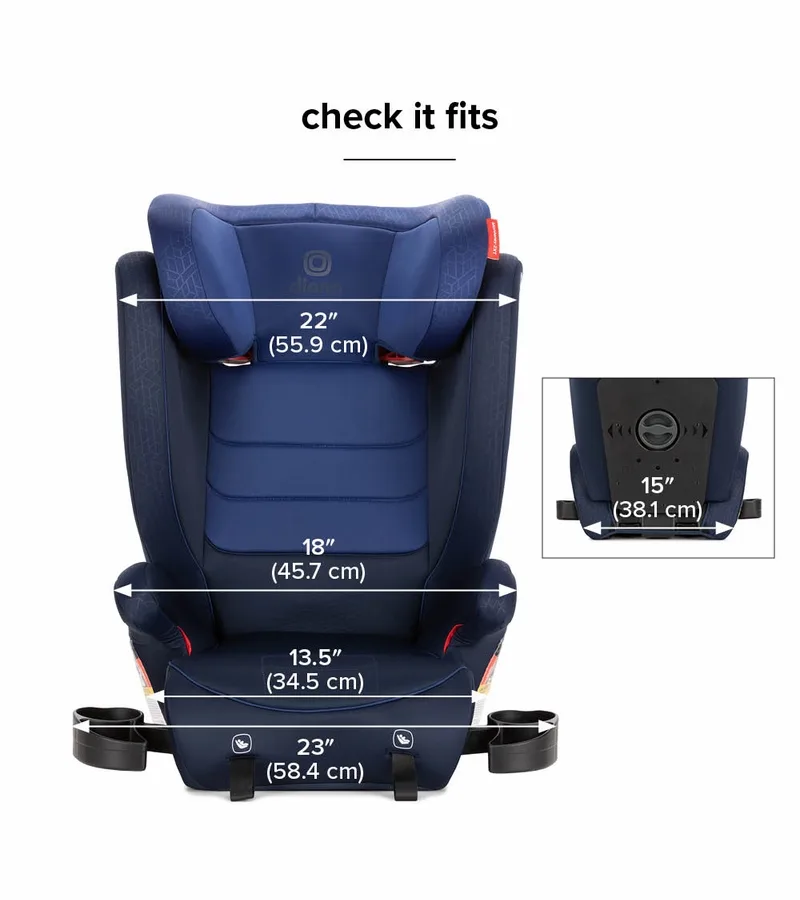
Image source: Web (Bing) / amazon.com (Web image (fair-use with source credit))
The 1-Inch Head Rule, Explained Simply
The 1-inch rule covers the gap between the top of your baby's head and the top of the hard shell. You want at least 1 inch there. Once the gap shrinks below that, a crash could let the head move too far before the shell catches it.
Some seats count the headrest or insert height, some don't. Check your manual, because the exact measurement point varies by brand.
Reading Your Seat's Weight and Height Limits
The limits are printed on a label on the side of the shell and repeated in the manual. Find the rear-facing weight range and the standing height cap. Write them somewhere handy, like a note on your phone.
Here's a quick reference for how those limits translate to real timelines:
| Limit Type | Typical Range | What It Means |
|---|---|---|
| Weight limit | 22 to 35 lbs | Heavier babies may hit this first |
| Height limit | 29 to 32 in | Tall babies often hit this before weight |
| Head clearance | 1 inch below shell top | Triggers the switch regardless of weight |
The Pinch Test and Harness Fit Check
Straps should be snug enough that you can't pinch a fold at the shoulder. Do the pinch test every single ride. Loose straps are one of the most common and most dangerous car seat mistakes.
The chest clip sits at armpit level, not on the belly. Bulky coats go under the straps? No.
They belong over the harness or in a blanket instead.
Rear-Facing vs. Moving Up: What the Safety Guidance Actually Says
The safety community is clear on one thing: rear-facing as long as possible. The American Academy of Pediatrics (AAP) recommends keeping kids rear-facing until at least age 2, and longer if the seat allows it.
Moving to forward-facing early isn't worth the risk. Rear-facing spreads crash forces across the back, head, and neck instead of concentrating them.

Image source: Bing (Web (fair-use with source credit))
AAP and NHTSA Recommendations in Plain English
The NHTSA car seat guidance puts it simply: keep children rear-facing as long as the seat's height and weight limits allow. The AAP echoes that and nudges parents past the age-2 minimum.
Here's what that means practically. If your child still fits rear-facing, they stay rear-facing, even at 2 or 3.
Why Rear-Facing Longer Protects the Head, Neck, and Spine
A baby's head is proportionally huge and their neck is still developing. In a frontal crash, a forward-facing child's head whips forward hard. Rear-facing lets the shell cradle the head and diffuse the force.
That's the whole point of the recommendation. It's not about convenience or cost. It's about protecting the most vulnerable part of a small body.
State Laws vs. Safety Best Practice
State laws vary, and many now require rear-facing until age 2. But here's the catch: legal minimums and safety best practice aren't the same thing. A state may allow forward-facing at 1, while the AAP recommends rear-facing until 2 or beyond.
When the law and the safety guidance disagree, follow the safety guidance if the seat fits.
Infant Seat vs. Convertible Seat: Which Path Fits Your Family
The infant seat and the convertible seat solve the same problem in different ways. Which one fits depends on your baby's size, your car, and your daily routine.
An infant carrier snaps in and out of a base, which matters a lot when your baby is asleep. A convertible seat stays in the car and rear-faces for much longer.
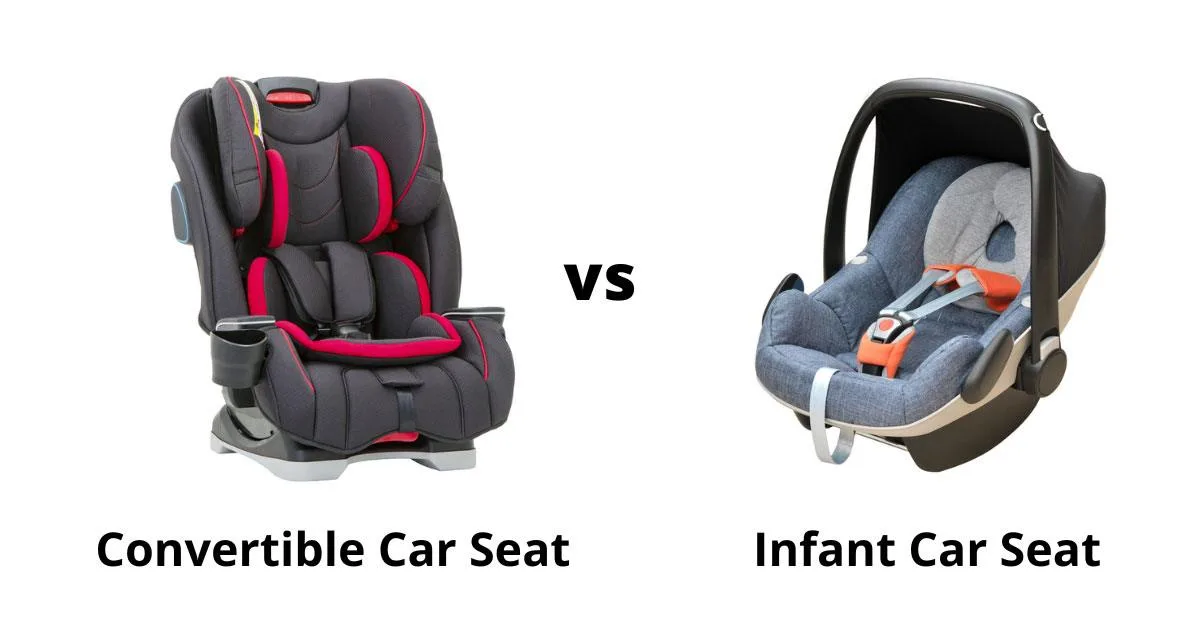
Image source: Web (Bing) / 800bucklup.org (Web image (fair-use with source credit))
When the Infant Carrier Still Makes Sense
If your baby is a preemie or on the smaller side, an infant seat can last well past a year. The carrier handle is a genuine convenience for daycare drop-offs and quick errands. It also pairs with a stroller as a travel system.
When to Skip Ahead to a Convertible Seat
If your baby is already tracking large, a convertible seat might be the smarter buy. Convertible seats often rear-face to 40 pounds and 40 inches, so they carry you years past the infant stage. Skipping the infant carrier can save money if you don't need the portability.
Travel Systems, Bases, and Baseless Installs
A travel system links your infant seat to a stroller. It's handy, but it locks you into one brand family. A second base (one per car) makes switching cars easy.
If you're flying, check your seat's FAA approval before you book.
A Quick Comparison
| Feature | Infant Seat | Convertible Seat |
|---|---|---|
| Rear-facing limit | 22 to 35 lbs | Up to 40 to 50 lbs |
| Portability | High (carrier handle) | Low (stays in car) |
| Typical lifespan of use | 6 to 15 months | 2 to 4 years rear-facing |
Common Mistakes That Cut an Infant Seat's Life Short
Most transition mistakes fall into a few predictable buckets. Avoid these and you'll keep your baby safer and get full value from the seat.
- Turning forward-facing too early because of a birthday, not a size.
- Leaving bulky coats under the harness, which hides a loose fit.
- Adding aftermarket inserts that didn't come with the seat.
- Using a seat past its expiration date, usually 6 to 10 years.
- Accepting a hand-me-down seat with no known history.
- Missing the head-clearance check because weight still looks fine.
Turning Forward-Facing Too Early
Age isn't a trigger, size is. If your toddler still fits rear-facing, keep them there. The AAP and NHTSA both push for longer rear-facing, and there's no safety benefit to switching early.
Bulky Coats, Aftermarket Inserts, and Loose Straps
A puffy coat compresses in a crash, leaving straps dangerously loose. Put the coat on over the harness, or use a blanket. And skip the padded insert unless it came in the box.
Aftermarket products can void your seat's safety certification.
Expired, Recalled, or Hand-Me-Down Seats
Every seat has an expiration date, usually 6 to 10 years from manufacture, printed on the shell. Plastic weakens over time, and standards change. Register your seat so you get recall alerts, and never use a seat with an unknown crash history.
A Simple Decision Guide: Month-by-Month and Size-by-Size
Timelines shift with each baby, but patterns hold. Use these as reference points, then check your own seat's labels. Percentile growth, not the calendar, is what moves you forward.
- Newborn to 3 months: almost every baby still fits comfortably.
- 3 to 6 months: fast growers may approach the height limit.
- 6 to 12 months: height usually triggers the switch before weight.
- 12 to 18 months: smaller babies often still fit fine.
- 18 months and up: rare for infant seats, but possible for petite babies.
Average Timelines (With the Caveat That Every Baby Differs)
Manufacturer specs and aggregate parent reports suggest most babies move out between 10 and 12 months. Tall babies often leave closer to 8 months. Babies tracking under the 25th percentile sometimes stretch it past 15 months.
If your baby hits any of the three triggers, that's your signal, regardless of month.
Your Go-To Checklist Before Every Transition
A quick checklist keeps you honest:
- Weight under the seat's rear-facing limit? Yes or no.
- Height under the standing height cap? Yes or no.
- At least 1 inch of shell above the head? Yes or no.
- Harness snug and chest clip at armpit level? Yes or no.
- Seat registered for recalls and not expired? Yes or no.
If any answer flips to "no," it's time to move up.
FAQs About Infant Car Seat Duration
Can a baby stay in an infant seat past age 1?
Yes, and many should. Age isn't a limit. If your baby still fits the weight, height, and head-clearance rules, there's no reason to move them out at 12 months.
Rear-facing longer is safer, per AAP guidance.
What if my baby outgrows the seat by height before weight?
Switch to a convertible seat and keep them rear-facing in that. Height limits are just as binding as weight limits. A longer-shell convertible seat rear-faces well past the infant stage.
Do all babies outgrow infant seats at the same time?
No. Growth rate, not birth date, decides. A 90th-percentile baby can outgrow the same seat six months before a 25th-percentile baby.
Track your child, not the average.
Is a convertible seat safer than an infant seat?
Not inherently. Both meet FMVSS 213 when installed correctly. The real safety factor is staying rear-facing as long as possible and keeping the harness snug.
Whichever seat does that wins.
How do I know if my seat is expired?
Check the label on the shell or the base. Most seats expire 6 to 10 years from manufacture. If you can't find a date, contact the manufacturer before using it.

Similar Posts