Which Side Should a Baby Car Seat Go On?
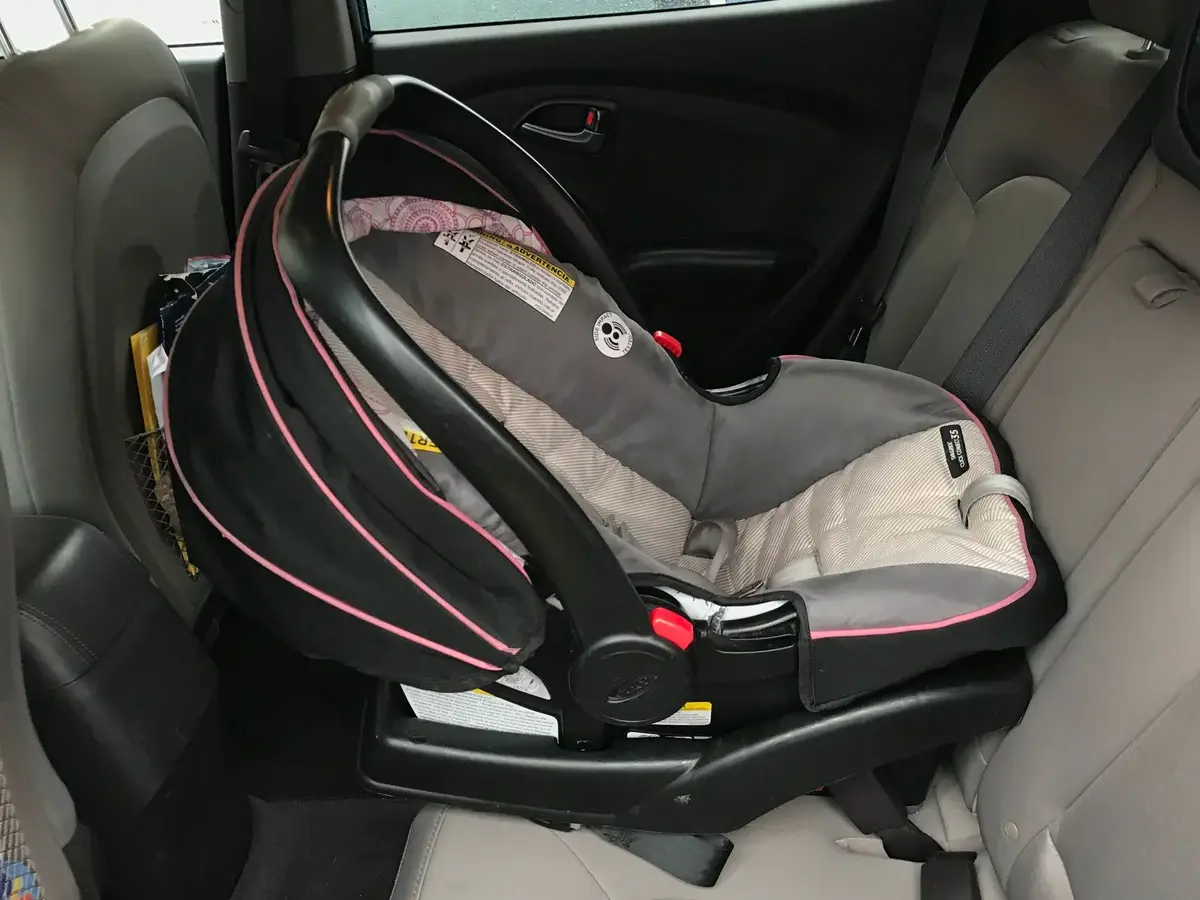
You're deciding where to put your baby's car seat, and the honest answer is that there's no single "right side" that works for every car, every street, and every family. What matters is matching the seat position to how and where you actually park. Get that wrong and you could end up lifting a baby carrier into traffic every morning.
In our research into car seat guidance, we found that placement decisions come down to three things: curb position, door geometry, and your own physical reach. The National Highway Traffic Safety Administration (NHTSA) treats the center rear seat as the safest position when it can be used. Everything else is a practical trade-off.
Here's how to think it through before you tighten a single strap.
which side to put baby car seat
Put the car seat on the curbside rear seat whenever you park on a street, so you're never loading your baby from the traffic side. If both sides are curbside (a driveway or parking lot), the center rear seat is safest. Choose the passenger side only if it makes daily reach easier.
Quick Answer: Curbside vs. Traffic Side, and Why "Which Side" Isn't the Whole Question
The short version is this. The "correct" side changes with your parking situation, not with a fixed rule. That's why so many parents feel stuck.
Let's define the terms plainly, because they get muddled. Curbside means the rear seat closest to the pavement or sidewalk. Traffic side means the rear seat closest to moving vehicles.
Which physical side of the car that is depends entirely on which way you're parked.
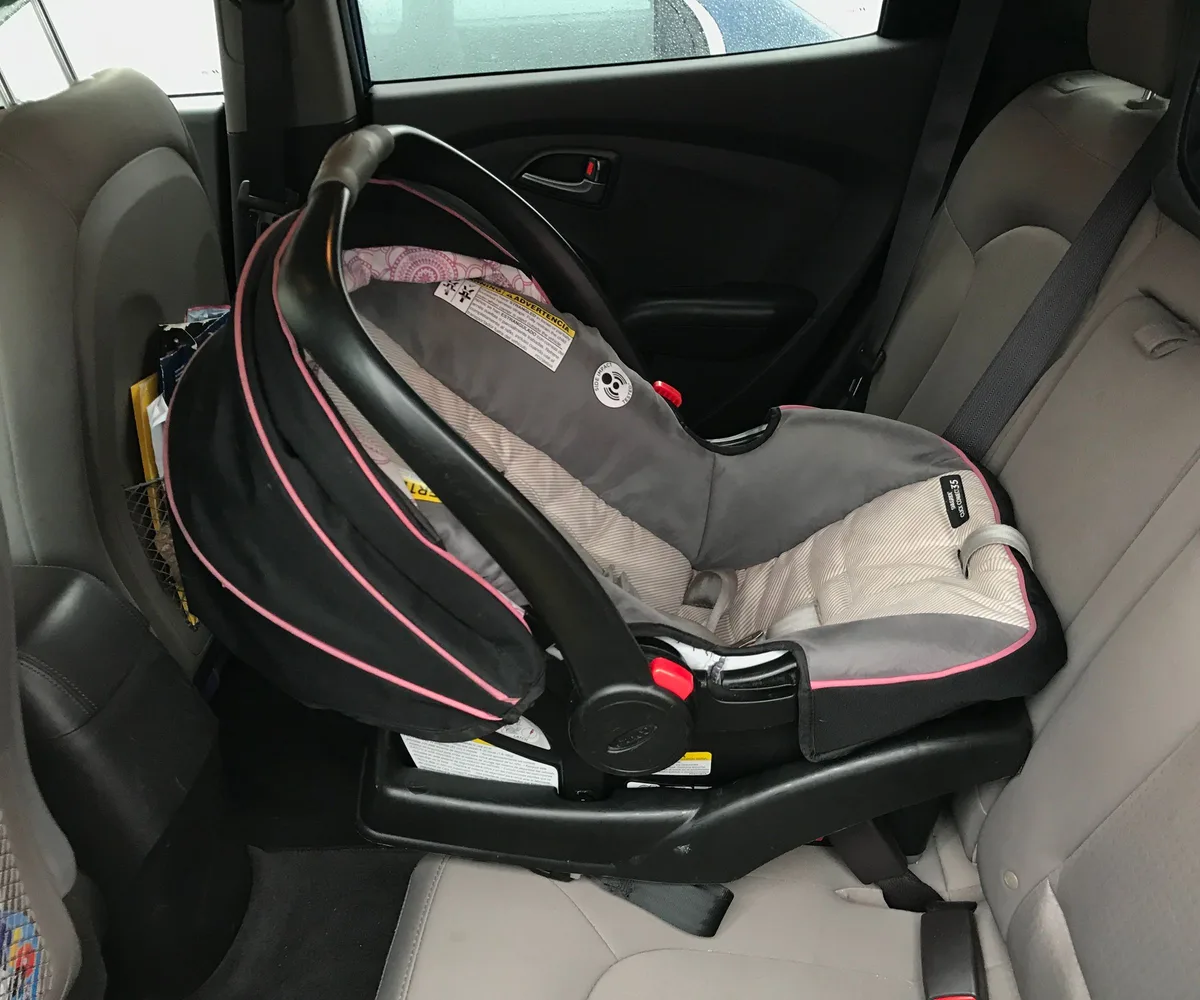
Image source: Web (Bing) / rcfact.com (Web image (fair-use with source credit))
In right-hand traffic countries like the US and Canada, the rear-right seat is curbside when you parallel park on the right. In left-hand traffic countries like the UK and Australia, the rear-left seat is curbside. This is exactly where a simple diagram would save you ten minutes of squinting at your back seat.
So here's the frame that actually works. Safe placement isn't about picking a permanent side. It's about picking the side that keeps you and your baby out of the traffic lane during every load and unload.
What You're Actually Looking At (and Why a Photo Helps)
A photo helps because the safety answer lives in the geometry of your car, not in an abstract rule. You need to see four things at once: the door, the curb, the traffic lane, and your own body position.
Walk out to your car and look at the second row. You'll spot a rear bench seat, which is one continuous seat across the back. Some vehicles swap this for captain's chairs, which are two separate seats with a gap between them.
The three real seating positions in your back seat
The rear seat has three positions, and each one behaves differently for loading.
- Center rear: the middle spot. It's furthest from both side doors, so it offers the most protection in a side-impact crash.
- Outboard rear: the two window seats. Easier to load, closer to the doors.
- Captain's chairs: outboard only, with no center option in most layouts.
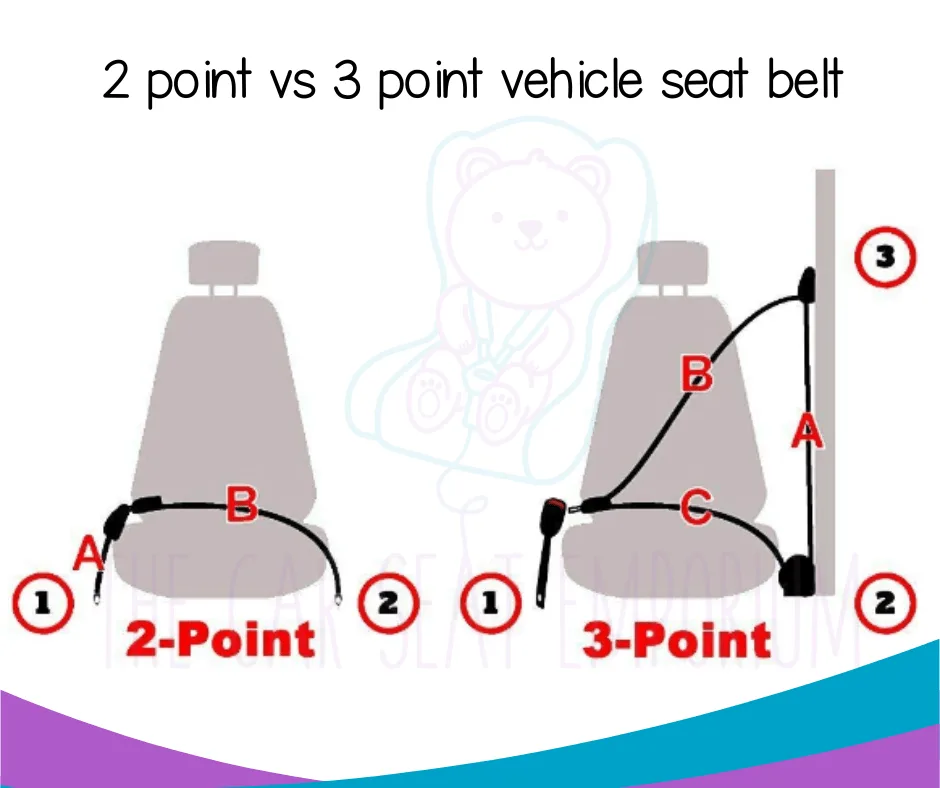
Image source: Web (Bing) / thecarseatemporium.co.za (Web image (fair-use with source credit))
How to read your car's door, curb, and traffic layout in ten seconds
Stand at the rear door and ask one question: which door opens onto safety, and which opens onto danger? Then measure how far that door actually swings. A rear door that only opens 25 to 35 inches makes loading a rear-facing carrier genuinely awkward.
Center seat vs. outboard seat: the trade-off nobody explains
The center seat wins on crash protection. It loses on loading convenience and on fit. Many vehicles have a hump or non-standard anchor spacing in the middle, which can block a proper installation.
Per NHTSA guidance, the center is best when a solid install is possible there. If it isn't, move outboard without guilt.
The Decision Logic: Matching the Side to Your Parking Reality
This is where if/then thinking beats a blanket rule. Run your daily parking routine through the branches below.
Parallel parking on a street
If you street-park on the right side in the US, then the rear-right seat is your curbside spot. Load and unload from the pavement, never from the road. If you're in the UK or Australia, that flips to the rear-left seat.
Image source: Web (Bing) / en.syok.my (Web image (fair-use with source credit))
Driveway, garage, or parking lot
If both doors open onto safe ground, then the center rear is the best choice. You get maximum distance from side impacts and no traffic risk on either side. If the center won't fit properly, pick the side that lines up with how you enter and exit the house.
Two adults in the car vs. you alone with the baby
If you're usually alone, then pick the side that lets you reach and buckle without twisting. A rear-facing seat behind the passenger seat is easy for the driver to glance at in a mirror. But if you're forever getting out to lift the carrier, that convenience evaporates.
Narrow streets, wide streets, and everything in between
If your street is narrow, then a door opening into a bike lane or traffic lane changes the math fast. In that case, prioritize curbside loading over any other factor. Test it once during a normal parking job.
Then decide.
Step-by-Step: Choosing and Installing the Seat on the Right Side
Follow this sequence and you'll avoid the guesswork. Each step takes minutes.
Check your manual first (both of them)
Read the car seat manual and your vehicle owner's manual. They tell you which positions allow installation and where the anchors sit. Some car seat makers prohibit certain center installs.
The manual is the final word.
Pick the position, then install
Decide curbside or center based on your parking reality. Then install using LATCH (Lower Anchors and Tethers for Children) or the seat belt. LATCH anchors live in the seat crease.
The top tether anchor is usually behind the seat or on the seatback.
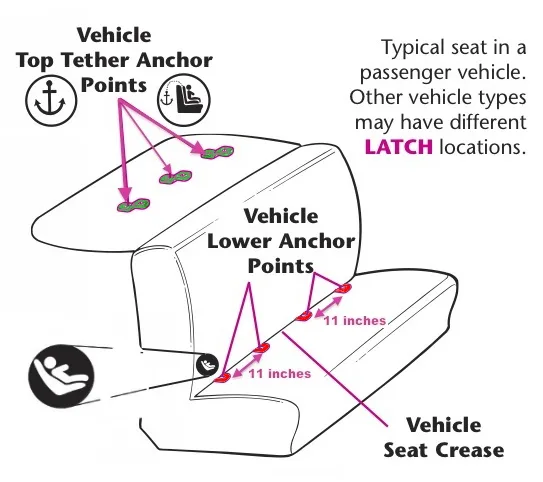
Image source: Web (Bing) / userpartcarlo101.s3-website-us-east-1.amazonaws.com (Web image (fair-use with source credit))
Note the LATCH weight limit. Per NHTSA, it's typically a combined 65 pounds for the child plus the seat, unless the manufacturer says otherwise. Past that, you switch to a seat belt install.
Test the install before you test the side
Grab the seat at the belt path and push and pull. It should move less than 1 inch in any direction. Check the recline angle indicator, then run the pinch test on the harness.
If you can pinch slack at the collarbone, it's too loose.
Adjust your loading routine around the side you chose
Once it's set, build a repeatable routine. Open the curbside door, place the carrier in the base, click it in, and tug to confirm. Consistency builds muscle memory, which matters when you're tired.
Mistakes That Cause the Most Trouble
Most placement errors come from habit, not carelessness. Watch for these.
- Loading from the traffic side out of habit. This is the single biggest risk, and it's easy to fix.
- Assuming the center is always best regardless of the car. A bad center install is worse than a solid outboard one.
- Ignoring LATCH weight limits and anchor spacing. Each vehicle differs.
- Forgetting that the "right" side flips when parking situations change. Street today, driveway tomorrow.
- Never checking the install after a new car seat, a new car, or a growth spurt.
Safety Rules and Legal Basics You Can't Skip
The single hardest rule is this: never put a rear-facing car seat in front of an active airbag. That's why the rear seat is the standard spot in every serious guideline. A deploying airbag can strike a rear-facing shell with enough force to cause fatal injury.
Image source: Web (Bing) / rcfact.com (Web image (fair-use with source credit))
Rear-facing matters more than side choice. The American Academy of Pediatrics recommends keeping children rear-facing until they reach the seat's height or weight limit, and at minimum past age 2. Spine development is the reason.
A rear-facing seat spreads crash forces across the back and head.
What US and UK law actually says
In the US, every state requires an appropriate car seat for young children, though the specific ages vary. NHTSA's own guidance is worth reading directly at NHTSA.gov for the current federal position.
In the UK, children must use a car seat until they're 12 years old or 135 cm tall. Seats sold there follow UN R129 (i-Size) or the older ECE R44/04 standard. Both set minimum side-impact and installation requirements.
Best practice vs. legal minimum
The law is the floor, not the ceiling. Legally you might be able to move your child front-facing at a certain age. Best practice says keep them rear-facing longer, and keep the seat outboard or center based on fit.
Safety, not convenience, wins every tie.
When to Move the Seat, and When to Get It Checked
You don't move the seat on a schedule. You move it when something about your setup changes. Here are the triggers worth watching.
Life changes that force a rethink
- A new car or a rental. Anchor positions and seat contours differ.
- A new sibling. Two seats often won't fit side by side on a narrow bench.
- A back or shoulder injury. Your reach changes, so the loading side should too.
- A new parking routine. Moving from a driveway to street parking flips the curbside seat.
- A growth spurt. The child outgrows the infant carrier and moves to a convertible.
Finding a certified technician
A CPST, or Child Passenger Safety Technician, will inspect your install for free at many fire stations and clinics. Safe Kids Worldwide runs regular inspection events. In our research, the most common fix technicians report is a loose install, not the wrong side.
Get it checked once at installation, and again after any change. It takes about 20 minutes and catches the errors you can't see yourself.
Frequently Asked Questions
Is the passenger side safer than the driver side?
No, not inherently. Crash data doesn't favor one outboard side over the other. The safer side is the curbside side for your specific parking situation, because it keeps you out of traffic during loading.
The center rear seat beats both when it fits properly.
Can I put the car seat in the middle if my car has a hump?
Sometimes. A center hump or non-standard anchor spacing can prevent a solid install. Check your vehicle manual for whether the center position allows LATCH or seat belt installation.
If it doesn't fit tight, move outboard.
Does the side matter for a convertible seat?
Yes, the same logic applies. A convertible seat installed rear-facing still needs curbside loading on streets. The difference is it stays in the car, so you're loading the child directly rather than lifting a carrier.
Choose the side that reduces your twist and reach.
What if my car only has LATCH anchors on the outboard seats?
Then you're limited to the two window seats, and the center isn't an option for LATCH. You can still try a seat belt install in the center if the manual allows it. Otherwise, pick the outboard side that matches your parking reality.
Should I move the seat when I'm parallel parking?
You don't need to move the seat itself. Instead, adjust how you load. Always open the curbside door, place the child from the pavement, and never step into the traffic lane.
If you street-park on both sides of the road regularly, the curbside side changes with each park.
How do I know my install is tight enough?
Grab the seat at the belt path and tug. It should move less than 1 inch in any direction. Confirm the harness passes the pinch test at the collarbone, with no slack you can fold.
If either check fails, redo the install or see a certified technician.

Similar Posts































