When Can Baby Face Forward in a Car Seat?
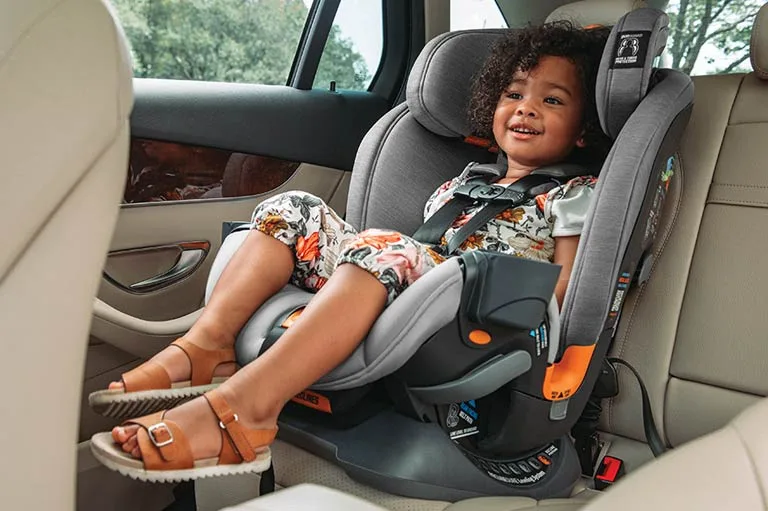
When baby car seat face forward is one of those questions parents Google at 2 a.m., usually after a toddler starts kicking the back of the front seat or a grandparent asks why the kid is still "backwards." The short answer is that most children should stay rear-facing until at least age 2, and many safety advocates push that further, until the child maxes out the seat's rear-facing weight or height limit.
It helps to know what the rules actually say. Per the American Academy of Pediatrics, children should remain rear-facing until they reach the highest weight or height allowed by their car seat manufacturer, and the National Highway Traffic Safety Administration echoes that guidance. The reason comes down to crash physics: rear-facing seats spread force across the shell and back of the seat, protecting a toddler's still-developing neck and spine.
when baby car seat face forward
Children should face forward only when they've outgrown the rear-facing limits of their specific car seat, typically around age 2 to 4. That usually means hitting the seat's rear-facing weight cap (often 40 to 50 lbs) or height cap (usually 40 to 49 inches). Age alone isn't the deciding factor.
The seat's manual and your child's measurements are.
Quick Answer: The Two Numbers That Decide It
Two numbers decide this for you: your child's weight and your child's height. Check both against the rear-facing limits printed on your car seat and in its manual.
If your child is still under the rear-facing weight cap and below the height cap, keep them rear-facing. If they've hit either limit, they're ready to turn forward, regardless of age, as long as they've also reached the seat's minimum forward-facing requirements (usually age 2 or 22 lbs, whichever the manual states).
Image source: Bing (Web (fair-use with source credit))
Here's the practical breakdown most parents find useful:
- Most convertible car seats rear-face from 5 lbs up to 40 to 50 lbs
- Most rear-face up to 40 to 49 inches in height
- Forward-facing harness mode usually starts at 22 to 25 lbs and age 2
- A child should hit the forward-facing minimums before switching, not just outgrow rear-facing
One thing worth saying plainly: age 2 is a floor, not a finish line. Plenty of kids rear-face comfortably until 3 or 4. There's no rush.
Why This Switch Is Riskier Than Parents Think
Turning a child forward-facing too early is one of the most common car seat mistakes, and the consequences are serious. In a frontal crash, a rear-facing seat cradles the child's head and spine against the shell. A forward-facing child's head whips forward instead.
The neck of a toddler isn't built to handle that. The vertebrae are still ossifying, and the head is proportionally heavy compared to the body. Rear-facing spreads crash forces over the whole back, head, and neck, which is why aggregate safety data shows lower injury rates for children under 2 in rear-facing seats.
It's also worth knowing that "legal" and "safe" aren't the same thing. Every US state allows forward-facing before a child hits the AAP's recommended age 2 threshold, and some allow it as early as age 1. Laws set a minimum.
They don't set the safest practice.
If you're ever unsure, use this rule: when in doubt, leave them rear-facing. There's no safety downside to keeping a child rear-facing longer. There is a real downside to switching early.
The Real Rules: Age, Weight, and Height Limits
The real rules come from three places, in this order of importance: your car seat manual, the federal safety standard the seat was built to, and general guidance from pediatric and traffic safety bodies.
The AAP and NHTSA Position
The AAP recommends rear-facing until a child reaches the highest weight or height allowed by the seat manufacturer. NHTSA's official guidance aligns with this and adds a clear floor: keep children rear-facing until at least age 2. As of 2026, both organizations continue to point parents toward height and weight limits rather than birthday milestones.
Your Seat Manual Beats Every General Rule
Your specific seat's manual overrides anything you read online, including this article. Limits vary widely between brands like Britax, Graco, Chicco, Nuna, Clek, and Diono. One seat might rear-face to 40 lbs, another to 50.
The manual also tells you the minimum forward-facing weight and age, plus the correct harness slot position for each mode.
How to Check If Your Child Has Actually Outgrown Rear-Facing
Outgrowing rear-facing isn't a guess. It comes down to your child's head position relative to the shell.
- The child has reached the seat's rear-facing weight limit
- The top of the child's head is within 1 inch of the top of the seat shell
- The child's shoulders have gone above the highest rear-facing harness slot
If any of those are true, that's your signal to turn the seat around. Otherwise, leave it.
Rear-Facing vs Forward-Facing: What Changes in a Crash
In a frontal crash, physics decides almost everything. A rear-facing seat distributes the crash force across the back of the seat, the shell, and the headrest area. The child's head moves with the seat rather than away from it.
That's the key protection.
A forward-facing seat has to restrain the child with the harness and let the top tether do the heavy lifting. The child's head still pitches forward, but the tether limits how far the seat rotates. That's why the top tether is mandatory for forward-facing harness seats under FMVSS 213.
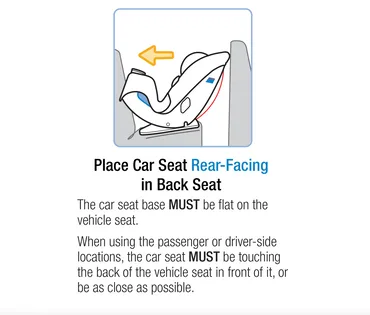
Image source: Web (Bing) / rcfact.com (Web image (fair-use with source credit))
Here's the honest comparison:
| Factor | Rear-Facing | Forward-Facing |
|---|---|---|
| Neck and spine protection | Highest | Lower |
| Recommended for | Under 2, ideally longer | Once RF limits are maxed |
| Legroom | Tight in small cars | Roomy |
| Visibility of child | Limited | Easy |
| Top tether needed | No | Yes, always with harness |
So if you're weighing the trade-offs, the safety margin clearly favors rear-facing as long as your child fits. Convenience is the other side of the scale, and it's a real factor for many families. Just be honest with yourself about which one matters more.
How to Switch Your Seat Safely, Step by Step
If your child has genuinely outgrown rear-facing, here's how to make the switch the right way. Do this in a driveway or garage, not a parking lot, and give yourself 20 to 30 minutes.
- Read the seat manual's forward-facing section first. Note the required recline angle, harness slot height, and whether LATCH or seat belt is preferred at your child's weight.
- Reinstall the seat forward-facing. Route the seat belt or LATCH strap per the manual, then tighten until there's less than 1 inch of movement at the belt path.
- Move the harness straps to at or above the child's shoulders. This is different from rear-facing, where straps go at or below.
- Attach and tighten the top tether. Clip it to the designated tether anchor in your vehicle and pull the slack out.
- Buckle your child in and check the harness. The pinch test should fail at the shoulder (no slack to pinch).
- Position the chest clip at armpit level. Not at the belly, not at the neck.
- Get a free inspection. Many fire stations, hospitals, and Safe Kids events offer CPST inspections at no cost.
Recline, Harness Height, and Chest Clip
Forward-facing recline is usually more upright than rear-facing. Check your manual for the allowed range, since some seats have a specific FF recline position only. Harness height matters more than most parents realize: at or above the shoulders prevents the child from sliding up in a crash.
The chest clip is the third piece. It should sit flat across the chest at armpit level, holding the straps together. If it drifts down to the belly, the straps can slip off the shoulders.
LATCH vs Seat Belt and the Top Tether Rule
For most forward-facing installs, either LATCH or the seat belt works, as long as you follow the manual. But the LATCH lower anchor weight limit typically caps out around 65 lbs combined (child plus seat). Past that, you switch to the seat belt.
The top tether isn't optional. Under FMVSS 213, forward-facing harness seats require it. Skipping it can increase head excursion in a crash by several inches.
That's not a small difference.
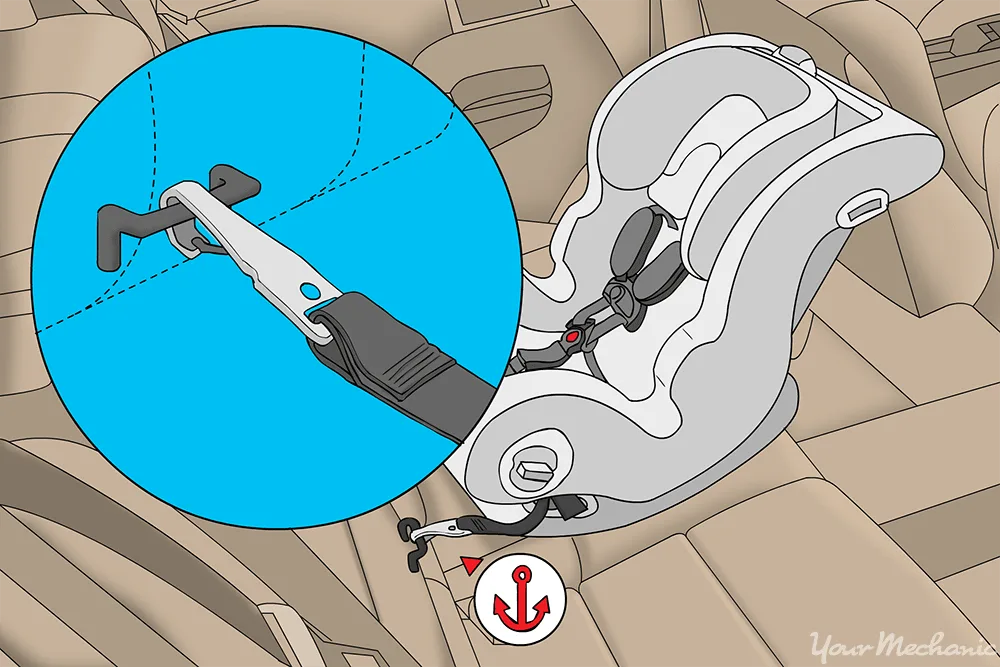
Image source: Web (Bing) / storage.googleapis.com (Web image (fair-use with source credit))
If your vehicle doesn't have a tether anchor in the position you want to use, check the owner's manual. Many vehicles have anchors in outboard positions only, and some can be retrofitted. The NHTSA covers anchor requirements and installation guidance at nhtsa.gov.
Mistakes That Put Kids at Risk
Most forward-facing problems come down to a handful of repeat offenders. Catch these early and you'll avoid the ones that show up in crash reports.
- Switching too soon, often because a toddler kicked the seat or a relative pushed for it
- Harness straps still set at or below the shoulders after the flip
- Chest clip sliding down to the belly, letting straps slip off
- Top tether left unattached or hooked to the wrong anchor
- Seat belt or LATCH strap loose enough to move more than an inch
- Reclining too far forward or back for forward-facing mode
- Installation with LATCH past the combined 65 lb anchor limit
- Bulky coats left on under the harness, hiding slack
- Aftermarket head supports or strap covers interfering with the harness path
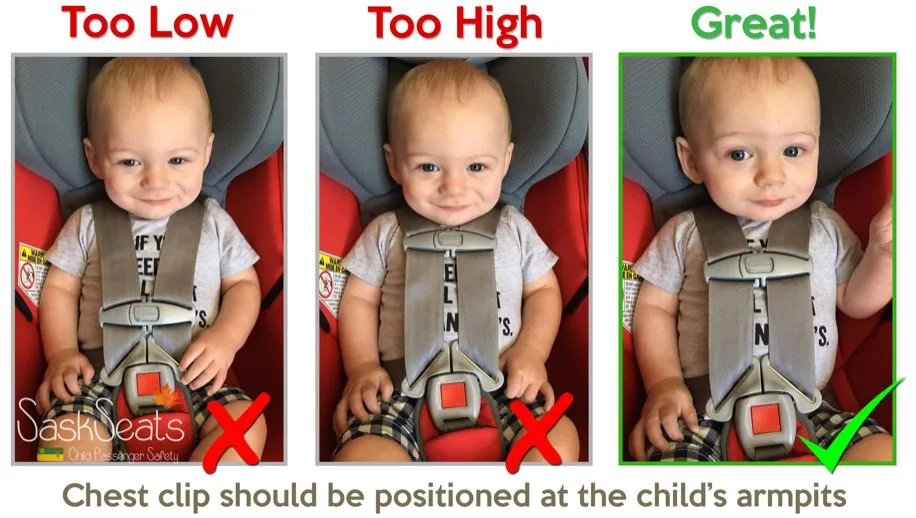
Image source: Bing (Web (fair-use with source credit))
A quick check after any install: grab the seat at the belt path and push side to side, then front to back. It should move less than 1 inch either way. If it clicks, shifts, or wobbles, tighten the belt or strap and try again.
The Legal Side: State Laws, i-Size, and "Legal Isn't Safe"
State law is a floor, not a safety standard. Every US state permits forward-facing before the AAP's recommended age 2 mark, and several allow it as early as age 1 with a qualifying weight. That means a parent can follow the letter of the law and still be making the riskier call.
In the EU and UK, the UN R129 (i-Size) regulation requires rear-facing until at least 15 months. Older ECE R44/04 seats allowed forward-facing from 9 kg, roughly 20 lbs. That gap is one reason extended rear-facing seats grew popular in Europe before they caught on here.
Canada takes a different tack. Transport Canada requires rear-facing until at least 1 year and 22 lbs, but strongly recommends keeping kids rear-facing much longer. Australia's AS/NZS 1754 sits in a similar spot, with 6 months as the absolute legal minimum and 12 months widely treated as the practical one.
If you're unsure what applies to you, one phone call settles it: your local police non-emergency line can tell you the state minimum. For the safety recommendation, though, the AAP and NHTSA are the sources to trust. Legal compliance keeps you out of a ticket.
It doesn't keep your toddler's neck out of trouble.
FAQs
When can a baby face forward in a car seat?
Your child can face forward once they've outgrown the rear-facing weight or height limits of their specific seat, usually around age 2 to 4. Age 2 is the widely cited minimum. Many children stay rear-facing comfortably until 3 or 4 if their seat allows it.
Is age 2 the only rule I need?
No. Age 2 is a floor, not a finish line. The AAP and NHTSA both say to keep kids rear-facing until they hit the seat's maximum rear-facing weight or height.
That means a small 3-year-old may still belong rear-facing, and a large 2-year-old may already be ready to turn.
Can I turn my child forward-facing at 1 year?
Legally, some US states allow it. From a safety standpoint, no. Rear-facing protection is dramatically better for children under 2 because their neck and spine are still developing.
One year is the legal floor in some places, not a safety recommendation.
What if my toddler's legs look cramped?
Cramped legs don't mean the seat is too small. Children fold and cross their legs comfortably, and there's no evidence that leg position increases injury risk in a crash. Turning a child forward just for legroom trades comfort for real protection.
Do I need the top tether when forward-facing?
Yes, always with a harness seat. FMVSS 213 requires it for forward-facing harness use. Skipping the top tether allows the seat to rotate further in a crash, increasing head movement by several inches.
Clip it to the vehicle's designated tether anchor and pull the slack tight.
How do I know the harness is tight enough?
Do the pinch test. Buckle your child in, then pinch the strap at shoulder level. If you can grab any slack, it's too loose.
The chest clip should sit flat at armpit level, and the straps should lie flat with no twists.
The Bottom Line: When to Turn, and When to Wait
The answer to when baby car seat face forward comes down to two measurements: weight and height, measured against your seat's rear-facing limits. Age 2 is the widely recommended minimum, but many seats let kids stay rear-facing well past their third birthday. If your child still fits the rear-facing limits, leaving them there is the safer call.
Period.
When the switch does come, get three things right: harness straps at or above the shoulders, chest clip at armpit level, and a properly attached top tether. Skip any one of those and you've weakened the whole setup. Take 20 minutes, read the manual, and run the install check before you drive anywhere.
And if you want certainty, use the free CPST inspection services that Safe Kids and many fire departments offer. A trained technician will catch the details a manual can miss. You can find certified technicians through the American Academy of Pediatrics and NHTSA.
That 30-minute visit is the single best thing you can do for your child's safety in the car.

Similar Posts































