When Can Baby Go in a Front-Facing Car Seat? A Safety Guide

Every parent eventually hits the same wall: a wriggly toddler with knees jammed against the seatback, plus a relative insisting it's time to flip the car seat around. So, when can baby go in front facing car seat? Honestly, later than most people expect, and the answer comes from measurements, not birthdays.
Per NHTSA crash data, child restraints cut fatal injury risk by 71% for infants, and rear-facing seats add a second layer of head and neck protection on top of that. Rushing the flip is one of the few car seat mistakes that can't be undone afterward. Here's how to know exactly when your child is ready.
when can baby go in front facing car seat
When can baby go in front facing car seat? Most kids switch around age 4, after outgrowing rear-facing limits. Your seat's manual sets the exact height and weight cutoffs.
The American Academy of Pediatrics advises rear facing until at least age 2. Many convertible seats allow rear facing to 40 or 50 pounds. State law sets a legal floor, not the safest stopping point.
The Real Deciding Factors: Age, Weight, Height, and That 1-Inch Rule
Age gets all the attention, yet it's the least precise of the deciding factors. The real answer lives in three measurable checks, plus the calendar. All of them come from your seat's manual and a tape measure.
First, some quick vocabulary. A forward-facing car seat is any restraint aimed at the front of the vehicle, held by the seat belt or LATCH anchors plus a top tether. If you're still using an infant car seat, the rear-facing-only bucket that clicks into a base, then you're nowhere near the switch yet.
The seat most families land in next is a convertible car seat, which installs rear facing first and flips forward once your child outgrows the rear-facing limits. That "outgrows" part is where the confusion starts. Kids outgrow a rear-facing shell by height long before they hit the weight cap, and parents get surprised every time.
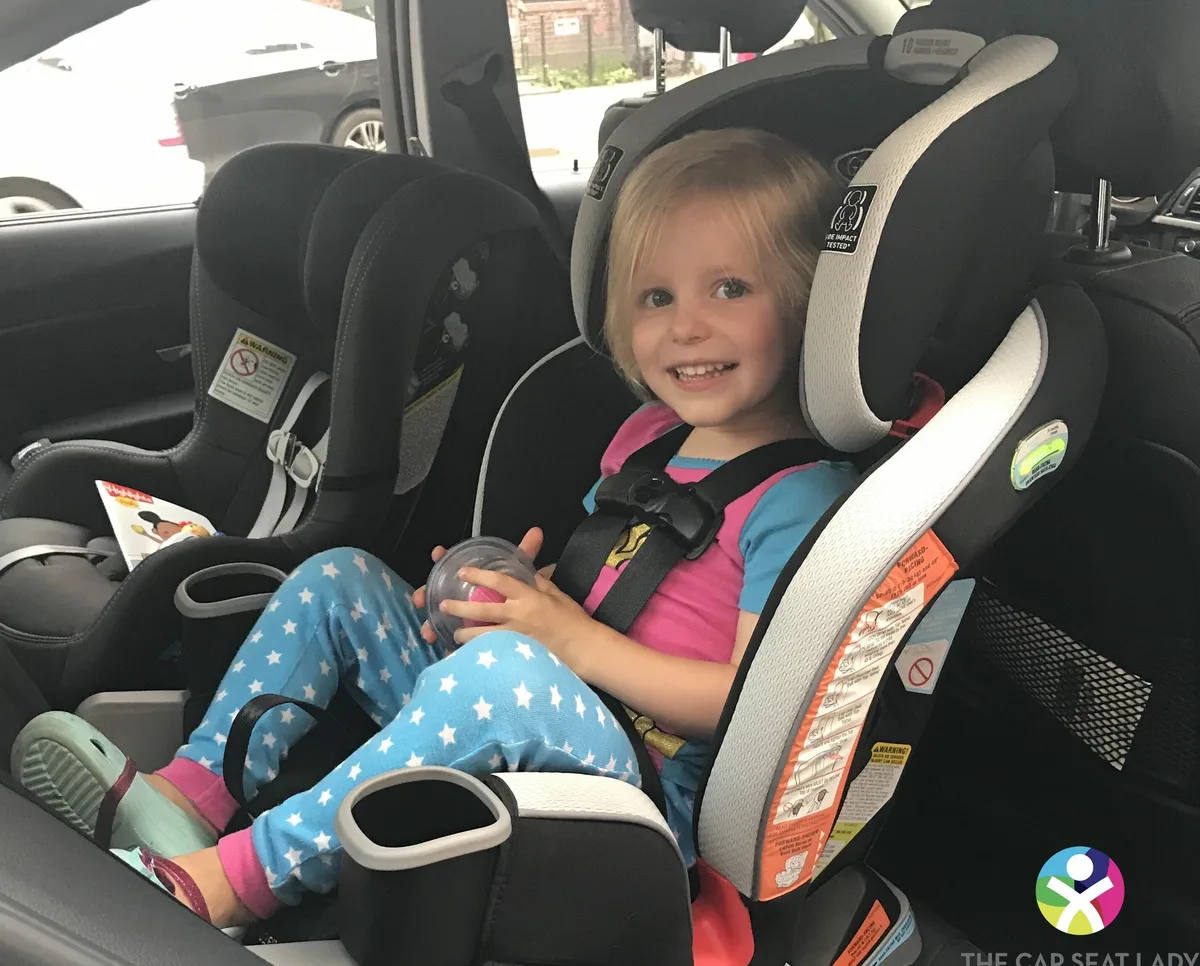
Here's the full checklist:
| Factor | What to check | Where to find it |
|---|---|---|
| Weight | Your child vs. the seat's rear-facing cap, often 40 to 50 lbs | Label on the shell and the manual |
| Height | Your child vs. the seat's rear-facing height max | The manual |
| Head position | Top of the head at least 1 inch below the shell's edge | Quick eyeball check |
| Age | State minimums and readiness cues | State law and your pediatrician |
Three details trip people up:
- If the head is within 1 inch of the shell's top, your child has outgrown the seat rear facing, even if the weight and age numbers say otherwise. That's the 1-inch rule, and it's the most overlooked check in the whole seat.
- Torso length decides head clearance, which is why two kids of the same height fit the same seat differently. A long-torso child "grows out" of a rear-facing shell faster than a long-legged one.
- Legroom is a comfort issue, not a safety threshold. Bent knees don't signal anything.
Once any one of these checks flips, the rear-facing stage is over. Until then, the switch can wait.
Why Rear-Facing Actually Matters: What Happens in a Crash
Picture a crash at 30 mph. The car stops in a fraction of a second. Your child keeps moving at 30 mph until something stops that motion.
In a rear-facing seat, that something is the shell itself. The seat catches the head, neck, and spine together, spreading the force across the strongest, most load-tolerant parts of a small body. Facing forward, the harness stops the torso while the head keeps traveling, so the neck does the braking.
A toddler's spine isn't a finished structure. The vertebrae are still partly cartilage, and the connecting tissue stretches more than an adult's does. That combination is why the rare but catastrophic spinal injuries in young children cluster in forward-facing positions, per NHTSA crash investigations and AAP guidance.
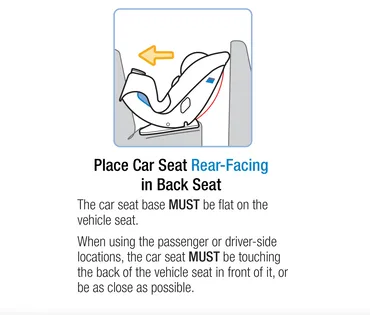
FMVSS 213, the federal crash standard every US car seat must pass, actually puts this in numbers. A forward-facing seat's job is to manage how far the head travels during an impact, and even passing seats allow a lot of forward motion. A rear-facing shell eliminates most of that travel entirely.
What rear facing buys you:
- Crash forces spread across the shell instead of concentrating on the neck
- Dramatically less forward head movement, known in crash research as head excursion
- Extra coverage in side impacts, where the shell wraps around the child's head
Now, the objection every parent raises: won't their legs snap in a crash? Crash data says the opposite. Leg injuries to rear-facing children are rare and usually minor, while head, neck, and spinal injuries are the ones that change lives.
Toddlers bend and fold naturally, and crossed legs with knees on the seatback is a position they choose on their own. Discomfort is temporary. The other stuff isn't.
The Four Things That Decide Your Turnaround Point
By now you've noticed the pattern: there's no single magic number. Here are the four checks, in the order most families should run them.
Your State's Law (The Legal Minimum)
Every state writes its own child passenger law, and the gaps between them are wide. As of 2026, more than a dozen states, including California and New York, require rear facing until age 2. A few others still allow forward facing for a 12-month-old who weighs 20 pounds, which is exactly why the law alone makes a lousy guide.
Treat your state's statute as the floor you're never allowed below, and nothing more.
The AAP Recommendation (The Safety Standard)
Since 2018, the American Academy of Pediatrics has pushed past the old "turn at 2" benchmark with a simpler rule: keep children rear facing as long as the seat allows, usually to age 3 or 4. The academy's parent-facing guidance lives at HealthyChildren.org, and it's worth reading next to your seat manual. Pediatric practice has broadly shifted along with it.
So if your doctor still quotes the old age-2 turnaround point, the updated guidance says: keep facing the back until the seat itself says stop.
Your Specific Seat's Limits
Your seat's manual outranks every website, including this one. Manufacturer specs confirm that mainstream convertibles now reach 50 pounds rear facing, including the Graco Extend2Fit line and Diono's Radian models, with all-in-one shells pushing the envelope even higher. Both limits apply at the same time, so check the weight cap on the label and the height table in the manual.
A child can be under one and over the other.
Your Child's Height and Torso Length
This is where the 1-inch rule does the heavy lifting. Because the head needs clearance, seated torso length, not total height, decides when kids outgrow a rear-facing shell. A short-torso child can ride rear facing years past their same-age neighbor.
Stand your child against the seat monthly after age 2, and let head clearance, not the birthday, make the call.
Run the four checks in this order:
- Is your child within the seat's rear-facing weight and height limits, with 1 inch of head clearance? If yes, keep rear facing.
- Does your state require rear facing to age 2? If yes, that's a hard floor.
- Has the seat been outgrown by any one measurement? If yes, flip forward and follow the steps below.
How to Switch to Forward-Facing the Right Way
The flip takes about 20 minutes and one full re-read of the manual. Two words set this section apart: top tether. It's the step installers skip most, and it's the one that protects the head.
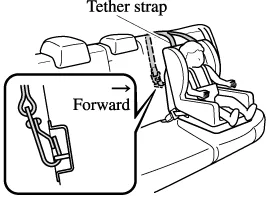
Belt Path, Top Tether, and Recline Angle
Work through this list in order, with the manual open:
- Find the forward-facing belt path. It's usually a different route than the rear-facing one, marked on the shell and diagrammed in the manual.
- Pick one installation method: the seat belt or the LATCH lower anchors, never both together, unless the manual explicitly allows it. LATCH is the built-in anchor system found in cars since 2002.
- Thread the belt, lock it with a lock-off or by locking the retractor, then press down hard on the seat while you tighten.
- Attach the top tether strap to the vehicle's tether anchor behind the headrest, and pull it tight until the seat stops rocking. The tether dramatically cuts head movement in a crash.
- Watch the LATCH weight limit, which most seats cap around 65 pounds combined, child plus seat. Past that, use the vehicle belt.
- Set the recline inside the indicator range for forward facing, because too upright means a head that flops when they nap.
Harness Height, Chest Clip, and the Pinch Test
Forward facing, the harness straps sit at or above the shoulders. Rear facing was the opposite, at or below, which is why this detail gets missed. The chest clip belongs at armpit level, never on the belly.
Then run the pinch test. Grab the strap at the shoulder and try to pinch the webbing vertically. If you can pinch up a fold, tighten it.
You want fabric only, no slack.
Getting It Inspected by a CPST
NHTSA estimates that nearly half of car seats are installed or used incorrectly in ways that reduce protection. A Child Passenger Safety Technician, called a CPST, fixes that in one appointment, usually free, at fire stations, hospitals, and community inspection events. NHTSA's car seat section lists inspection stations by ZIP code.
Twenty minutes with a tech beats guessing every time.

Similar Posts































