How Long Should a Baby Stay in an Infant Car Seat?
How long should a baby be in an infant car seat? For a healthy newborn, the practical answer is one stretch of no more than two hours at a time, with breaks that let them lie flat and stretch out. That number isn't a hard federal rule, though.
It's a positional safety guideline built around a simple fact: babies are safest in that reclined shell for short, supervised windows.
In our research, the stricter limit actually comes down to your specific seat. Every infant car seat sold in the US must meet FMVSS 213, and each one carries its own height and weight ceiling printed on the label. As of 2026, most infant-only models top out around 30 to 32 inches.
Hit that line, and the seat is done for them regardless of the clock. So the real answer has two clocks running at once: time and fit. Here's how to read both.
how long should a baby be in an infant car seat
Two hours per stretch is the standard limit.
That applies to car time and stroller time alike.
Newborns should get out and lie flat often.
Never let a baby sleep overnight in the seat.
Short trips of 30 minutes are fine daily.
The Real Question Isn't a Number, It's a Set of Limits
Image source: Web (Bing) / walmart.com (Web image (fair-use with source credit))
Most parents search for one crisp number. The truth is messier and, frankly, more useful once you see it. Three separate limits govern how long your baby stays in that seat, and whichever one trips first is the one that matters.
The first limit is positional. Car seats hold babies semi-upright. That angle is fine for travel, but long stretches of it can affect breathing in very young infants.
This is where the two-hour rule comes from, and it's why you break the trip up.
The second limit is physical. Your seat has a maximum height and weight, and the height cap almost always arrives first. A baby who still fits the weight chart can quietly outgrow the shell length months earlier.
Check the label, not your gut.
The third limit is legal and developmental. Rear-facing isn't a phase you rush through. The American Academy of Pediatrics recommends keeping children rear-facing until at least age 2, or until they max out the rear-facing limits of their seat.
For most babies, that means a convertible seat after the infant bucket, still facing backward.
So yes, "how long" has three answers: no more than two hours per stretch, no farther than the label allows, and no earlier than the safety guidelines say to switch positions.
The two-hour guideline, unpacked
The two-hour figure is a commonly cited ceiling, not a countdown timer. It's meant to stop you leaving a newborn strapped in for a four-hour drive without a break. If your trip runs longer, pull over, take them out, and let them lie flat for a bit.
Why "how long" has three separate answers
Because a seat can fail you on fit before time ever matters. A tall, fast-growing baby may outgrow the shell by 4 months while still being well under the weight limit. That's the trap the single-number search hides.
What Actually Determines How Long Your Baby Can Stay In the Seat
This is where the decision gets personal. Two babies of the same age can have completely different answers, depending on the seat and the kid.
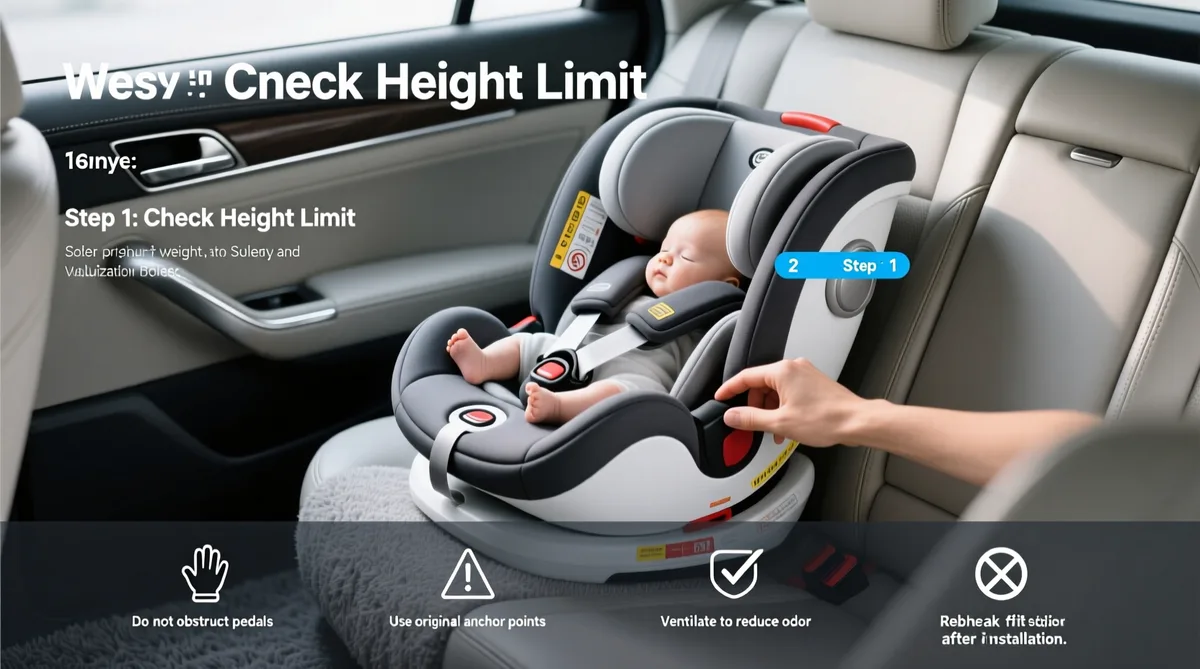
Image source: Web (Bing) / carinterior.alibaba.com (Web image (fair-use with source credit))
The height and weight limits on your seat's label
The label is the source of truth. Infant-only seats typically list a minimum around 4 to 5 pounds and a maximum near 30 to 35 pounds. The height ceiling usually sits at 30 to 32 inches.
Here's the rule most parents miss: it's not just the overall height. Many seats also require a minimum of 1 inch of shell above the baby's head. If your baby's head is within an inch of the top, the seat is outgrown, full stop.
Recline angle, harness fit, and why they change over time
Recline protects the airway in a newborn. Too upright, and the head slumps forward. Use the built-in level line and recline angle indicator, and follow the manual's newborn insert instructions exactly.
Harness fit shifts as they grow too. Rear-facing straps go at or below the shoulders. The chest clip sits at armpit level.
You should not be able to pinch slack at the shoulder.
If you want to check your install properly, NHTSA runs free car seat inspection stations nationwide, and a certified technician will verify the fit in minutes.
When your baby outgrows the infant seat (and it's rarely the weight)
If they've hit the height cap, it's time. If there's less than 1 inch of shell above the head, it's time. If the harness no longer adjusts snugly at the lowest setting, it's time.
Weight is usually the last limit to arrive.
The Risks That Make This a Bigger Deal Than It Sounds
None of this is scare tactics. It's crash physics and infant physiology, and both are well documented.
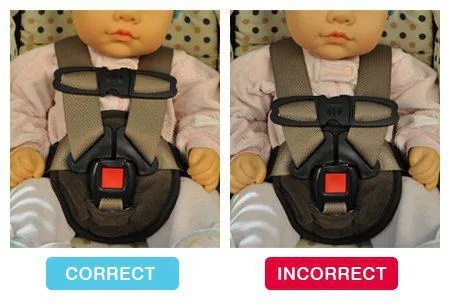
Image source: Web (Bing) / kentdomombaby.com (Web image (fair-use with source credit))
Positional asphyxia: why a sleeping newborn in a car seat isn't "just fine"
Positional asphyxia happens when a baby's airway is compressed or blocked by their own position, and they can't self-correct. Newborns have weak neck muscles and a heavy head. In a semi-upright seat, a slumped chin-to-chest position can narrow the airway over time.
That's why the seat is for travel, not for sleeping in at home. A baby who falls asleep mid-drive is fine while you're driving and supervising. A baby left napping in the seat on your kitchen floor for two hours is not the same situation at all.
Container baby syndrome and flat head syndrome
Container baby syndrome is the catch-all term for problems that build when a baby spends too much time in restrictive devices: car seats, swings, bouncers, and stroller seats. The issues range from flat spots on the head (plagiocephaly) to delayed motor development.
The fix is simple. Tummy time, floor time, and being held all count as breaks from the container. Every hour in a seat is an hour not spent developing those neck and core muscles.
Heat, head-slump, and the aftermarket insert trap
A closed car in summer can push seat surface temperatures dangerously high. Buckles and straps can burn. Never leave a baby in a car seat in a hot vehicle, even briefly.
And those cute padded inserts from third-party sellers? Most aren't crash-tested with your seat, and using them can void the seat's certification. Stick with what came in the box.
If the manual says remove the newborn insert at a certain weight, remove it.
Safe Practices: How Long Is Too Long, and What To Do Instead
Here's where we turn the rules into something you can actually do on a Tuesday.
In the car: short trips and why you don't wake a sleeping baby for errands
A 10-minute school run with a sleeping baby is fine. Wake them anyway? No.
The guidance is about total time, not about interrupting good sleep. Just don't stack errands into a three-hour loop.
For longer drives, plan breaks every two hours. Take the baby out, let them stretch flat, feed, change, and reset. Then back in.
Out of the car: the bassinet vs. stroller vs. arms decision
This is the part people get wrong most often. Using a car seat clicked into a stroller frame for a two-hour mall trip is not a break. It's still container time.
If you're out for a while, bring the bassinet attachment or a flat-lying stroller. If you're running in for five minutes, the car seat is fine. Match the tool to the length of the outing.
What to do on long road trips, daycare runs, and NICU discharge
Road trip: break every two hours, no exceptions. Daycare run: 15 minutes each way is well within limits, so don't stress. NICU discharge: your hospital may require a car seat tolerance test before you leave, covered below.
When To Move Up to a Convertible Seat, and When To Call Your Pediatrician
This is the transition most parents fumble because they wait for a milestone instead of watching the label.
Height-based vs. weight-based transitions
Weight-based thinking says "they're only 22 pounds, plenty of room." Height-based reality says the shell is done. Check both every month or so. If the head is near the top edge, start shopping.
The car seat tolerance test for preemies and low-birth-weight babies
A car seat tolerance test (CCTT) monitors a baby's heart rate and breathing while they sit in their actual seat, usually for 90 to 120 minutes. It's standard for preemies and low-birth-weight infants before NICU discharge.
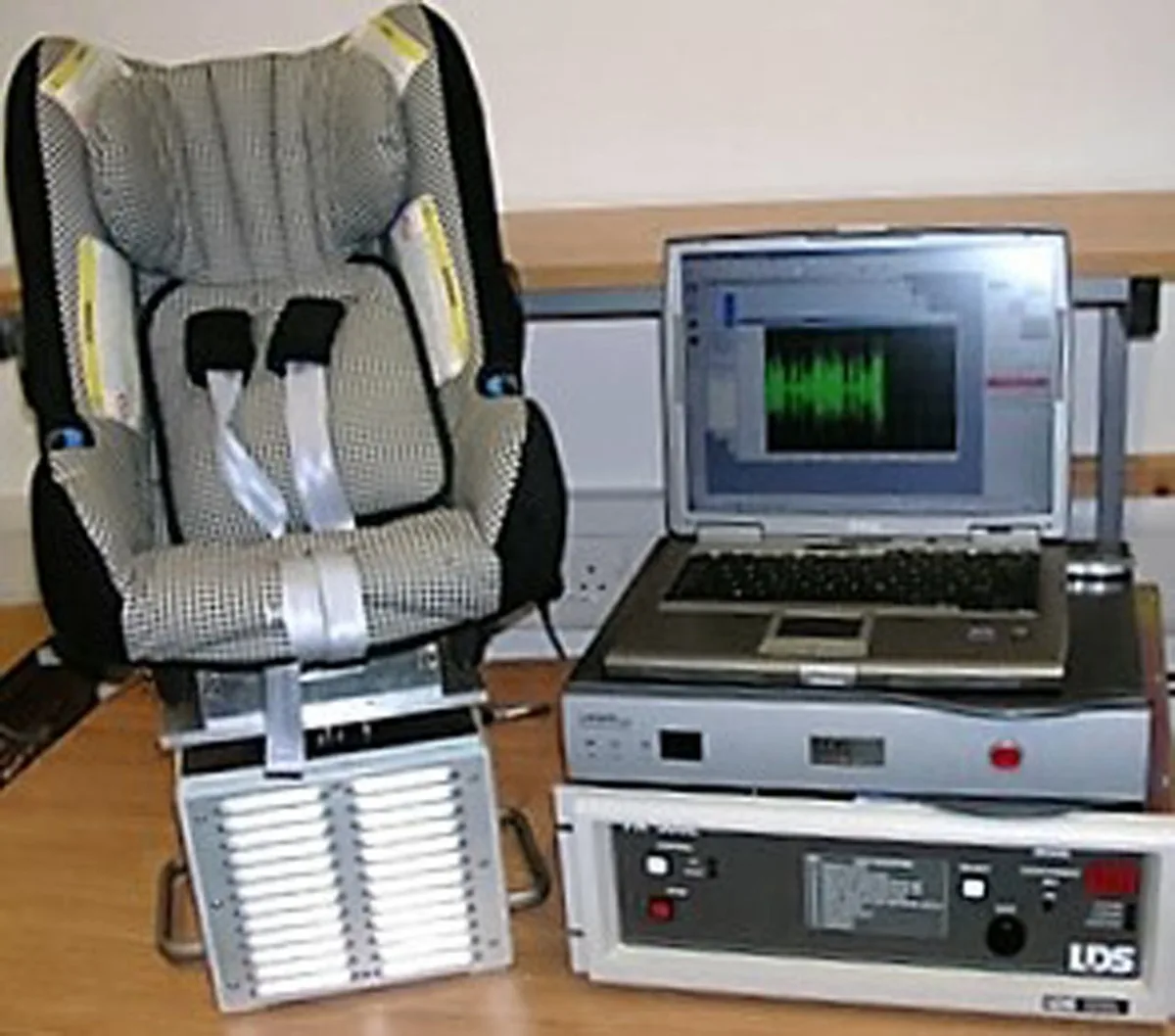
Image source: Web (Bing) / automotiveplanner.com (Web image (fair-use with source credit))
If you're not sure whether your baby needs one, ask. Your pediatrician or NICU team will tell you, and it's a quick, painless check.
Signs something's wrong during a ride
If your baby's chin drops toward their chest, if they're turning blue or grey, if they're struggling to breathe, or if they seem unusually lethargic, pull over and get them out. Don't wait. Breathing trouble in a car seat is a medical emergency, not a wait-and-see situation.
Call your pediatrician or emergency services depending on severity.
Common Mistakes Parents Make With Infant Seat Time
These show up again and again in parent forums, CPST inspection reports, and pediatric advice columns. Any one of them can turn a safe seat into a risky one.
Using the car seat as a nap spot at home
This is the single most common one. A baby falls asleep on the drive home, and you carry the whole seat inside so you don't wake them. It feels kind and sensible.
It's also the exact scenario that positional asphyxia warnings are built around.
If your baby is asleep when you get home, transfer them to a flat surface. A firm crib mattress or bassinet is the safe sleep space. The car seat is for travel only.
Bulky coats, loose harnesses, and misplaced chest clips
A puffy coat creates a gap between the harness and your baby's body. In a crash, that gap compresses and the harness can't hold them. The fix: buckle them in without the coat, tighten the harness, then lay a blanket over the top.
Chest clip placement matters just as much. It goes at armpit level, no lower. A clip at the belly does nothing to keep straps on the shoulders.
Hand-me-down seats, expired plastic, and missing recalls
A used seat with an unknown history is a gamble. You don't know if it's been in a crash, and crashed seats must be replaced. You also don't know if it's been recalled.
Check the manufacture date stamped on the shell. Infant seats typically expire 6 to 10 years out, because plastic weakens over time. Then run the model number through the NHTSA recall database.
Both checks take two minutes.
Infant Seat vs. Convertible vs. Bassinet: Which Fits Your Day
Different tools for different days. Here's how they actually compare on time limits and use cases.
| Option | Best daily use | Max time per stretch | Who it's best for |
|---|---|---|---|
| Infant car seat | Car travel, short errands | About 2 hours | Newborns, parents on the go |
| Convertible car seat | Car travel, long-term use | About 2 hours | Babies outgrowing the bucket seat |
| Bassinet attachment | Walks, naps on the go | Unlimited flat time | Long outings, daily stroller use |
Side-by-side comparison of time limits and use cases
The infant seat wins on portability and click-in convenience. It loses on container time, because you're still strapping a baby semi-upright. Use it for the car and quick trips, not for a full afternoon out.
The convertible seat is the long game. It stays rear-facing well past the infant bucket's limits, often to age 2 and beyond. It doesn't click into a stroller, so it's car-only.
The bassinet attachment is the underrated hero for long outings. A flat-lying surface lets a baby sleep safely on a walk without the container-time penalty. If you're out for two hours or more, this is the better choice.
Best fit for newborns, preemies, city parents, and road-trippers
Newborns and preemies: infant seat, with a CCTT if the hospital requires it. City parents on foot: bassinet attachment, plus a car seat for actual drives. Road-trippers: either seat works, as long as you break every two hours.
FAQs About Infant Car Seat Time
Can my baby sleep in the car seat overnight?
No. A car seat is not a safe sleep surface for unsupervised sleep. Positional asphyxia risk is highest when a baby is left unattended in a semi-upright seat.
Overnight sleep belongs on a firm, flat surface, every time.
Does the two-hour rule apply to a stroller too?
Yes, if the stroller seat is a car seat clicked into a frame. The position is the same, so the risk is the same. A flat-lying bassinet attachment is different and has no time limit for supervised use.
When can my baby go forward-facing?
Not before age 2 at the earliest, per AAP guidance. Many kids stay rear-facing until age 3 or 4. The right switch point is when they max out the rear-facing height or weight limit of their convertible seat.
Do I need a new seat if it's been in a minor crash?
Usually, yes. Most manufacturers say replace after any crash, even a minor one, because you can't see internal stress cracks. Check your specific seat's manual.
Some allow reuse after a very minor crash with no airbag deployment and no damage near the seat.
What if my baby hates the car seat?
Check the fit first. A too-tight harness, a twisted strap, or a bad recline angle causes most car seat meltdowns. If the fit is right and they still hate it, try a light muslin over the seat and a white-noise app.
Some babies just need time.
The Bottom Line: Follow the Label, Watch the Clock, and Don't Park the Seat Indoors
There's no single magic number, and that's the honest takeaway. Watch three things: the two-hour stretch, your seat's height and weight limits, and the 1-inch shell rule above the head. Whichever trips first, act on it.
Keep the seat for travel. Use a flat surface for sleep. Break long drives every two hours.
And when your baby's head nears the top edge of the shell, start shopping for a convertible seat that keeps them rear-facing well past their second birthday.
That's the whole game. Get the fit right, respect the clock, and get them out of the container whenever you can.

Similar Posts































