When Can Baby Sit Forward in Car Seat? Safe Age Guide
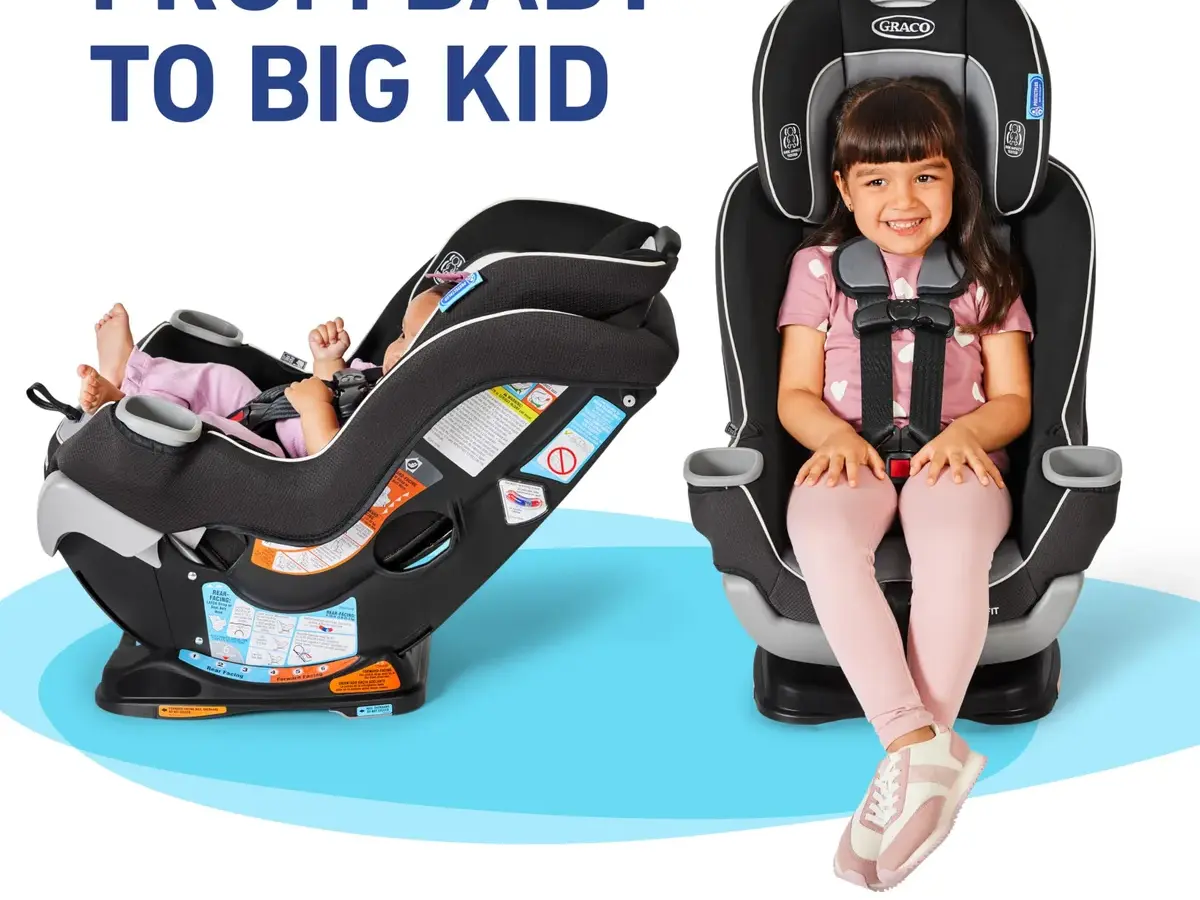
You're likely wondering when can baby sit forward in car seat, and the honest answer is that it depends on far more than a birthday. Most parents assume age two is the magic number and flip the seat on that day. But safety guidance, state law, and the physical limits of your specific seat often point to different answers.
Getting this wrong isn't a minor slip. It's one of the most studied decisions in child passenger safety.
The American Academy of Pediatrics (AAP) recommends keeping children rear-facing until they hit the seat's height or weight limit, which typically falls between ages two and four. A rear-facing seat absorbs crash forces across the child's entire back, not just the harness points. That difference matters enormously in a frontal crash, the most common type on US roads.
So let's walk through what actually decides the switch.
when can baby sit forward in car seat
A baby can sit forward-facing at a minimum of age two, per AAP guidance. But age alone doesn't decide it. The child must also reach the seat's rear-facing height or weight limit.
Check your seat's manual for those exact numbers. Never flip before both age two and the seat's own limits say it's safe.
Why This Decision Is Worth Getting Right
Child passenger safety is not a place for guesswork. Crash data shows that rear-facing seats protect a young child's head, neck, and spinal cord far better than forward-facing ones. That's because a baby's head is proportionally huge and their neck bones are still soft and flexible.
Wait, let me rephrase that.
A young child's spine hasn't fully hardened into bone yet. It's mostly cartilage, which means it can stretch up to two inches in a severe crash. Rear-facing seats spread that force over the whole back.
Forward-facing seats concentrate it on the neck and spine.
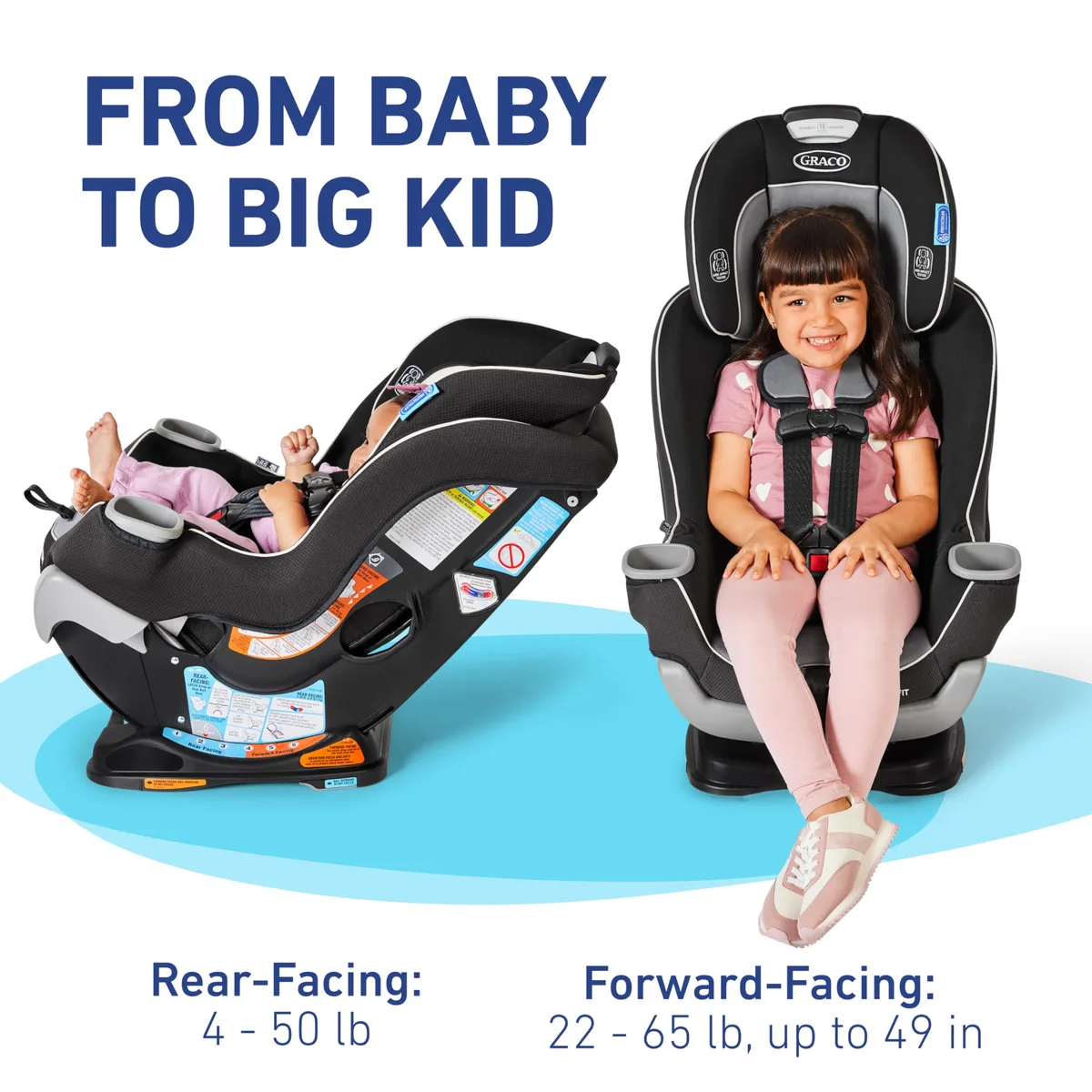
Image source: Bing (Web (fair-use with source credit))
Here's the practical takeaway. Every month you keep a child rear-facing is a month of extra protection. The National Highway Traffic Safety Administration (NHTSA) runs the Child Passenger Safety program and publishes recommendations that echo the AAP.
Both agencies agree: don't rush the flip. The seat's own limits, not the calendar, are your real signal.
The Three Numbers That Actually Decide It: Age, Height, and Weight
Three numbers govern this decision, and they all have to line up. Age two is the floor. Height and weight are the ceilings set by your seat.
You flip forward-facing only when the child has maxed out the rear-facing limit.
Age: The Two-Year Minimum
As of 2026, the AAP still recommends age two as the absolute minimum for forward-facing. Many states now require rear-facing until two by law. But two is a floor, not a finish line.
Plenty of kids stay rear-facing well past their third birthday.
Height: Often the First Limit Reached
Height tends to end rear-facing before weight does, especially for long-torso kids. The rule is simple: the top of the child's head must stay at least one inch below the top of the seat shell. Once it doesn't, the seat is outgrown in that mode.
Most modern convertible seats allow rear-facing up to around 40 to 49 inches.
Weight: The Second Ceiling
Weight limits on convertible seats usually run from 40 to 50 pounds in rear-facing mode. Heavier kids hit this ceiling first. The seat's manual lists the exact figure, and it varies by brand.
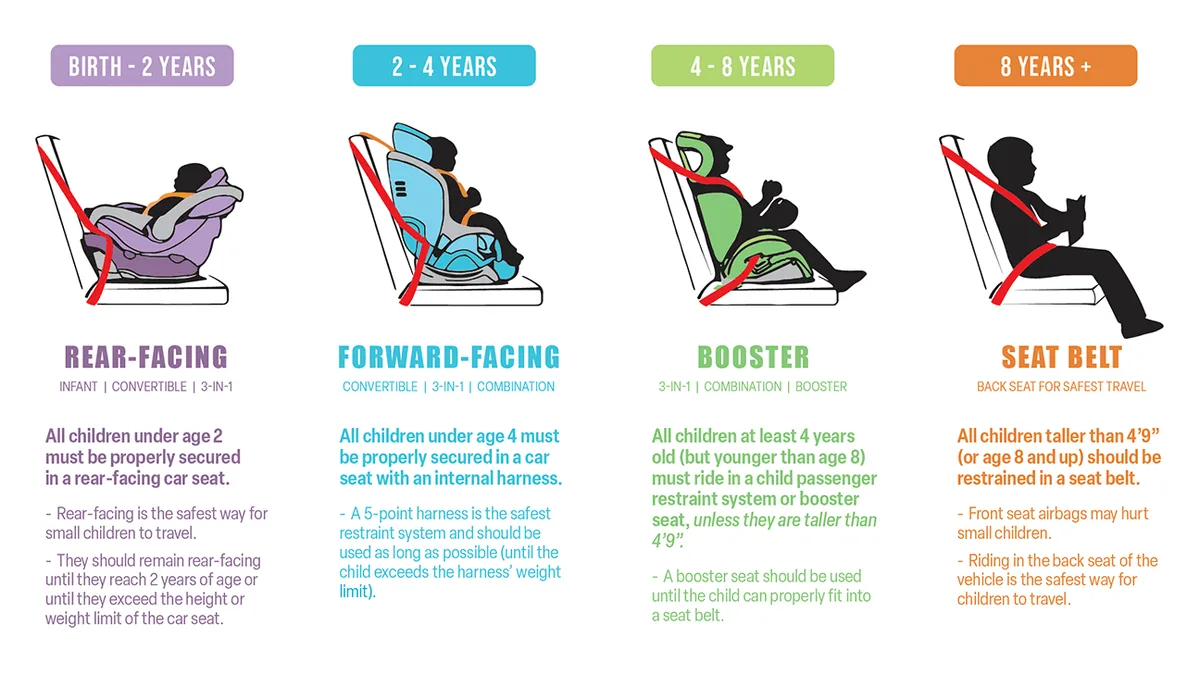
Image source: Bing (Web (fair-use with source credit))
That's the whole decision, really. Age two or older, plus still under the seat's rear-facing height and weight limits, means keep them rear-facing. Hit either limit, and it's time to flip.
Some seats also have a standing-height rule alongside the seated one, so read the manual carefully.
Rear-Facing vs. Forward-Facing: What Actually Changes in a Crash
The single biggest change is how crash forces travel through your child's body. Rear-facing spreads them. Forward-facing concentrates them.
That's the core of it.
In a frontal crash, everything inside the car keeps moving forward at the original speed until something stops it. A rear-facing seat cradles the child and lets the shell absorb the energy. The child's back, head, and neck all ride down into the seat shell together.
No single point takes the full load.
A forward-facing seat does the opposite. The harness holds the child's torso, but the head whips forward. The neck and spine absorb that motion.
For a young child, that's the riskiest possible scenario.
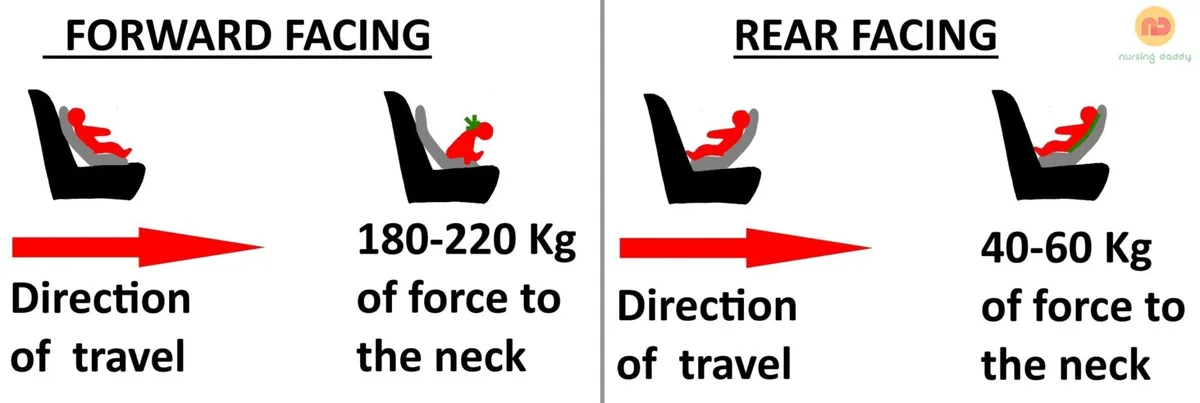
Image source: Bing (Web (fair-use with source credit))
There's a common myth that kids outgrow rear-facing because their legs are too long. Studies and safety experts have repeatedly debunked this. Leg injuries are rare in rear-facing seats, and bent legs aren't a safety hazard.
Kids just tuck them up or drape them over the sides. It looks cramped, sure. But that's comfort, not danger.
This is why extended rear-facing (ERF) has become standard advice. Sweden, which has one of the lowest child road fatality rates in the world, keeps kids rear-facing to age four or five as routine. The physics doesn't care about cultural norms, and the data backs the Swedish approach.
State Law vs. Safety Guidance: Where the Rules Don't Line Up
Here's what trips a lot of parents up. State law and safety guidance aren't the same thing. Many states still allow forward-facing at age one and 20 pounds.
That's legal, but it's nowhere near the safest choice.
The AAP and NHTSA both recommend rear-facing until the seat's limits are reached, which usually means age two to four. State laws vary widely and many haven't caught up to the research. Your legal minimum is not the same as the safe minimum.
Here's the simple rule. Follow whichever standard is stricter: your state law or the AAP recommendation. In practice that means staying rear-facing past age one, past 20 pounds, and ideally past age two.
If your state says two and the AAP says "until the seat is outgrown," follow the seat's limits.
You can check your state's exact requirements through your local DMV or the NHTSA car seat laws page. And if you're ever unsure whether your install is correct, get it checked. Many fire stations and police departments offer free inspections from Certified Child Passenger Safety Technicians (CPSTs).
How to Flip the Seat Safely: A Step-by-Step Transition
Once your child hits the forward-facing point, the flip itself is a small project. Do it in daylight, read the manual, and take your time. Here's the process.
- Check the manual for forward-facing limits. Confirm the child is below the forward-facing weight and height ceiling.
- Move the harness straps to the correct slots. They shift from at-or-below the shoulders to at-or-above the shoulders.
- Reposition the crotch strap if your seat allows it. Many have a forward position for forward-facing mode.
- Recline the seat to the forward-facing angle. It sits more upright than rear-facing.
- Route the seat belt or LATCH strap through the forward-facing belt path.
- Attach the top tether to the vehicle's tether anchor. This is critical and often skipped.
- Tighten until the seat moves less than one inch at the belt path.
- Do the pinch test at the collarbone. No slack means the harness is snug enough.
- Check the chest clip. It sits at armpit level, not the belly.
- Register the seat with the manufacturer for recall alerts.
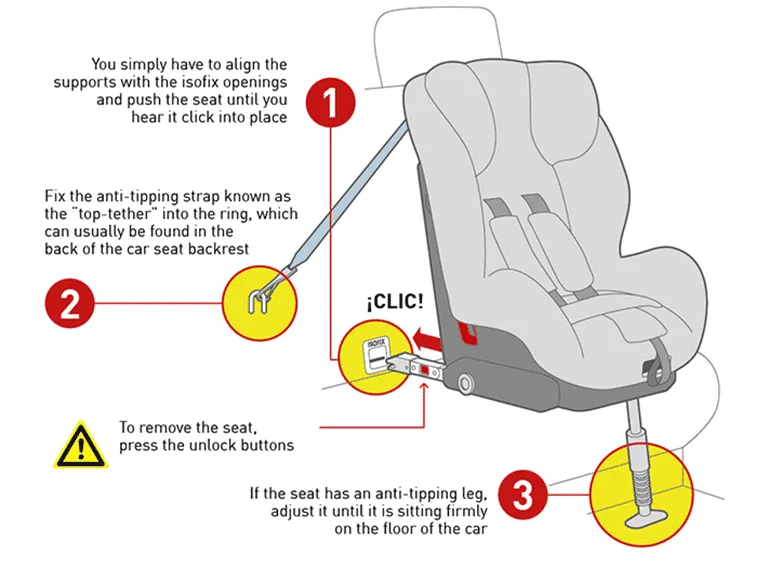
Image source: Bing (Web (fair-use with source credit))
The top tether is the step most parents miss. Forward-facing seats without it move much further forward in a crash, which increases head injury risk. If your vehicle has a tether anchor, use it.
Almost every car built after 2001 does. For lower anchor weight limits, remember that LATCH has a cap (often 65 pounds combined child and seat). Past that, switch to the seat belt.
Common Mistakes That Put Kids at Risk After the Switch
The flip itself isn't the finish line. Most of the danger sits in the details after the switch. Here are the errors we see most often, and how to sidestep each one.
- Skipping the top tether. Forward-facing seats without a tether move much further forward in a crash. If your vehicle has an anchor, use it.
- Wrong harness slot height. Straps must sit at or above the shoulders in forward-facing mode. Below-shoulder slots are for rear-facing only.
- Reusing the rear-facing recline. A forward-facing seat needs a more upright angle. The wrong angle causes head slump and reduces protection.
- Bulky coats under the harness. Puffy jackets compress in a crash, leaving the harness dangerously loose. Buckle the child in a thin layer, then add the coat over the straps.
- Aftermarket add-ons. Head supports, strap covers, and mirrors that didn't come with the seat void warranties and can interfere with the harness.
- Loose install. More than one inch of movement at the belt path means the seat isn't tight enough. Push and pull at the belt path to check.
- Ignoring LATCH weight limits. Lower anchors have a combined cap, often 65 pounds with the child and seat. Past that, switch to the seat belt.
- A used seat with unknown history. No seat that's been in a crash, missing parts, or past its expiration date should be used. Most seats expire in six to ten years.
That last point matters more than people realize. Plastic degrades over time and in heat, so an old seat may not perform as tested.
If you're ever unsure whether your install is right, get it checked. Many fire stations and police departments offer free inspections from Certified Child Passenger Safety Technicians (CPSTs).
FAQs: Quick Answers to What Parents Ask Most
Can my baby sit forward-facing at age one?
No, not safely. Age one is the legal minimum in some states, but it's well below current safety guidance. The AAP recommends rear-facing until at least age two, and ideally until the seat's height or weight limit is reached.
Age one forward-facing increases head and neck injury risk significantly.
What if my child's legs look cramped rear-facing?
Bent legs are normal and not a safety concern. Kids fold their legs, cross them, or drape them over the seat sides. Leg injuries are rare in rear-facing seats.
Cramped legs are a comfort issue, never a reason to flip early.
How do I know when my child has outgrown the rear-facing seat?
Check two things. The top of the head must stay at least one inch below the top of the seat shell. And the child must stay within the seat's rear-facing weight limit, usually 40 to 50 pounds.
Hit either limit and the seat is outgrown in that mode.
Is it safe to use LATCH for a forward-facing seat?
Yes, but only up to the lower anchor weight limit. That cap is usually 65 pounds combined, child plus seat. Past that, switch to the seat belt.
The top tether should be used either way when an anchor is available.
Do I need a new seat, or can I flip the one I have?
It depends on the seat type. Convertible and all-in-one seats flip from rear-facing to forward-facing, so you keep the same seat. A rear-facing-only infant seat can't be flipped.
If yours is rear-facing only, you'll need a convertible or forward-facing seat.
How long should my child stay in a forward-facing harness?
Until they outgrow the harness limits, which is often age four to seven. After that, they move to a belt-positioning booster. Most kids need a booster until they're around 4'9" tall, usually between ages eight and twelve.
The Bottom Line: When to Make the Switch (and When to Wait)
If your child is under age two, stay rear-facing. That's the rule, full stop. Rear-facing protection is simply better for a young child's head, neck, and spine.
If your child is age two or older, check the seat's rear-facing limits. Still under both the height and weight ceiling? Keep them rear-facing.
Hit either limit, and it's time to flip.
Once you make the switch, get the install right. Move the harness slots, set the recline, attach the top tether, and tighten until the seat barely moves. Those four steps do most of the safety work.
And remember the law isn't the same as the safest choice. State minimums often lag behind the research. Follow the stricter standard, and let the seat's own limits guide you.
When in doubt, get a free inspection from a certified technician.
Wait, let me double-check one thing. Yes, that's right. The switch is a milestone, not a race.
A few extra months rear-facing costs you nothing and protects your child far better.

Similar Posts































