When Can a Baby Face Forward in a Car Seat?
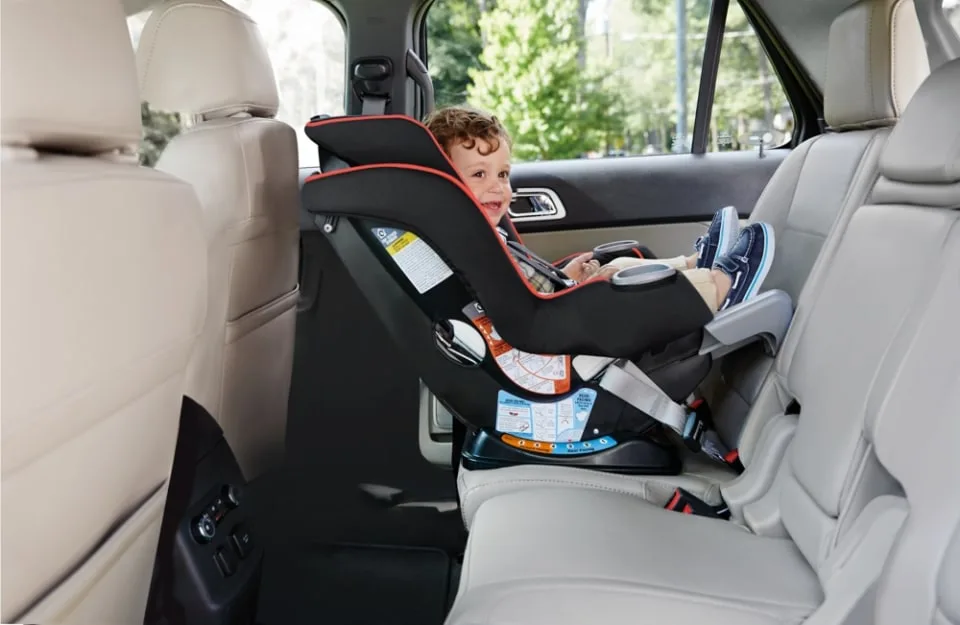
When can a baby face forward in a car seat? The honest answer is: not when the calendar says so, and not when your toddler starts complaining. It's when your child maxes out the rear-facing limits on your specific seat, and the American Academy of Pediatrics (AAP) wants you to hold off until at least age 2.
Most parents turn the seat around far earlier than they should. A 2018 study in the Journal of Pediatrics found that many children move to forward-facing before their second birthday, even though crash data shows rear-facing is dramatically safer for small bodies. That gap between what parents do and what the research says is the whole reason this question keeps coming up.
when can a baby face forward in a car seat
A baby can face forward once they hit the rear-facing weight and height limits of their car seat. The AAP recommends waiting until at least age 2. Most convertible seats allow rear-facing to 40 or 50 pounds.
Your child needs to meet the age, weight, and height thresholds together. The seat's manual is the final word.
The Short Answer (And Why "Age 2" Isn't the Full Story)
Age 2 is a milestone, not a finish line. The AAP's actual position is that kids should stay rear-facing until they reach the maximum weight and height their seat allows. For many convertible car seats, that's closer to age 3 or 4.
Image source: Bing (Web (fair-use with source credit))
Here's the confusion. State laws and safety guidelines often get mashed together. A handful of US states still follow the old "1 year and 20 pounds" floor, which is decades out of date.
NHTSA and the AAP both say that's the bare minimum, not the target.
So if you want a decision rule, use this:
- If your child is under 2, keep them rear-facing regardless of weight.
- If your child is 2 or older but still under the seat's rear-facing height and weight max, keep them rear-facing.
- If your child has outgrown every rear-facing limit on the seat, it's time to turn them around.
The manual that came with your seat is the tiebreaker. Manufacturer specifications indicate the exact numbers for that model, and they override generic advice from blogs or grandparents.
Why Rear-Facing Keeps Them Safer — The Biology and the Crash Data
A baby's neck isn't built like yours. The vertebrae are still mostly cartilage, and the head is roughly 25% of total body weight. In a frontal crash, a forward-facing child's head whips forward while the harness holds the torso back.
That's where neck and spinal cord injuries happen.
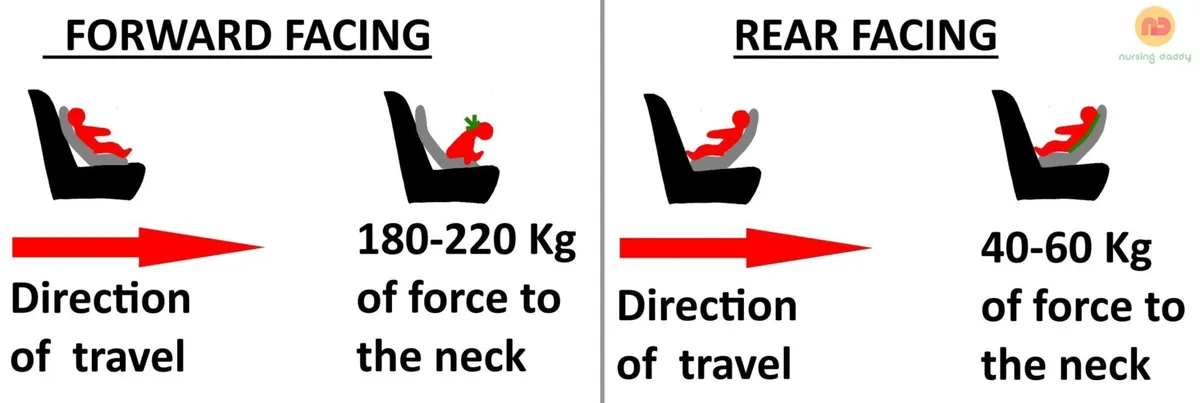
Image source: Web (Bing) / nursingdaddyblog.com (Web image (fair-use with source credit))
Rear-facing flips the physics. The shell of the seat cradles the head, neck, and spine, and the crash forces spread across the whole back instead of concentrating on the neck. Per NHTSA crash testing and AAP policy statements, rear-facing seats reduce the risk of serious injury by around 5 times for children under 2.
The takeaway isn't subtle. Every extra month rear-facing is extra protection. That's why the AAP moved its recommendation from "age 1" to "age 2" in 2011, and why it now says to max out the seat.
The Three Boxes Your Child Has to Check Before You Flip the Seat
Three limits, and all three have to be met at the same time. Miss one and you're turning too early.
Age, Weight, and Height: You Need All Three
The rear-facing limits on a convertible car seat usually look something like this:
| Limit | Typical Rear-Facing Max | When It's Time to Flip |
|---|---|---|
| Age | 2 years minimum | 2+ and ready |
| Weight | 40 to 50 lbs | Child exceeds the listed max |
| Height | 40 to 49 inches | Head within 1 inch of top of shell |
If your 18-month-old weighs 38 pounds but your seat's rear-facing max is 40, you wait. If your 3-year-old is nowhere near the weight limit but has grown past the height limit, you flip. Weight alone doesn't decide it.
The One-Inch Rule Most Parents Miss
The one-inch rule is simple. When your child is rear-facing, there should be at least 1 inch of car seat shell above the top of their head. Once that gap disappears, the seat can no longer protect them rear-facing.
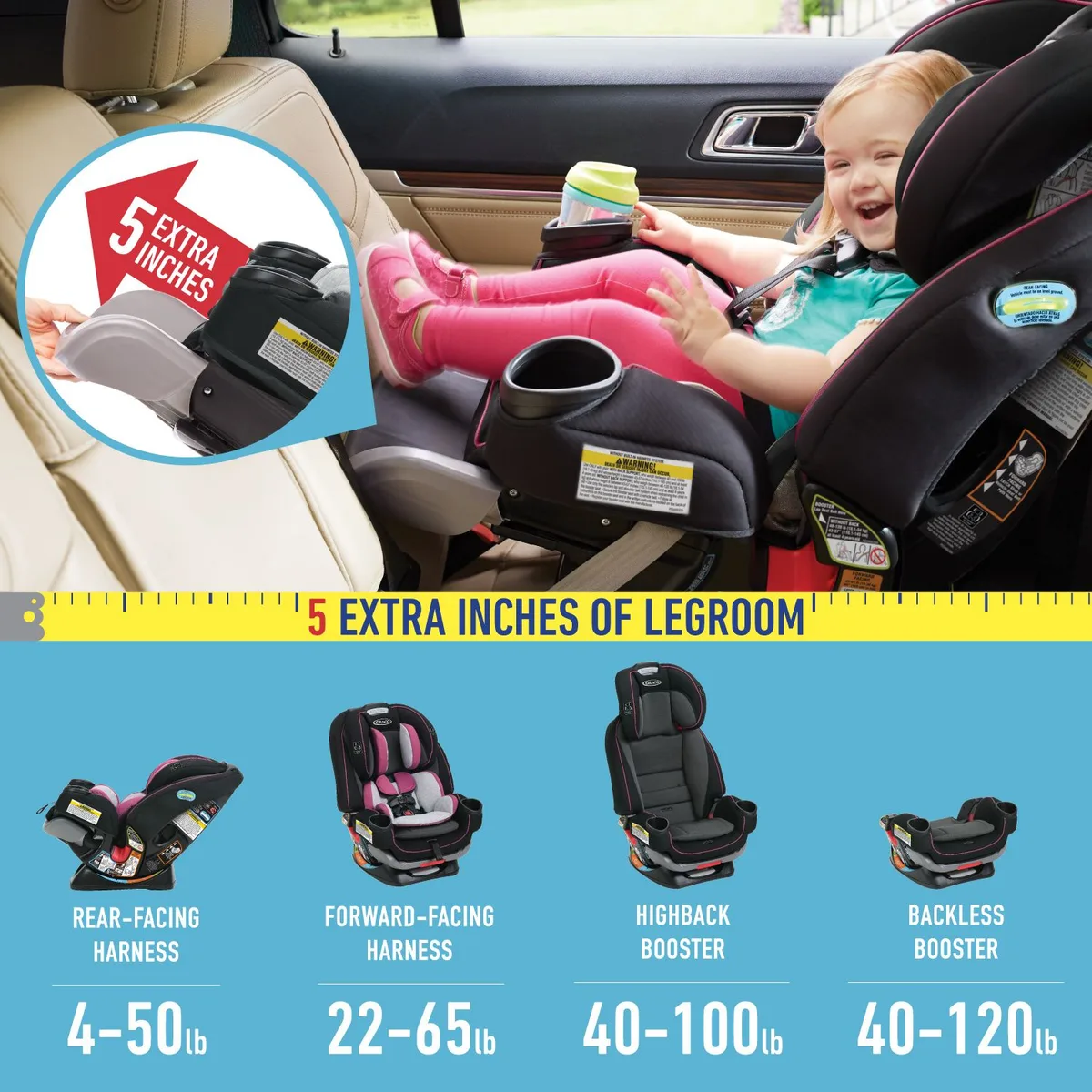
Image source: Bing (Web (fair-use with source credit))
This is the rule that catches parents off guard. Kids grow fast, and a seat that fit perfectly six months ago may now be too short. Check the gap every few weeks.
If you can't fit a finger's width of shell above the head, it's time.
A rear-facing seat with a taller shell, like many all-in-one models, buys you more time. Shorter shells force the transition earlier.
What Your Seat's Manual Says vs. What Your State Says
State law is the floor. Your car seat manual is the ceiling. You want to live somewhere in between, closer to the manual.
Some states still allow forward-facing at 1 year and 20 pounds. Others require rear-facing until 2. A few use height-based rules borrowed from European i-Size standards.
None of them require you to flip at the minimum.
NHTSA's official car seat guidance is clear: keep kids rear-facing as long as the seat allows. That page is worth bookmarking if you want the federal position in writing rather than the internet's version of it.
How to Switch a Car Seat From Rear-Facing to Forward-Facing
Once your child has outgrown the rear-facing limits, the switch is mechanical but easy to get wrong. Here's the sequence.
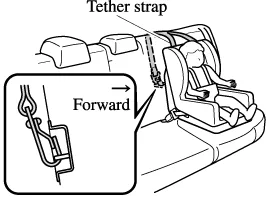
Image source: Web (Bing) / velcromag.com (Web image (fair-use with source credit))
Step-by-Step Install Checklist
- Read the manual section for forward-facing mode. Each seat has its own rules for harness slot height, recline, and belt path.
- Rotate the seat and reset the recline. Forward-facing seats sit more upright than rear-facing ones.
- Re-thread the harness. For forward-facing, the harness straps must come out at or just above the child's shoulders, never below.
- Install with either the seat belt or LATCH, not both. Pick one, follow the manual, and lock it down.
- Attach the top tether. This is required for forward-facing installs and cuts head movement in a crash.
- Check the install. You should feel less than 1 inch of movement at the belt path when you tug side to side.
- Tighten the harness. Do the pinch test at the collarbone. If you can pinch slack, it's too loose.
- Set the chest clip at armpit level. Not the belly, not the throat, armpit.
- Register the seat with the manufacturer. That's how you get recall notices.
- Get it inspected. Many fire stations and hospitals offer free checks by a certified Child Passenger Safety Technician (CPST).
The Top Tether Is Not Optional
A forward-facing car seat without the top tether is only doing part of its job. The tether anchors the top of the seat to a point behind or under the vehicle seat, which limits how far the child's head moves forward in a crash.
If your car has tether anchors (nearly all vehicles built after 2000 in the US do), use them. If you can't find them, check your vehicle's owner's manual. And if your car genuinely doesn't have them, that's a conversation to have with a CPST before installing forward-facing at all.
Forward-Facing vs. Booster: A Gap Parents Accidentally Skip
Turning the seat forward isn't the final transition. The one after it causes more trouble than the first: jumping from the harness to a booster too soon.
A belt-positioning booster has no harness. It simply lifts the child so the adult seat belt crosses the strong parts of the body, the shoulder and hip bones. That only works if the child sits still, every single ride, no slouching, no fidgeting with the buckle.
Quick comparison:
| Factor | Forward-Facing Harness | Belt-Positioning Booster |
|---|---|---|
| Minimum age | 2+ after rear-facing limits | Typically 4 or 5 |
| Weight range | Up to 40 to 65 lbs, per the label | From 40 lbs until proper belt fit |
| Restraint | 5-point harness | Adult seat belt alone |
| Child cooperation | Harness does the work | Kid must sit still every trip |
Stay harnessed until your child outgrows that seat's harness weight limit. Only then, and only if they're at least 4 and mature enough, consider a booster. Moving early is a leading cause of preventable injury among kids aged 4 to 8, per aggregate crash data cited by NHTSA.
Common Mistakes That Undo the Safety
Even a correctly chosen seat fails when it's used wrong. NHTSA estimates most car seats are misused in at least one way, and these are the usual suspects:
- Ignoring the LATCH weight limit. LATCH carries a combined limit, usually 65 pounds of child plus seat. Once you cross it, reinstall using the vehicle seat belt instead.
- A puffy winter coat under the harness. It compresses in a crash and leaves the straps loose. Buckle over thin layers, then flip the coat backward over the harness.
- Aftermarket accessories. Strap covers, inserts, and seat mats not sold with your seat can interfere with performance and void the certification.
- Expired or secondhand seats. Seats last 6 to 10 years from the manufacture date on the label. A seat with an unknown crash history should be retired, not reused.
- Twisted straps. Harness webbing should lie flat against the chest and hips, never bunched.
- Guest installs. Grandparents and babysitters need the same 60-second check before every ride, not just the first time.
None of these take long to fix. All of them matter.
The Legal Side: State Laws, Standards, and Where to Get a Free Inspection
State law sets the minimum, not the target. As of 2026, more than a dozen states, including California, New York, and New Jersey, require rear-facing until age 2. Several others still accept 1 year and 20 pounds, guidance the AAP dropped more than a decade ago.
Underneath all of it sits FMVSS 213, the federal standard every US car seat must pass before sale. A 2022 update added mandatory side-impact testing for seats manufactured from late 2025 onward, worth checking if you're buying secondhand.
Laws won't tell you when to flip. Your seat's manual will, and the AAP's plain-language version lives on HealthyChildren.org.
Free help is closer than you think:
- The NHTSA car station locator finds certified Child Passenger Safety Technicians near you.
- Many fire stations, hospitals, and police departments hold free car seat clinics.
- Safe Kids Worldwide runs community checkup events throughout the year.
Technicians routinely find one or two errors parents have quietly missed for months. That's a cheap insurance policy on a device your child uses every day.
FAQs: Extended Rear-Facing, Tall Toddlers, and Grandparent Pushback
Quick answers to the questions that come up most at checkup lines and in parent forums.
Is it really okay for a toddler's legs to be bent rear-facing?
Yes, and it beats the alternative. Kids fold their legs comfortably on their own, and research shows leg injuries are rare in rear-facing seats. Forward-facing children face higher head, neck, and limb injury risk because their upper bodies get thrown forward in a crash.
My baby is 20 pounds at 11 months. Can we turn the seat around?
No. The old "1 year and 20 pounds" rule is decades out of date. Current AAP guidance starts the age minimum at 2.
Keep the seat rear-facing until your child reaches age 2 plus the weight and height limits printed on that specific seat.
What if my child maxes out the height limit before the weight limit?
Flip the seat the moment any one limit is reached. Height usually happens first, and the one-inch rule is your early warning. When less than an inch of shell remains above the head on a rear-facing install, that seat is finished in that mode regardless of weight.
How do I handle grandparents who insist forward-facing is fine?
Show them the seat's manual and the current AAP guidance instead of debating the road rules of their era. If that doesn't land, book a free CPST appointment. Most grandparents accept the change faster from a certified technician than from their own kids.
The Bottom Line: When It's Actually Safe to Turn Them Around
Here's the whole answer compressed into one rule: flip the seat when your child is at least 2 and has outgrown every rear-facing limit listed in the seat's manual. Not before. Not a moment sooner.
For most kids in a modern convertible seat, that means forward-facing somewhere between ages 3 and 4. Tall toddlers get their date from the one-inch rule. Lighter kids get theirs from the weight limit.
What happens after the flip matters just as much. Harness straps at or above the shoulders, top tether attached, chest clip at the armpit, and an install that moves less than an inch at the belt path. Twenty minutes with a free CPST inspection confirms every one of those boxes.
Every extra month rear-facing is protection your child can't ask for themselves. Give it to them anyway.

Similar Posts































