When to Change Your Baby’s Car Seat: Key Signs
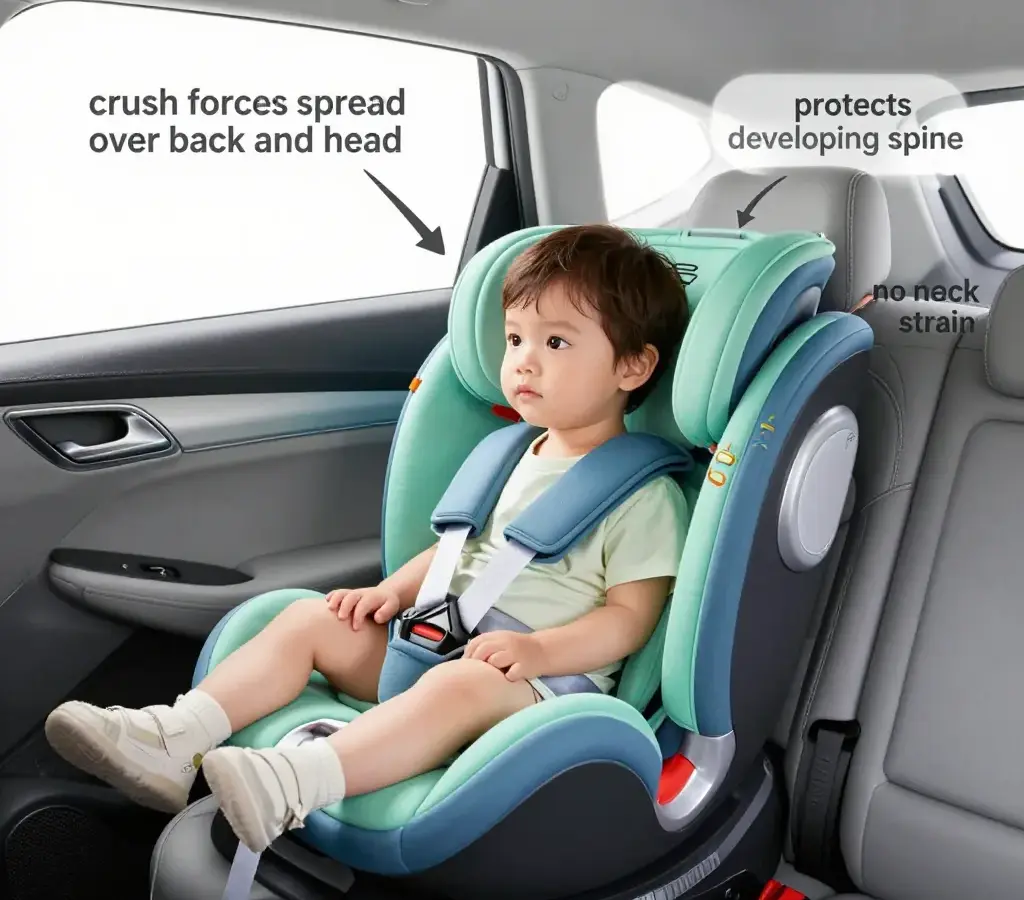
If you're staring at a growing baby and wondering when to change car seat for baby, the answer isn't a birthday. It's a fit measurement. Kids don't grow on a schedule, and seats don't switch stages on a calendar either.
Manufacturer specifications set the real limits, and they're based on weight and height, not age alone. As of 2026, the American Academy of Pediatrics still recommends keeping your child rear-facing until they max out the seat's rear-facing limits, not at age 2. That single rule reframes the whole question.
when to change car seat for baby
Change the seat when your child outgrows one of its limits, not on a birthday.
Check the weight cap. Then check the height cap. Then check the head-to-shell clearance.
Any one of those triggers a change. Age alone never does.
The Real Trigger Isn't Age, It's Fit
Every car seat is rated for a specific range. Rear-facing infant seats might top out at 22 to 35 lbs. Convertibles often go to 40 or 50 lbs rear-facing.
Forward-facing harnesses usually run to 65 lbs or more.
But here's what gets missed: height limits almost always hit first. Kids stretch faster than they gain pounds. A 30 lb toddler can outgrow a 35 lb rear-facing seat by sheer height six months before weight becomes an issue.
That's why the fit check matters more than the scale. Every time you buckle your baby in, you're gathering data. Head too close to the top?
Harness slots below the shoulders? Those are the real signals.
Some parents wait for a milestone. Others wait for a doctor's visit. Both miss the point.
The seat tells you when it's done, not the calendar.

Image source: Bing (Web (fair-use with source credit))
The Four Car Seat Stages, and What Each One Actually Requires
There are four standard stages in child passenger safety. Each one has its own rules, limits, and "move up" triggers.
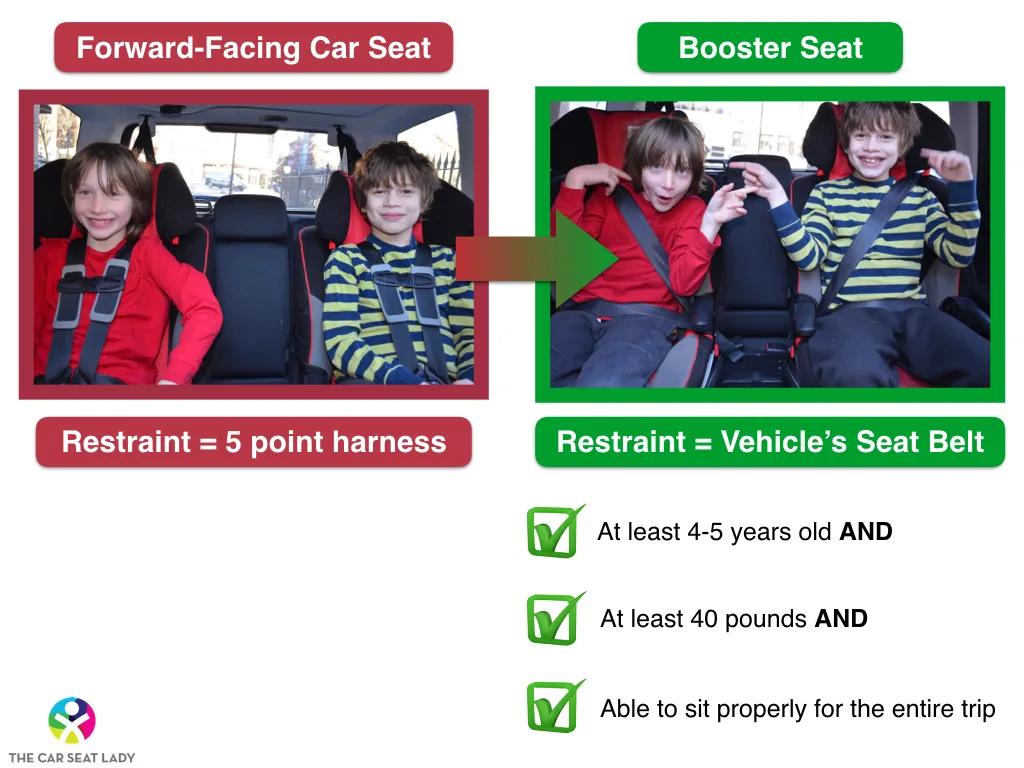
Image source: Web (Bing) / bidfta.com (Web image (fair-use with source credit))
Here's the breakdown:
Stage 1: Rear-facing infant seat (bucket seat)
These come with a base and a handle. They're portable and usually cost less upfront. Weight limits sit around 22 to 35 lbs.
Many parents move on from these within 9 to 12 months, not because the baby outgrows them, but because the seat gets heavy to carry.
Stage 2: Convertible seat, rear-facing
Same seat flips forward later. Rear-facing limits typically run 40 to 50 lbs. This is where extended rear-facing happens.
A convertible can keep a child rear-facing until age 3 or 4 in many cases.
Stage 3: Convertible or forward-facing harness
Once the rear-facing limits are maxed, the seat flips. The 5-point harness stays in play. Forward-facing harness limits usually hit 65 to 80 lbs.
Stage 4: Booster seat
Booster seats position the vehicle seat belt across a child's chest and hips. High-back boosters help with head support. Backless boosters work once the car's headrest lines up correctly.
Most kids need a booster until 4'9" tall, usually between ages 8 and 12.
The trick with stages is that they overlap. A convertible seat can serve stages 2 and 3. An all-in-one can technically serve all four.
Overlap is fine. Skipping strict definitions is fine. What isn't fine is jumping ahead before the fit limits say to.
Your Decision Tree: How to Know When to Move Up
Run through this sequence every month or two. It takes two minutes and answers the question for you.
Image source: Web (Bing) / storage.googleapis.com (Web image (fair-use with source credit))
Step 1: Weigh and measure.
Use a kitchen scale for infants under 30 lbs. Use a bathroom scale or standing height chart for older kids. Write it down so you can track growth.
Step 2: Read the manual for the current seat's limits.
Not the seat's marketing page. The manual. Manufacturer specs sometimes differ between what's printed on the box and what's in the printed guide, especially for seat heights.
Step 3: Check head-to-shell clearance.
For rear-facing seats, the rule is typically one inch of shell above the top of the head. Different seats measure this differently, so check your specific manual. Once the head drops below that margin, it's time to move up.
Step 4: Check harness slot position.
Rear-facing, the straps should come out of the shell at or just below shoulder level. Once the shoulders rise above the top usable slot, the seat is done.
Step 5: Check weight and height.
Whichever limit hits first wins. Weight and height aren't interchangeable. If the child hits 40 lbs but is still 2 inches under the height cap, the seat is fine until height or head clearance fails.
Step 6: Decide.
If any of the three checks fails, move to the next stage. If none fail, you stay put.
Here's the if-then version:
- If head is within 1 inch of the shell top → move up
- If shoulders are above the top rear-facing harness slot → move up
- If weight limit is reached → move up
- If height limit is reached → move up
- If none of those are true → stay
The "stay" answer is more common than parents expect. Most kids stay in each stage longer than the age-based charts suggest.
The Height-vs-Weight Trap (and Other Mistakes Parents Make)
Height beats weight almost every time. That single fact trips up more parents than anything else.
Weight caps are generous. Height caps are stingy. A child eating well and gaining slowly can still shoot up three inches in a season.
Meanwhile the seat's rear-facing weight cap looks miles away.
Common mistakes to watch for:
- Switching to forward-facing at age 2 because "the law says so." There's no US federal law about rear-facing age. AAP guidance says "as long as possible." Many states allow forward-facing at 1 year old, but that doesn't make it safe.
- Assuming an all-in-one seat handles every stage well. It often handles them "okay" instead. Some convertibles make poor boosters. Check the booster fit chart from IIHS before assuming one seat covers it all.
- Ignoring the harness strap position when rear-facing. Straps below the shoulders are correct. At shoulder level or above, it's time to move up.
- Letting the seat "just about" hit the height limit. If the top of the head is level with the shell, that's already past. Head should sit inside the shell with margin to spare.
- Reusing an expired seat. Most seats expire 6 to 10 years from the manufacture date. The plastic weakens over time. Check the label.
One more: bulky coats. If your child looks like a marshmallow, the harness won't sit tight enough. That's not a "move up" issue, but it makes fit checks misleading.
How to Check Fit in Under 5 Minutes
You don't need a certified technician for a monthly check. You need five minutes and a mirror.
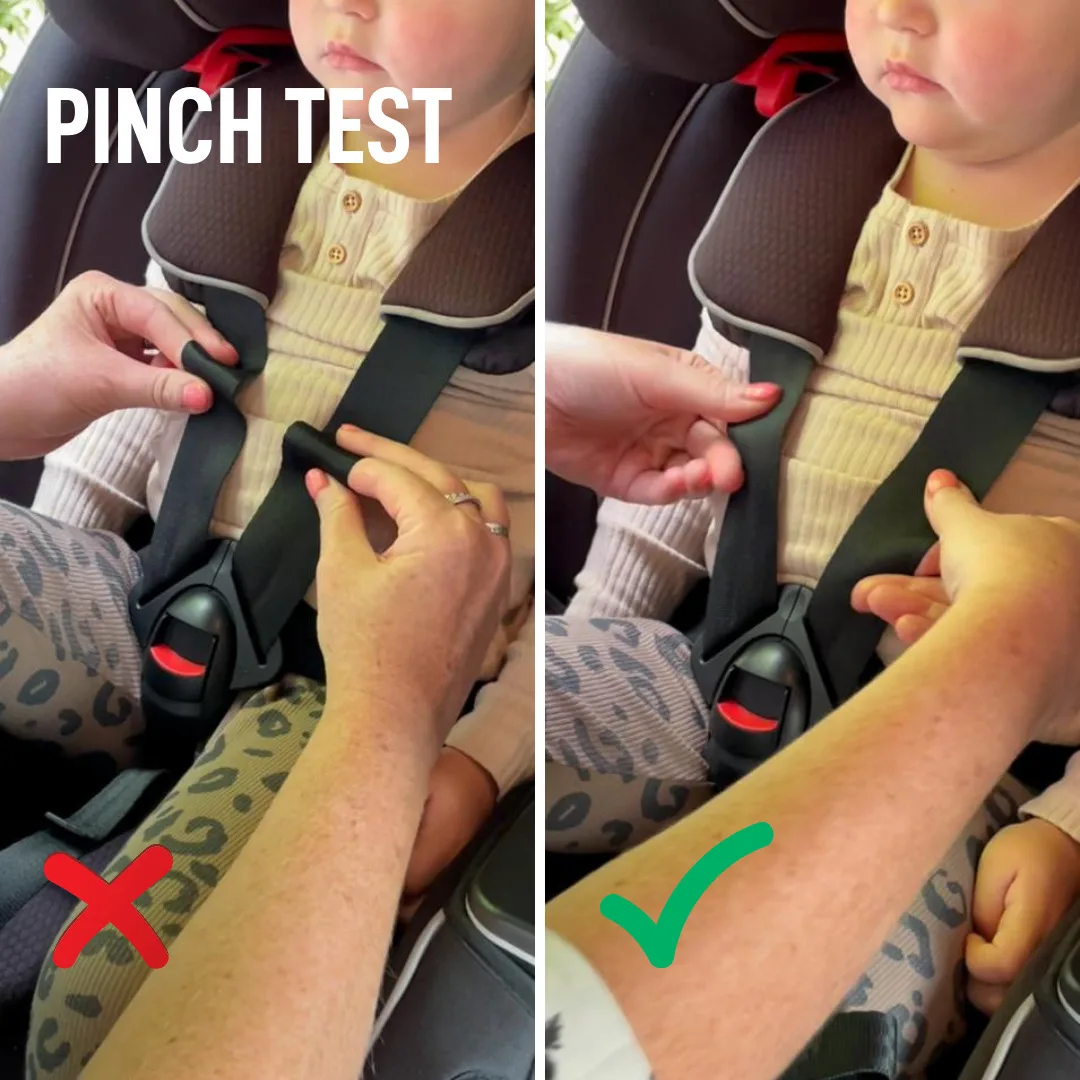
Image source: Web (Bing) / chiccousa.com (Web image (fair-use with source credit))
Here's the routine:
- Buckle your child in with normal clothes on. No coats, no bulky layers.
- Do the pinch test. Try to pinch the harness strap at the collarbone. If you can grab any slack, tighten it. Nothing should pinch up.
- Check the chest clip. It should sit at armpit level, not on the belly.
- Check the harness slots. Rear-facing: at or below the shoulders. Forward-facing: at or above the shoulders.
- Check the head-to-shell clearance. For rear-facing, look at where the top of the head sits. If it's within an inch of the shell top, plan your next seat.
- Check the install. Grab the seat at the belt path and give it a firm tug. It shouldn't move more than 1 inch in any direction.
Do this monthly until kindergarten. After that, every three months is fine. Growth spurts cluster around toddler years and again around age 6 to 8.
If anything feels off, visit a Child Passenger Safety Technician. Safe Kids hosts free inspection events across the US. It's the single fastest way to catch a mistake, and it costs you nothing.
Rear-Facing, Forward-Facing, Booster: What Changes and When
| Stage | Typical Limits | Move-Up Trigger | Typical Age |
|---|---|---|---|
| Rear-facing infant | 22 to 35 lbs | Outgrowing weight OR head within 1 inch of shell | 0 to 12 months |
| Convertible rear-facing | 40 to 50 lbs | Same head/weight/height triggers | 1 to 4 years |
| Forward-facing harness | 65 to 80 lbs | Shoulders above top harness slot OR weight cap | 4 to 7 years |
| Booster | 100 to 120 lbs | Reaches 4'9" OR passes the 5-step test | 8 to 12 years |
The 5-step test tells you when the seat belt alone fits. Here it is:
- Back sits flat against the vehicle seat back.
- Knees bend naturally at the edge of the seat.
- Lap belt crosses the upper thighs, not the stomach.
- Shoulder belt crosses the mid-shoulder, not the neck.
- Child can sit this way the entire ride, every ride.
If any of those fail, keep the booster.
US vs. UK vs. EU: How the Rules Differ
Most US states require a car seat until a child is 8 years old or 4'9" tall, though details vary by state. The UK requires a child to use a car seat until age 12 or 135 cm, whichever comes first. The EU uses R129, also called i-Size, which requires rear-facing until at least 15 months.
Here's the practical takeaway: minimums aren't safety targets. US law permits forward-facing at age 1 in some states, but AAP guidance and NHTSA both recommend rear-facing far longer. Match the strictest standard you can, not the loosest one your jurisdiction allows.
For caregivers in multiple countries, follow the rules where the car is registered. That's usually the safer default.
FAQs
How do I know my baby has outgrown the infant car seat?
Check three things: weight against the seat's cap, head clearance to the shell, and harness slot position. If any one is exceeded, the seat is outgrown. Height usually triggers the switch before weight does.
Can I move my 2-year-old to forward-facing?
Legally, in most US states, yes. Safety-wise, no, if the child still fits the rear-facing limits of the seat. AAP recommends rear-facing until the seat's rear-facing limits are maxed out, which is often 3 to 4 years old.
How long does a car seat last before it expires?
Most car seats expire 6 to 10 years after manufacture. The expiration date is printed on a label on the seat itself, usually under or behind the cover. Check it before accepting a hand-me-down.
Should I switch to a booster at 40 lbs?
No. Booster readiness is about height, maturity, and belt fit, not weight. Most kids aren't ready for a booster until at least age 4 to 5, and often older.
Weight alone is never the trigger.
What's the 1-inch rule for rear-facing seats?
It means the top of your child's head should stay at least 1 inch below the top of the car seat shell. Once the head is within that margin, the seat is outgrown rear-facing. Check your specific seat's manual, since some measure differently.
Do I need to recheck fit after a growth spurt?
Yes. Growth spurts can move a child up an inch or more in a month. A monthly fit check catches outgrown seats before they become unsafe.
It takes five minutes and prevents surprises.

Similar Posts