When to Move Baby to the Next Car Seat: Key Signs
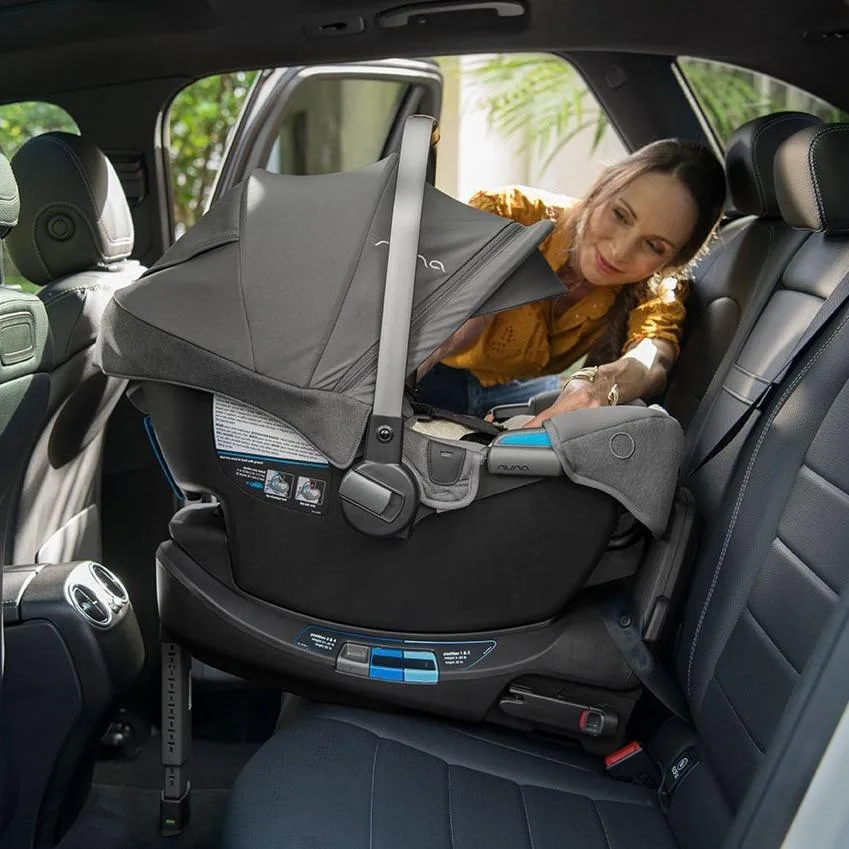
You're right, time to think practically. Infants and toddlers get hurt in crashes when parents move them up a stage too soon. The question of when to move baby to next car seat is one of the most searched, most confused, and highest-stakes decisions in early parenting.
Every seat has its own stated limits. Every child grows on their own curve.
That's why age alone tells you almost nothing. Per National Highway Traffic Safety Administration (NHTSA) figures, car seat use cuts fatal injury risk by roughly 70% for infants and 54% for toddlers. The right move is to follow the seat's height, weight, and fit requirements, not a birthday.
when to move baby to next car seat
Move your baby only when they outgrow the current seat's limits, not at a set age. Rear-facing comes first, until they hit the seat's height or weight cap. Most seats allow rear-facing well past age 2.
After that, a forward-facing harness. Boosters come last, usually around 4'9".
The Short Answer (And Why "Age 2" Isn't the Whole Story)
Two is the legal floor, not the goal.
Most US states require rear-facing until age 2. That's a minimum. The American Academy of Pediatrics (AAP) has recommended since 2018 that kids stay rear-facing until they max out their seat's rear-facing limits.
For many convertible seats sold as of 2026, those limits run to 40 or even 50 pounds.
So a small 4-year-old might still be safest rear-facing. A tall 2-year-old might have already hit the height cap on a shorter-shell seat. That's the whole point: size beats age.
The transition happens in three steps, and each one has its own trigger:
- Infant seat to convertible: when the baby hits the infant seat's weight or height limit, or their head is less than 1 inch below the top of the shell.
- Rear-facing to forward-facing: when they outgrow the convertible's rear-facing limits, typically 40-50 lbs or when the head clears the shell.
- Forward-facing harness to booster: usually around 40-65 lbs, age 4 minimum, and only when the child can sit still the whole ride.
Image source: Bing (Web (fair-use with source credit))
If you remember one thing, make it this: the next stage isn't a reward. It's a downgrade in protection. Keep them in every stage as long as the seat allows.
The Four Car Seat Stages — And What Actually Ends Each One
Each seat has a manual with a spec sheet. That spec sheet, not your child's age, ends the stage.
How to Read Your Seat's Real Limits
Look at the label on the side of the seat and the manual. You'll see a table with rear-facing, forward-facing, and booster weight and height ranges. The lower number is the minimum, the higher number is the max.
When your child hits either the weight cap or the height cap, that stage is over.
Some limits are easy to miss:
- Standing height is measured with shoes off, back against a wall.
- Seated height matters for the shell check more than total height.
- Shoulder height determines whether the harness slots still fit.
Why Outgrowing a Seat Is Never About Age Alone
Kids grow at wildly different rates. A 3-year-old at the 95th percentile may weigh 40 pounds. A 3-year-old at the 5th percentile may weigh 28 pounds.
Both are perfectly normal. Both need different seats at different times.
This is exactly why pediatricians and CPSTs push height and weight checks at every well visit. Weigh your child every few months during the toddler years and measure height against the door frame. When they approach a limit, that's your signal to plan the next step.
| Stage | Typical Trigger to Move Up |
|---|---|
| Infant seat | Weight cap reached, or head under 1 inch from shell top |
| Rear-facing convertible | Weight or height cap reached (often 40-50 lbs) |
| Forward-facing harness | Harness weight cap reached (often 40-65 lbs) |
| Booster | Child is 4'9" and passes the 5-step test |
The Rear-Facing to Forward-Facing Decision
This is the single most important transition in the whole sequence.
The 1-Inch Rule and the Shoulder Slot Check
For rear-facing seats, the head must stay at least 1 inch below the top of the shell. That's the 1-inch rule. Check it by laying a ruler flat across the top of the shell and measuring down to the crown of your child's head.
Then check the shoulder straps. In rear-facing mode, straps should come out at or below your child's shoulders. If they're coming out above, and the seat is still rear-facing, that's a fit problem.
It usually means it's time to move the headrest up or move up a stage.
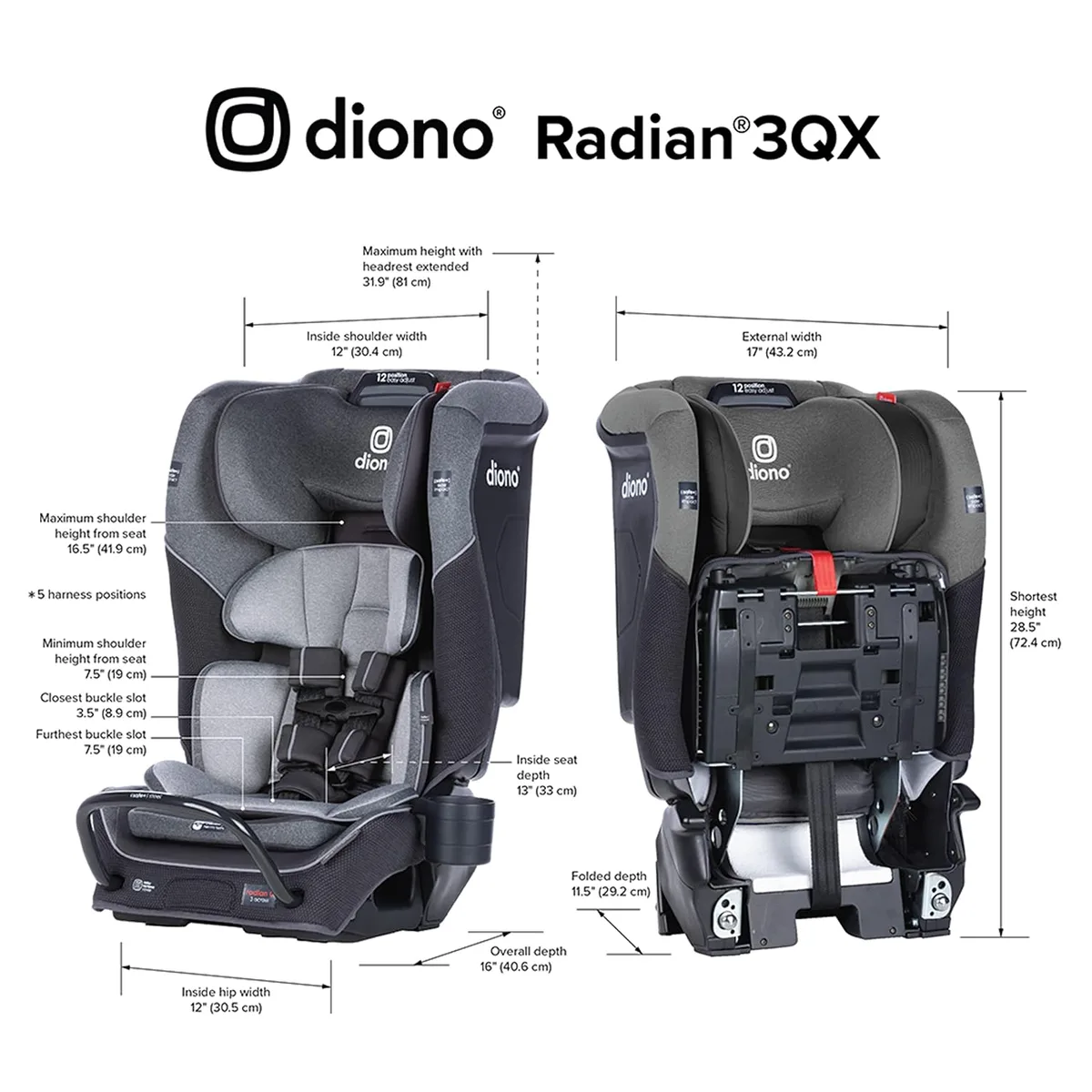
Image source: Bing (Web (fair-use with source credit))
What "Max Out the Rear-Facing Seat" Really Means
Here's the mindset shift: don't look for reasons to flip them forward. Look for reasons to keep them back.
Rear-facing distributes crash forces across the child's back, neck, and head. Forward-facing puts those forces on the spine and neck, where the anatomy is weakest. Per NHTSA guidance, kids under 2 should stay rear-facing, and AAP favors going longer if the seat allows.
If your child is under the seat's rear-facing cap, keep them rear-facing. That's it.
Forward-Facing Harness to Booster: The Transition Most Parents Rush
The harness feels babyish. The booster looks grown-up. That pull is real, and it's the reason so many 4-year-olds end up in boosters too early.
A booster only works if the seat belt sits correctly on the child's body. On a small child, the lap belt rides up over the belly and the shoulder belt cuts across the neck. In a crash, that's how kids get internal injuries and spinal damage.
The harness exists to prevent exactly that.
Booster Readiness: The 5-Step Test
Before you ditch the harness, run this test with your child buckled in the car, in the booster, with the seat belt on:
- Does the lap belt sit low across the upper thighs, not the belly?
- Does the shoulder belt cross the mid-shoulder and chest, not the neck?
- Do the child's knees bend comfortably at the edge of the seat?
- Do the child's feet rest flat on the floor?
- Can the child stay seated correctly for the entire ride, even when asleep?
If any answer is no, the harness stays. No exceptions.
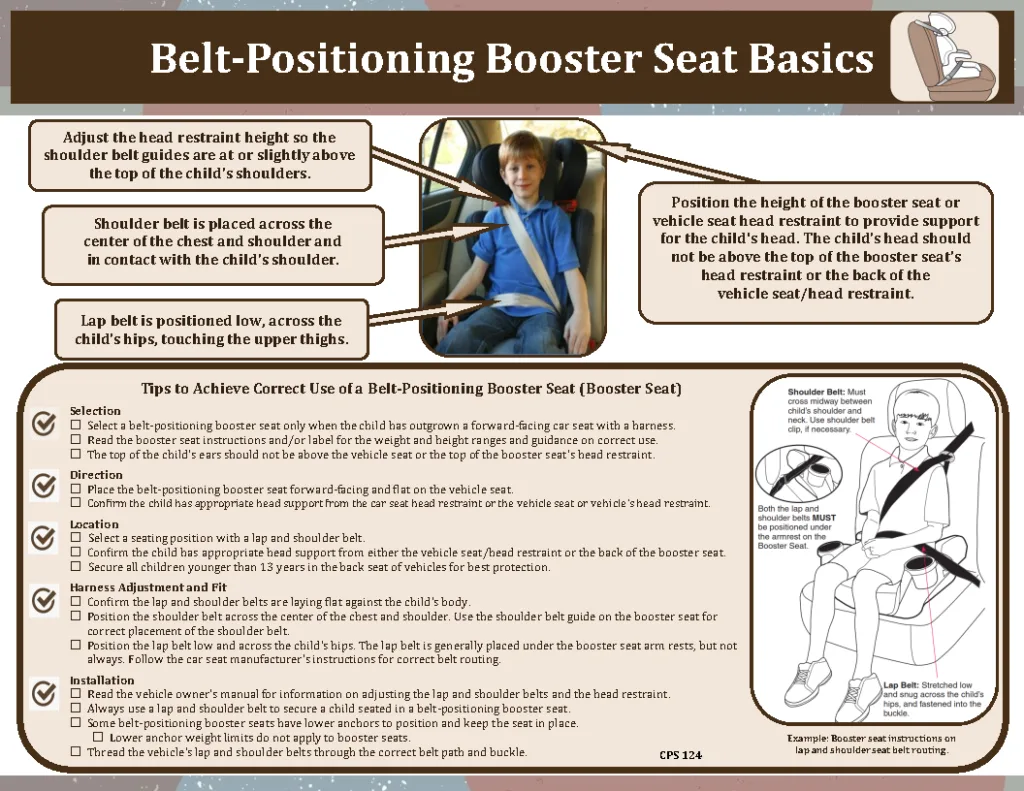
Image source: Bing (Web (fair-use with source credit))
Why the 4'9" Milestone Matters More Than Any Birthday
Seat belts are designed for adults. The 4'9" benchmark, roughly 57 inches, is when the belt geometry finally fits most kids correctly without a booster. Most children reach it between ages 8 and 12.
Until then, a booster is doing the work. It lifts the child so the adult seat belt sits where it's supposed to.
Common Mistakes That Put Kids at Risk
Even parents who read the manual get a few things wrong. These are the ones CPSTs see most often.
Loose Harnesses, Wrong Slots, and the Winter Coat Problem
The pinch test is the simplest check. Buckle your child, tighten the harness, then try to pinch the strap at the shoulder. If you can pinch any slack, it's too loose.
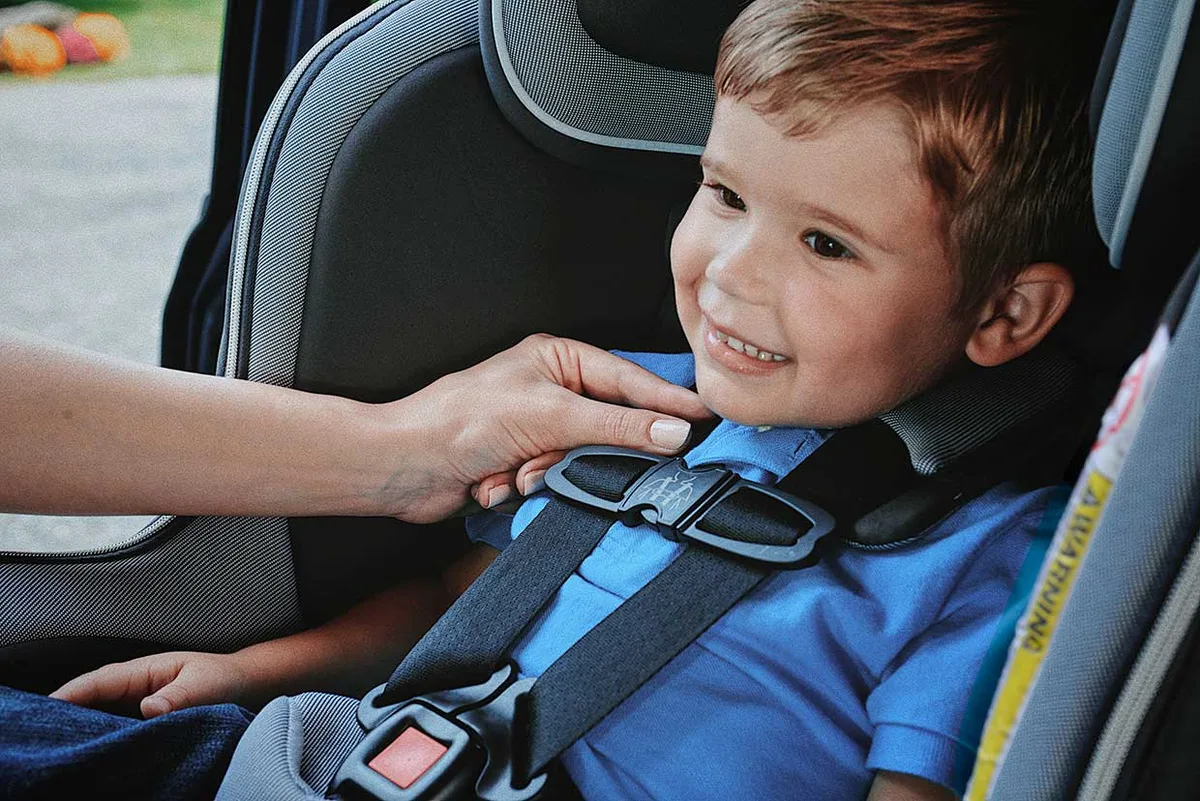
Image source: Bing (Web (fair-use with source credit))
Winter coats are a huge source of slack. A puffy coat compresses in a crash, leaving the harness dangerously loose. Put the coat on after the harness is tight, or use it as a blanket over the lap instead.
Expired Seats, Hand-Me-Downs, and Aftermarket Inserts
Car seats expire, typically 6 to 10 years from the manufacture date. Plastic degrades. If you can't find the manufacture date or the seat has been in a crash, don't use it.
Aftermarket inserts are another trap. Any padding, head support, or strap cover that didn't come with the seat can interfere with how the harness tightens. Only use what the manufacturer includes.
Installing With Both LATCH and Seat Belt
Use one or the other, never both. The lower anchor (LATCH) system has its own weight limit, often 65 pounds combined child plus seat. Past that, you switch to the seat belt.
Check both the car seat manual and the vehicle owner's manual to confirm which method applies to your setup.
If you're not sure your install is right, visit a certified Child Passenger Safety Technician. Inspections are free at most fire departments and many hospitals.
A Quick-Reference Decision Guide by Size, Not Age
Use this table when you're standing in the garage, kid on your hip, trying to remember the rule.
| If your child is… | Then move to… |
|---|---|
| Under the infant seat's weight/height cap and head is 1+ inch below shell | Stay in the infant seat |
| Over the infant seat's cap, or head is within 1 inch of shell top | Move to a rear-facing convertible |
| Under the convertible's rear-facing cap (often 40-50 lbs) | Stay rear-facing |
| Over the rear-facing cap, or head clears the shell | Switch to forward-facing with 5-point harness |
| Under the harness weight cap (often 40-65 lbs) | Stay in the harness |
| Over the harness cap, age 4+, passes the 5-step test | Move to a belt-positioning booster |
| Under 4'9" tall | Stay in the booster |
| 4'9" tall and seat belt fits correctly | Graduate to the seat belt alone |
If you're ever between two stages, err toward the safer one. Rear-facing beats forward-facing. Forward-facing harness beats booster.
Booster beats the seat belt. That order never flips.
Safety, Legal, and Compliance Basics Every Parent Should Know
The rules here aren't opinions. They're written into federal standards, state codes, and manufacturer certification.
State Laws, i-Size vs. FMVSS 213, and Top Tether Requirements
Every US car seat sold as of 2026 must meet FMVSS 213, the federal standard for child restraint systems. That covers crash testing, labeling, and minimum performance. But state laws add their own layer, and they vary a lot.
California requires rear-facing until 2 years old and 40 lbs or 40 inches. Many other states set the same floor. Some specify booster use until age 8 or 4'9".
Check your state's DMV or highway safety office for the exact rule where you live.
If you're shopping in Europe or importing a seat, look for the i-Size (R129) marking. It's stricter than the older R44 standard and ties child size to seat fit rather than weight alone.
One more federal rule: forward-facing seats require the top tether. It's not optional. The tether keeps the seat from pitching forward in a crash.
Getting a Free CPST Inspection
A certified Child Passenger Safety Technician (CPST) will check your install, harness fit, and seat selection in about 30 minutes. These inspections are free.
Find one through NHTSA's inspection locator or your local Safe Kids coalition. Most fire departments and many hospitals host regular events. Go after every stage change and after any new vehicle.
Frequently Asked Questions
Can I move my baby to a forward-facing seat at 2 years old?
Only if they've also hit the seat's forward-facing minimum weight, usually 22-30 lbs, and outgrown the rear-facing mode. At 2, most kids are still well under the rear-facing cap. Keep them rear-facing until the seat says otherwise.
What if my child hates rear-facing?
Most protests are about comfort, not the direction. Reclining the seat slightly, adding a mirror, or adjusting the harness can help. Safety beats a fussy ride.
Don't flip them early because of a bad week.
How do I know the harness is tight enough?
Use the pinch test. Buckle and tighten, then pinch the strap at the shoulder. If you can grab any slack, tighten more.
The harness should lie flat with no twists.
Are hand-me-down car seats safe?
Only if you know the seat's full history. No crashes, no missing parts, still within its expiration date, and you have the manual. Otherwise, don't risk it.
A new seat is cheaper than a hospital bill.
When can my child use just the seat belt?
When they're about 4'9" tall and pass the 5-step test. That usually happens between ages 8 and 12. Until then, a booster keeps the belt on the right parts of their body.
Do I need a new seat after a minor fender-bender?
Check your seat's manual and the manufacturer's guidance. Most recommend replacement after any moderate or severe crash. Some allow continued use after a minor one if specific conditions are met.
When in doubt, replace it.
Final Word: When in Doubt, Keep Them Rear-Facing Longer
There's no prize for moving up a stage early. The whole system is designed around one idea: keep kids in the most protective phase their size allows. Rear-facing is the safest.
A harness is safer than a booster. A booster is safer than the seat belt.
Follow the seat's limits. Check the install. Get a free CPST inspection.
Weigh and measure your child every few months. Then move up only when the numbers say you have to.
The rush to "big kid" gear fades fast. A safe kid lasts a lifetime.

Similar Posts































