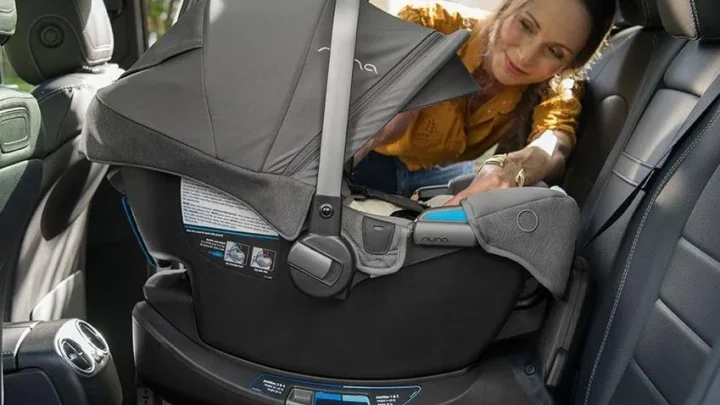
When Can a Baby Face Forward in a Car Seat?
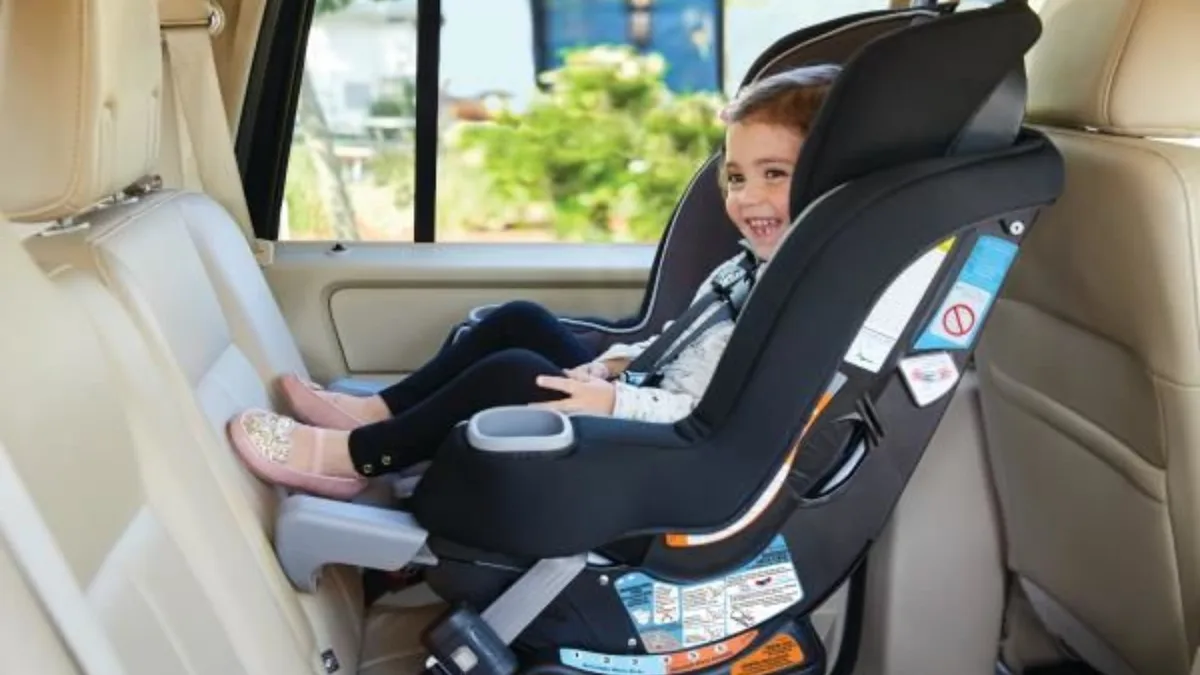
Finding a straight answer to at what age can a baby face forward in a car seat is trickier than it should be. Most parents hear "around one" from a relative or an old handbook. That number hasn't matched best practice for years.
The real rule has nothing to do with a birthday at all. It's about size, weight, and whether your child has actually outgrown the rear-facing seat.
That distinction matters because rear-facing is dramatically safer for a young child's neck and spine. The American Academy of Pediatrics (AAP) says children should stay rear-facing until they hit the seat's height or weight limit, not a set age. As of 2026, most convertible seats carry rear-facing limits of 40 to 50 pounds.
So when can you flip the seat? Let's walk through what actually decides that.
at what age can a baby face forward in a car seat
There's no fixed age. A child can face forward when they reach the seat's height or weight limit for rear-facing. The AAP no longer ties this to a birthday.
Most kids hit that limit somewhere between age 2 and 4. Always check your own seat's label. Age alone never decides it.
The Real Rule Isn't an Age, It's a Size and Readiness Check
If age doesn't decide it, what does? Your specific car seat's rear-facing limits. Every seat is tested and certified to a maximum weight and height in rear-facing mode.
Once your child exceeds either one, the seat is no longer safe to use that way.
Manufacturer specifications typically list those limits right on the seat shell and in the manual. A common rear-facing range sits at 30 to 50 pounds, with a height cap of 40 to 49 inches. The exact numbers vary by brand and model, so never assume yours matches someone else's.
There's also a simple visual rule that overrides everything else. Your child's head must stay at least 1 inch below the top of the seat shell while rear-facing. If the head creeps past that line, the seat can't protect the neck properly anymore.
That's your signal, regardless of what the scale says.
Image source: Bing (Web (fair-use with source credit))
So the readiness check comes down to four things. Answers here decide the flip, not the calendar.
- Weight: is your child still under the rear-facing weight limit?
- Height: are they under the rear-facing height limit?
- Head clearance: is the head at least 1 inch below the shell top?
- Harness slots: are the shoulders at or below the rear-facing harness slots?
Why the first birthday rule is outdated
The old "age one" guidance came from a 1980s-era standard that assumed most 1-year-olds had the neck strength to handle forward-facing forces. Modern testing showed that assumption was weak. Rear-facing spreads crash forces across the back, head, and neck instead of concentrating them on a still-developing spine.
The AAP updated its position starting around 2011, and the advice has only gotten firmer since.
What the AAP recommends now
Keep your child rear-facing as long as the seat allows. Move to forward-facing only when they max out the seat's height or weight limit. After that, use a forward-facing harness seat with a top tether until they hit its limits.
Then move to a booster. That sequence, rear-facing to forward-facing harness to booster, is what pediatric safety experts push in 2026.
When state law and best practice don't match
Here's the gap that trips people up. Many US states still write "age 1" into law as the legal floor for forward-facing. That's a minimum, not a recommendation.
Following the law while ignoring the AAP means flipping your child far earlier than is safest. If law and best practice disagree, follow best practice. Legal minimums lag medical guidance by years.
Rear-Facing vs. Forward-Facing: What Happens in a Crash
The difference between the two positions isn't cosmetic. It's about where crash forces land on a small body. We compared how each mode handles a frontal impact, which is the most common serious crash type.
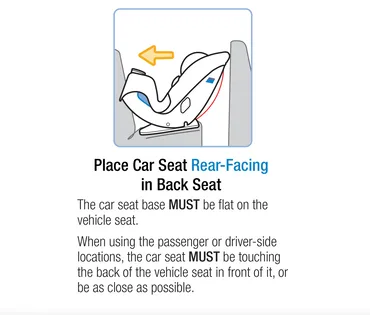
Image source: Web (Bing) / rcfact.com (Web image (fair-use with source credit))
In a rear-facing seat, the shell cradles the child. On impact, the whole back, head, and neck are supported as the seat rotates. The energy spreads across a wide area.
In a forward-facing harness seat, the body is held back by the harness while the head whips forward. That's fine for an older child with a stronger neck. It's risky for a toddler whose head is proportionally huge compared to the neck.
| Factor | Rear-Facing | Forward-Facing Harness |
|---|---|---|
| Crash force distribution | Spread across back, head, neck | Concentrated on harness and neck |
| Best for | Infants and young toddlers | Older, larger children who maxed the seat |
| Neck protection | Highest | Reduced but still strong |
| AAP guidance | Keep until seat limit | Only after rear-facing limits reached |
Why rear-facing protects the neck and spine
A young child's head is a big share of their total body weight, and their neck bones aren't fully hardened. In a forward-facing crash, that heavy head gets thrown forward hard. Rear-facing avoids the whiplash entirely.
The seat shell absorbs the motion, so the spine stays aligned and the neck isn't stretched.
What changes the moment you flip the seat
You lose that spread-force advantage. The harness and tether now carry the load. That's why the top tether becomes mandatory, and why the seat must be installed tight with less than 1 inch of movement.
If the install is loose or the tether isn't attached, you've thrown away most of the forward-facing safety benefit.
The developmental milestones that actually matter
Neck strength and head control are the big ones, but they're not the trigger. Size limits are. Still, a child who can sit up well and hold their head steady has the muscle control to handle forward-facing forces better.
Use that as a tiebreaker, not the deciding factor. The seat's limits come first.
How to Tell Your Child Is Ready to Face Forward
Stop guessing. You can check readiness in about five minutes with a tape measure and your seat manual. Do all four checks before you make the switch.
The four checks that decide it
- Height: measure your child against the seat's rear-facing height limit.
- Weight: step on a scale and compare to the rear-facing weight limit.
- Head clearance: confirm there's at least 1 inch between the top of the head and the top of the shell.
- Harness slots: check that the shoulder straps are at or below shoulder level for rear-facing.
If every box is still green, keep them rear-facing. If they've maxed out any one limit, it's time to flip.
Reading your seat's labels without guessing
The weight and height ranges are printed on a label on the seat, usually near where the harness comes out. The manual repeats them with more detail. Different modes on a convertible seat have different limits, so match the mode you're using to the right numbers.
Don't blend the rear-facing and forward-facing ranges together.
When to move to a booster instead
If your child has already maxed out a forward-facing harness seat, the next step is a booster, not more rear-facing time. Boosters use the vehicle's seat belt rather than a harness. Most kids aren't ready for one until around age 4, and often later.
Look for a booster with a high back and a belt-positioning guide for the shoulder strap.
Step-by-Step: Flipping the Seat the Right Way
Once you've decided to flip, the install has to be redone from scratch. A forward-facing install is different from a rear-facing one. Follow the manufacturer's instructions for your exact model, and use these steps as your checklist.
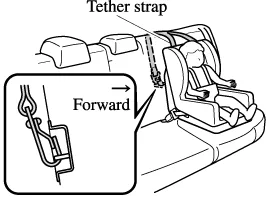
Image source: Bing (Web (fair-use with source credit))
Reinstalling forward-facing with the top tether
Route the seat belt or LATCH strap through the forward-facing belt path. Tighten until the seat moves less than 1 inch at the belt path. Then connect the top tether strap to the designated anchor in your vehicle.
The tether controls how far the seat pitches forward in a crash. Always attach it when forward-facing.
Re-threading the harness and adjusting recline
Move the harness straps to the correct slots. Forward-facing harness straps sit at or above shoulder level, the opposite of rear-facing. Check the recline indicator for forward-facing mode, which is usually more upright.
A seat reclined too far can throw off how the harness sits on the child.
The pinch test and the 1-inch install check
Buckle the child in and tighten the harness until you can't pinch any slack at the collarbone. That's the pinch test. Then grab the seat at the belt path and give it a firm shake.
If it moves more than 1 inch side to side or front to back, tighten it further.
Get it inspected by a certified CPST
A Child Passenger Safety Technician can check the install for free. NHTSA maintains a locator for inspection stations across the US, and Safe Kids Worldwide runs regular check events. A second set of trained eyes catches the small errors that are easy to miss.
If you're unsure at any point, book an inspection before the next drive.
Mistakes That Put Kids at Risk
Even parents who know the rules can slip up on execution. These are the errors we see most often, and each one quietly weakens the seat's protection.
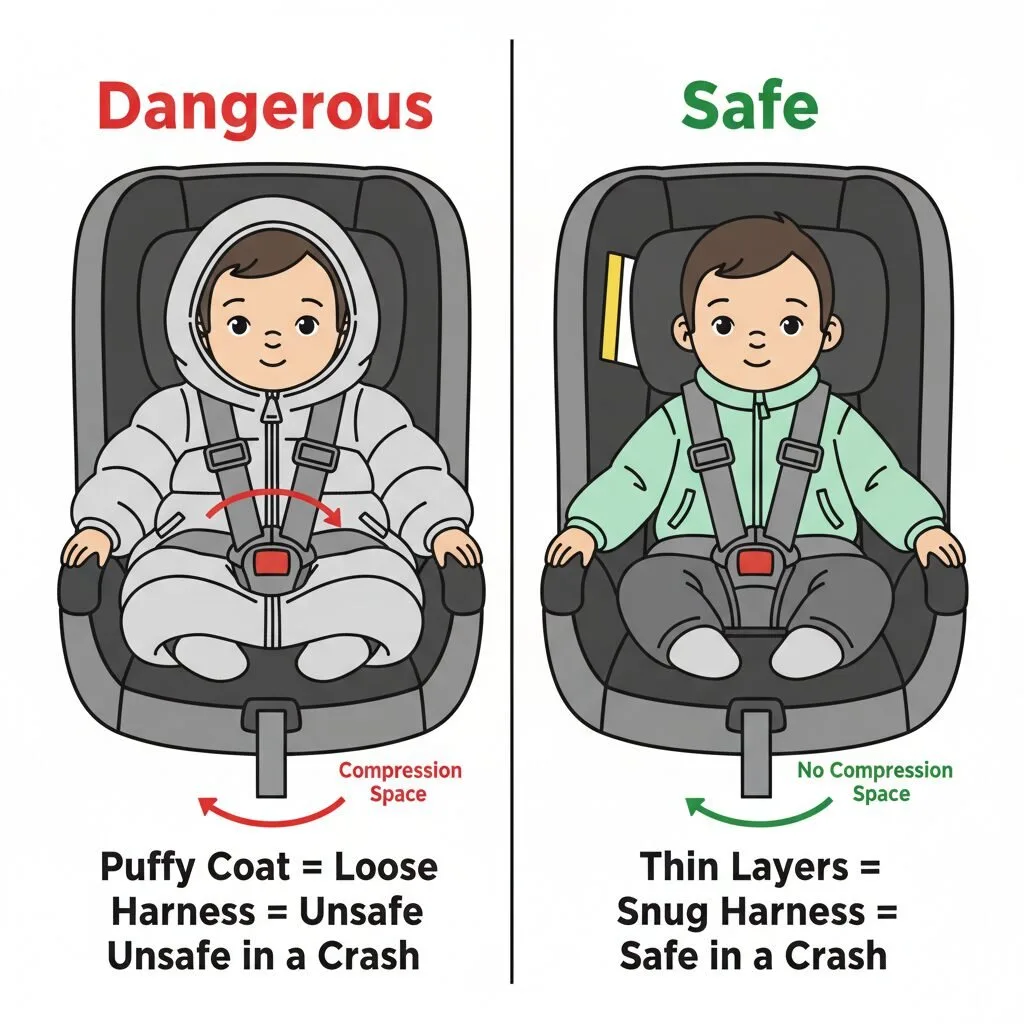
Image source: Web (Bing) / firstcrycare.com (Web image (fair-use with source credit))
Flipping too early for convenience
This is the big one. A child seems tall or restless, so the seat goes forward early. Leg cramps get used as the excuse, but bent legs rear-facing aren't dangerous.
Kids fold their legs naturally. Bumping shoulders against the seat shell isn't a limit either. Only the posted height and weight caps count.
Bulky coats, aftermarket inserts, and loose harnesses
A puffy winter coat creates slack under the harness that compresses in a crash. Take the coat off, strap the child in, then layer the coat over the harness or use a blanket. Aftermarket inserts and strap covers void the seat's certification.
And a harness that's too loose lets the child slip out on impact. Do the pinch test every single time.
Ignoring expiration dates and recalls
Car seats expire, usually 6 to 10 years after the manufacture date, because plastic weakens over time. The date is stamped on the seat. Register your seat with the manufacturer so you get recall notices.
A seat under an open recall shouldn't be used until the fix is applied.
Safety, Legal, and Compliance Basics Every Parent Should Know
Safety guidance and the law don't always say the same thing, so it pays to know both. Per NHTSA federal standards, child restraints must meet Federal Motor Vehicle Safety Standard 213. That covers crash performance, labeling, and hardware.
Your state law, though, is a separate floor that often sets the minimum far lower.
NHTSA standards and LATCH weight limits
LATCH (Lower Anchors and Tethers for Children) has a weight cap. Most vehicles set it at 65 pounds combined, meaning the seat plus the child. Once you pass that, you switch to the seat belt for installation.
The top tether is separate from that limit and should stay attached regardless. Check your vehicle manual for the exact LATCH number, since it varies by car.
Airbag warnings and back seat rules
Never place a rear-facing seat in front of an active airbag. The force of a deploying airbag can kill a child in that position. The safest spot is the back seat, ideally the center if it installs well there.
If you must use the front seat, check the visor warning and disable the airbag only if the vehicle allows it.
Registering your seat and tracking recalls
Register your car seat with the manufacturer so recall notices reach you directly. The registration card usually comes in the box, and most brands offer online signup. You can also check NHTSA's recall database by model and date.
A recalled seat shouldn't be used until it's fixed or replaced. Set a calendar reminder to check twice a year.
Frequently Asked Questions
Can my tall 2-year-old face forward?
Only if they've maxed out the seat's rear-facing height or weight limit. Height alone doesn't decide it. Check both numbers on your seat's label.
If your child still fits under both, keep them rear-facing. A tall toddler can often stay rear-facing well past age 2.
What if my child's legs are cramped rear-facing?
Bent legs are normal and not dangerous. Kids fold, cross, or dangle their legs without issue. There's no evidence that cramped legs cause injury in a crash.
The rear-facing position is still far safer than flipping early. Don't let comfort complaints override the seat limits.
Is it legal in my state to keep them rear-facing past age 2?
Yes, in every US state. Keeping a child rear-facing longer than the legal minimum is always allowed. State laws set a floor, not a ceiling.
No law requires you to flip at a certain age. Following the AAP's extended rear-facing guidance is legal everywhere.
Do forward-facing seats always need a top tether?
Yes, whenever the seat and vehicle support it. The top tether is a critical part of forward-facing protection. It limits how far the seat pitches forward in a crash.
If your vehicle has tether anchors, use them. Skipping the tether reduces the seat's effectiveness.
When should I switch from forward-facing harness to booster?
When your child maxes out the forward-facing harness limits. That's usually 40 to 65 pounds, and often around age 4 or later. A booster uses the vehicle seat belt instead of a harness.
Don't rush it. Keep the harness until the seat's weight or height cap is reached.
What if my seat doesn't come with a top tether?
Some older seats and vehicles lack a top tether anchor. If yours doesn't have one, follow the seat manual's instructions for that situation. Never skip the tether if an anchor is available.
You can often have an anchor retrofitted by a dealer. Ask a CPST to confirm the install is still safe.
The Bottom Line: Keep Them Rear-Facing as Long as the Seat Allows
There's no magic birthday that makes forward-facing safe. Your child's height, weight, and head clearance against the seat's rear-facing limits decide it. The AAP's guidance hasn't wavered on that point, and the crash data backs it up.
Rear-facing spreads impact forces across the strongest parts of a small body. Forward-facing concentrates them on a neck that isn't ready.
If you remember one rule, make it this. Keep your child rear-facing until they outgrow the seat, then move to a forward-facing harness with the top tether attached. When that harness is maxed out, switch to a booster.
Follow that sequence, check the labels, and get the install inspected. That's what keeps a small passenger protected, no matter what the calendar says.

Similar Posts