How Long Can a Baby Be in an Infant Car Seat?
How long can a baby be in an infant car seat? The short answer most experts give is roughly two hours at a stretch, and that clock resets once you take them out. The longer answer depends on where the seat is and what you're doing.
In a properly installed car seat in a moving vehicle, a baby can stay buckled for a full road trip with breaks. Out of the car, that same seat becomes a completely different risk.
Per American Academy of Pediatrics guidance and National Highway Traffic Safety Administration crash data, the real danger isn't the seat itself. It's how long a baby sits in it once the car stops. As of 2026, every major car seat manufacturer in the US prints a weight and height limit in the manual, but none of them print a "how long is too long" number.
That gap is exactly where parents get confused, so let's walk through it properly.
how long can a baby be in an infant car seat
Babies can safely ride in an infant car seat for the length of a normal drive, up to about 2 hours at a stretch. After that, take them out, hold them, and let them stretch. Car seats are for travel.
They're not for sleep, feeding, or lounging at home.
The Real Question Isn't "How Long" — It's "Where" and "Why"
The number everyone quotes, that "two-hour rule," only makes sense once you know which clock is running. In our research, the confusion almost always comes down to one thing. Parents treat "in the car" and "in the car seat sitting on the living room floor" as the same situation.
They're not even close.
Image source: Bing (Web (fair-use with source credit))
When the seat is clicked into its base and the car is moving, the seat sits at a carefully engineered recline angle. That angle keeps a newborn's airway open. The motion of the car also keeps them slightly stimulated.
As soon as the car stops, or the seat comes out and lands on a stroller or a kitchen floor, that angle can shift. Now you've got a sleeping baby in a semi-upright plastic shell, and nobody's watching the clock.
So the honest framing is this. There are two time limits, not one. A travel limit and a container limit.
They overlap, but they're measuring different risks. If the seat is in the car, you're managing fatigue and feeding breaks. If the seat is out of the car, you're managing airway position, heat, and flat-spot pressure.
That's the core of this whole topic.
The Two-Hour Rule, Explained Without the Panic
The two-hour rule is a general guideline, not a law. It comes from a mix of pediatric guidance on container time, positional risk, and plain common sense. It shows up in parent education from the AAP and in car seat manufacturer manuals, though you have to hunt for it.
Here's what it actually says in practice: don't leave a baby in any infant seat, car seat included, for more than about two hours in a 24-hour stretch without a real break. A break means out of the seat, held or on a flat surface, for at least a few minutes.
The "in a 24-hour period" part matters. If you do four back-to-back 30-minute errands, that's two hours of cumulative container time even though no single stretch was long. It adds up faster than most parents realize.
If the baby is in a moving car and sleeping peacefully, you can stretch slightly past two hours for a long drive. Pull over, take them out, feed them, change them, let them kick. Then buckle them back in and start the clock again.
If the baby is in the seat but the car is parked, or the seat is on a stroller, the two hours is a hard ceiling. Don't push it. That's where the silent risks live.
What Actually Happens When a Baby Stays in a Car Seat Too Long
Three separate problems build up over time, and they don't all announce themselves. Let's go through each one honestly.
Why Positional Asphyxiation Is Silent and Sudden
Positional asphyxiation happens when a baby's chin drops toward their chest and their airway gets compressed. A newborn's neck muscles are weak. They can't lift their head to fix the position.
They also can't cry for help if they're struggling to breathe.
Image source: Web (Bing) / storage.googleapis.com (Web image (fair-use with source credit))
The terrifying part is how quiet it is. There's no gasping, no obvious struggle. A baby can slip into it while looking asleep.
That's why the rule exists: don't leave a sleeping infant in a car seat unsupervised, and don't let them stay in one long enough for the position to settle into a bad angle.
If you want the full picture on infant sleep safety and airway positioning, the CDC's child passenger safety resources and the AAP's HealthyChildren.org guidance cover the mechanism in detail.
The Flat Head and Container Baby Connection
Flat head syndrome, or plagiocephaly, comes from constant pressure on one spot of a baby's soft skull. Car seats are firm and shaped. Leave a baby in one for hours every day and that pressure adds up.

Image source: Bing (Web (fair-use with source credit))
Container baby syndrome is the broader term. It describes delayed motor development from too much time in seats, swings, bouncers, and carriers. Babies need floor time to build neck, core, and hip strength.
A car seat keeps them in one position, which is great for travel and terrible for development if it becomes the default spot.
The fix isn't complicated. Tummy time and floor play are the counterbalance. Aim for supervised tummy time starting at a few minutes a day and building toward 15 to 30 minutes spread across the day by two months.
Overheating, Slumping, and the Chin-to-Chest Problem
Heat builds up fast in a closed car seat, especially with a canopy down or a blanket tucked over the top. A baby can overheat even in mild weather. In hot climates, this is a serious concern.
Slumping is the third piece. Even a properly reclined seat can let a newborn's head tilt to the side or forward if the harness is loose. A snug harness holds them in place.
A loose one lets them slide into a position that compresses the airway. Same seat, same recline, very different outcome.
In the Car vs. Out of the Car: Two Completely Different Clocks
This is the section that answers the question most parents are actually asking. The time limit changes based on the scenario. Here's the breakdown.
Car Seat Installed in a Vehicle
In a properly installed seat, with a snug harness and a baby at the right weight and height for the seat, you're in the safest configuration possible. You can drive for a long stretch, but plan breaks every two hours. Feed, change, let them stretch.
Then restart.
Car Seat Used as a Stroller, Carrier, or "Convenience Seat"
This is where the clock speeds up. The seat is often at a slightly different angle than in the car. Nobody's monitoring the baby as closely.
Errands stack up. Keep this under two hours total, ideally much less.
Car Seat Used as a Sleep Surface (Don't)
Never use an infant car seat as a crib, bassinet, or overnight sleep space. This is the hill to plant your flag on. The AAP, the Consumer Product Safety Commission, and every major manufacturer say the same thing: a flat, firm, empty sleep surface is the only safe place for a baby to sleep.
A car seat, no matter how reclined, is not that.
| Scenario | Safe Time Limit | Main Risk |
|---|---|---|
| In a moving car, correctly installed | ~2 hours, then break | Fatigue, feeding, diaper |
| Clicked into a stroller | Under 2 hours total | Airway angle, heat |
| Sitting on the floor or counter | Minutes only | Unattended risk, falls |
| Used as a sleep surface | Never | Positional asphyxiation |
How to Tell When Your Baby Has Had Enough Car Seat Time
Babies don't always signal discomfort clearly, especially newborns. You have to watch for the subtle stuff.
- Head tilting forward or to one side
- Chin dropping toward the chest
- Flushed or sweaty skin, especially on the back of the neck
- Fussiness that doesn't stop when you pick them up
- Flat spot starting to form on the back of the head
- Stiff neck or head preference to one side
If you see any of these, take them out. Don't wait for the two-hour mark, and don't try to "just finish this one errand." The clock is a ceiling, not a target.
The daily container-time budget is the bigger picture. Add up every minute your baby spends in a car seat, swing, bouncer, or carrier. Some pediatric guidance suggests keeping total container time well under a few hours a day for newborns.
Every minute out of a container is a minute their body gets to move, stretch, and develop.
Transitioning Out: When the Infant Seat Is No Longer the Right Seat
Infant seats aren't meant to last forever. They have two hard limits and one soft one, and you need to know all three before you decide the seat still fits.
The 1-Inch Rule and Weight/Height Limits
The 1-inch rule is the one parents forget. Your baby's head needs at least one inch of shell above it. If the top of their head is level with or above the top edge, the seat is too small, no matter what the scale says.
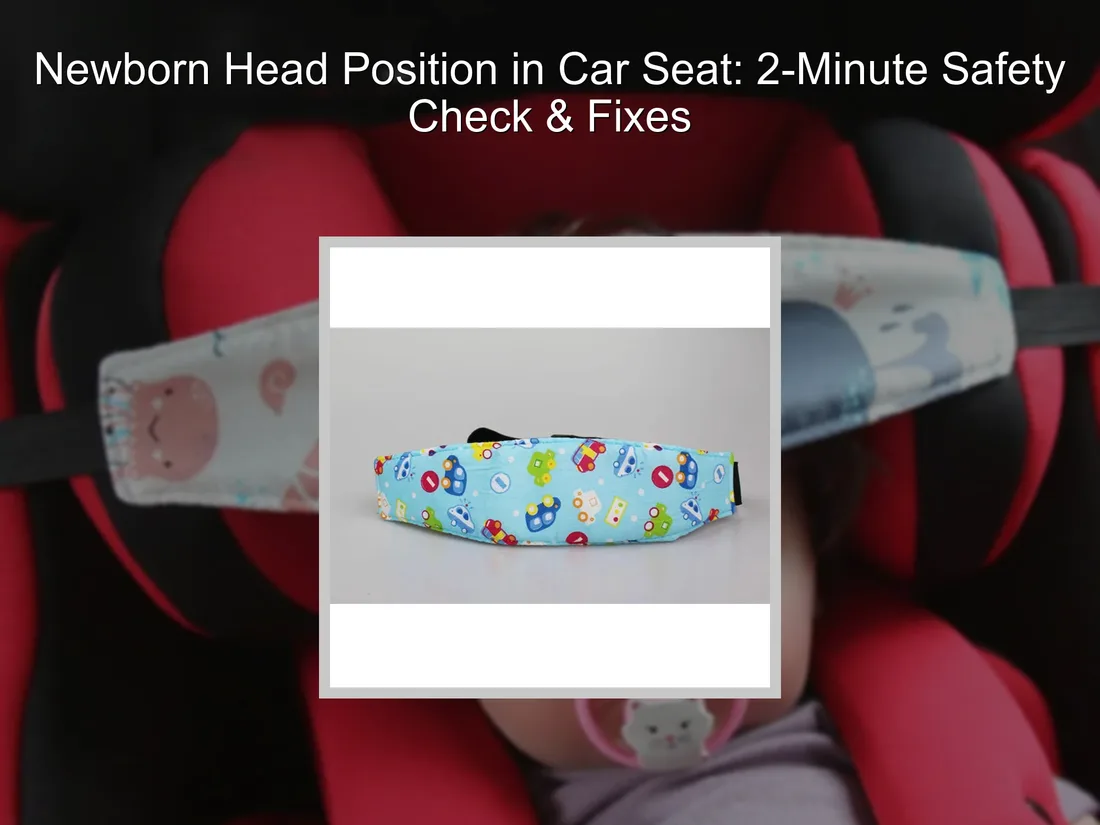
Image source: Bing (Web (fair-use with source credit))
Manufacturer specs confirm typical infant seat limits land between 22 and 35 pounds and 30 to 32 inches tall. Whichever limit hits first wins. A long, lean baby often outgrows the seat by height months before they hit the weight ceiling.
Infant Seat vs. Convertible Seat: Timing the Switch
If your baby has hit the weight limit, the height limit, or the 1-inch mark, it's time. If none of those apply and they're still comfortable, keep them in the infant seat. There's no rush.
Convertible seats are the natural next step. They stay rear-facing longer, often up to 40 or 50 pounds, and they're built for the toddler years too. The tradeoff is convenience.
You lose the click-in-and-go handle, and the seat stays in the car.
What to Do With an Expired or Hand-Me-Down Seat
Car seats expire, usually 6 to 10 years from the manufacture date stamped on the shell. Plastic gets brittle. Standards change.
A seat that was safe for your first baby may not be for your third.
If the seat is expired, was in a moderate or severe crash, or has missing parts or an unknown history, replace it. Hand-me-downs from a trusted family member with a known history are usually fine. Seats from a curb, a garage sale, or a stranger are not worth the risk.
Mistakes Parents Make (and How to Avoid Every One)
Most car seat mistakes aren't dramatic. They're small, repeated habits that quietly stack up. Here are the ones our research shows come up again and again.
- Using the infant seat as a bassinet, swing, or feeding chair
- Leaving the harness loose because the baby "seems comfortable"
- Tucking a blanket over the canopy and trapping heat
- Adding aftermarket inserts, strap covers, or head supports
- Strapping a baby into a bulky winter coat before buckling
- Letting the seat sit in a hot car, then putting a warm baby into it
- Skipping breaks on long drives because the baby is finally asleep
- Reusing a seat with an unknown crash history
Each one is easy to fix. Snug the harness so you can't pinch the strap at the shoulder. Dress the baby in thin layers and add a blanket over the buckled harness instead of a coat underneath.
Keep the seat in the shade. Take the break.
If a mistake has already happened and you're worried, don't guess. Get the seat checked. Safe Kids Worldwide runs free inspection stations across the US, and most fire departments will check an install on request.
Frequently Asked Questions
Can my baby sleep in the car seat overnight?
No. Overnight sleep belongs on a flat, firm surface, not in a car seat. Positional asphyxiation risk is highest when a baby is unsupervised and the seat angle shifts.
If your baby falls asleep during a drive, that's fine. Just move them to a crib or bassinet when you get home.
Is it okay if my baby falls asleep in the car seat on a long drive?
Yes, as long as the seat is correctly installed and the harness is snug. Check on them at every stop. Look for chin-to-chest positioning or a tilted head.
Take a break every two hours to feed, change, and let them stretch out of the seat.
Does the 2-hour rule apply when the car seat is clicked into a stroller?
Yes, and it's often stricter in practice. The stroller angle can be shallower than the car angle, which raises airway risk. Treat stroller time as container time.
Keep the total under two hours, and pull the baby out sooner if they look slumped or flushed.
How soon can a newborn be in a car seat after birth?
Immediately, if they're going home in a car. Hospitals won't discharge a newborn without a properly installed seat. Preterm and low-birth-weight babies may need a car seat challenge test before discharge, where they're monitored in the seat for a set period to check breathing and heart rate.
Can I use a car seat on a plane for the same amount of time?
Yes, a FAA-approved car seat is fine on a plane, and the same container-time limits apply. Air travel adds a wrinkle: the seat has to fit in the airline seat, and you'll want to check the FAA approval label before you fly. Don't count on the airline to have a compatible seat on hand for you.

Similar Posts































