When Can Baby Face Forward in a Car Seat?
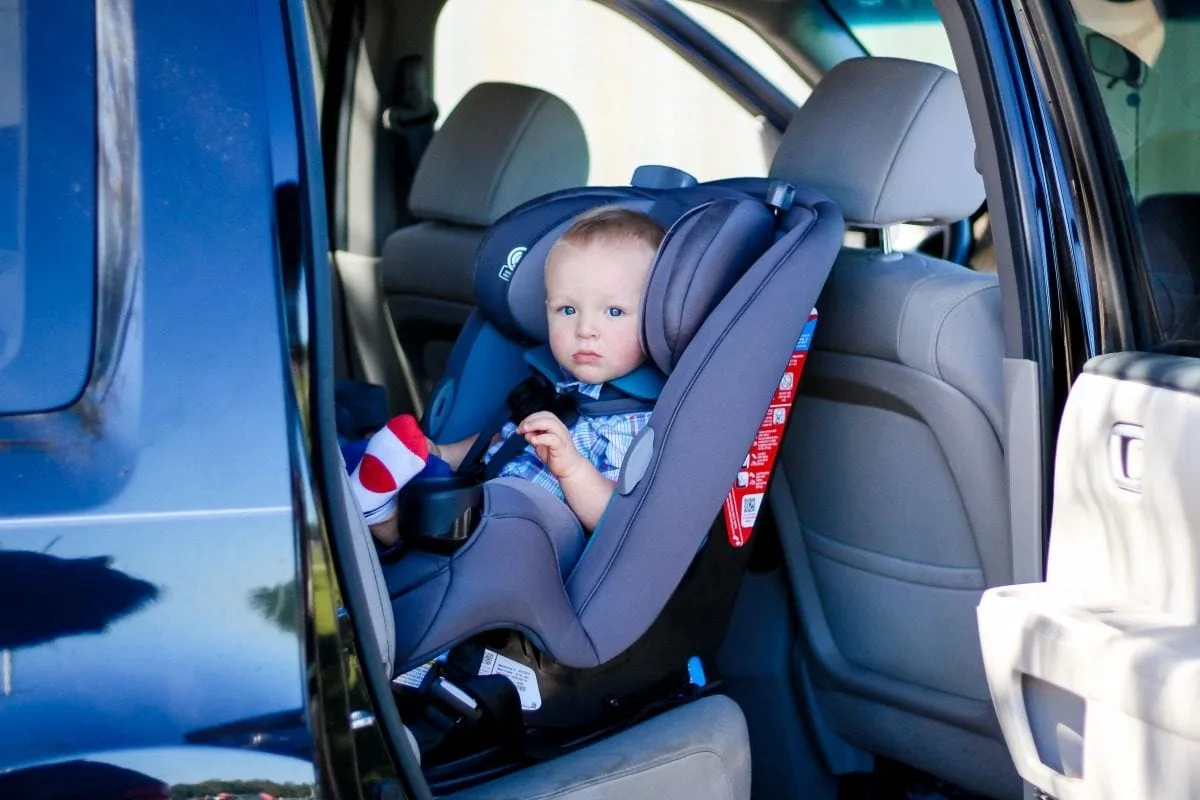
When your toddler's legs start bumping the back seat and you're wondering if it's finally time to flip the seat around, the honest answer depends on three things: your child's age, their weight and height, and what your specific car seat manual says. There's no single magical birthday. But there is a clear safety standard, and it's stricter than most parents realize.
The old "1 year and 20 pounds" rule is decades out of date. The American Academy of Pediatrics (AAP) has recommended since 2018 that children stay rear-facing until they hit the maximum weight or height limit printed on their seat, as of 2026 that usually means 40 to 50 lbs. Here's what actually decides it, and how to make the switch safely when the time comes.
when baby can face forward in car seat
A baby can face forward only after meeting three requirements at once: the age minimum on your seat or state law, the weight and height limits in your car seat manual, and full harness fit. The AAP recommends rear-facing until your child maxes out the seat's rear-facing weight or height limit. That's often age 2 to 4.
The Short Answer (And Why "1 Year and 20 Pounds" Is Outdated)
The minimum legal standard in most US states is still age 1 and 20 lbs. That number is decades old and dangerously behind current safety research.
Rear-facing isn't training wheels you graduate from on a birthday. It's the position that protects your child's head and spine in a crash, and it keeps working until the seat physically can't hold them anymore.
Here's the difference in plain terms:
- Legal minimum: Usually age 1 and 20 lbs in many states. This is the lowest bar to stay legal.
- Seat's requirement: Every car seat has its own forward-facing minimums printed on labels and in the manual.
- AAP best practice: Rear-face until the seat's maximum rear-facing limits, even if that's age 3 or 4.
Image source: Bing (Web (fair-use with source credit))
So the honest answer is: your baby can face forward when they meet the minimums on the seat, not before. But "can" and "should" aren't the same word.
If your child is 1 year old and 22 lbs, most states say you're allowed to flip the seat. The AAP says wait. The seat's manufacturer may say wait even longer.
Follow whichever rule is most protective.
Per the AAP's policy statement on child passenger safety, children under 2 are 75% less likely to die or be seriously injured in a crash when rear-facing compared to forward-facing. That's not a small margin. That's the whole ballgame.
Why This Decision Actually Matters — Rear-Facing vs. Forward-Facing Crash Physics
Rear-facing car seats spread crash forces across the entire back, neck, and head. Forward-facing seats concentrate that force on the neck and spinal cord.
It comes down to how a baby's body is built. An infant's head is roughly a quarter of their total body weight, and their neck vertebrae don't fully harden until around age 3. In a frontal crash, forward-facing kids get thrown head-first into the harness.
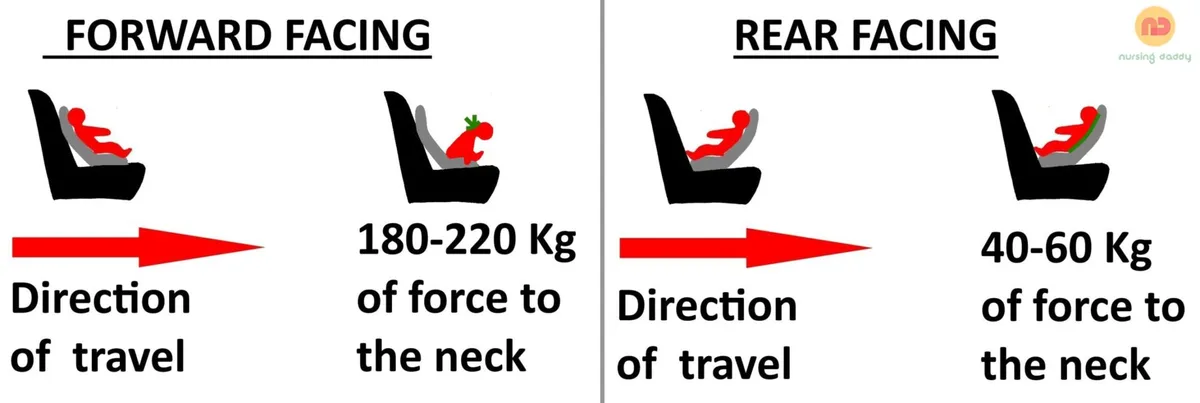
Image source: Web (Bing) / nursingdaddyblog.com (Web image (fair-use with source credit))
Rear-facing, the shell of the seat cradles the head and back. The seat absorbs the energy. The child's spine stays aligned.
It's the single most effective thing you can do to protect a small child in a crash.
Federal Motor Vehicle Safety Standard 213 (FMVSS 213) sets the crash-test rules car seats must pass in the US. Forward-facing testing allows more head excursion than rear-facing testing does. That gap exists for a reason: the physics are simply harsher one way than the other.
The Three Things That Decide It: Age, Weight & Height, and Your Specific Seat
Every car seat has its own forward-facing rules. You'll find them on the label stuck to the side of the shell and in the manual.
Here's what to look for:
| Requirement | Where to Find It | Typical Numbers |
|---|---|---|
| Minimum age | Label + manual | 1 or 2 years |
| Minimum weight | Label + manual | 22 to 40 lbs |
| Maximum weight | Label + manual | 40 to 65 lbs (harness) |
| Max height | Label + manual | 43 to 50 inches |
| Harness slot position | Manual | At or above shoulders |
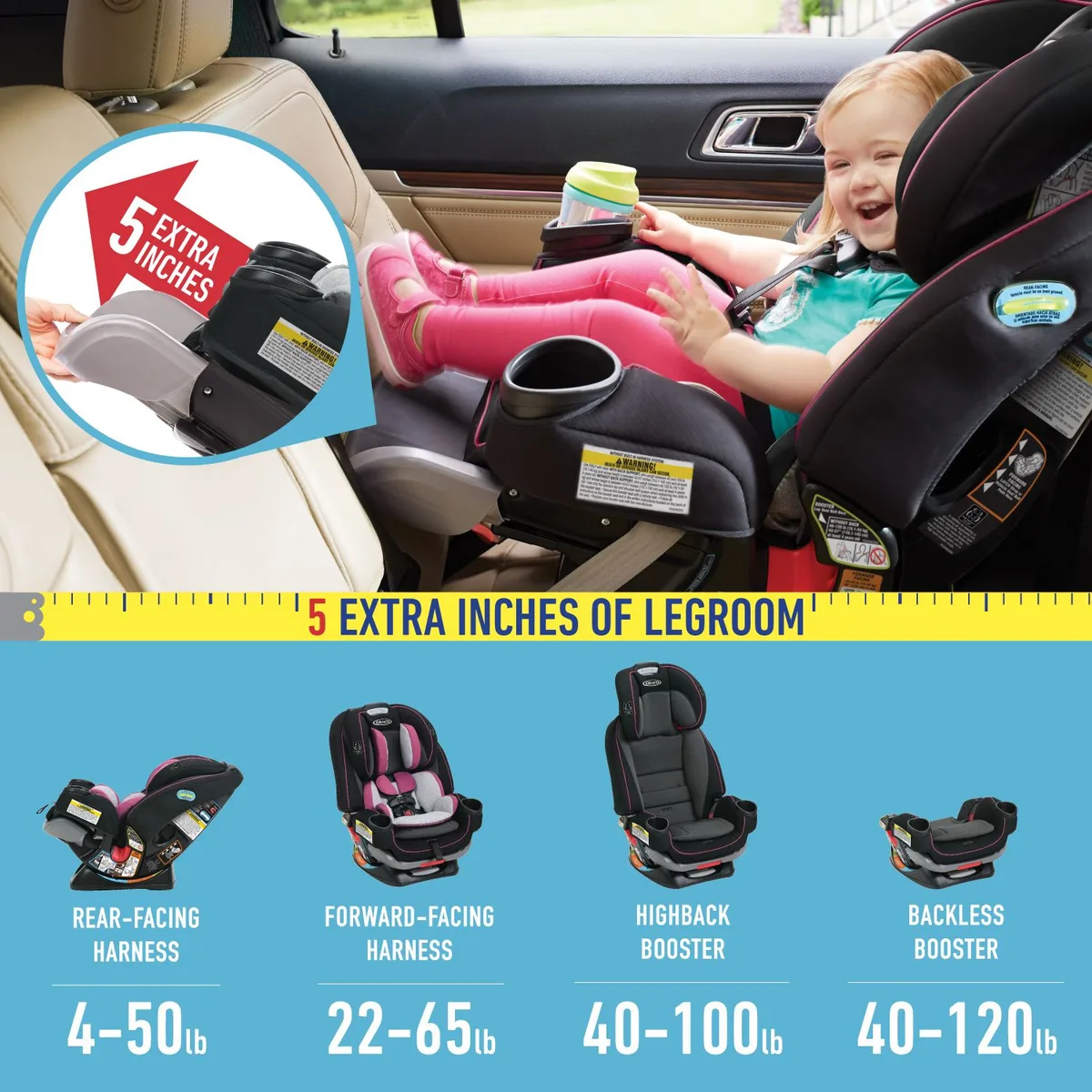
Image source: Web (Bing) / carinterior.alibaba.com (Web image (fair-use with source credit))
What the AAP and NHTSA Actually Recommend
Keep your child rear-facing until they hit the maximum weight or height allowed by their seat. Don't flip early just because a birthday passed.
The National Highway Traffic Safety Administration (NHTSA) publishes car seat recommendations and a state-by-state law chart. Their guidance echoes the AAP: rear-face as long as possible, then forward-face with a top tether.
What Your State Law Says (And Why the Legal Minimum Isn't the Safety Standard)
State laws set a floor, not a ceiling. Meeting your state's minimum keeps you legal. It doesn't keep your child as safe as they could be.
If your state says age 1 and 20 lbs, that's the floor. Your seat's manual and the AAP guidance are the real ceiling. When in doubt, follow the strictest one.
Reading Your Car Seat Manual — Where the Real Limits Live
If the label says rear-facing up to 40 lbs, stop rear-facing at 40 lbs. Then, and only then, switch to forward-facing if your child also meets the forward-facing age minimum.
Never guess. Never go by feel. The manual is the rulebook for that specific seat.
How to Switch Your Baby to Forward-Facing the Right Way
Once your child meets every forward-facing minimum on the seat, here's the actual process.
Step 1: Confirm eligibility. Check the manual for the seat's forward-facing age, weight, and height minimums. All three must be met.
Step 2: Re-thread the harness. Move the shoulder straps to the slots at or above your child's shoulders. Forward-facing harnesses sit differently than rear-facing ones.
Step 3: Recline the seat upright. Forward-facing mode uses a more upright recline angle. Follow the manual's recline indicator.
Step 4: Install with seat belt or LATCH. Check your vehicle manual for which method applies and any weight limits.
Step 5: Attach the top tether. A top tether reduces forward head movement in a crash. Most forward-facing seats require it. Use the tether anchor in your vehicle.
Step 6: Test the install. The seat shouldn't move more than 1 inch side-to-side or front-to-back at the belt path.
Step 7: Fit the harness. Snug enough that you can't pinch slack at the collarbone. Chest clip at armpit level.
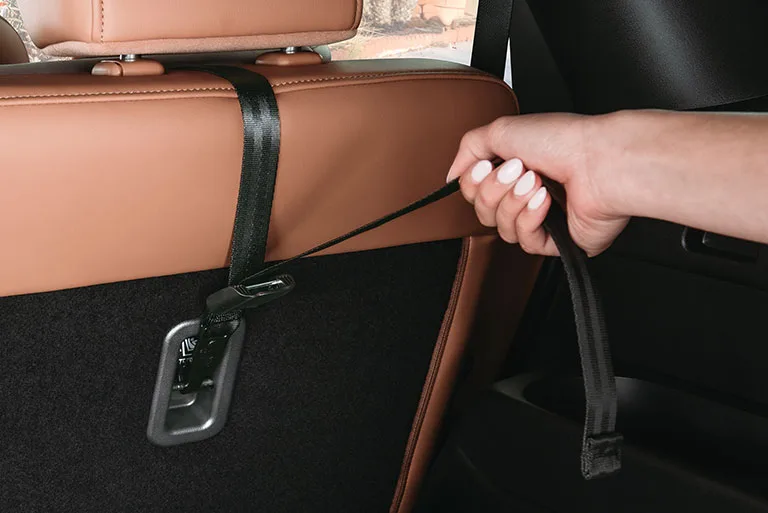
Image source: Web (Bing) / chiccousa.com (Web image (fair-use with source credit))
Harness, Tether, and Install Checks Most Parents Miss
Three things go wrong most often. Parents forget to move the harness up. They skip the top tether.
And they leave the seat reclined too far back.
If you're unsure, get it checked. NHTSA runs a car seat inspection locator, and certified Child Passenger Safety Technicians (CPSTs) inspect installs for free at many fire stations and hospitals across the country.
Common Mistakes Parents Make (And How to Avoid Them)
The most common mistake is flipping the seat too early because the legs look cramped. Rear-facing legs bend, cross, or rest against the seat back, and that's normal. Leg injuries from rear-facing are rare.
Neck and spinal injuries from forward-facing too soon are not.
Here's what our research keeps surfacing as the repeat offenders:
- Skipping the top tether. Most forward-facing seats require it. Skip it and forward head movement increases in a crash.
- Leaving the harness in the lower slots. Forward-facing straps go at or above the shoulders. Rear-facing straps sit at or below.
- Bulky coats under the harness. Puffy jackets create slack. Take the coat off, buckle up, then layer a blanket over the top.
- Reclining the seat too far back. Forward-facing seats ride upright. That reclined rear-facing angle doesn't carry over.
- Trusting a hand-me-down seat with no history. Expired seats, seats from a crash, and seats missing parts aren't safe. Check the NHTSA recall database.
- Installing with LATCH past the weight limit. Most lower anchors have a combined child-plus-seat limit around 65 lbs. Past that, switch to the seat belt.
Parents also forget that "legal" and "safe" aren't synonyms. Meeting your state's minimum doesn't mean you've maxed out protection.
When to Get a Certified Tech to Check Your Install
Get a certified Child Passenger Safety Technician (CPST) to check the install any time you switch modes, change vehicles, or buy a new seat. This isn't overkill. It's the single cheapest safety upgrade available.
NHTSA's car seat inspection station locator shows free inspection sites across the country. Many fire departments, hospitals, and police stations run them. The tech will check the recline angle, harness fit, tether attachment, and whether the seat moves more than an inch at the belt path.
In our research, installation errors show up in a huge share of seats checked at inspection events, often in the range of 50 to 75 percent. The most frequent problems are a loose seat and a loose harness. Both are easy to fix once someone shows you.
If you can't find a station nearby, many CPSTs offer virtual checks over video. You'll walk through the install while they watch and correct. It beats guessing.
FAQs: Extended Rear-Facing, Tall Toddlers, Cramped Legs, and Hand-Me-Down Seats
At what age can a baby face forward in a car seat?
There's no single age. Most seats have a forward-facing minimum of age 1 or 2. The AAP recommends waiting until the child hits the seat's rear-facing weight or height limit.
That usually lands between age 2 and 4.
Can my toddler face forward if their legs are cramped?
Yes, but cramped legs aren't a reason to flip early. Bent or crossed legs are normal and safe rear-facing. Kids often sit cross-legged or prop their feet on the seat back.
It's a comfort issue, not a safety one.
What if my child is tall but light?
Follow the height limit on the seat. If your child outgrows the rear-facing height limit but doesn't hit the forward-facing weight minimum, you need a seat with a higher rear-facing shell. Don't switch before the seat's forward-facing weight minimum is met.
Is a hand-me-down car seat safe for forward-facing?
Only if it's unexpired, never in a crash, has all parts, and comes with its manual. Check the manufacture date on the shell. Most seats expire 6 to 10 years after production.
If you can't verify the history, don't use it.
Does my state's law override the AAP recommendation?
No. State law is the legal floor. The AAP and your seat's manual are the safety standard.
Follow the strictest rule of the three. In most cases, that means rear-facing well past your state's minimum age.
How do I know my forward-facing install is correct?
The seat shouldn't move more than 1 inch at the belt path. The harness should be snug with no pinched slack at the collarbone. The chest clip sits at armpit level, and the top tether is attached.
If any of those fail, redo the install.
If you're still unsure, swing by a free inspection station. A CPST can spot issues in minutes.
The Bottom Line: Keep Them Rear-Facing as Long as the Seat Allows
Rear-facing is the safest position for a young child, full stop. The longer you can keep your baby that way, the better their odds in a crash. Most modern convertible seats rear-face to 40 to 50 lbs.
Many kids can stay that way until age 3 or 4.
When you do switch, meet every minimum first: age, weight, and height. Then install forward-facing properly, harness at or above the shoulders, top tether attached, seat upright. A snug harness and a tight install matter more than any gadget or accessory.
If you only remember one thing, make it this: the date on the calendar doesn't decide when to flip the seat. The limits printed on your car seat do. Read the manual, check your state law, and follow whichever rule protects your child the longest.

Similar Posts































