Is It Safe to Feed Baby in a Car Seat? What to Know
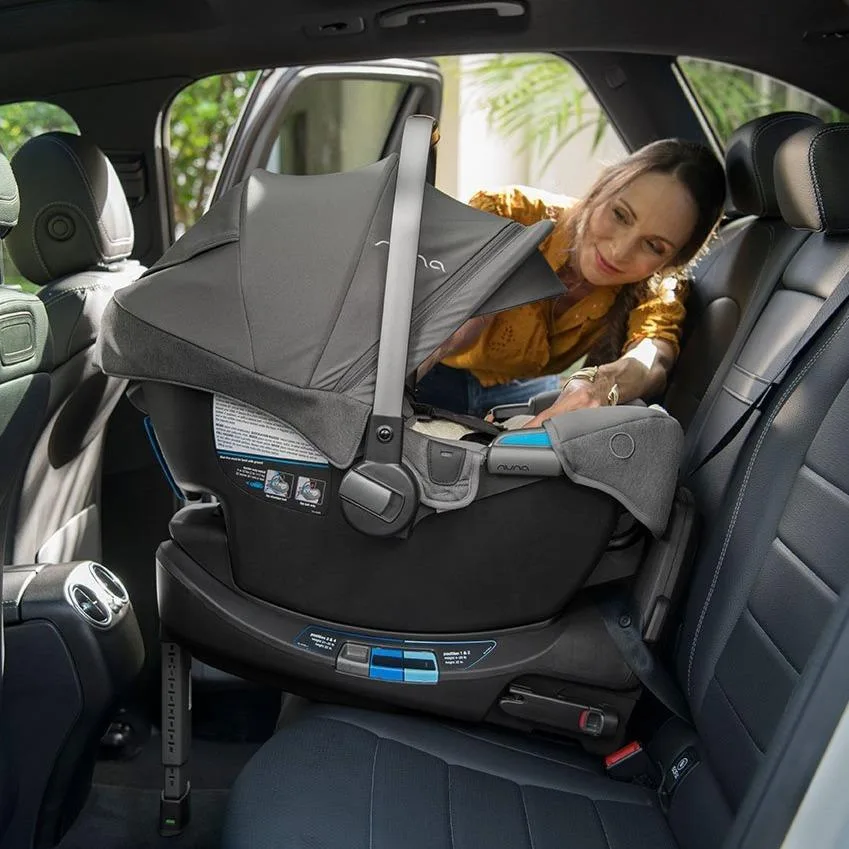
It's a question almost every parent hits at some point on a long drive. You've got a hungry, screaming baby in the back seat and 40 miles to the next exit. So is it safe to feed baby bottle in car seat while the car's moving?
The short answer is no, and the reasons go well beyond a bit of spilled milk.
In our research, we found that the American Academy of Pediatrics (AAP) recommends feeding babies only when they're removed from the car seat, because both choking and positional asphyxia risks climb sharply when an infant feeds at a reclined angle. That's the core guidance. But what that looks like in practice on a 6-hour road trip is where most parents get stuck, so let's walk through it properly.
is it safe to feed baby bottle in car seat
No. Feeding a baby a bottle in a car seat is not safe, especially while the vehicle is moving. The reclined position raises the risk of choking and positional asphyxia.
A crash could also turn the bottle into a projectile. Feed your baby before you leave, during scheduled stops, or after you park safely.
The Short Answer — and Why It's Not a Simple Yes or No
Three real risks stack up when a baby takes a bottle in a moving car seat. None of them are theoretical. Each one has sent infants to the emergency room.
The first is choking. A baby feeding at a reclined angle has a wider, more open airway. If the car hits a bump, brakes hard, or the bottle slips, milk can flow faster than the baby can swallow.
That's aspiration, and it can happen in seconds.
The second is positional asphyxia. This is when a baby's head slumps forward, chin to chest, and the airway gets compressed. Newborns have weak neck muscles.
A 45-degree recline is already a compromise. Add feeding and drowsiness and the risk climbs fast. Per CPSC data, sleep-related infant deaths in car seats and similar products account for a meaningful share of suffocation cases each year.
The third is the crash itself. A bottle is a hard object. In a 30 mph crash, forces are equivalent to falling from a three-story building.
Anything loose in the cabin becomes a projectile, including the bottle, and including a baby whose harness has been loosened to make room for it.
So it's not a simple "yes if parked, no if moving" answer either. Even parked, the reclined feeding angle is still a positional risk. That's why pediatric guidance points to feeding in arms, or after you remove the baby from the seat entirely.
Image source: Bing (Web (fair-use with source credit))
What Actually Happens When a Baby Feeds in a Car Seat
Choking and aspiration
Choking is the most immediate risk. A baby's swallow is coordinated but fragile. Milk flows from a bottle by gravity, and a tilted car seat changes the angle of the bottle too.
On a sharp brake, the milk can shoot back toward the throat faster than the baby can handle. That's why feeding a crying, jostled baby in a moving seat is especially risky. You can't see how much is going in and you can't react quickly.
Positional asphyxia and the head-slump problem
Positional asphyxia is the quiet one. It doesn't look dramatic. A baby who's fallen asleep mid-feed with their chin on their chest can suffocate without any sound.
Newborns and preemies are at the highest risk. Signs to watch for include a head that's flopped forward, a chin tucked into the chest, and lips or fingertips that look dusky. The AAP specifically warns that car seats are for travel, not for sleep or feeding.
The harness problem nobody talks about
To fit a bottle in their baby's hands, some parents loosen the harness. That's the moment crash protection collapses. A 5-point harness only works when it's snug.
NHTSA guidance is that you should not be able to pinch slack at the collarbone, and the chest clip sits at armpit level. Loosen it by an inch and your baby can slide out or be ejected in a crash. The bottle itself also becomes a projectile.
The bottle as a projectile
Anything in the cabin is a potential missile in a crash. A full 8-ounce bottle weighs around half a pound. At 30 mph impact forces, that's a heavy object moving at speed.
If your baby is holding it, they take the hit. If it's on the seat, it flies. There is no safe way to have a loose bottle in the cabin during a crash.
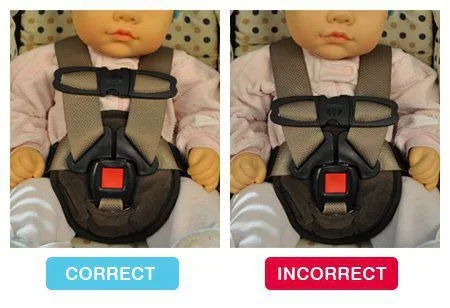
Image source: Bing (Web (fair-use with source credit))
When It's Still Tempting — And What's Really Going On
Every parent who's done this has had a reason. None of them are bad reasons. It's just that the fix isn't the car seat.
Long road trips with no safe place to stop
Interstate highways often run 20 to 40 miles between exits. If your baby starts wailing at mile 12 of a 60-mile stretch, the temptation is real. But you're not out of options.
You can pull onto a wide shoulder on a low-speed road only as a last resort. On an interstate, drive to the next exit, even if it's slow going. A crying baby for 10 minutes is safer than a choking baby in the back seat.
A screaming, hungry baby on the highway
A crying baby is stressful, and stress makes bad decisions feel reasonable. Here's the reframe: crying is not an emergency. Choking is.
Positional asphyxia is. Your baby is uncomfortable but safe in a properly buckled seat. Your job is to get to a stop safely, not to fix the crying mid-drive.
Solo parents, rideshares, and overnight drives
If you're the only adult in the car, you can't safely reach back and feed anyway. Reaching back means eyes off the road, arm twisted, one hand on the wheel. Rideshare drivers with infants in the car face the same math.
The only safe answer is to stop.
Safe Feeding on the Road: What Actually Works
Feed before you buckle in
The simplest fix is to feed right before departure. A full baby is usually a calm baby for the first 1 to 2 hours of a drive. Plan your feedings around your departure time, not the other way around.
If you can shift a nap so your baby sleeps through the first stretch, even better.
Plan stops around feedings, not the other way around
Newborns feed every 2 to 3 hours. Older babies stretch to 3 to 4. Build those intervals into your route.
Look up rest stops, truck stops, or safe parking lots in advance. A 20-minute feed and burp at a proper stop is faster than a 40-minute delay because your baby choked and you had to pull over in a panic.
Pull over properly — never the shoulder
Interstate shoulders are one of the most dangerous places to be. Cars pass at 70 mph just feet away. Pull off at an exit, a rest area, a gas station, or a parking lot.
Once parked, take your baby out of the car seat entirely. Feed them in your arms. Burp them.
Then buckle them back in, snug the harness, and check the chest clip. Then drive.
What to do if you genuinely can't stop
If you truly cannot stop, meaning no exit for miles and your baby is distressed, focus on getting to the stop as fast as is safe. Do not reach back. Do not loosen the harness.
Do not hand back a bottle. If you have a passenger, they can offer a pacifier (still a mild crash-object risk) but never a bottle. The minute you can safely pull off, do it, and feed properly.
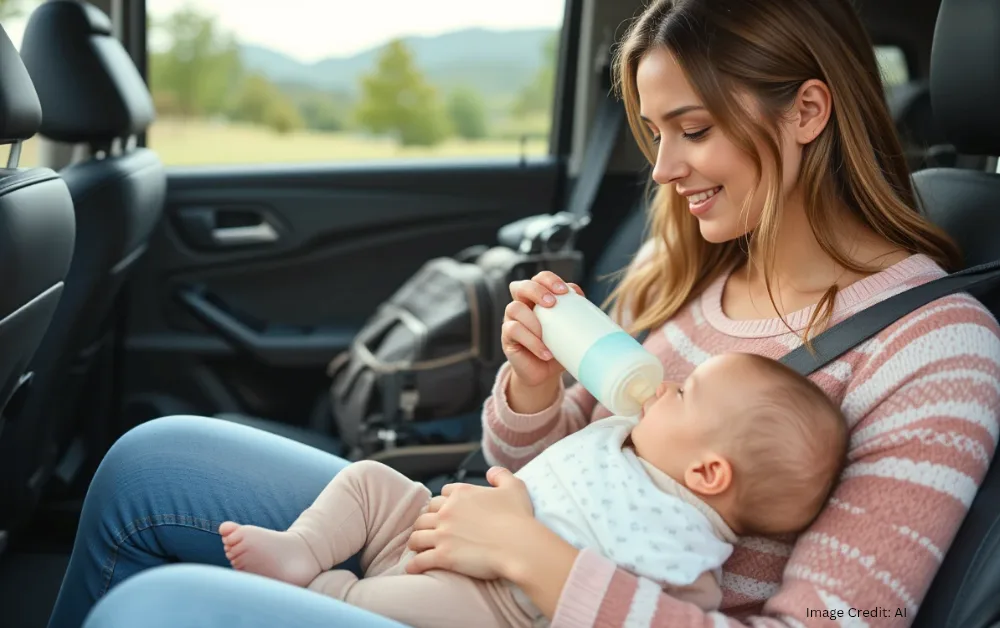
Image source: Bing (Web (fair-use with source credit))
Common Mistakes Parents Make
These are the ones we see flagged most often in car seat inspection reports and parent forums. Every one of them is understandable. Every one of them is fixable.
- Loosening the harness to fit a bottle. This is the single biggest safety failure. A loose harness means your baby can slip out in a crash.
- Propping the bottle so hands stay free. This is dangerous even parked. It increases flow rate and choke risk, and it's a projectile in motion.
- Feeding a sleeping baby in a reclined seat. A sleeping baby can't protect their airway. If their head slumps, they can suffocate silently.
- Assuming a pacifier is the same risk as a bottle. A pacifier is far lower risk than a bottle, though still a light object in the cabin. Use it as a short-term calmer, not a substitute for a stop.
- Skipping burping before re-buckling. Trapped air means spit-up, which means a soiled harness and a fussy baby 10 minutes down the road.
- Using aftermarket bottle holders clipped to the seat. These void your car seat warranty and were never crash-tested. The CPSC has warned against them.
The Car Seat Rules That Override Everything Else
AAP and NHTSA guidance on rear-facing and feeding
The AAP recommends rear-facing until at least age 2, or until a child outgrows the seat's height and weight limits. NHTSA's own guidance is clear that car seats are for travel, not feeding or sleeping. As of 2026, both organizations continue to flag feeding in a moving car seat as a serious risk.
The recline angle that keeps a newborn's airway open during a crash is not the angle that makes feeding safe.
What manufacturers actually say
Every major car seat maker (Britax, Chicco, Graco, Evenflo, Nuna, Clek, Cybex) warns against feeding in the seat. Their manuals use language like "never leave a child unattended" and "do not use for feeding." These warnings are there because of real injury data. If a manufacturer tells you their product isn't meant for a use, listen.
Aftermarket bottle holders and why they're a hard no
Clip-on bottle holders, seat-mounted tray tables, and strap-on cup holders for car seats are not regulated to FMVSS 213 or UN R129 (i-Size). They have not been crash-tested with a real dummy and a real bottle. They add weight and hard edges near your baby's head.
Any product that promises to make car seat feeding "easy" or "hands-free" is selling you a hazard.
Image source: Bing (Web (fair-use with source credit))
FAQs
Can I feed my baby a bottle while the car is parked?
You can feed your baby in a parked car, but take them out of the car seat first. Feeding a baby in the seat, even parked, still puts them at a reclined angle that raises choking and positional asphyxia risk. Sit in the back seat with your baby in your arms, feed, burp, then buckle them back in snugly.
Is it safe to give a pacifier in a moving car?
A pacifier is much lower risk than a bottle, and many parents use one to calm a baby on the road. It's a light object, so it's not a serious projectile in a crash. Don't attach it to a clip that could snag or strangle, and never use it as a substitute for a feeding stop.
What age is it safe to feed a baby in a car seat?
There is no age at which feeding a baby a bottle in a moving car seat becomes safe. The risks shift as babies get older, but they don't disappear. A 6-month-old still can't protect their airway against a sudden stop.
The safe rule stays the same: feed outside the seat.
How often should I stop to feed my baby on a road trip?
Newborns feed every 2 to 3 hours. Older babies stretch to 3 to 4 hours. Plan your route around those windows and identify rest stops, truck stops, or safe parking lots in advance.
A 20-minute feed and burp at a proper stop beats a panic pull-over on a highway shoulder.
Can I prop the bottle just for a minute?
No. Propping a bottle is dangerous even when parked. It increases the flow rate, which raises choke risk, and it takes your eyes and hands off the baby.
In a moving car, the bottle also becomes a projectile. If you have to prop it, you've already lost the safety argument.
What if my baby falls asleep mid-feed in the car seat?
Take them out. A sleeping baby with a slumped head can suffocate silently, and this is the exact scenario behind many positional asphyxia cases. Move your baby to a flat, firm surface for sleep.
Car seats are for travel, not napping.
The Bottom Line for Real Parents
You don't need a perfect road trip. You need a safe one. Feed before you leave.
Plan your stops around feeding windows. Pull off properly at an exit or rest area, never a highway shoulder. Take your baby out, feed and burp them in your arms, then buckle them back in snug.
If your baby cries between stops, that's hard, and it's normal. Crying is discomfort. Choking and positional asphyxia are emergencies.
Your job isn't to stop the crying instantly. It's to get everyone to the next safe stop in one piece, no matter how loud the back seat gets.

Similar Posts































